Six months on from the ugliest afternoon Scottish football has produced in years, Celtic and Rangers find themselves on the same side of an argument for once — both clubs have formally appealed against the Scottish FA’s decision to force them into playing their next home Scottish Cup ties behind closed doors, and both are contesting the £100,000 fines that came with it.
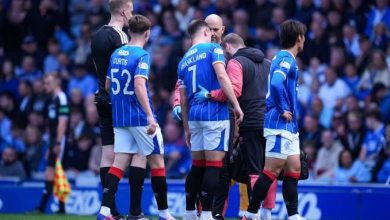
The sanctions stem from the chaos that followed Celtic’s penalty-shootout win over Rangers in last season’s Scottish Cup quarter-final at Ibrox back in March. What should have been remembered as a gripping cup tie decided on spot-kicks instead became one of the most damaging nights for Scottish football’s reputation in recent memory, after dozens of Celtic supporters spilled onto the pitch to celebrate and were met by a retaliatory surge from Rangers fans, some of them masked. Missiles were thrown, a lit flare landed among the crowd, and police and stewards were left struggling to keep the two sets of supporters apart in scenes that took several minutes to bring under control.
The scale of the disorder was laid bare in the aftermath. Police Scotland confirmed 43 arrests in connection with the trouble, with officers and stewards among those injured, and reports at the time described a female officer being kicked to the ground from behind as she attempted to hold the line, and a member of Celtic’s coaching staff being assaulted by a fan who had made it onto the pitch. An independent review into the incident concluded that the disorder brought Ibrox to the brink of catastrophe, warning that a “crushing incident was a real and foreseeable risk” given how easily non-compliant sections of both support bases had been able to surge past police and stewards.
Given the severity of that review’s findings, the Scottish FA’s disciplinary panel opted for one of the more significant sanctions available to it: both clubs were ordered to play their next home Scottish Cup fixture entirely behind closed doors, with no supporters present at all. On top of that, Celtic and Rangers were each fined £100,000, payable directly to the visiting club in that behind-closed-doors tie, as compensation for the gate receipts and matchday income both sides would lose as a result. A second, more severe closed-doors punishment was also held in reserve — the panel made clear that any repeat of serious crowd trouble at a Scottish Cup fixture within the next two seasons would trigger an identical sanction being applied again.
Crucially, both clubs had admitted the original charges relating to the conduct of their supporters, meaning this was never going to be a dispute over guilt. What is now being contested is the scale of the punishment itself, and in Celtic’s case in particular, the basic fairness of applying an identical sanction to both clubs for what the Parkhead side argues were fundamentally different levels of culpability
Celtic’s objection centres on a specific and, on the surface, fairly reasonable point of process: they were the away team at Ibrox that day, and under SFA competition rules it is the home club that carries responsibility for a stadium’s safety arrangements and matchday operation. In the club’s own words, released in a statement at the time of the sanctions, Celtic said they were “shocked by this disproportionate punishment for a relatively small incursion by Celtic supporters at a moment of emotion and celebration.”
The statement went further, drawing a direct line between the scale of the trouble and the fact that Celtic had been allowed their full allocation of the Broomloan Road stand — around 7,500 away fans — for the first time at Ibrox since 2018, a concession made specifically to comply with Scottish Cup ticketing rules that guarantee away clubs up to 20 per cent of stadium capacity. Recent Old Firm derbies had seen away allocations fluctuate wildly, from as low as 750 up to roughly 2,500 under separate agreements between the clubs, or in some seasons no away fans at all, so the presence of a much larger travelling support at the March quarter-final represented a significant departure from the recent norm — one that, in Celtic’s telling, Rangers as the home club were responsible for managing and policing.
“We understand the part emotion plays in football and would have expected the context and distinction in behaviours to have been taken into account by the panel,” the Celtic statement continued. “Another important distinction is that, on this occasion, Celtic were not the home club, responsible for stadium safety arrangements.” The clear implication is that Celtic believe their support’s incursion, while wrong, was a comparatively brief and celebratory pitch invasion, and that it was the retaliatory response from home fans — several hundred of them charging across the pitch to confront the away end, according to police accounts — that turned the situation genuinely dangerous. Lumping the two clubs together with matching sanctions, in Celtic’s view, ignores that distinction entirely and revives what critics have long characterised as the SFA’s instinct to treat any Old Firm disciplinary matter as a “both as bad as each other” exercise, regardless of the specific
Rangers, by contrast, have been notably more measured in public. Where Celtic issued a pointed statement questioning the proportionality of the sanction within days, Rangers said only that they would “consider the outcome in full, including its implications, before determining any further course of action” — language that gave little away about their thinking, but which has since translated into an identical appeal against both elements of the punishment, the closed-doors order and the £100,000 fine.
That is, in some respects, the more complicated position for Rangers to argue. As the home club, Ibrox’s safety planning and stewarding on the day was formally their responsibility, and the independent review’s finding that a genuinely dangerous crush situation was narrowly avoided is not something Rangers can easily distance themselves from in the way Celtic have tried to. Their appeal is therefore likely to focus less on questions of relative blame between the two clubs and more on the severity of the sanction itself — arguing, presumably, that a fine and/or a more limited restriction would have been sufficient without resorting to a full closed-doors punishment that hits legitimate, well-behaved supporters as hard as it hits the small number responsible for the disorder.
That last point is one that has resonated with sections of the Rangers support and pundits alike in the weeks since the sanction was announced: a closed-doors order punishes the vast majority of matchgoing fans, many of whom had no involvement whatsoever in the trouble, for the actions of what by most estimates was a few hundred individuals out of a combined attendance of tens of thousands. It is the same argument that has followed collective punishment sanctions in Scottish football for years, and one the SFA has never fully resolved to the satisfaction of either half of the Old Firm.
The practical stakes of the appeal are significant. If the closed-doors sanction is upheld, it means that whichever Scottish Cup tie either Celtic or Rangers is next drawn to host at home will be played in an empty stadium — no home fans, no away fans, no atmosphere, and no matchday revenue for either club involved. Given the random nature of cup draws, there is a very real possibility that the fixture affected could itself end up being another Old Firm derby, or a high-profile tie against one of the other Premiership sides chasing a cup run of their own. Either scenario would represent a significant loss, both financially and in terms of the occasion itself, for whichever smaller club draws Celtic or Rangers away and suddenly finds their biggest match of the season stripped of any crowd at all.
That knock-on effect for opponents is part of why the SFA built the £100,000 compensation payment into the original sanction — recognising that a closed-doors order doesn’t just punish Celtic and Rangers, it also punishes whichever club would otherwise have benefited from a bumper away-day gate receipt at Ibrox or Celtic Park. If the appeal succeeds in overturning or reducing that fine without changing the closed-doors element, smaller clubs drawn away to either Glasgow giant could find themselves losing out on a significant payday with no compensation to show for it.
There is also the separate question of precedent. This is not the first time crowd trouble has led to a closed-doors punishment involving Rangers, nor is it the first time an SFA sanction following crowd disorder has ended up being challenged through the appeals process. Scottish football has a long and largely uncomfortable history of supporter disorder at showpiece fixtures — from the pitch invasion that marred Hibernian’s 2016 Scottish Cup final win over Rangers at Hampden, when thousands of Hibs fans stormed the pitch and clashes broke out between rival supporters, to numerous smaller-scale incidents at Old Firm fixtures over the years. What has often followed those incidents, as in 2016, is a period of dispute over whether the initial sanction was fair, proportionate, or even legally sound, sometimes dragging on for months. The pattern with this latest case looks set to be no different, with the hearing itself not scheduled to take place until Monday, 26 October — meaning both clubs will go into the beginning of their Scottish Cup campaigns this season without knowing for certain what sanction, if any, will ultimately apply to their next home tie in the competition
There is an obvious irony in Scottish football’s two fiercest rivals finding common cause on a disciplinary matter, and it says something about how significant both clubs consider the sanction to be that they have been willing to pursue parallel, if not identical, appeals rather than simply accepting the punishment and moving on, as both had initially seemed prepared to do when the charges were first admitted. Neither club has fully commented on the specifics of their appeal beyond their original statements, and both are likely to be cautious about being seen to minimise what was, by any reasonable measure, a serious and frightening breakdown of crowd control at a major fixture — First Minister John Swinney was among those to publicly call for a “collective approach” to tackling the issue in the immediate aftermath, underlining how far beyond football’s own governance the fallout from that afternoon travelled.
At the same time, neither club can be expected to accept a sanction they view as disproportionate or unfairly distributed without at least testing the process. For Celtic, the appeal is explicitly framed around fairness and the specific facts of who was responsible for what on the day. For Rangers, the calculation looks more focused on the severity and collective nature of the punishment itself, and its impact on supporters who had no part in what happened.
Whether the panel convened for the 26 October hearing is receptive to either argument remains to be seen. SFA appeal panels are not obliged to reduce or overturn sanctions simply because a punishment is unpopular or contested, and past disciplinary battles between the governing body and both halves of the Old Firm suggest these hearings are rarely quick or straightforward — Rangers themselves have gone through lengthy and often bitter disciplinary disputes with the SFA before, including protracted arguments over administration-era sanctions where legal technicalities and rule interpretations dragged proceedings out for months. There is little reason to expect this appeal will be resolved any more swiftly, even with a firm hearing date now in place
Until the 26 October hearing takes place, the closed-doors sanction and both fines remain live and, in principle, enforceable — meaning the threat of an empty stadium for whichever club’s Scottish Cup tie comes first hangs over the beginning of the competition regardless of the appeal’s eventual outcome. Both clubs will also be conscious of the standing warning attached to the original sanction: any further crowd trouble at a Scottish Cup fixture involving either side within the next two seasons would trigger a second closed-doors punishment automatically, appeal or no appeal, adding an extra layer of pressure on both boards to ensure nothing resembling the scenes from March is repeated when Celtic and Rangers next meet in the competition, whenever that draw comes.
For now, the outcome of Monday’s hearing in October is the only thing that will settle whether Scottish football’s two biggest clubs play out their next Scottish Cup ties in front of their own supporters or in near-total silence. Given the scale of what happened at Ibrox in March, and how close the independent review suggested Scottish football came to a genuine tragedy that afternoon, there will be plenty within the game who feel a sanction of this magnitude was entirely justified, appeal or not. Whether the panel agrees that Celtic and Rangers should be treated identically for what happened, or draws the same distinction between home and away responsibility that Celtic have argued for, will go a long way to shaping how the SFA handles the next Old Firm disciplinary flashpoint — and there is little reason to think, on recent history, that this will be the last one.