Deeper exploration of Martin O’Neill’s tactical vision and what he expects from the striker

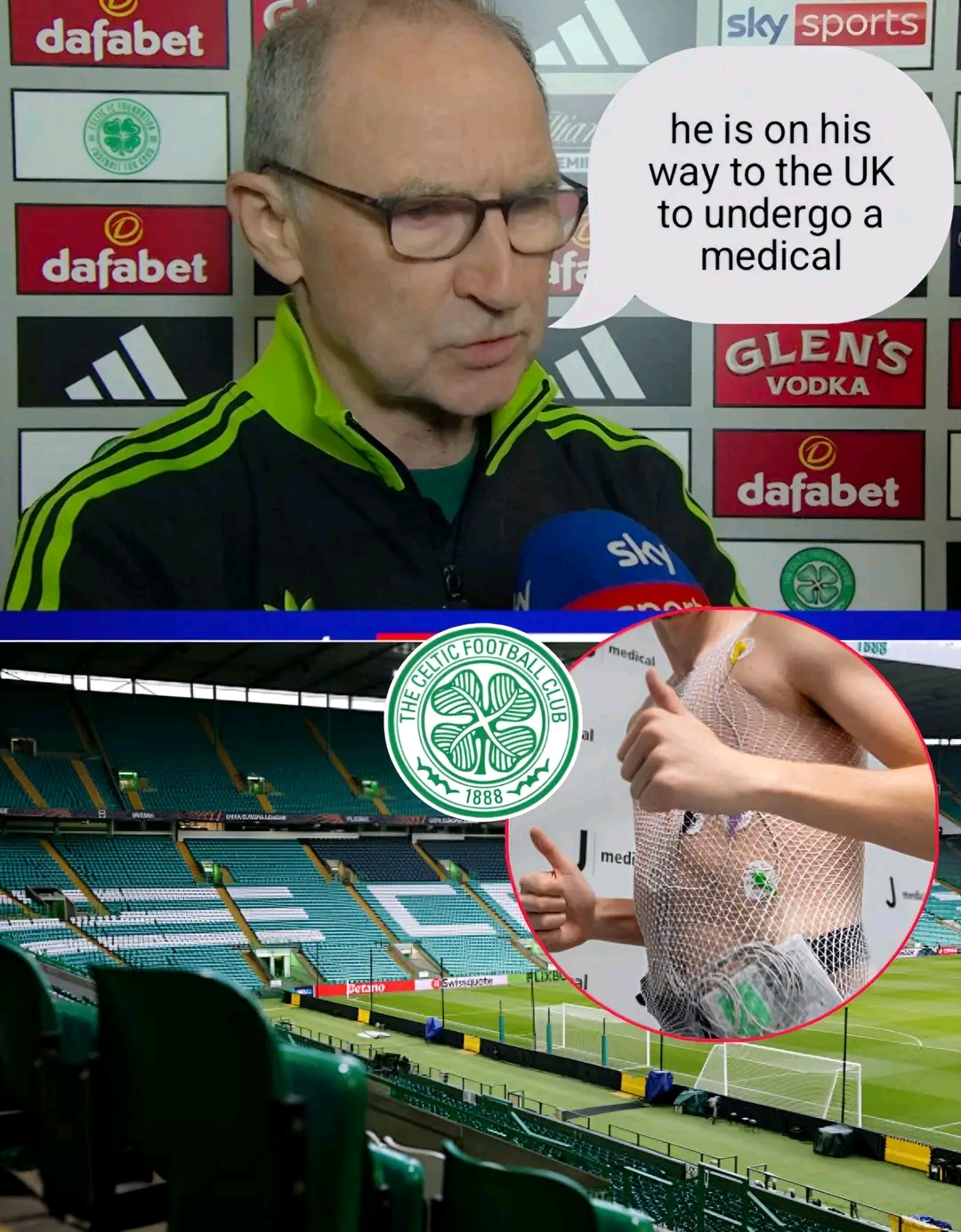
When Martin O’Neill speaks about what he expects from Camilo Duran, he is not merely describing a player’s ability to score goals or execute basic aacking responsibilities. Rather, he is articulating a comprehensive tactical framework that positions the Colombian striker as the central fulcrum of Celtic’s attacking philosophy. O’Neill’s recent comments—particularly his emphasis on Duran’s ability to “hold up play” and act as a strong presence in that department—reveal a manager with a clearly defined strategic vision for how his team will function both in possession and in transition.
O’Neill’s career as both a player and manager has been characterized by a pragmatic yet sophisticated understanding of modern football. His experience managing at various levels of British and international football has equipped him with the tactical flexibility to adapt systems based on available personnel while maintaining core philosophical principles. His appointment at Celtic represents his opportunity to build a squad that reflects his evolved tactical thinking, and Duran appears to be the catalyst around which much of this vision will revolve.
The decision to deploy Duran as a central striker—rather than maximizing his versatility across attacking positions—is revealing of O’Neill’s broader tactical approach. In contemporary football, where attacking flexibility and positional fluidity have become increasingly fashionable, O’Neill’s preference for a defined central striker role suggests a manager who believes in the enduring value of a focal point, a player who provides structure and organization to the team’s attacking play.
This approach harks back to a more traditional understanding of striker responsibilities, yet it is far from antiquated. Many of Europe’s most successful teams—from Bayern Munich to Paris Saint-Germain to Real Madrid—continue to build their attacking systems around a central striker who provides the foundation for teammate involvement and higher-level attacking movements. The striker in this role becomes the positional anchor from which more fluid, technically gifted players can operate.
For O’Neill, this represents an intentional choice. Rather than seeking a player who can drift into various positions and operate somewhat anonymously across the forward line, the Celtic manager wants a player who will occupy a defined space, provide a clear target, and use intelligence and physicality to transform possession into attacking opportunities.
When O’Neill specifically highlighted Duran’s ability to “hold up play,” he identified what might be the single most important responsibility in modern striker play—a responsibility that often goes undervalued by supporters who focus primarily on goal-scoring statistics. Holding up play represents far more than simply receiving the ball with one’s back to goal and turning to shoot. It is a sophisticated tactical skill that requires physical strength, intelligent positioning, tactical awareness, and the technical quality to make split-second decisions under pressure.
Holding up play begins with physical presence. When a striker receives the ball deep in midfield or on the wing, opposition defenders will immediately look to close him down and win back possession. The ability to withstand this pressure—to shield the ball effectively, maintain balance despite physical contact, and prevent defenders from easily winning possession—is crucial to successful striker play. O’Neill’s emphasis on Duran being “strong in that department” suggests the Colombian possesses the physical attributes necessary to absorb pressure without losing possession.
This physical resilience serves multiple functions. First, it slows opposition attacking transitions. When a team loses possession, the quickest way to re-establish attacking play is to immediately launch a counter-attack before defensive lines have reset. By holding up possession despite pressure, Duran forces opposing defenders to maintain their forward positioning, buying time for Celtic’s defensive shape to reorganize. Second, it allows teammate creativity. When Duran holds the ball against pressure, midfielders supporting him gain time and space to make forward runs or position themselves for supporting passes. Third, it can fatigue opposition defenders. Repeatedly pursuing a striker who can withstand their pressure without losing the ball is physically and mentally draining, potentially reducing opposition defenders’ efficiency as matches progress.
Holding up play also requires sophisticated positional intelligence. Duran must understand not simply where he should position himself to receive passes, but how his positioning affects the entire attacking structure. A poorly positioned striker holding up play can actually impede team attacks by occupying spaces that would be more valuable if left open for teammate movement. Conversely, intelligent positioning by the striker creates passing lanes, draws defenders into unfavorable positions, and creates space for colleagues.
O’Neill’s emphasis on this quality suggests he has identified in Duran a player who possesses the tactical intelligence to recognize these nuances. Rather than simply running into dangerous spaces and hoping to receive the ball, a player truly capable of holding up play must continuously adjust his positioning based on where teammates are moving, where opposition defenders are located, and what the immediate tactical situation demands.
A critical component of holding up play is the ability to execute what is sometimes called the “layoff pass”—receiving the ball, holding it momentarily against pressure, and then playing a quick pass to a supporting teammate who has made a forward run. This pass often comes when a striker is under immediate pressure from defenders, yet must still find a teammate in space.
For Celtic’s attacking system, this quality is invaluable. Midfielders making runs from deeper positions can time their movement to arrive just as Duran receives the ball, allowing for quick combinations that penetrate defensive lines. Without a striker capable of executing this layoff pass consistently, these supporting runs lose their effectiveness. O’Neill’s emphasis on Duran’s holding-up abilities suggests he believes the Colombian can execute these passes with the timing and accuracy necessary for the system to function effectively.
O’Neill’s tactical vision for Duran cannot be separated from his conception of how Celtic’s midfield will function. If Duran is to successfully hold up play, Celtic’s midfielders must be positioned and timed to make supporting runs that create passing opportunities. This suggests O’Neill envisions a midfield that is more dynamic and fluid than merely defensive, with players capable of advancing into attacking positions in phases of possession.
Implicit in O’Neill’s tactical framework is a number 10—or a midfielder operating in a number 10-adjacent role—who will support Duran’s play and provide the creative spark for Celtic’s attacks. This player would be responsible for making the runs that Duran’s layoff passes are designed to reach. This player would also be expected to operate in the space between Duran and Celtic’s deeper midfielders, receiving the ball and advancing attacking play when Duran has successfully held it up.
This role requires exceptional tactical intelligence and technical quality. The player must understand when to make runs into the space Duran is occupying (forcing defenders to decide which player to mark), when to stay deeper to receive passes from Duran, and when to drift wide to create space for fullback involvement. O’Neill’s emphasis on needing “a few more players” suggests he may not be entirely satisfied with his current options in this role and may seek to strengthen it during the summer window.
With a striker occupying a central position and midfielders moving into advanced positions, the width of Celtic’s attack will depend largely on their fullbacks. O’Neill’s system appears to envision fullbacks who can advance into attacking positions, providing crossing opportunities and creating overloads on the flanks. Duran’s central positioning actually facilitates this fullback involvement, as his presence in the middle maintains central defensive responsibility, allowing fullbacks to push forward without leaving the center completely exposed.
Below the more advanced midfielders, Celtic will require a deeper midfield presence capable of breaking opposition play and providing quick transition passes to Duran. O’Neill’s system appears to operate with at least one dedicated midfielder responsible for pressing opposition possession in midfield and providing a platform for quick attacking transitions. When Duran receives passes from these deeper midfielders, the tactical chain is complete: deep press → quick transition → holding up play → support runners → advanced play.
It is crucial to note that while O’Neill has emphasized Duran’s hold-up play, this does not suggest the manager expects the striker to be primarily a playmaker rather than a goal scorer. Rather, O’Neill’s system appears designed to create goal-scoring opportunities through the involvement of multiple players, with Duran himself continuing to be a significant threat in the box.
A striker who holds up play effectively creates space for himself to later move into the box. By occupying defenders’ attention with his holding up play, Duran creates situations where he can time runs into the penalty area that capitalize on the space created. This is a more sophisticated version of striker movement than simply positioning oneself in the box from the opening of play. Defenders marking Duran during his hold-up play may be temporarily out of position when he suddenly advances into the box, creating dangerous situations.
Once in the box, Duran will be expected to combine the technical finishing quality that saw him score 15 goals last season with the positioning intelligence necessary to find half-spaces where finishing opportunities are most likely. O’Neill appears to envision Duran as both a provider and a finisher—a player who creates opportunities for others through holding up play but also ensures he remains a significant threat to opposition goalkeeping.
Duran’s physical profile suggests he can be a threat from aerial situations—set pieces and crosses alike. The emphasis on his strength suggests O’Neill may look to exploit this quality through direct attacking play on occasion, with crosses into the box for Duran to attack. While not the foundation of O’Neill’s system, this aerial capability provides tactical flexibility and an alternative attacking approach when conventional positional play is being effectively neutralized by opposition defenses.
A sophisticated manager like O’Neill understands that tactical systems must retain flexibility to adapt to opposition threats. Duran’s versatility—his ability to play across the forward line if necessary—provides this adaptability. Against opposition with particularly strong central defenders, O’Neill might deploy Duran in a wider attacking role, using his strength to retain possession on the wing while fullbacks provide central support. Against opposition with weak midfields, O’Neill might push Duran slightly deeper, allowing him to participate more actively in build-up play.
This flexibility is crucial. Duran is not simply a central striker; he is a forward with sufficient technical quality and intelligence to function in multiple positions. However, O’Neill’s default preference—his ideal deployment—appears to be central, with all the responsibilities and opportunities that role provides.
At 24 years old, Duran remains a player with significant potential for tactical development. O’Neill’s emphasis on his youth, combined with his current technical quality, suggests the Celtic manager sees Duran not merely as a solution to immediate needs but as a player who can develop under his guidance. The tactical framework O’Neill is building around Duran may evolve as the player gains experience in the Celtic system and in Scottish football more broadly.
Over multiple seasons, O’Neill may gradually expand Duran’s responsibilities, perhaps incorporating more creative playmaking as his understanding of the system deepens. Alternatively, if Duran’s goal-scoring proves so prolific that other adaptations become necessary, O’Neill can adjust his tactical approach accordingly. The framework being established now—with Duran as a physically strong, intelligent holder of possession—provides the foundation for tactical evolution.
To fully understand O’Neill’s vision, it is worth considering how Duran’s role at Qarabag may have differed from what is expected at Celtic. At Qarabag, Duran was effective in a more direct attacking style, where his goal-scoring ability and physical presence were utilized in a somewhat more straightforward manner. While he was always a competent all-round forward, the Azerbaijani league does not typically demand the same tactical sophistication in striker play that Scottish football and European competition require.
O’Neill’s vision represents an evolution in how Duran’s talents are deployed. Rather than simply looking to utilize his goal-scoring ability in a direct fashion, O’Neill wants to enhance Duran’s all-round play, making him a more complete forward who contributes to team success in multiple dimensions. This developmental aspect of the signing is significant—O’Neill is not simply acquiring a ready-made goal scorer but investing in a player he believes can become something greater through tactical guidance and experience.
Duran’s role as a holding-up central striker is just one component of a broader attacking system that O’Neill is building at Celtic. The system appears designed to generate attacking opportunities through a combination of positional intelligence, midfield dynamism, and fullback support. Duran is the anchor around which this system revolves, but the system’s success depends equally on the quality and positioning of players supporting him.
O’Neill’s system appears to operate with distinct attacking phases. In the first phase, Celtic looks to progress the ball through deeper positions, with Duran available as a primary target for longer passes that advance possession into attacking positions. In the second phase, having received the ball and held it up, Duran’s layoff passes to advancing midfielders create more advanced attacking situations. In the third phase, these advanced midfielders can either attempt direct shots, create for wide players, or feed the ball back to Duran as he advances into the box.
While O’Neill’s emphasis has been on possession-based attacking, modern football requires also thinking about how teams attack when they regain possession quickly. Duran’s ability to hold the ball makes him valuable in transition situations. When Celtic wins possession unexpectedly in midfield, Duran’s presence as a target provides an outlet, allowing the team to avoid losing the ball immediately to opposition counter-pressing.
To assess how successfully Duran fulfills O’Neill’s tactical vision, Celtic supporters and analysts will need to look beyond mere goal tallies. While goals will certainly matter, the effectiveness of O’Neill’s system will be demonstrated through metrics such as:
Pass completion rate in holding-up situations How often does Duran successfully retain possession when pressed?
Chances created for teammates**: How many scoring opportunities does Duran create through his hold-up play and positioning?
– **Pressing resistance**: How effectively does Duran shield the ball against aggressive opposing defenders?
– **Positioning consistency**: Does Duran maintain the positional discipline necessary for the system to function?
– **Support play quality**: When making passes to teammates, what percentage reach their targets with the timing and accuracy to create dangerous situations?
Traditional striking statistics—goals and assists—will provide one dimension of assessment, but O’Neill’s tactical vision is sophisticated enough that Duran’s impact may extend beyond these traditional markers.
O’Neill’s comment that Duran should arrive in Portugal during Celtic’s training camp suggests the manager is thinking seriously about integration and development. The timeframe allows for Duran to begin understanding the tactical framework before competitive fixtures commence. However, tactical integration cannot be rushed. Even if Duran is available for friendly matches, several weeks of training and tactical work may be necessary before he is genuinely comfortable in the system.
This suggests that while O’Neill will likely deploy Duran when match fitness allows, the manager may exercise patience in integrating the striker fully. Early competitive matches may see Duran functioning primarily as a goal scorer, with the more nuanced hold-up play and tactical responsibilities developing as his comfort in the system increases.
Martin O’Neill’s vision for Camilo Duran represents a distinctive tactical philosophy centered on the intelligent deployment of a physically strong, technically capable central striker who functions as the organizing principle of Celtic’s attacking play. The emphasis on holding up play, supporting teammates, and creating opportunities through positioning and awareness suggests O’Neill is building a system of considerable tactical sophistication.
Duran is not simply being asked to score goals—though goals will certainly be expected. Rather, he is being asked to function as a football intelligence in the attacking third, a player who elevates the play of those around him while remaining a significant goal-scoring threat himself. This is a demanding role, but one that, if executed effectively, can make a team considerably greater than the sum of its individual parts.
The success of this tactical vision will depend equally on O’Neill’s ability to assemble a midfield and fullback contingent capable of supporting Duran’s play. With the manager suggesting that recruitment will continue, the coming weeks will reveal whether he can build a complete attacking system that transforms Duran’s individual talents into collective team success. If successful, Celtic may possess an attacking system of genuine sophistication. If O’Neill’s vision falls short—either through inadequate support or through Duran’s inability to adapt to the demands of the role—then the tactical framework itself may require revision.
For now, the Colombian striker’s impending arrival represents the foundation on which O’Neill believes Celtic’s future can be built. Whether that foundation proves solid and capable of bearing considerable weight will become apparent once competitive football begins.