Derek McInnes Reveals What Sir Alex Ferguson Told Him in Private After He Got the Rangers Job

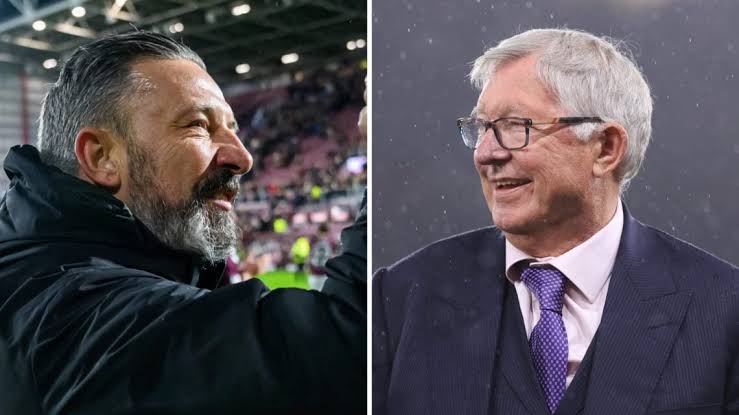
Some phone calls carry more weight than the people on them let on. When Derek McInnes was named Rangers manager this summer, one of the first people he spoke to was Sir Alex Ferguson, the man he has leaned on for advice, reassurance and the odd blunt reminder for years. What was said in that conversation has now been pieced together from McInnes’s own words, and it tells a quieter, more human story than the usual manager-meets-legend photo opportunity. It is a story about loyalty, about timing, and about a decision that was never going to be easy for a man who had just taken Hearts to the brink of a Scottish title.
The headline version is simple. Ferguson was delighted. He did not try to talk McInnes out of leaving Tynecastle, and he did not hide his affection for what McInnes had built there. But he understood. That single word does a lot of work, because it comes from someone who knows better than anyone alive what it costs to walk away from a project you believe in, and what it feels like when a bigger club comes calling at the wrong moment, or perhaps the right one.
McInnes described the call to the media in late June, shortly after taking the Rangers job. He said he had spoken to Ferguson only days earlier and that the old Manchester United manager had been pleased for him. He recalled that Ferguson had enjoyed coming to watch Hearts last season and had thought there was something special going on. In McInnes’s words, Ferguson sounded in good form, and McInnes was clearly relieved to hear it, because Ferguson has not been in the best of health. The tone of the whole exchange, as McInnes relayed it, was warm, unhurried and a little emotional.
It would be easy to treat that as a pleasant footnote, but the context makes it more significant. The relationship between the two men is not a courtesy arrangement. McInnes has talked repeatedly about how Ferguson became a sounding board during Hearts’ remarkable league campaign last season, when a club outside the Old Firm came closer to ending the duopoly than anyone had managed in decades. Ferguson was a visitor at Tynecastle, a guest at a game against McInnes’s former club Aberdeen, and a regular voice on the end of the phone on match days. For a manager attempting something historic, that kind of support is not trivial.
The bond goes back much further than last season. McInnes played for Rangers in the 1990s under Walter Smith, who was one of Ferguson’s closest friends, and that connection is how the two first became friendly. It was Smith who, in a sense, opened the door. Ferguson, a former Rangers player himself and a man who has never hidden his affection for the club despite his career-defining years at Aberdeen and Manchester United, found in McInnes a younger manager who understood the same footballing culture and shared the same instincts about hard work and standards.
Ferguson was also there at a delicate earlier moment. When Rangers first sounded out McInnes years ago, while he was still in charge at Aberdeen, the approach ultimately came to nothing. McInnes has since explained that he had concerns about working under the regime of that time and was persuaded to stay at Pittodrie. The two people he turned to then were Smith and Ferguson, both of whom he regards as great mentors. When they spoke again this summer, Ferguson reminded McInnes of those earlier conversations, a small detail that says plenty about how long this dialogue has been running.
So when the Rangers job came around a second time, the call to Ferguson was never going to be a formality. McInnes has said they spoke long and hard about it. By his account, Ferguson had genuinely believed that a club outside the Old Firm could win the league, and he had enjoyed watching Hearts push so close. That made the decision harder in some ways, because the person McInnes was seeking advice from had a personal investment in what he was leaving behind. Yet Ferguson, true to form, did not make it about himself. McInnes’s own summary is that Ferguson simply wants good things to happen for him.
There is a revealing contrast between this and the way Ferguson has spoken about McInnes in public over the years. In 2021, when McInnes left Aberdeen after eight years in charge, Ferguson offered a glowing reference to the press. He called McInnes a top-class, experienced manager who still had the energy of youth, and said he would gladly provide a reference if one were needed. He also warned about the financial gulf between clubs like Aberdeen and the Old Firm, which he described as unbridgeable. That was a man speaking from experience, because he is the last person to have led a club outside Glasgow to the title.
Ferguson achieved that with Aberdeen in 1985, one of the great stories in British football, and it is the reason he followed Hearts’ progress with such interest. McInnes was chasing something that only his mentor has done in the modern era. Ferguson knows what the pressure feels like in the final months, how every result begins to carry extra weight, and how the mood around a club can swing from belief to anxiety in a single afternoon. McInnes has said that talking to him in those weeks was a privilege and that he took notes as the older man spoke, because even casual remarks contained something worth keeping.
That is why it matters that Ferguson reacted the way he did to the Rangers move. A different mentor might have felt abandoned, or might have quietly urged McInnes to see the Hearts project through. Ferguson, by McInnes’s telling, did neither. He recognised that an opportunity like Rangers is rare, that McInnes grew up supporting the club, and that the chance to manage at that level may not come around a third time. He had himself walked away from Aberdeen in 1986 for the biggest job in English football, and he knows better than most that loyalty and ambition do not always point in the same direction.
What McInnes has described since is, if anything, even more interesting than the summer call. Earlier this week Ferguson turned up at Auchenhowie, the Rangers training base, for lunch with the manager and his staff. McInnes said the older man messaged him on Monday asking if he could drop in on Tuesday. He was in Glasgow dealing with a few family matters and seeing his brother, and he used the visit to catch up. McInnes laughed that Ferguson spent time chewing the fat, as he always does, and said it was great to see him in person.
The visit carried some emotional weight because of Ferguson’s health. McInnes was candid that there had been a scare, and that the man he describes as his mentor is dealing with a bit of difficulty walking at the moment. But he also relayed Ferguson’s own optimism. By McInnes’s account, Ferguson says he is two months from being right as rain again, and he looked in decent spirits. For anyone who has followed Ferguson’s career and the way he has dealt with adversity, that determination will sound entirely in character.
It is also worth noting how often McInnes returns to the idea of gratitude when he talks about these conversations. He describes Ferguson as someone who has always been supportive, not just of him but, he suspects, of many managers. He says that any time he gets to spend with him, whether on the phone or face to face, is an opportunity he has to take. He was a big supporter of what McInnes was doing at Hearts, a regular visitor last season, and it clearly means something to McInnes that the relationship has continued after the move across the city and across the divide.
Then there is the advice itself, which is where the story becomes useful as well as touching. Speaking ahead of this weekend’s game against Kilmarnock, McInnes revealed that Ferguson had spoken about his own difficult start at Manchester United. The lesson, as McInnes summarised it, is that it matters far more how you finish a season than how you begin it. Sometimes success takes time to arrive, he added, though he acknowledged with a smile that in modern football a manager does not always get that time. It is the kind of observation that only someone who survived the early years at Old Trafford could make.
Anyone who knows the Ferguson story will understand the force of that. He arrived at Manchester United in 1986 and spent several seasons without a major trophy. The pressure grew, the criticism intensified, and there were stories that his position was in danger before the FA Cup in 1990 changed everything. He has often said that patience from the board, and a willingness to back a long-term plan, was what separated United from clubs that sacked managers in a panic. When he tells McInnes that a campaign is judged by its ending, he is speaking from the most personal evidence imaginable.
McInnes does not need the lesson as much as some, because Rangers have started well. They came into the recent Old Firm fixtures on the back of four straight wins, and the back-to-back victories over Celtic before the international break have lifted the mood around the club considerably. Ferguson himself, by McInnes’s account, was impressed by what he saw, and he particularly rated the performance at Celtic Park. That is not a throwaway comment from someone who has seen thousands of derbies across his career and has no patience for sentimentality.
The display in Glasgow’s east end also gave McInnes the chance to praise one of his summer signings. Olwethu Makhanya, the South African defender who arrived for around three million pounds from Philadelphia Union, has been named the Premiership’s Player of the Month. McInnes admits he hoped the centre-back would hit the ground running, but says the level of his impact has been a credit to the player. He describes him as quietly effective, someone who goes about his work without fuss, and he points out that Makhanya is doing all of this far from home, having moved to Scotland on his own.
Those details matter because they show the shape of McInnes’s thinking. He is not treating the early wins as proof of anything. He has said plainly that the season is still in its infancy and that his team will be judged over months rather than weeks. That is almost exactly the philosophy Ferguson has been urging on him. A good run in September and October is welcome, but the title is decided in the spring, and the managers who handle that long arc best tend to be the ones who stay calm when things go well and calmer still when they do not.
There is another strand of Ferguson’s influence that has been picked up by observers, and it concerns the way McInnes approaches the day to day business of running a team. One Rangers-focused outlet noted that Ferguson always liked to settle his side well in advance, ideally by the Friday before a game, and that he fostered a bond with his players so strong that they would run through brick walls for him. Whether McInnes consciously adopts those habits or not, the comparison is revealing. His Hearts side were known for their collective spirit, and the early signs at Ibrox suggest he is trying to build something similar.
It is also true that McInnes will face a different kind of pressure at Rangers than he did at Hearts or Aberdeen. The expectations at Ibrox are relentless. The manager before him, Danny Röhl, struggled to cope with the barbs that came his way before derbies, and the same commentator noted that McInnes is a different sort of personality and may find it easier to handle that side of the job. Ferguson, of course, was the master of the pre-match mind game, and it will be intriguing to see whether McInnes borrows from that playbook when the big fixtures arrive.
For now, though, his approach seems to be understated. Asked about Ferguson’s influence during the Hearts campaign, McInnes was careful to downplay the idea that he was being coached from afar. He described their chats as conversations rather than lectures, and recalled that before one Edinburgh derby the entire message was a gruff reminder not to lose. It was an instruction he already knew, he joked, but it was delivered with the kind of bluntness that only Ferguson can pull off. The point is that the older man trusts McInnes to make his own decisions.
That trust is perhaps the most important part of the whole story. Ferguson has had hundreds of conversations with managers over the years, many of whom would have loved to hear him tell them exactly what to do. What he offers McInnes instead is perspective, a sense that someone who has been through the same storms has not found them as terrifying as they look. The best mentors tend to give people permission to be themselves, and that seems to be the spirit of what Ferguson told McInnes after he accepted the Rangers job.
There is also a quiet symmetry to the whole situation that is hard to ignore. Ferguson spent the first part of his career breaking the Old Firm’s grip on Scottish football with Aberdeen. McInnes has spent a decade trying to do something similar, first with the Dons, who regularly reached cup finals and European qualifying rounds under him, and then with Hearts. Now he has taken a job at one half of the duopoly, which means he has to win the league in a very different way: not as a plucky challenger, but as the man everyone expects to do it.
That transition is not without risk. At Hearts, McInnes was an underdog with nothing to lose, and the result was a season of freedom and belief that almost produced a historic title. At Rangers, the margin for error is far smaller. Supporters want trophies, not performances, and a poor spell of results can quickly turn into a crisis. Ferguson understands that dynamic better than almost anyone, having managed at both ends of the spectrum, and his reminder that seasons are judged by how they end is as much a warning as a comfort.
Yet there are reasons for optimism that go beyond a good run of results. McInnes has a pre-season behind him, which his predecessors did not always enjoy. He has the backing of a board that, at least publicly, appears united behind him. And he has the advantage of a squad that has responded quickly to his methods. The mood around Ibrox has lifted noticeably, and the manager has been careful not to let it tip into complacency. That balance, enthusiasm without arrogance, is another trait Ferguson would recognise.
It is worth stepping back to consider what the story says about modern football more broadly. In an era of data analysts, performance directors and endless media training, the most valuable resource a manager can have is still a trusted voice who has been through it before. Ferguson cannot tell McInnes which formation to play, and he does not try to. But he can remind him that panic is rarely useful, that patience can be a competitive advantage, and that the people around a manager matter as much as the tactics on the whiteboard.
McInnes appears to have taken that to heart. He talks warmly about his own backroom staff, many of whom are managers in their own right, and he credits them with sharing the weight of decisions. He understands that the job is too big for one person to carry alone. In that sense, the private conversation with Ferguson was less about instructions and more about reassurance, a confirmation that the path he has chosen is one that people he respects can accept and even admire.
The timing of the revelation is also telling. McInnes chose to speak about the call when Rangers were in good form and the club was enjoying a rare period of calm. That suggests he sees the relationship as a source of strength rather than a secret weapon. He is not hiding behind Ferguson’s name, nor invoking it as a shield against criticism. He is simply acknowledging that, like anyone who has reached a certain level, he has people in his corner who have been there before.
Looking ahead, the real test will come when form dips, as it inevitably will. Rangers will lose games, injuries will bite, and the noise around the club will rise. That is when the advice about how a season finishes will matter most, and when McInnes’s willingness to take notes during phone calls with a man who has seen it all may prove its worth. Ferguson, for his part, will no doubt be watching with the same mixture of interest and affection that he has shown throughout.
In the end, what Ferguson told McInnes in private was not a tactical masterclass or a grand prophecy. It was a vote of confidence, delivered with the honesty of someone who has earned the right to be believed. He was pleased, he understood, and he wanted good things for him. For a manager stepping into one of the most demanding jobs in British football, that is perhaps the best thing a mentor can say. The rest, as Ferguson himself would insist, will be decided over the long months ahead.








