Expert: Rangers ‘at risk’ of losing Dujon Sterling as Premier League club plot move

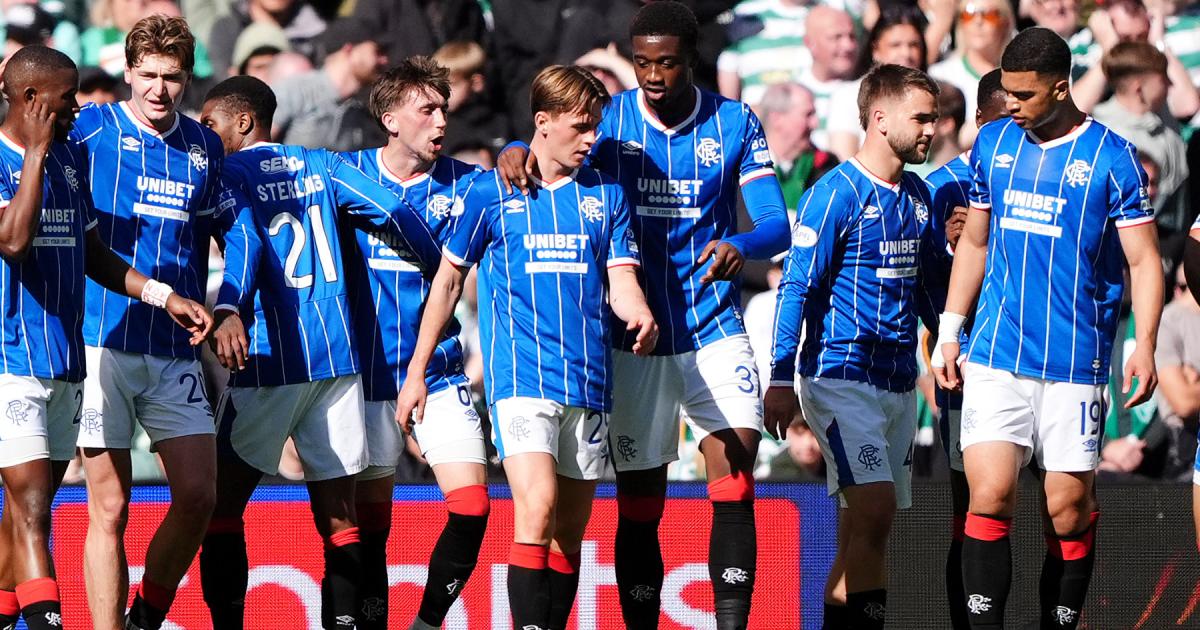
A strong autumn, a derby win and a former Manchester United scout’s warning have put Rangers’ right-back on the radar of English clubs
A few weeks ago, a conversation about Dujon Sterling’s future at Rangers would have centred on whether he could stay fit. Now it centres on whether Rangers can keep him.
On 28 September, former Manchester United chief scout Mick Brown told Football Insider that Rangers are at risk of losing the 26-year-old as clubs in England take note of his form. The report said a number of Premier League and leading Championship clubs are believed to have tracked him since his move to Ibrox in 2023, and that they are now impressed. Brown added that the interest could lead to a move if a big-money offer arrives.
It is the kind of story that appears often in the weeks before a transfer window, and it deserves a measure of caution. But it also reflects something real: a player who spent years on the margins of English football is now being talked about as one of the best right-backs in Scotland. This piece looks at what was said, who Sterling is, why the interest has arisen now, and how Rangers might respond.
Brown’s comments were measured, and they are worth reading carefully because the headline is stronger than the substance.
His central argument was a general one. When a player performs at a high level for either Rangers or Celtic, he said, it is going to attract attention from Premier League clubs. If Sterling keeps playing well, there could be interest from the Premier League or the Championship. And if that happens, Rangers would be at risk of losing him, because a move to England is a big step up in terms of the strength of the league.
That final point cuts both ways. It means that a Premier League club would be taking a risk on a player whose best form has come in the Scottish Premiership, and that Sterling himself would have to weigh the attraction of the top division against the reality of a tougher competition. But it also describes the way the market works. Clubs in England regularly look at Scotland for value, and a defender who looks comfortable at Ibrox is a natural target.
It is also worth noting what the report did not say. It did not name the club said to be “plotting a move”, and it did not claim that any bid had been made. The wording in the headline, that Premier League clubs “plot” a move, is a flourish. What exists, according to the sources, is interest and monitoring, not a deal.
To understand why this matters, it helps to look at where Sterling has come from. Born in October 1999, he joined Chelsea’s academy as an eight-year-old and spent 15 years there. In all that time, he made just two senior appearances for the club, both as a substitute in cup competitions.
Instead, he built his career on loan. He played for Coventry City, where his first spell was a success and he made 40 appearances in League One. He went on to Blackpool, Wigan Athletic and Stoke City, and across those clubs he featured more than 100 times in first-team matches. His manager at Stoke, Alex Neil, described him as arguably one of the best one-on-one defenders he had seen.
By 2023, he had grown frustrated at the lack of opportunities at Stamford Bridge. He turned down a new deal at Chelsea, and Rangers, then managed by Michael Beale, signed him on a free transfer when his contract expired. Beale knew him from his own time in Chelsea’s academy and described him as a powerful and strong defender with fantastic attacking qualities. Sterling said at the time that he had not expected to make up his mind so quickly, but that the manager’s proposal was exactly what he felt he needed.
That background matters. Sterling’s career is the story of a player who was never given a proper chance at the highest level and who then found his feet elsewhere. It makes the current interest more intriguing: some of the clubs now watching him may be the type that would have overlooked him a few years ago.
Sterling’s first seasons at Ibrox were solid but interrupted. He became a regular under Philippe Clement, who praised his versatility after he performed well in central midfield during an injury crisis against Real Betis in a key Europa League fixture. He also won a trophy: Rangers beat Aberdeen 1-0 in the 2023-24 League Cup final, and Sterling was named man of the match.
In 2024, the club rewarded his progress with a new contract. Clement described him as a vital member of the squad who had shown his potential in several positions and was always ready for the team. That extension runs to May 2028, which means Rangers have him under contract for almost two more seasons
But fitness problems have been a feature of his time at the club. He made only 17 appearances in all competitions last season, a figure that is hard to reconcile with the idea of an undisputed first choice. That history is the main reason why any suitor, and any assessment of his value, has to be treated with care
This season has been different. Under Derek McInnes, Sterling has established himself at right-back and has made 11 appearances so far, impressing in the process. He was a key figure in the 1-0 win over Celtic before the international break, a result that completed back-to-back victories over their rivals.
Reports describe him as one of McInnes’ trusted players, someone the manager has leaned on from the start of the campaign. There is also growing talk that he could be the long-term successor to James Tavernier at right-back, a role that carries enormous weight at Ibrox. One report noted that his displays have strengthened his case for that role despite lacking one traditional attacking trait
That qualification is interesting. Tavernier has been renowned for his attacking output from right-back, and Sterling’s strengths are different. He is a robust, athletic defender who is good one-on-one, comfortable stepping into midfield and reliable in possession. That combination may not produce as many goals, but it can produce a more balanced team
It is also relevant that Sterling is playing under a manager who evidently values him. Players often thrive when they feel trusted, and the sight of Sterling performing with confidence is part of what has attracted attention.
The reporting suggests Rangers have not been caught off guard. According to Football Insider, the club is “very keen” to secure Sterling’s future with a new contract. The report said the centre-back, as it described him, is out of contract in the summer of 2028, but that Rangers hope to sit down and discuss an extension. The aim is to ward off interest before it intensifies.
A separate report said Rangers have every intention of talking to Sterling about a new deal before the end of the season. Sterling is not alone: Nicolas Raskin is among several first-team players whose contracts also run to 2028, which suggests the club is thinking carefully about its whole squad.
There is an important strategic point here. The report noted that, if Rangers cannot agree a new deal with Sterling, they would be forced to make a difficult decision, because next summer would be their final chance to cash in. In other words, with one year left on a contract, a player’s value drops sharply, because buyers can wait and negotiate with the player directly. That is the logic behind the push to extend now.
One analysis of the situation pointed out the risk of reading too much into a good spell. His contract already has plenty of time to run, so Rangers have room to negotiate without rushing into a huge commitment, and the board should make sure any new terms reflect a body of evidence rather than a few weeks of good form. That is a sensible caution, particularly given the injury history
Here, scepticism is healthy. Several factors suggest the “plot a move” language should be read as speculation rather than imminent action.
The injury record. Seventeen appearances last season is a red flag for any buying club. A Premier League side paying a meaningful fee would want confidence that the player can stay fit across a long campaign. Rangers supporters themselves have been debating this. Some argue that English clubs would look at the injury history and conclude that problems are likely to return.
The price. Reports describe him as a £1 million-rated player, though valuations of that kind are rough and can change quickly. A free-transfer signing from Chelsea who has become a key player could command a much higher fee if demand grows, but the figure will depend on the market.The level of the league. As Brown himself acknowledged, the step up from Scotland to England is large. A player who excels at Ibrox may struggle against stronger opposition, and clubs know this. They will want to see evidence that he can handle the pace and physicality.
The timing. The January window is months away, and a lot can happen before then. Interest is not the same as a bid, and a bid is not the same as a deal. Most rumored moves never happen.
The suitors. Because the unnamed club or clubs have not been identified, it is impossible to judge how serious the interest is. The Premier League and the Championship include a vast range of clubs with very different needs and budgets. None of this means Sterling will stay. It simply means the story, for now, is one of potential rather than certainty
The Sterling situation sits within a broader context. Rangers have long followed a strategy of buying young players with potential at a low price and selling them on for a much higher value after a few years. Calvin Bassey and Joe Aribo are the examples usually cited. When the club signed Sterling in 2023, commentators noted that he fitted the model neatly: a young player on a free transfer who could develop and eventually be sold.
That model is central to how the club operates. As other reporting this week has made clear, Rangers’ ability to generate transfer income is seen as a key factor in whether they can fund more ambitious signings. A sale of a player like Sterling, if the price is right, would be part of that cycle.
So the question is not simply whether Rangers can keep Sterling. It is whether they should, and at what price. If a Premier League club offers a substantial fee, the board will have to weigh the value of the money against the loss of an important player. If the club can instead tie him down to a long contract at an acceptable wage, they keep a valuable asset and strengthen their negotiating position.
The risk, as always, is getting the timing wrong. Sell too early, and the club loses a player at his peak. Wait too long, and the value may evaporate through injury or a decline in form.
It is easy to forget that the player himself has a say. Sterling’s history is one of seeking opportunity. He left Chelsea because he was not playing, and he chose Rangers because he believed in the manager’s plan and wanted a permanent home. He told the club at the time that he felt the move was the right one for him.
That suggests someone motivated by playing time and trust. At present, he has both. McInnes clearly values him, he is a regular in the side and he is playing in big matches against Celtic. For a player who spent years on the periphery, those things matter.
On the other hand, ambition is natural. A defender who started at Chelsea and has spent his career moving between English clubs may well want to prove himself at the highest level. If a Premier League club makes a serious approach, he will have to decide whether the move is worth the risk of losing his place.
The new-contract talks will also reveal a great deal. A player who is committed to a club is usually willing to sign a longer deal. One who is keeping his options open may hold out. Which of those paths Sterling takes will say much about his intentions.
Rangers fans are divided in the way supporters often are on these questions. Some take the view that Sterling is the best full-back in the league when fit and should be kept at almost any cost. Others take a more commercial line: if he stays healthy, he is a long-term starter, but if the injuries return, the club would be foolish not to listen to offers while his value is high
Both views have merit. The debate encapsulates the tension at the heart of the situation. A player who is available and performing is hugely valuable. A player who is frequently injured is a risk. The truth, as ever, probably lies somewhere in between.
There is also the emotional dimension. Sterling has been through a lot at the club, including injury setbacks and the pressure of a rebuilding period. His revival under McInnes is a story fans enjoy, and many will be reluctant to see him leave just as he finds his best form.
The club has several routes, and they are not mutually exclusive.
Extend and protect. Offering a longer, improved contract would reward his form and reduce the risk of losing him for little. The downside is the financial commitment, particularly given his injury record and the club’s wage structure.Extend with a release structure. Some contracts include clauses that fix a price at which the club will consider offers. That gives the player assurance and the club control, though such clauses can also limit the fee.
Sit tight With a contract to 2028, there is no urgency. Rangers could wait to see how the season unfolds and make a decision in the summer, accepting that the leverage will gradually shift.
Sell high. If a substantial offer arrives, the club could cash in. This would provide funds for reinvestment and fit the long-standing model, but it would remove a key player from a team that is performing well.
The right choice depends on factors that are not yet known: the size of any offer, the health of the player and the club’s priorities
Several developments will shape how this unfolds.
Dujon Sterling’s story is one of persistence. A player who spent 15 years at Chelsea without making a real impact, who built his reputation on loan, and who chose Rangers to find a permanent home, is now being discussed as a target for clubs in England. That is a testament to his development and to the faith McInnes and his predecessors have placed in him.
Mick Brown’s warning that Rangers are at risk of losing him is a reasonable observation, but it is not a report of a bid. What exists is interest, a strong season so far and a club that is clearly aware of the danger. Rangers’ reported plan to open contract talks is the sensible response, and it reflects the reality that the best time to secure a valuable player is before his price rises.
The sticking points are fitness and money. If Sterling stays healthy and continues to perform, he will be a coveted player, and keeping him will require commitment from the club. If the injuries return, the picture will change quickly. For now, Rangers have a defender in form, a contract that runs to 2028 and a chance to build around him. Whether they can turn that into lasting security, or whether a Premier League club tempts him away, will be one of the more interesting stories to follow in the coming month








