Exposed’ – Pep Guardiola Torn Apart For Playing ‘Embarrassing’ Duds vs Real Madrid

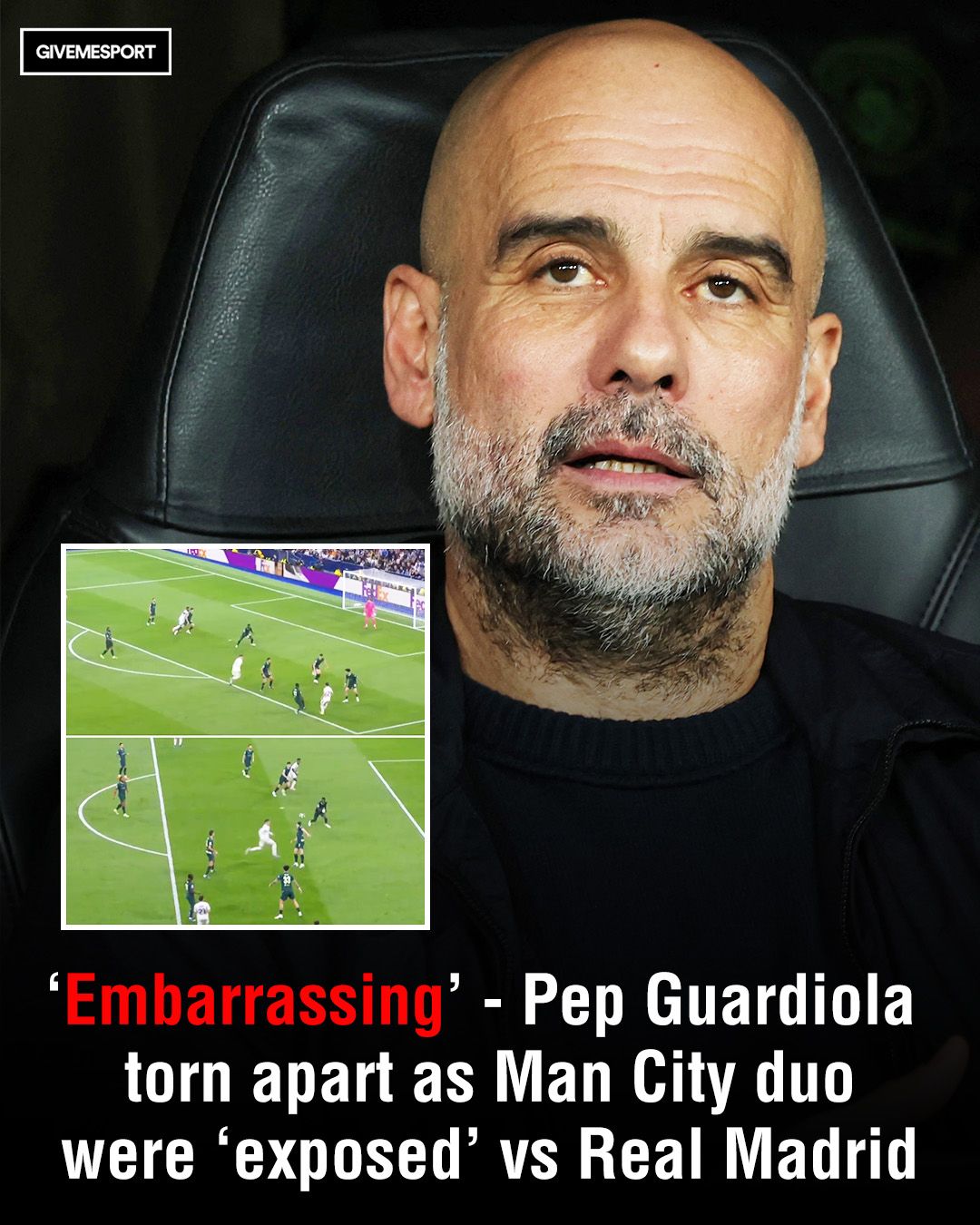
Pep Guardiola has come under intense criticism following Manchester City’s heavy defeat to Real Madrid, with many questioning his decision-making after a night where inexperience appeared to be brutally exposed on one of football’s biggest stages.
City arrived at the Santiago Bernabéu with a sense of cautious confidence. Despite a season that has not always matched their usual high standards, there was belief within the squad that they could exploit vulnerabilities in the Madrid setup. The Spanish giants had been dealing with their own internal issues, including a managerial shake-up that saw Álvaro Arbeloa take interim charge following the departure of Xabi Alonso. Reports of dressing room tensions and fragile egos had created an impression that this might be a Real Madrid side there for the taking.
However, what unfolded on the pitch told a completely different story. Instead of exposing Madrid’s weaknesses, Manchester City found themselves overwhelmed by a ruthless and clinical performance from their opponents. The game quickly slipped away from Guardiola’s side, with Federico Valverde delivering a devastating first-half display that included a hat-trick, effectively putting the tie beyond City’s control before the break.
It was a shocking result, not just because of the scoreline, but because of how it happened. City, a team renowned for control, composure, and tactical discipline, looked disjointed, vulnerable, and at times completely out of their depth. For many observers, the defeat highlighted deeper issues within the squad, particularly as the club continues to navigate what Guardiola himself has described as a transitional period.
Throughout the 2025/26 season, Guardiola has repeatedly emphasized that his team is evolving. Several key players are either aging, adapting to new roles, or being phased out as the club looks toward the future. To accelerate this process, City invested heavily in the transfer market, bringing in new faces who were expected to make an immediate impact. Among those arrivals were Marc Guéhi and Antoine Semenyo, two players signed in the January transfer window with the hope of strengthening the squad for the decisive stages of the campaign.
On paper, the signings made sense. Guéhi, a composed and intelligent defender, had impressed in the Premier League, while Semenyo brought pace, power, and attacking versatility. However, their introduction into the team came at a crucial moment, and their lack of experience at the highest level of European football quickly became a talking point.
The decision to start both players in such a high-pressure environment as the Bernabéu raised eyebrows even before kickoff. The UEFA Champions League is known for its intensity, and the knockout stages demand not only technical quality but also mental strength and experience. Throwing relatively inexperienced players into that environment, especially against a club with the history and pedigree of Real Madrid, was always going to be a risk.
As the match progressed, that risk appeared to backfire. Marc Guéhi, in particular, endured a difficult evening. Tasked with dealing with Madrid’s dynamic attacking play, he struggled to assert himself in duels and looked uncomfortable under pressure. Statistics from the game painted a worrying picture, as he won only a small fraction of his ground duels and was repeatedly bypassed by opposing attackers. At times, he appeared uncertain in his positioning, reacting rather than anticipating, which is often a sign of a player still adjusting to the demands of elite-level competition.
Similarly, Antoine Semenyo found it difficult to make an impact. Known for his ability to drive forward and influence games in domestic competition, he was largely ineffective against Madrid. His involvement in attacking play was limited, and he struggled to establish a connection with teammates, including Erling Haaland, who was left isolated for long periods. For a player expected to provide energy and creativity, it was a frustrating performance.
While criticism of the players themselves was inevitable, much of the backlash was directed at Pep Guardiola. Fans and pundits questioned whether it was the right decision to trust two relatively inexperienced players in such a crucial match. Some argued that City should have relied on more established figures, particularly in a competition where experience often proves decisive.
Social media reactions were particularly harsh. Many supporters expressed disbelief at the lineup, suggesting that the decision to hand Champions League debuts at the Bernabéu to players still adapting to the club was a major miscalculation. Comments ranged from disappointment to outright anger, with some even calling into question Guardiola’s judgment and long-term strategy.
The criticism also touched on the club’s transfer policy. Over the past year, Manchester City have spent heavily, investing hundreds of millions in new players. The expectation that comes with such spending is immediate improvement, especially in key competitions like the Champions League. When performances fall short, questions are inevitably asked about whether the right players have been recruited and whether they are being used effectively.
In this case, the focus was not just on the signings themselves, but on how quickly they were being integrated into high-stakes matches. Transition periods are a natural part of football, but managing that transition requires careful balance. Introducing new players gradually, allowing them to adapt before exposing them to the highest level, is often seen as the safer approach.
Guardiola, however, has never been one to shy away from bold decisions. Throughout his career, he has shown a willingness to trust players and take risks, often with great success. But on this occasion, the gamble did not pay off, and the consequences were clear for all to see.
The defeat also raised broader questions about City’s current trajectory. Are they in the middle of a necessary rebuild, or are there deeper issues that need to be addressed? Is the squad lacking experience, balance, or leadership in key moments? These are questions that will likely continue to be debated as the season progresses.
For the players involved, the experience, though painful, could prove valuable in the long run. Matches like this can be harsh lessons, but they also provide an opportunity for growth. Learning how to cope with pressure, adapt to different styles of play, and recover from setbacks are all part of developing into top-level professionals.
For Marc Guéhi and Antoine Semenyo, this could be a defining moment in their careers. How they respond in future matches will be crucial in determining whether they can establish themselves as key players for Manchester City.
As for Pep Guardiola, he will undoubtedly reflect on the decisions made and the lessons learned from this defeat. One of his greatest strengths as a manager has always been his ability to adapt, evolve, and find solutions. Whether that means adjusting his approach, rotating his squad differently, or placing more trust in experienced players remains to be seen.
What is certain is that expectations at Manchester City remain incredibly high. Success is not just desired—it is expected. Defeats like this are not easily accepted, especially in a competition as prestigious as the Champions League.
In the end, this was more than just a bad night. It was a reminder of the fine margins at the highest level of football, where decisions, experience, and execution all play a crucial role. For City, it is a setback that raises important questions. For Guardiola, it is a challenge to respond and prove once again why he is considered one of the best managers in the world.
And for the fans, it is a moment that will not be forgotten anytime soon, as they look ahead and hope for a stronger, more composed response in the matches to come.