Following Rodri’s complaints about fixture congestion, Pep Guardiola has told the Manchester City midfielder to adapt or move to France or Portugal…

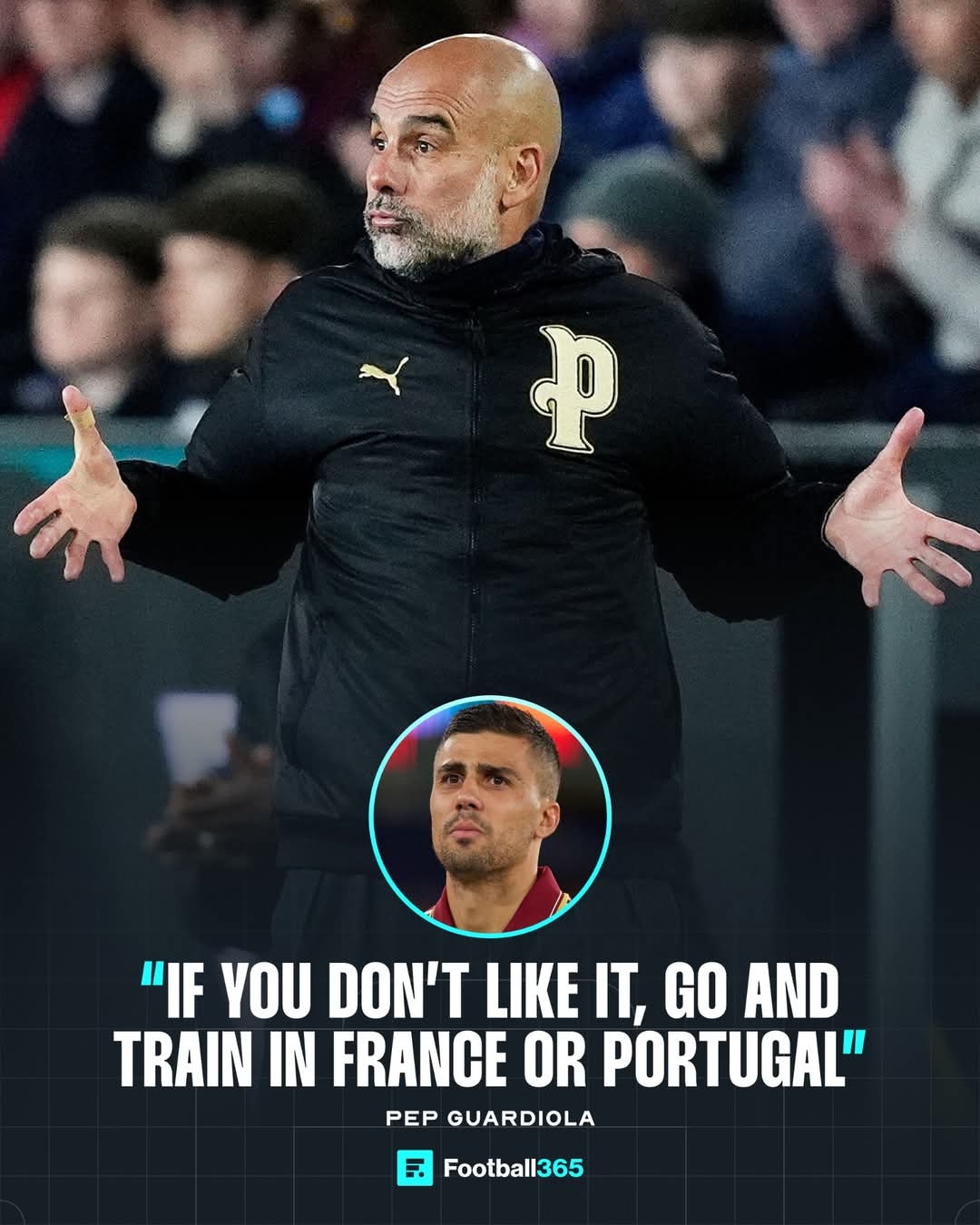
The story started with a feeling that many players in modern football now share, a feeling of being pushed to the limit, a feeling that the game they love is slowly turning into something too demanding, too heavy, too exhausting for the human body and mind. And at the center of this conversation was Rodri, the calm, intelligent midfielder who has become one of the most important players for Manchester City under Pep Guardiola.
Rodri is not the kind of player who speaks just to make noise. He is known for his calm nature, his deep thinking, and his understanding of the game beyond just running and passing. So when he spoke about fixture congestion, people listened. He talked about how the football calendar has become too packed, how players are being asked to play too many matches with very little rest, and how this is not sustainable for their health or performance.
In simple terms, Rodri was saying something many players feel but are sometimes afraid to say openly. The number of competitions has increased. Domestic leagues are demanding. Cup competitions add more pressure. European competitions bring travel and intensity. And then there are international games. It feels like football never stops.
He spoke about fatigue, about how players are constantly tired, about how injuries are becoming more common. He even hinted that players might have to take serious action in the future if things do not change. That statement alone created a lot of discussion in the football world. Fans, pundits, and former players all started talking about it.
But then came the response from Pep Guardiola, a man who is known for his honesty, his intelligence, and sometimes his tough love approach. Guardiola did not fully agree with Rodri’s complaints. Instead, he gave a response that shocked many people.
He basically told Rodri something very direct: adapt to the situation, or consider playing in leagues like France or Portugal where the schedule might be less intense.
That statement immediately caught attention. It sounded harsh. It sounded like a warning. And it also showed how Guardiola sees modern football.
For Guardiola, football at the highest level is demanding. It is intense. It requires sacrifice. He has always believed that to be the best, players must be ready to handle pressure, both physically and mentally. In his mind, this is part of the job.
He did not dismiss Rodri completely, but he made it clear that complaining will not change the reality quickly. The system is already in place. The competitions are growing. The business of football is expanding. And players have to deal with it.
This created a strong contrast between player concerns and managerial expectations. On one side, you have Rodri, representing players who feel overworked. On the other side, you have Guardiola, representing the demands of elite football.
It is important to understand the background here. Rodri is not just any player. He is one of the most important players in Guardiola’s system. He controls the midfield, protects the defense, and starts attacks. Without him, Manchester City often struggles.
He played a huge role in their success, including winning major trophies. His importance means he plays a lot of matches. And because he plays so often, he feels the effects of this congested schedule more than many others.
So when he speaks about fatigue, it comes from real experience.
Guardiola, however, sees the bigger picture. He understands the pressures from clubs, leagues, broadcasters, and fans. Football is no longer just a sport. It is a global business. Matches bring money. More matches mean more revenue. And that revenue supports clubs, players, and the entire football system.
In Guardiola’s mind, this is the reality players must accept.
But his comment about moving to France or Portugal added another layer to the conversation. It suggested that if a player cannot handle the intensity of the Premier League, then maybe they should consider playing in a less demanding league.
This was not just about Rodri. It was a message to all players.
The Premier League is known as one of the toughest leagues in the world. The pace is high. The physical demands are strong. The competition is fierce. Every match matters. There are no easy games.
Compared to that, leagues in countries like France or Portugal are often seen as less intense, although they still have quality and competitiveness.
Guardiola’s comment was not meant to disrespect those leagues, but rather to highlight the difference in demands.
Still, many people felt the comment was too strong. Some believed Guardiola should support his player more. Others felt he was simply being honest.
This situation also brings attention to a bigger issue in football today. The debate about fixture congestion is not new. Many players, including top stars, have spoken about it.
There have been concerns about player burnout, injuries, and mental health. Some players feel they do not get enough time to recover. Others feel they cannot perform at their best because they are always tired.
At the same time, football continues to grow. New tournaments are introduced. Existing competitions expand. The calendar becomes more crowded.
It is a difficult balance.
Fans want more football. Clubs want more revenue. Broadcasters want more content. But players are human. They have limits.
Rodri’s comments brought this issue back into focus. Guardiola’s response added fuel to the discussion.
Inside Manchester City, this situation also raises questions about how the club manages its players. Guardiola is known for rotating his squad, but even with rotation, key players like Rodri still play a lot.
This is because they are so important to the team’s success.
Guardiola trusts Rodri. He relies on him. And in big matches, he wants his best players on the pitch.
So even if there is rotation, players like Rodri cannot avoid playing many games.
This creates a difficult situation. The manager needs the player. The player feels the pressure. And the schedule does not change.
From a tactical point of view, Rodri’s role is very demanding. He is involved in almost every phase of the game. He defends, he passes, he controls tempo, he reads the game. This requires not just physical energy, but also mental focus.
Playing this role in many matches without enough rest can be very challenging.
That is why his comments about fixture congestion are important.
They are not just complaints. They are warnings.
Warnings about the future of football. Warnings about player health. Warnings about the limits of human performance.
Guardiola’s response, however, shows another side. It shows the reality of elite football. It shows that at the top level, there is little room for excuses. It shows that players are expected to adapt.
This difference in views is not necessarily a conflict. It is a reflection of the complex world of modern football.
Both Rodri and Guardiola are right in their own ways.
Rodri is right to talk about player welfare. Guardiola is right to highlight the demands of the game.
The challenge is finding a balance.
In the future, football authorities may need to look at the calendar again. They may need to consider reducing the number of matches or giving players more rest.
But for now, the situation remains the same.
Players like Rodri must continue to perform at a high level, even under pressure.
Managers like Guardiola must continue to push their teams to succeed.
And fans will continue to watch, discuss, and debate.
This story is not just about one player and one manager. It is about the future of football.
It is about how the game evolves.
It is about how players and managers deal with new challenges.
And it is about how the balance between business and sport is managed.
Rodri’s voice has started an important conversation. Guardiola’s response has made it even more interesting.
What happens next will depend on many factors.
But one thing is clear.
Football is changing.
And everyone involved must find a way to adapt.