Insider: Rangers told to offer new contract to Ibrox player now worth ‘£20m’

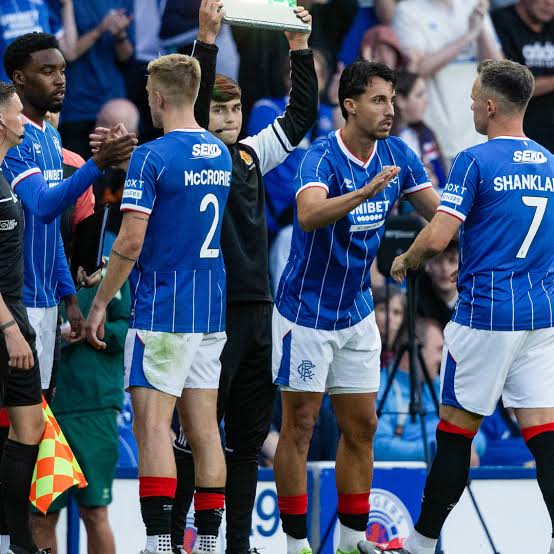
Rangers should already be working on a new contract for Olwethu Makhanya, despite the centre-back having only joined the club at the end of July. That’s the view of former Aberdeen chief executive Keith Wyness, who put the case forward in comments made exclusively to Football Insider. Wyness argues the club needs to take what he calls a “gamble,” extending Makhanya’s existing four-year deal as far as it can be pushed, even this early into his Ibrox career.
The scale of the ambition behind that suggestion is significant. Wyness was clear that Rangers can’t get away from the reality that they will eventually have to sell Makhanya, the player having already established himself as a rapid success story at the club. But he believes the defender is heading towards a valuation in the region of £20 million, a huge jump from the fee Rangers paid to sign him only a couple of months earlier. Reports on that original deal put the fee at £3 million, secured from MLS side Philadelphia Union, though a separate American outlet at the time of the signing quoted a fee of up to $4.5 million, a modest discrepancy likely down to how add-ons and different currencies were reported around the deal. Either way, the jump being floated now, to £20 million, is on a completely different scale, and it captures just how quickly Makhanya’s stock has risen since he arrived in Scotland.
To understand why a respected football finance figure would make that case so early, it helps to look at how completely Makhanya has embedded himself in the side. He has played every single minute of Scottish Premiership action since joining, having signed in time to be involved from the club’s opening league game of the season. That is an extraordinary run of involvement for a player who arrived from a different continent and a different style of football only weeks before the campaign began, especially given he’d also just been through a taxing World Cup with South Africa that summer. Managers are usually cautious about throwing a brand-new signing straight into every single league minute, particularly a defender still adjusting to a new country, a new league and a new dressing room. That Makhanya has started and finished, or been left on for the full ninety minutes, in every Premiership fixture so far says as much about the trust McInnes has placed in him as it does about the player’s own application.
This isn’t the first time Makhanya’s rapid rise at Ibrox has been the subject of glowing assessment either. His path to Rangers ran through Stellenbosch in South Africa, where he was nominated for the country’s Young Footballer of the Year and picked up the Most Promising Player award at the Nedbank Cup, before a move to Philadelphia Union in MLS, where he became the club’s first Under-22 Initiative signing. He made over forty appearances in MLS, helped Philadelphia win the Supporters’ Shield, and earned a place in South Africa’s World Cup squad that summer, even though he didn’t feature in any of the country’s four matches at the tournament, having been repeatedly overlooked by then-national coach Hugo Broos across his career despite performing well at club level. His move to Rangers, confirmed on the eve of the club’s league opener against Dundee United, was pitched at the time by head coach Derek McInnes as a signing with real upside, McInnes describing him as possessing a lot of athleticism and good potential while acknowledging the adjustment involved in stepping up from MLS.
Since then, Makhanya has delivered on that early promise in fairly emphatic fashion. He was named Man of the Match in a Europa Conference League play-off win over Czech side Jablonec, with McInnes praising how well he’d integrated alongside the club’s other young recruits, while adding that he still believed there was significant room for the defender to improve further. That’s a notable thing for a manager to say about a player already earning man-of-the-match honours only weeks into his time at the club, and it lines up closely with the ambition behind Wyness’ new comments. If McInnes genuinely believes Makhanya’s ceiling is still some way above his current level, then Wyness’ argument, that Rangers should lock him down on an extended deal before his value rises even further, starts to look less like a bold gamble and more like straightforward business sense.
Wyness’ reasoning, as reported, centres on value protection rather than simply keeping hold of a good player for football reasons. His argument, that an “extended contract” would help Rangers secure a fair valuation for their asset rather than risk losing him prematurely, reflects a fairly standard piece of football finance logic. A player entering the crucial early years of a long contract, performing above expectations, is in exactly the position where a club has the most leverage to either extend terms on favourable financial footing or set themselves up to command a serious fee if a sale eventually becomes necessary. Wait too long, and a release clause, a shortening contract, or interest from bigger clubs abroad can all erode that leverage. Wyness’ argument is essentially that Rangers have a limited window in which to lock in the terms of any eventual sale, and that window is now, while Makhanya is still adjusting to life in Scotland and before his form invites the kind of interest that would push his valuation even higher and his patience for a lower release fee even lower.
It’s worth being clear about where this claim is coming from and how it should be read. This isn’t a report that Rangers have opened contract talks, nor is it confirmation that a £20 million valuation has been agreed or even formally floated by the club itself. It is the stated opinion of one experienced football executive, delivered on Football Insider’s Inside Track podcast and relayed through the outlet’s reporting. Wyness has a track record in football administration, having previously served as chief executive at Aberdeen, which gives his views some weight on football finance questions specifically, but that background doesn’t make the £20 million figure anything more than an educated projection at this stage. Fans reading the headline should treat it the same way as previous speculative pieces covered in this conversation: as informed commentary on a player’s trajectory, not as a confirmed club position.
The same Football Insider report that carried Wyness’ comments on Makhanya also touched on a very different situation involving another player out of favour at Ibrox, and it’s worth setting the two stories side by side because they illustrate the range of situations a modern squad has to manage simultaneously. The outlet reported that Rangers will “evaluate” the future of midfielder Connor Barron in the lead-up to the January transfer window. Barron, 24, was loaned out to English Championship side Middlesbrough over the summer but has yet to make a single appearance for his new club, a striking contrast to the immediate impact Makhanya has made in the opposite direction. Sources cited by the outlet say Rangers are prepared to recall Barron if his lack of game-time at Middlesbrough doesn’t improve, with a view to loaning him out elsewhere for the second half of the season instead. The former Aberdeen midfielder remains under contract at Ibrox until the summer of 2028, but it’s described as likely to be difficult for him to force his way back into Derek McInnes’ plans at Rangers itself.
Put together, those two stories, Makhanya’s rise and Barron’s struggles, tell you something about the churn that goes on constantly beneath the surface of a Scottish Premiership club’s transfer strategy. While one young defender is being talked up as a future £20 million asset worthy of an early contract extension, another academy product of a rival Scottish club, already contracted to Rangers for years to come, is struggling even to get minutes at a loan club in a lower English division. Both situations require decisions from the same recruitment and football operations staff, working out which players to build around and lock down, and which to actively manage away from the first-team picture, potentially through a second loan move or eventually a permanent departure.
This is also not the first time a Rangers player’s valuation has been the subject of a specific £20 million figure this year, and it’s useful context for judging how these numbers tend to hold up. Earlier in 2026, well before Makhanya had even arrived at the club, reports circulated that Rangers were hoping to command more than £20 million for midfielder Nicolas Raskin, with the figure originating from former Rangers midfielder Charlie Adam and repeated across multiple Football Insider pieces through the spring and early summer. At the time, Raskin was flying high, having been central to the club’s push under then-manager Danny Rohl, and the logic was that a strong World Cup campaign with Belgium that summer would push interest, and his price, even higher. That story didn’t unfold as smoothly as the £20 million framing suggested. Coverage from after his underwhelming World Cup showing, in which he was substituted after just 58 minutes in a group game against Iran, questioned whether Rangers should lower their asking price rather than hold out. And as covered earlier in this conversation, Raskin ultimately stayed at Ibrox that summer entirely, with a deal reportedly close, believed to be with Besiktas, falling through on the very last day of the window, leaving him admitting he had been “mentally ready to leave” but unsure exactly why the move collapsed.
The Raskin story is a useful cautionary comparison for how to read the new Makhanya figure. A £20 million valuation attached to a player’s name by pundits or outlets doesn’t automatically translate into an actual sale at that price, or even a confirmed asking price from the club itself. Circumstances change quickly in football: form dips, injuries strike, international tournaments go badly, transfer windows close without an expected bid materialising. Raskin went from being talked about as a £20 million-plus certainty to still being at the club months later, his exit having fallen apart for reasons even he says he doesn’t fully understand. If Makhanya’s rise continues at its current pace, a genuine £20 million valuation by next summer isn’t at all far-fetched given the trajectory he’s on. But the Raskin saga is a reminder that headline transfer figures floated by pundits and outlets in September or October don’t always describe how the following summer’s transfer window actually plays out.
There’s also a broader theme connecting Makhanya’s story to others covered already in this thread. Ryan Naderi went from looking like a player Rangers might move on to becoming, in one pundit’s words, “absolutely dynamite,” largely on the back of performances that changed McInnes’ calculations about his attack. Makhanya’s story follows a similar shape, minus the uncertainty over his long-term place: a player who arrived with a reasonable but unspectacular reputation, built almost entirely on MLS form and an unused World Cup squad place, has gone on to make himself first-choice and is now being talked about in terms of a valuation nearly seven times his transfer fee. Both cases point to the same pattern running through this Rangers season under Derek McInnes: several new arrivals, signed for modest fees relative to the club’s needs, have outperformed expectations quickly enough to reshape how they’re valued and discussed within a matter of months rather than years.
L
What Rangers actually do with that opportunity is a separate question from whether Wyness is right to raise it. Handing a new contract to a player only a couple of months into a four-year deal is not without risk. It would represent a vote of confidence that could backfire if form dips, and it would also mean committing to improved terms, presumably including a higher salary, for a player whose transfer value the club might otherwise have preferred to bank rather than protect through wages. But Wyness’ argument is explicitly built around the idea that this is a gamble worth taking, precisely because waiting risks losing far more value than an early contract extension would cost. If Makhanya’s form and the interest around him continue to build at their current rate, doing nothing carries its own risk: watching a player signed for around £3 million develop into a target for clubs with far deeper pockets than Rangers, with the Ibrox club holding a weakening hand in any eventual negotiation the longer his existing deal runs down without an extension attached.
For now, this remains speculation from an informed outside voice rather than confirmed club business. There has been no indication from Rangers themselves that contract talks with Makhanya are underway, and no independent verification yet of the £20 million figure beyond Wyness’ own estimate. What is verifiable is the underlying trend the claim is built on: a defender signed relatively cheaply from MLS in the summer has not missed a single minute of league action since arriving, has already picked up a man-of-the-match award on the European stage, and has earned public praise from his own manager suggesting there’s still more to come. Whether Rangers move to extend his contract in the way Wyness recommends, and whether a £20 million valuation ever becomes a live transfer story rather than a pundit’s projection, are both questions that only the coming months, and eventually the following transfer window, will answer.