My transfer to Rangers collapsed after I failed medical, now I’m playing in La Liga

🇲🇦 “MY TRANSFER TO RANGERS COLLAPSED AFTER I FAILED MEDICAL, NOW I’M PLAYING IN LA LIGA” 🔵
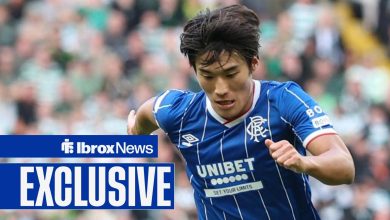
Few transfer stories capture the sheer unpredictability of deadline week quite like the one Couhaib Driouech has just lived through, and the winger himself has now spoken candidly about a saga that took him from the stands at Ibrox to the treatment table and, ultimately, all the way to Spain. A little over a fortnight ago, the Moroccan under-23 international appeared to be on the brink of completing a move to Rangers, with the two clubs having struck an agreement worth around seven million pounds and Driouech himself pictured taking in a European fixture at Ibrox as part of the final stages of a deal that seemed all but done. Instead, within twenty-four hours, the whole thing unravelled, and Driouech has now confirmed exactly why, admitting for the first time in public that a failed medical was the reason his switch to Glasgow never happened.
Driouech’s account, given at his official unveiling as a Celta Vigo player following his subsequent seven-figure move to La Liga, is refreshingly straightforward. Rather than dressing the situation up or deflecting blame, the winger simply confirmed that he had travelled to Glasgow, taken in the club’s stadium and matchday atmosphere as a guest, and was fully expecting to complete his move to Rangers before the medical examination flagged a problem that ultimately ended the deal. He revealed he had picked up a minor tear that was still troubling him at the exact moment his Ibrox medical took place, and while he was quick to stress the injury was nothing serious, a setback of only a couple of weeks rather than anything long-term, it was evidently enough for Rangers’ medical staff to have concerns about his immediate availability. Driouech was clear that he is now fully recovered, describing himself as fit, strong and ready to play, and revealing his hopes of making his competitive Celta Vigo debut against Real Sociedad this coming Thursday.
To understand why the situation escalated the way it did, it is worth going back to how close Driouech genuinely came to becoming a Rangers player. Signing wingers had been high on Derek McInnes’s list of priorities as he worked through his first transfer window in charge at Ibrox, and Driouech, then on the books at PSV Eindhoven, emerged as one of the manager’s leading targets for that particular problem position. Personal terms were agreed between player and club, and Rangers reached an agreement with PSV on a fee in the region of seven million pounds, a significant outlay that reflected how highly McInnes and his recruitment staff rated the twenty-four-year-old’s ability to add pace, directness and end product from wide areas. Driouech’s visit to Ibrox, taking in a Rangers European tie from the stands as the move edged towards completion, was widely read at the time as one of the final formalities before an announcement, the sort of pre-signing stadium tour clubs routinely arrange for players in the final stages of a transfer. Within a day of that visit, though, everything changed, when the medical examination he underwent uncovered the issue that would ultimately sink the deal entirely.
The fallout from the collapsed transfer was immediate and, from PSV’s side of the negotiating table, distinctly frustrated. PSV technical director Earnest Stewart did not hold back in his assessment of how Rangers had handled the situation, revealing that Driouech had been left deeply upset by the decision to pull out of a move he had been genuinely excited about completing. Stewart’s central grievance centred on the gap between the two clubs’ medical assessments of the injury: where PSV’s own medical staff believed the winger would be back playing within a matter of weeks, Rangers’ internal assessment of his recovery timeline was, in Stewart’s telling, considerably longer, and that discrepancy in professional opinion proved decisive. Stewart also pointed out that Driouech had travelled to Scotland to sign a four-year contract, a substantial long-term commitment that made Rangers’ decision to walk away over what PSV considered a short-term fitness issue all the more painful for a player who had already begun mentally preparing for life north of the border. The winger, according to Stewart, was left in a state of uncertainty for around forty-eight hours before the move was formally called off, only to then have to return to Eindhoven and attempt to reintegrate into a PSV squad and coaching staff he had effectively already said his goodbyes to.
PSV head coach Peter Bosz was similarly candid about how blindsided the club felt by the collapse, having believed, in his own words, that everything between the two clubs had already been settled by the time Driouech underwent his medical examination in Glasgow. Bosz’s immediate response was pragmatic rather than bitter: the winger was withdrawn from PSV’s squad for their following league fixture against Excelsior as a precaution while the injury situation was assessed independently by the Dutch club’s own medical team, with Bosz confirming Driouech would return to first-team contention as soon as he was fit to do so. That timeline, as it turned out, moved quickly. Driouech was back in training with PSV within days of the transfer collapsing, a detail that only reinforced the Eindhoven club’s belief that Rangers’ assessment of the injury’s severity had been overly cautious, and it was that swift recovery which set the stage for the whirlwind second act of this transfer saga: a fresh suitor moving in almost immediately to take advantage of a situation Rangers had walked away from.
That suitor turned out to be Celta Vigo, who wasted little time reaching a verbal agreement with PSV over Driouech once word spread that the Ibrox deal had fallen through. The Spanish side, who are set to face Celtic in the Europa League league phase later this year, an intriguing subplot given the winger’s near-miss with Rangers, moved to agree a fee described as being in the region of five and a half million pounds, a reduced valuation compared with the sum Rangers had been willing to pay only weeks earlier, but one that reflected the leverage Celta held in negotiating for a player whose most recent transfer had just collapsed over medical concerns. There was reported interest from Major League Soccer clubs in the same window, giving Driouech a genuine choice of destinations once his Ibrox move fell through, but it was the pull of La Liga, and the chance to prove his fitness on one of European football’s bigger stages, that ultimately won out. The move was completed and confirmed, with Driouech formally unveiled as a Celta Vigo player and given the platform, at his very first press conference in Spanish football, to set the record straight on exactly what had happened at Ibrox.
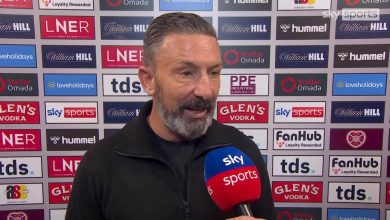
For Rangers and for Derek McInnes specifically, the collapse of the Driouech deal represents a frustrating footnote to what has otherwise been a busy and, by the manager’s own admission, largely successful summer transfer window in terms of incoming business. Signing a genuine width-and-pace winger had been identified as a clear priority for a Rangers side looking to freshen up its attacking options, and having a deal agreed at both club and player level, only for it to unravel at the medical stage, is precisely the kind of outcome that no amount of pre-transfer diligence can always guard against. Medical examinations exist for good reason: clubs are, in effect, committing significant transfer fees and multi-year wage packages to a player’s physical fitness and longevity, and any professional medical team faced with a discrepancy over an existing injury has little choice but to flag it, whatever the short-term disappointment that causes for the player, the selling club or their own manager’s transfer plans. Rangers’ medical staff clearly took the view that the risk attached to Driouech’s tear was greater than PSV’s own assessment suggested, and however painful that judgment proved for all parties in the moment, McInnes’s recruitment department will point to it as evidence of a thorough, risk-averse process working exactly as intended, even when the conclusion it reaches is an unwelcome one.
There is also a broader pattern worth noting here, because failed medicals derailing high-profile transfers are far from a new phenomenon in football, even if each individual case tends to generate its own wave of speculation and finger-pointing in the moment. Clubs across Europe have walked away from agreed deals after medical staff flagged concerns ranging from minor muscular issues to far more serious long-term conditions, and the process itself, typically involving a detailed review of medical history followed by a thorough physical examination covering everything from joints and muscles to blood pressure and vision, is designed precisely to catch exactly the kind of discrepancy that arose in Driouech’s case. What makes situations like this so difficult to referee from the outside is that two clubs’ medical departments can, in good faith, reach genuinely different conclusions about the same injury and the same recovery timeline, and when that happens, the buying club will always err on the side of caution given the size of the financial commitment being made. That is cold comfort for a player left in limbo for forty-eight hours between two countries, as Driouech was, but it is the reality of how modern transfers are underwritten, and it is a reality that has ended plenty of moves involving far bigger names and far bigger fees than this one down the years.
What stands out most in Driouech’s own account of the saga, though, is the complete absence of bitterness towards Rangers themselves. He did not use his unveiling at Celta Vigo to criticise the Ibrox medical team’s judgment or suggest the club had been overly cautious in walking away from the deal; instead, he simply laid out the sequence of events as he experienced them, acknowledged that he was carrying a minor issue at the time, and made clear that the injury is now firmly behind him. That measured tone will likely be appreciated inside Ibrox, where the last thing McInnes and his staff would want, having made a difficult medical-driven call on a significant transfer target, is a lingering public row over their handling of the situation. For Driouech himself, the focus has clearly and sensibly shifted entirely towards his new reality in Spanish football, and there was a note of genuine excitement in his suggestion that he could be available to make his Celta Vigo debut against Real Sociedad this Thursday, a fixture that would represent the first tangible on-pitch evidence that the injury concerns which derailed his Rangers move really have been resolved.
From a Rangers perspective, the episode leaves McInnes with a familiar late-summer headache: a wide attacking gap in the squad that Driouech had been earmarked to fill, and a shortened runway in which to identify and complete an alternative deal before the window shuts. McInnes had already been candid in the days following the Driouech collapse about the club continuing to work hard on incoming business, and Rangers supporters will hope that whatever contingency plans were quietly being explored in the background can now be accelerated, given how advanced the pursuit of Driouech had become before it fell apart. Losing out on a player who had already visited the stadium, taken in a matchday atmosphere and agreed personal terms is a peculiarly public kind of setback in the transfer market, one that generates exactly the sort of headlines that followed Driouech’s frank Celta Vigo unveiling this week, and it will sting rather more than a deal that quietly fails to progress past the earliest stages of negotiation. But football’s transfer landscape moves quickly, and Rangers’ priority now will simply be turning the page, learning whatever lessons can reasonably be drawn from a medical process that, however disappointing the immediate outcome, appears to have been followed thoroughly and in good faith by all involved.
Driouech, for his part, now finds himself in exactly the position he wanted to be in a few short weeks after the disappointment of Glasgow: settled at a new club, in a major European league, and closing in on his first appearance for his new side. Whatever regret lingers over how close he came to a different path at Ibrox, his own words suggest a player who has moved past the frustration of those forty-eight uncertain hours and is now firmly focused on the season ahead in Vigo. It is a reminder, as much as anything, of how thin the margins in professional football transfers really are, where a genuinely agreed deal worth seven figures can collapse entirely over a medical discrepancy of only a few weeks, and how quickly a player can find themselves rerouted from one of Scottish football’s biggest clubs to a starting role in one of the most competitive leagues on the continent instead.