Nico Raskin’s World Cup Statement: How Belgium’s Mockery of Trump Became the Real Story of a Seattle Rout

There are nights in football when the scoreline tells you everything you need to know, and there are nights when the number on the board is almost incidental to the story unfolding around it. Belgium’s 4-1 demolition of the United States in the Round of 16 at Lumen Field belonged firmly in the second category. By the time Romelu Lukaku wheeled away to complete the rout, the football itself had become a subplot in a much bigger drama — one that had dragged the White House, FIFA’s disciplinary machinery, and the credibility of the World Cup’s biggest host nation into a single, chaotic 48-hour news cycle. And somewhere in the middle of it all, wearing the shirt of Rangers Football Club, was Nicolas Raskin, grinning his way through a dressing-room celebration that Ibrox supporters will be replaying for years.
Footage has now emerged from inside the Belgium dressing room showing Raskin and his Red Devils teammates continuing the mockery of Donald Trump that had begun on the pitch moments after Lukaku’s fourth goal. It is a moment that captures, in miniature, everything that made this particular World Cup fixture feel different from the hundreds of knockout matches that have gone before it: politics bleeding into sport, a Rangers player at the centre of a genuinely global storyline, and a Belgian squad that decided the best response to a week of controversy was not silence, but theatre.
A Red Card That Refused to Stay Down
To understand why Belgium’s players felt they had a point to make, you have to go back to the previous Wednesday in Santa Clara, when Folarin Balogun was shown a straight red card during the USA’s Round of 32 win over Bosnia and Herzegovina. The American striker had gone down attempting to win the ball against defender Tarik Muharemovic, and slow-motion replays appeared to show him stepping on the Bosnian’s ankle. The referee’s decision was clear-cut under FIFA’s own rules: a red card carries an automatic one-match suspension, a principle that, as Belgium would later point out with some fury, had applied to every other sending-off at this tournament without exception.
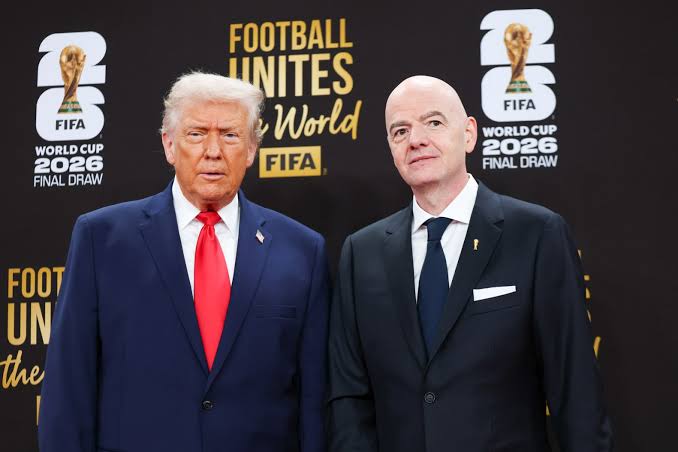
What happened next turned a routine disciplinary matter into a genuine controversy. Reports emerged, and were later confirmed by FIFA president <cite index=”3-1″>Gianni Infantino</cite>, that Donald Trump had personally telephoned the governing body’s leadership to ask for a review of Balogun’s suspension. <cite index=”4-1″>Trump would later tell reporters directly that he had asked for the review because he did not believe the challenge constituted a foul</cite>, adding a characteristically blunt admission that <cite index=”4-1″>he had not previously understood what a red card even signified</cite>. Within days, FIFA’s disciplinary committee announced that Balogun’s ban would be suspended for a probationary period rather than enforced immediately, citing Article 27 of its own disciplinary code — a provision that allows judicial bodies discretion over how sanctions are implemented, but one that had never before been used in this manner in the sixty-plus year history of the tournament.
The Royal Belgian Football Association did not take the decision quietly. In a strongly worded statement, the federation said it was astonished by the ruling and argued the decision directly contradicted the tournament’s own competition regulations, which state plainly that any player sent off must automatically miss their side’s next match. Belgium’s head coach used his pre-match press conference to make his displeasure known in equally pointed terms, comparing the timing of the announcement to an April Fools’ joke landing more than three months late. UEFA went further still, describing FIFA’s move as crossing a line that should never have been crossed. Belgium’s attempt to formally challenge the reversal was rejected by FIFA on the grounds that the federation was not a recognised party to the original proceedings, leaving Brussels with no route back except revenge on the pitch.
That is precisely what Belgium delivered. Balogun, restored to the USA lineup despite the outcry, played the full ninety minutes but could not prevent his side’s elimination as co-hosts of the tournament they had been so desperate to progress in. Christian Pulisic and the American attack were nullified by a Belgian side that looked sharper, hungrier and considerably more motivated than a team that had simply turned up to win a football match. By full time, the story had shifted decisively away from the contested red card and onto the manner of Belgium’s response.
The Dance, the Dugout, and the Dressing Room
The moment that will define this fixture arrived after Lukaku’s fourth goal sealed the result beyond doubt. As Belgium’s players celebrated in front of their own bench, several were filmed performing an unmistakable impression of the dance Trump himself has made a recurring feature of his public appearances — arms pumping, hips swaying, the same jerky, theatrical routine that has become instantly recognisable across American political and popular culture. It was cutting, deliberate, and unmissable, a pointed piece of physical satire delivered by a group of players who had spent the previous 48 hours listening to a foreign head of state weigh in on a football decision that directly affected their World Cup campaign.
What has now surfaced is proof that the mockery did not end when the players left the pitch. Footage shared on social media, captioned in French to note that the players “repeated it in the dressing room,” shows the celebration continuing behind closed doors, away from the cameras and clearly unprompted by any desire to perform for a wider audience. It is a small but telling detail. Public celebrations in front of broadcast cameras can always be dismissed as theatre, a moment engineered for effect. A private repeat performance, filmed candidly inside the sanctity of the dressing room, suggests something closer to genuine sentiment among the Belgian squad — a collective release of frustration that had been building since the red card review was first announced.
Raskin, prominent among those seen taking part, was not merely a bystander to Belgium’s run to the last sixteen. The Rangers midfielder started the match against the USA and played the vast majority of it, contributing an assist as Belgium tore through an American side that had been widely expected to offer sterner resistance on home soil. It continued a pattern of involvement that has seen the 25-year-old feature heavily throughout the tournament, taking his total appearances for the national team at these finals to eighteen caps overall — a mixture of starts and substitute outings that underline just how central he has become to Rudi Garcia’s plans in midfield.
Raskin’s World Cup Has Become a Showcase, Not a Distraction
For Rangers, there is an obvious tension in watching one of their prize midfield assets thrive on the biggest stage in world football while simultaneously knowing that every eye-catching performance edges him closer to the exit door. Raskin’s stock had already been rising steadily before the tournament, with a host of clubs from three different European leagues showing concrete interest in prising him away from Ibrox this summer. Hull City, freshly promoted to the Premier League, have been consistently linked with an ambitious swoop, while Real Betis have opened direct talks after securing Champions League qualification through their fifth-placed finish in La Liga. In Italy, Bologna have been the most persistent suitors, with reports suggesting the Serie A club see Raskin as a natural fit for their midfield and a potential makeweight in a parallel negotiation over their own captain, Lewis Ferguson.
None of that interest has cooled during the tournament — if anything, it has intensified. Raskin’s involvement in Belgium’s dramatic run, including a substitute appearance in a stirring comeback win over Senegal in the Round of 32 where he was credited with helping to break up an on-field flashpoint between teammates Youri Tielemans and Leandro Trossard, has only added to the sense that his value is climbing in real time. Rangers had already been reported to be holding out for a fee in the region of £20 million, with suggestions in recent days that the club may push that figure as high as £25 million given the level of competition among suitors. Sources close to the situation have described Rangers as actively hoping to engineer a bidding war between Hull, Betis and the Italian clubs circling him, a negotiating posture that becomes considerably easier to justify when the player in question is delivering assists and starring appearances against the co-hosts of the World Cup on a Monday night in Seattle.
There is a broader financial logic at play here that goes well beyond simple vanity or reputation. Derek McInnes inherited a Rangers squad in transition after replacing Danny Rohl, and has moved quickly to reshape it in his own image. Lawrence Shankland arrived from Hearts to spearhead the attack, Ross McCrorie returned to provide defensive steel and versatility, Ben Godfrey has joined on loan to add further defensive options, Ivor Pandur has come in as a goalkeeping addition, and Dan Neil has already been introduced to freshen up the midfield engine room. James Tavernier and Jack Butland, two long-serving fixtures of the previous era, have both departed, while academy graduate Youssef Chermiti’s big-money arrival last year continues to be cited by figures inside the club as evidence Rangers are prepared to spend seriously when circumstances demand it. Selling Raskin for a fee approaching £20 million or more would not simply balance the books; it would hand McInnes a genuine war chest to complete his rebuild, potentially funding a move for Ferguson himself, or for Partizan Belgrade’s highly rated young defender Vanja Dragojevic, for whom Rangers have already tabled an opening bid in the region of £3.8 million.
A Manager’s Dilemma: Cash In or Build Around Him
None of this makes the decision straightforward for McInnes, whose first competitive fixture in charge arrives away to Dundee United on Friday, July 31, with a home opener against Hibernian to follow just two days later. Raskin remains, by any reasonable measure, the most dynamic and influential midfielder at the club’s disposal — a player who combines defensive bite with genuine ball-carrying quality and, crucially, the emotional authority to steady a Rangers side that has too often looked frantic and disorganised during difficult away days under previous regimes. Losing that profile of player without a like-for-like replacement already lined up would represent a significant gamble, however healthy the resulting bank balance.
Supporters and pundits alike have begun to sketch out the various permutations McInnes might pursue. Former Rangers midfielder Andy Halliday has suggested publicly that any deal for Ferguson is only realistic if it is structured as part of a broader swap arrangement involving Raskin, given the scale of the fee Bologna are believed to be demanding for their captain — a figure understood to sit north of £15 million. Halliday’s logic reflects a wider acknowledgement inside Scottish football circles that Rangers, for all their ambitions under new ownership stewardship from 49ers Enterprises, cannot simply stack outgoing sales on top of incoming marquee signings without some kind of financial bridge connecting the two.
There is also a footballing romance to the potential Ferguson deal that adds weight to the speculation. The Scotland international grew up supporting Rangers, with both his father Derek and uncle Barry having enjoyed playing careers at the club, and it was McInnes himself who gave Ferguson his first real platform to shine during his time at Aberdeen. Ferguson made history of his own during the World Cup, playing every minute of Scotland’s campaign and further enhancing a reputation that has made him one of the most coveted leadership profiles outside the continent’s traditional superpowers. Bringing him back to Scotland, even at a cost north of £15 million, would represent exactly the kind of statement signing McInnes needs to stamp his authority on a rebuild that has so far been defined more by departures and incremental additions than by a single transformative arrival.
Whether that vision can be realised depends heavily on how the Raskin situation resolves itself in the coming weeks. Rangers’ recruitment staff are understood to have already begun preparing contingency plans regardless of the eventual outcome, a reflection of lessons learned from previous windows in which prized assets were allowed to drift toward the exit without adequate succession planning in place. With Mohammed Diomande, Tochi Chukwuani, Lyall Cameron, Connor Barron and now Dan Neil all available in central areas, McInnes at least has options to fall back on if Raskin’s departure becomes a formality rather than a possibility. None of those alternatives, however, currently offer quite the same blend of range, physicality and big-match temperament that Raskin has shown he possesses on the very stage that matters most.
Politics, Football and the Weight of a Single Video Clip
Stepping back from the transfer speculation, the footage of Raskin and his Belgium teammates mocking Trump inside their own dressing room says something important about where football currently sits in relation to the wider political world. This was never simply a dispute about a red card. It became, almost by accident, a test case for how far a sitting American president could reach into the internal workings of a global sporting institution, and how that institution would respond when its own credibility was placed under direct and public strain.
FIFA’s decision to intervene on Balogun’s behalf, whatever its stated legal justification, inevitably invited scrutiny of the relationship between Infantino and Trump, a dynamic that has been the subject of considerable commentary throughout the build-up to this tournament given the American president’s prominent role in supporting the United States’ co-hosting bid. Infantino has insisted publicly that his conversation with Trump played no part in the disciplinary committee’s independent deliberations, but the optics of a $40,000 fine issued to Balogun and the US federation for an unrelated pitch-invasion incident, delivered in the same breath as confirmation of the suspension reversal, did little to quiet suspicions that political pressure had shaped the outcome in some fashion.
For a Belgian squad that felt directly wronged by the process, silence was never going to be a realistic option once the football itself had settled the argument in the most emphatic way available to them. A four-goal margin of victory against the tournament’s co-hosts is usually more than enough of a statement on its own. That Belgium’s players chose to add a layer of pointed satire on top of it, and then carried that same energy back into the privacy of their own dressing room, speaks to just how deeply the events of the preceding week had affected the squad’s mood heading into kickoff.
What It Means for Rangers Going Forward
Back in Govan, none of the geopolitical noise surrounding this story will do anything to slow the momentum building around Raskin’s summer transfer saga, and if anything it may accelerate it. High-profile moments like these tend to travel fast across scouting networks and boardrooms, reinforcing to potential suitors exactly the kind of player, temperament and big-occasion composure they would be signing if a deal for Raskin can be agreed. Rangers’ negotiating position, already strengthened by his consistent involvement throughout Belgium’s run, has arguably been bolstered further by a moment that had nothing directly to do with football at all.
Whether Raskin ultimately departs for Real Betis, one of the interested Italian clubs, or ends up staying at Ibrox for at least one more season under McInnes remains genuinely uncertain. What is beyond doubt is that his profile has never been higher, both as a footballer capable of shaping matches at the very highest level and, now, as one of the players at the centre of one of this World Cup’s most talked-about off-field storylines. For a Rangers support that has watched plenty of talented midfielders come and go over the years, the sight of one of their own trading barbs with the President of the United States, however indirectly, is not something they are likely to forget any time soon — whichever club he is representing by the time the transfer window finally closes.