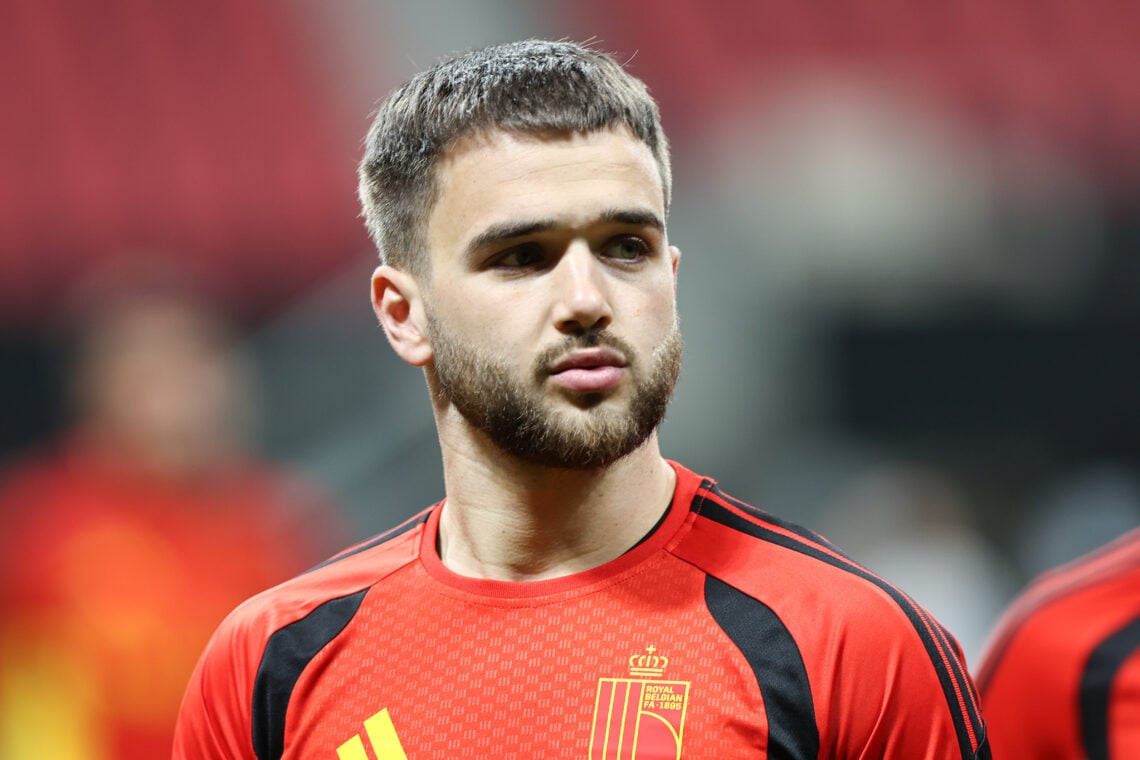
Every major international tournament produces its share of surprise storylines, but for Rangers supporters, the 2026 FIFA World Cup is proving to be something else entirely: a live audition for a player they are almost certainly about to lose. Nicolas Raskin, the 25-year-old Belgian midfielder who has spent the past three and a half years marshalling the engine room at Ibrox, is currently on the grandest stage in football, and every touch, tackle, and moment of composure is being watched not just by Belgium fans hoping for a deep run, but by a small cluster of European clubs weighing up whether now is the moment to make their move.
Raskin is one of two Rangers midfielders still active at the tournament, with Thelo Aasgaard’s Norway also having advanced through to the knockout stages alongside Belgium. That two members of Rangers’ midfield are still playing meaningful football in the summer, long after the Scottish Premiership season wrapped up, says plenty about the quality the club has quietly assembled in that area of the pitch. But it is Raskin’s involvement in Belgium’s remarkable comeback win over Senegal in the round of 32 that has really thrust him into the spotlight and, by extension, into the crosshairs of clubs sizing up a summer swoop.
Belgium’s 3-2 victory over Senegal was one of the most talked-about matches of the round-of-32 stage, a game that swung wildly from crisis to celebration. The Red Devils found themselves needing a response after falling behind, and it was in this context that Raskin was introduced from the bench, replacing the experienced Kevin De Bruyne partway through the match. Coming on in a game that demanded composure under pressure, Raskin didn’t just contribute in a footballing sense — he found himself playing peacemaker as well.
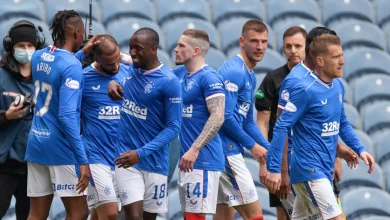
During a tense passage of play, an on-field flashpoint broke out between two of his own teammates, Youri Tielemans and Leandro Trossard. Rather than staying on the periphery, Raskin got directly involved, physically intervening to help calm the situation and break up what could have escalated into a much bigger distraction for the Belgian side. It was a small moment in the grand scheme of a 3-2 comeback win, but it spoke to the type of level-headedness and leadership that has made Raskin such a trusted figure in Rangers’ midfield during his time in Scotland. Belgium eventually found a way through Senegal’s resistance to complete the turnaround, and Raskin’s fingerprints — both tactical and diplomatic — were all over the result.
For a player who has spent the last few seasons proving his worth in Scottish football, this was exactly the kind of moment that elevates a reputation on the international stage. Performances like this, in matches watched by millions across the globe, tend to accelerate transfer interest rather than create it from scratch. Clubs that may have already had Raskin on a shortlist are now seeing tangible evidence, on the biggest platform available, of exactly why he’s worth pursuing.
Even before a ball was kicked at this World Cup, there was a sense inside Ibrox that this summer transfer window was shaping up to be the one where Raskin’s Rangers journey came to an end. He arrived at the club from Standard Liege and has spent three and a half years establishing himself as one of the more reliable performers in the middle of the park, someone supporters have come to view as a guaranteed starter and a real driving force in the team’s build-up play.
But football, especially at a selling club like Rangers, often works on a cycle: develop a player, watch him improve, and eventually sell him on for a profit once his value peaks. Raskin appears to be entering exactly that phase. His World Cup performances are widely expected to push his valuation upward, and with two years still remaining on his current Ibrox contract, the club is in a genuinely strong negotiating position. There’s no desperate need to sell, no relegation clause forcing a cut-price departure, and no injury cloud hanging over him. Instead, Rangers find themselves holding a valuable asset at the exact moment his stock is rising fastest, which is about as good a position as a selling club can hope to be in.
The clearest indication yet that Raskin’s Ibrox exit is now essentially locked in has come from Luca Bendoni, a well-regarded transfer reporter with Sky Sports Italy, whose information on continental transfer dealings carries significant weight in the industry. Posting on X (formerly Twitter), Bendoni indicated that Raskin’s departure from Rangers is primed to happen once the World Cup concludes, suggesting that the framework for a deal, or at least the expectation of one, is already largely understood behind the scenes.
The involvement of an Italian outlet in breaking this story is itself notable. It suggests that interest in Raskin isn’t confined to one region or one type of suitor — it’s being tracked and reported on by journalists whose beat covers exactly the kind of clubs believed to be sniffing around him. When reporters with strong connections in Italian football are the ones putting names and timelines to a transfer, it’s usually a signal that Serie A interest is real and substantive, not just speculative noise generated by agents looking to drive up a valuation.
Of the clubs credited with interest in Raskin, Real Betis have emerged as the most active. The La Liga side are reportedly exploring what a deal for the Belgian international might look like, with an eye toward bringing his particular blend of energy, tenacity, and ball-winning ability to Seville. Betis have built a reputation in recent seasons for shrewd recruitment, often bringing in players who thrive once given a platform in Spanish football, and Raskin’s profile — a tough, mobile, technically capable central midfielder who has proven himself over an extended run in a competitive European league — fits that mould well.
Alongside Betis, at least two Serie A clubs are said to be keeping tabs on the midfielder, according to the reporting that has emerged. While the specific identities of those Italian suitors haven’t been made public, their mere presence in the conversation changes the dynamic of any potential negotiation. A player attracting interest from multiple leagues, rather than a single suitor, tends to see his valuation climb, and it gives Rangers considerably more leverage than they would have if Betis were the only party at the table.
This kind of competitive interest is exactly what a selling club hopes for. Rather than negotiating with one buyer who can dictate terms and timelines, Rangers can effectively let a bidding environment develop naturally, driving up the price and ensuring they extract maximum value from a player they always knew they would eventually have to part with.
None of this is happening in isolation. Raskin’s expected departure is just one piece of a much larger midfield reconstruction project that manager Derek McInnes has been quietly working through since the transfer window opened. Rather than waiting until Raskin’s move is finalised to start planning for life without him, Rangers’ recruitment team has been proactive, working to have replacements and additions lined up in advance so that the club isn’t left scrambling in the final days of the window.
That forward planning is already bearing fruit. Rangers have placed a bid worth £3.8 million for Vanja Dragojevic, the captain of Partizan Belgrade, a move that signals the club’s intent to bring in a like-for-like midfield presence with leadership qualities of his own. Dragojevic’s experience as a captain suggests Rangers are not just looking for raw ability, but for character and game intelligence too — attributes that would help soften the blow of losing a player as influential as Raskin.
In addition to the Dragojevic pursuit, Rangers have also successfully brought in Dan Neil, adding further depth and competition to the midfield unit. Neil’s arrival, combined with the ongoing Dragojevic negotiations, shows a club that is treating Raskin’s departure not as a crisis to be managed reactively, but as an opportunity to reshape the middle of the park with fresh legs and new ideas.
If there’s one name that captures the ambition behind Rangers’ midfield rebuild, it’s Lewis Ferguson. The Bologna captain has reportedly been identified internally as the dream addition for this summer, a marquee target who would represent a serious statement of intent from the Ibrox hierarchy. Ferguson has established himself as one of the most well-regarded Scottish midfielders playing outside of the UK, captaining his Serie A club and earning plenty of admirers across Europe in the process.
Bringing Ferguson back to Scottish football, and specifically to Rangers, would be viewed by many supporters as a genuine coup — the sort of marquee signing that signals a club serious about competing on multiple fronts domestically and in Europe. Of course, arranging a move for a player of Ferguson’s stature and current value would require significant funds, and this is precisely where Raskin’s expected sale becomes so important to the broader strategy. The money generated from letting Raskin go is expected to play a direct role in financing further business, potentially including a genuine push to prise Ferguson away from Bologna.
## A Reliable Servant, But a Club That Plans Ahead
It’s worth stepping back and appreciating just how central Raskin has been to Rangers over the past three and a half seasons. Since arriving from Standard Liege, he has developed into exactly the sort of player supporters point to when discussing squad building done right: someone signed with clear potential, given time and trust to develop, and who repaid that faith by becoming a fixture in the side. His combination of energy, tactical discipline, and consistency has made him a name synonymous with reliability in Govan.
That’s precisely what makes this situation bittersweet for many fans. There’s an obvious tension between wanting to hold onto a player who has given so much to the club, and recognising the financial and strategic realities that make a sale not just possible but, from the board’s perspective, sensible. Rangers operate in a footballing ecosystem where developing and selling players is often a necessary part of sustaining competitiveness, and Raskin’s situation — two years still on his deal, career value peaking at a major tournament, and multiple suitors from different leagues — represents close to a perfect storm for maximising a transfer fee.
Supporters have been vocal in their reactions to the news, with opinions split along fairly predictable lines. Some fans have argued that the club should be doing everything possible to keep hold of a player who embodies the qualities they want to see in an Ibrox shirt, even suggesting that a new and improved contract should be put on the table to ward off suitors. Others have taken a far more pragmatic view, arguing that a single strong tournament shouldn’t be mistaken for a permanent step up in ability, and that cashing in while his value is inflated by a good World Cup run is the shrewder long-term move for the club. There’s also a recognition among some supporters that if a player has made clear he wants to test himself elsewhere, there’s little value in trying to force him to stay against his wishes — better, in that view, to reinvest the proceeds into players fully committed to the cause.
## The Financial Logic Behind Letting Raskin Go
From a pure business standpoint, the case for selling Raskin this summer is fairly compelling. He still has two years remaining on his Rangers contract, which means the club isn’t under any pressure to accept a lowball offer out of fear of losing him for nothing further down the line. At the same time, his stock has arguably never been higher, given his exposure on the World Cup stage and his direct involvement in one of the tournament’s most memorable comeback stories so far.
Add to that the presence of multiple credible suitors — Real Betis pushing hardest, with at least two Serie A clubs also circling — and Rangers are positioned to conduct exactly the kind of negotiation that maximises value. Rather than being forced into a single-buyer negotiation where Betis could potentially dictate lower terms, the presence of competing interest from Italy gives Ibrox officials real leverage to drive up any final fee.
This is where the broader financial picture comes into focus. Any significant fee received for Raskin isn’t just a one-off transaction — it’s expected to be funnelled directly back into the summer rebuild, helping fund further additions to the squad, and in particular assisting any move for a high-profile target like Ferguson. In that sense, letting Raskin leave isn’t simply about balancing the books; it’s about using his sale as a springboard to bring in players who can help take the squad forward.
## What Comes Next for Raskin and Rangers
As things stand, the picture is about as clear as it can be at this stage of a World Cup summer: Raskin is expected to depart Ibrox once the tournament concludes, with Real Betis the most active of his suitors and Italian clubs continuing to monitor developments from the sidelines. Rangers, for their part, appear to have already begun preparing for life without him, having moved for Dragojevic and completed the signing of Neil, while continuing to work on the more ambitious pursuit of Ferguson.
For now, all eyes remain on Belgium’s continued progress at the World Cup, where Raskin will hope to add further eye-catching performances to his résumé before any transfer business is formally concluded. Every additional minute on the pitch, every assured touch, and every moment of composure only adds further weight to his valuation — a reality that Rangers, as a club well versed in developing and moving on talent, are certainly not oblivious to.
Whatever happens over the coming weeks, it’s clear that Raskin’s time at Ibrox is drawing to a close. The only real questions left to answer are which club ultimately wins the race for his signature, and just how much of that fee ends up being reinvested in bringing Lewis Ferguson north to Govan. For a fanbase that has watched Raskin grow from a promising signing into one of the side’s most dependable performers, his departure will sting — but if the money raised helps deliver a marquee arrival like Ferguson, many supporters may find it easier to accept the outgoing transfer as part of a bigger, more ambitious plan taking shape at Ibrox this summer.