Manchester City’s recent 1-0 win over Leeds United came with mixed feelings for the fans, because while the three points were vital in the Premier League title race, the absence of Erling Haaland cast a shadow over the victory. The Norwegian striker, who has been the heartbeat of Manchester City’s attack this season, missed the trip to Elland Road due to what Pep Guardiola described as a “little injury,” a phrase that has become a source of both hope and worry for supporters around the world. Fans have been waiting eagerly for any update on Haaland’s return because his presence on the pitch is not just important for scoring goals but also for the psychological lift he provides to his teammates. Manchester City had to face Leeds without their top scorer, a player whose runs, aerial presence, and lethal finishing have turned games in City’s favor time and time again. Guardiola, known for his meticulous planning and tactical flexibility, had to think quickly and adapt his strategy to compensate for Haaland’s absence. He looked at his squad, considered his options, and made the bold choice to start with two forwards who have yet to make the same mark on the Premier League stage, Omar Marmoush and Antoine Semenyo, with the latter being a January signing from Bournemouth who has shown glimpses of potential but was not yet proven at this level.
The game itself was tense, with Leeds United defending resolutely and looking to punish City on the counter. Without Haaland to stretch defenses, Guardiola’s side had to find alternative ways to break through. It was Semenyo who rose to the occasion, connecting perfectly with a low cross from Rayan Ait-Nouri to slot in the game’s only goal. While the goal brought relief and three points, Guardiola’s mind was already racing ahead, considering how the team would cope with the congested schedule looming over them. The Premier League is unforgiving, and every point matters, particularly in the race against Arsenal, who had maintained their top spot and responded to City’s narrow victory by beating Chelsea 2-1 on Sunday. The title race was heating up, and Guardiola knew that City needed their best players back as soon as possible to keep the pressure on.
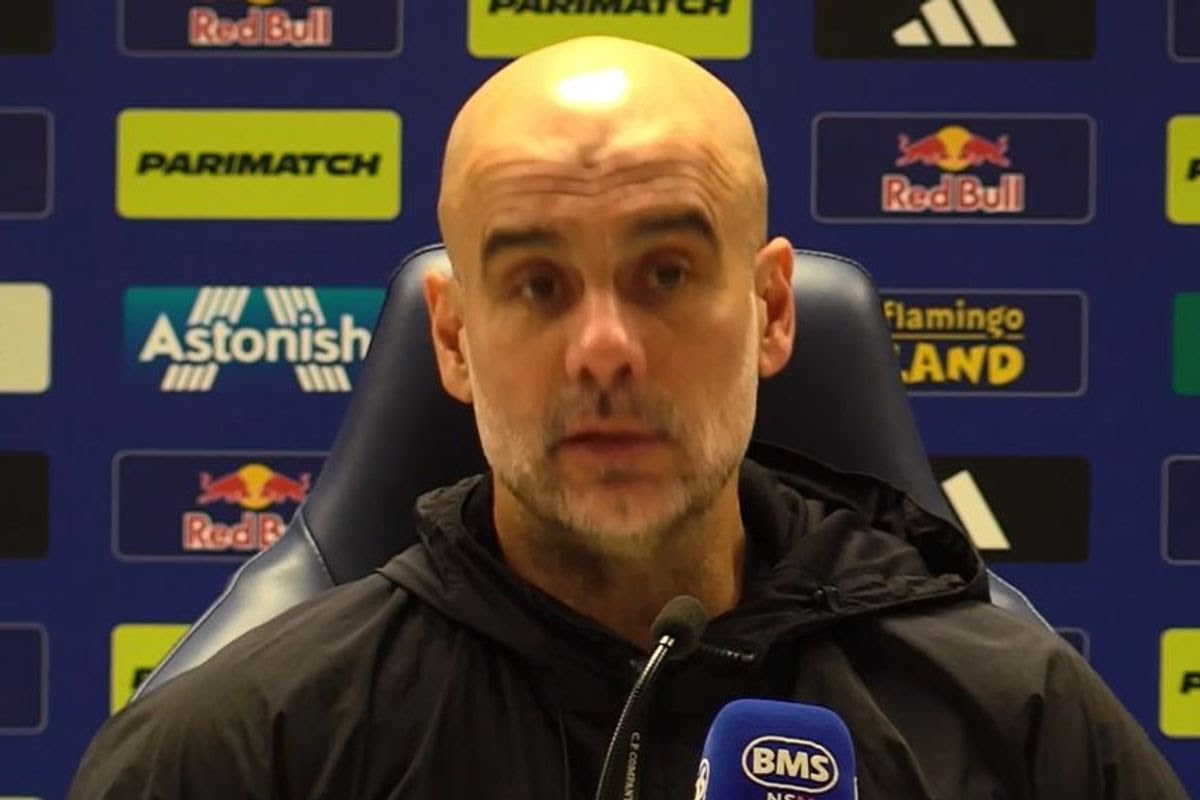
Speaking after the match, Guardiola was candid about Haaland’s situation. “Two days ago in training he had some problems and a little injury. Not a big issue but not ready for today,” he explained. His words were careful, measured, but they carried the weight of concern that fans immediately noticed. Guardiola continued, reflecting on the challenge of adapting to a key player’s absence. “We are without one top striker and we are playing with another top striker,” he said, acknowledging Semenyo’s contribution but also the reality that Haaland’s presence could have changed the dynamics entirely. Guardiola’s transparency with the media has always been appreciated, but this time it also highlighted the uncertainty surrounding City’s title ambitions and the timing of Haaland’s return.
The question on everyone’s mind was clear: when would Haaland be fit to play again? Guardiola was honest in his reply, leaving the fans in suspense. “I don’t have the answer right now. He was not ready for today, but we have four days before Nottingham Forest. And after three days in FA Cup at Newcastle at 8pm – thank you so much for that time to go better to Madrid with less recovery, I thank you,” he said, his words mixing humor, frustration, and the reality of a punishing fixture schedule. Manchester City’s next game against relegation-threatened Nottingham Forest at the Etihad Stadium would be crucial, not just for points but for gauging Haaland’s readiness. The challenge is not only physical but also mental; returning from even a minor injury in a schedule packed with league, cup, and Champions League fixtures is never simple. Guardiola knows this better than anyone, having managed squads through some of the most demanding campaigns in Europe.
The absence of Haaland also forced Guardiola to consider other players who could step up. Winger Jeremy Doku, who has been recovering from injury, and in-form midfielder Nico O’Reilly, who unfortunately suffered a knock against Leeds, became key talking points for the manager. Guardiola highlighted that the return of Haaland and Doku would help alleviate some of the load on the squad, particularly with Real Madrid waiting in the first leg of their Champions League last-16 tie on March 11. The combination of league matches, FA Cup ties, and European fixtures presents a grueling schedule that tests both the physical and mental endurance of the players. Every decision Guardiola makes regarding rotation, fitness, and strategy is amplified under these circumstances.
Haaland’s absence also sparked broader discussions among analysts, pundits, and fans about the depth of Manchester City’s squad. While the team has incredible talent, Guardiola’s reliance on Haaland for goals has been clear. His movement, finishing, and ability to create chances out of nothing have made him indispensable. In his absence, the spotlight shifted to players like Semenyo, Marmoush, and Phil Foden, who were expected to adapt to the demands of Premier League football at the highest level. Guardiola’s approach against Leeds was a testament to his tactical acumen; he recognized the challenge and adjusted accordingly. While City’s victory was narrow, it was a demonstration of resilience and squad depth, which will be tested even more in the upcoming weeks.
The context of the title race adds another layer of intensity. With City trailing Arsenal by just two points after the Leeds win, every fixture carries immense significance. Guardiola is acutely aware that the margin for error is minimal, and the return of Haaland could be decisive. Arsenal, buoyed by their victory over Chelsea, will not give an inch, and the next series of matches could determine the trajectory of the season. Guardiola’s comments about recovery times, fixture congestion, and the impact on player fitness underline the fine balancing act he must perform. It is not just about managing minutes on the pitch but ensuring that key players like Haaland are available and sharp for the most critical games.
Beyond tactical considerations, there is also the psychological impact of Haaland’s injury. For teammates, having the league’s top scorer on the field is a confidence boost. His absence forces players to step up, take responsibility, and adapt in ways that they may not have had to before. Guardiola’s trust in his squad is evident; he has faith that Semenyo and others can deliver, but the natural question of whether they can consistently perform at Haaland’s level remains. Football, after all, is not just about skill but timing, experience, and the ability to handle pressure. Guardiola knows that reintegrating Haaland will not only restore a potent attacking option but also recalibrate the team’s rhythm and morale.
The press conference also revealed Guardiola’s frustration with scheduling. The late kickoff at St James’ Park, followed by travel to Spain, highlighted the challenges of modern football, where domestic and European obligations collide. Guardiola’s sarcastic remark about the timing underscored the difficulty of balancing recovery, preparation, and travel, particularly with key players returning from injury. The manager’s ability to navigate these constraints, maintain performance levels, and motivate his squad is a testament to his experience and leadership.
Manchester City’s approach to injury management is meticulous. Haaland’s “little injury” could be anything from a minor knock to a strain, but Guardiola and his medical team will monitor him closely to ensure that rushing his return does not exacerbate the problem. The Premier League, with its physical intensity, and the Champions League, with its high stakes, require that key players be at peak fitness. Guardiola’s statements suggest caution, recognizing that even a small injury to a star player can have outsized consequences.
Looking forward, Guardiola’s strategy seems clear: integrate returning players gradually while relying on squad depth to navigate immediate fixtures. The Nottingham Forest game will provide an opportunity to assess Haaland’s fitness, while the FA Cup tie against Newcastle and the Champions League clash with Real Madrid will test both endurance and adaptability. Guardiola’s ability to manage rotations, recoveries, and tactical adjustments will be under the microscope, and the football world will be watching closely to see how Haaland’s situation unfolds.
The Leeds game itself also offered lessons about adaptability. Guardiola’s decision to field Semenyo paid off, showing that City can still win without their main striker. However, the narrow 1-0 margin reminds everyone that Haaland’s finishing ability and goal threat are irreplaceable. Analysts have pointed out that while City can win without him, the margin for error decreases, and opponents are more likely to exploit weaknesses when a key player is missing. Guardiola’s tactical flexibility, combined with squad depth, has allowed City to remain competitive, but the return of Haaland will be pivotal in maintaining their momentum against top rivals like Arsenal and Chelsea.
In summary, Erling Haaland’s injury is a significant but not insurmountable challenge for Manchester City. Guardiola’s management, squad depth, and tactical adaptability have so far mitigated the impact, as seen in the victory over Leeds. However, the upcoming fixtures, tight schedule, and title race intensity underscore the importance of Haaland’s timely return. Fans will be watching the Etihad, waiting for any updates, and hoping that their top scorer returns at full fitness to spearhead the chase for the Premier League and make an impact in Europe. Guardiola’s cautious optimism, combined with strategic squad management, sets the stage for a tense and dramatic few weeks in Manchester City’s season, where every decision, every substitution, and every recovery will have consequences not just on the pitch but in the broader race for silverware.
City’s season, their title aspirations, and the hope of Champions League glory all hinge on careful planning, player management, and timely returns from injury. Haaland’s situation exemplifies the delicate balance managers must strike in modern football: between ambition and caution, immediate results and long-term fitness, and tactical innovation and reliance on star talent. Guardiola’s words, gestures, and decisions reflect a manager fully aware of these pressures, navigating the complexities with experience, insight, and a hint of humor, even as the world waits for the Norwegian striker’s next move.