Pep Guardiola Sends a Big Warning to Real Madrid 👀 “I saw them lose to Getafe and I know their weakness.” 🔥 “I have two players ready to start against them.” ⚡ Pep says this time, beating Madrid is sure.

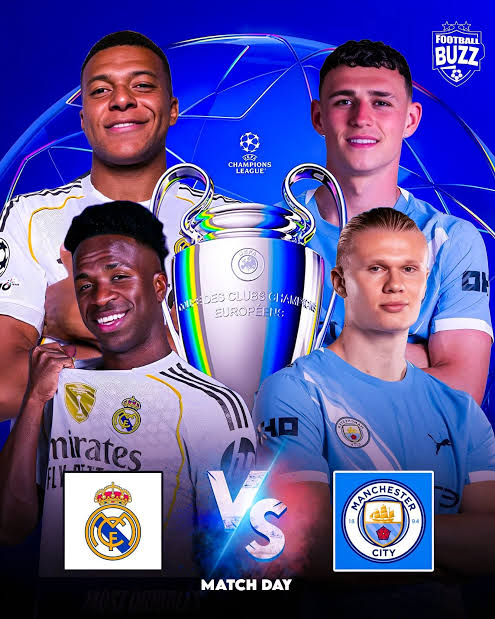
The Champions League continues to produce some of the most intense and captivating narratives in football, and the latest draw for the last sixteen has once again thrown Manchester City and Real Madrid together, a pairing that has become increasingly familiar over the last decade. Pep Guardiola, the manager of Manchester City, has spoken candidly about the situation, admitting that it feels “a little bit weird” to be facing Real Madrid yet again, a team that has consistently tested his managerial skill and tactical genius since he arrived at the Etihad Stadium in 2016. This will mark their thirteenth competitive encounter since Guardiola took charge, a figure that speaks volumes about the rivalry, the consistency of success for both clubs, and the intensity of European football at the very highest level. Fans and pundits alike have followed the evolving story between these two footballing powerhouses with fascination, not just because of the talent on the field but because of the tactical chess match that unfolds every time they meet. Guardiola, whose career has been defined by meticulous preparation and tactical innovation, recognizes the challenge but also the familiarity, understanding that both clubs have learned each other’s styles through repeated encounters over years of high-stakes competition.
The timing of the draw has added to the sense of strangeness surrounding this matchup. It is barely over two months since the two sides last met in the group stage of the current season’s Champions League, a recent memory for players, coaches, and supporters. Under previous formats of the competition, such repeated pairings would have been highly unlikely, as the design of the group stage and knockout rounds usually ensured that clubs would not meet again until the quarterfinals at the earliest. But the evolution of the Champions League’s structure, with its expanded group stage and revised rules for knockout phase draws, has created a scenario where clubs are encountering each other multiple times in quick succession. Guardiola has expressed his bemusement at this situation, noting that it feels unusual to be playing a team twice in such a short span of time, but he also acknowledges that football is a game of adaptation. He has learned to approach every fixture with focus and preparation, regardless of how familiar the opposition may be, and he understands that in the Champions League, every team presents a new challenge, regardless of previous encounters.
In his statements following the draw, Guardiola emphasized the novelty and the strangeness of the format. “Yes, it is a little bit weird,” he admitted, acknowledging that most fans and observers would likely share his perspective. He reflected on the contrast between the current arrangement and the way the competition operated in previous years, recalling that in the past, the last game of the group stage would rarely, if ever, coincide with the first knockout round, and that teams would typically avoid meeting familiar opponents until deeper into the tournament. Guardiola also highlighted the broader perspective, comparing the situation to domestic football, where clubs frequently face the same opponents multiple times within a single season. “In the Premier League and cups how many times have we played against Newcastle this season?” he asked rhetorically, using a familiar domestic parallel to illustrate his point. “Hopefully we can play against them in the final,” he added, a comment that underscores both his dry humor and his understanding of football’s cyclical nature, where top teams inevitably cross paths multiple times across different competitions.
Guardiola’s reaction also reveals his philosophical approach to football, one that emphasizes adaptability, focus, and respect for every opponent. He acknowledged that the draw may feel different to fans and media but insisted that his approach remains consistent: every game, regardless of familiarity or timing, requires the same level of preparation and intensity. “When I started it was eight, nine, ten teams in the Champions League. It is a question of adapting,” he said, reflecting on the evolution of the competition over his tenure. Guardiola understands that familiarity can breed both comfort and complacency, and he knows that Real Madrid, despite being a team he has faced multiple times, still presents challenges that require meticulous attention to detail. He frames the repeated encounters not as a burden but as an opportunity to test his squad against the best, to refine strategies, and to measure progress against one of Europe’s most successful clubs.
The tactical dimension of the matchup cannot be overstated. Both Manchester City and Real Madrid are teams renowned for their attacking prowess, technical sophistication, and strategic flexibility. Guardiola’s City are a team built on possession, movement, and relentless pressing, a side that thrives on controlling the ball and dictating the tempo of games. Real Madrid, under their own management, have perfected the art of counter-attacking, blending experience and youthful energy to exploit spaces and punish mistakes. Every meeting between these clubs becomes a chess match, with Guardiola adjusting his formations, personnel, and game plans based on the previous encounters, on video analysis, and on the subtle insights that can provide marginal gains in high-level competition. This tactical sophistication, combined with the repeated nature of the encounters, has turned the fixture into a psychological as well as a physical battle, where mental strength, resilience, and composure are tested alongside technical skill.
The history of Guardiola versus Real Madrid is a story in itself. Since taking charge at Manchester City, Guardiola has faced Los Blancos twelve times prior to this upcoming round of sixteen, experiencing victories, defeats, and draws that have all contributed to a narrative of rivalry and mutual respect. These matches are always high-stakes, often decided by the smallest margins, and they carry a level of intensity unmatched in most domestic competitions. Fans remember last season’s encounters vividly, where City narrowly edged Madrid in one leg while Madrid capitalized on set-piece opportunities in another, creating moments of drama, celebration, and heartbreak in equal measure. Every match adds layers to the ongoing story, with players accumulating experience, managers refining strategies, and supporters becoming deeply invested in the outcomes. Guardiola’s acknowledgment of the repetitive nature of the fixture is thus balanced by his appreciation of the challenge and the opportunity to compete against one of football’s elite teams once again.
Beyond the immediate tactical and psychological elements, the draw also has broader implications for Manchester City’s route through the Champions League. Should they progress past Real Madrid, the team could face either Bayern Munich or Atalanta in the quarterfinals, followed potentially by Paris Saint-Germain in the semifinals, assuming the holders advance. On paper, this represents a difficult path, filled with elite opponents capable of testing every aspect of the squad’s abilities. Guardiola, however, remains grounded, insisting that no team should be underestimated and that the competition as a whole is challenging from start to finish. “That would be so disrespectful, for example, to Newcastle, Barcelona, Atlético Madrid or Spurs. The Champions League is so difficult,” he said, emphasizing that every opponent presents unique challenges and that focusing solely on Real Madrid would be a mistake. His comments reveal a mindset rooted in respect, preparation, and focus, essential qualities for any team hoping to win Europe’s most prestigious club competition.
The mental and emotional preparation for City players is as important as the tactical work on the training ground. Competing against Real Madrid repeatedly in a short span can create a sense of pressure, familiarity, and even expectation, all of which must be managed carefully. Guardiola’s experience allows him to navigate these dynamics, ensuring that players remain focused on the immediate game rather than being distracted by past encounters or potential future rounds. The psychological battle is subtle but significant, requiring players to balance confidence and caution, to trust in their preparation while remaining alert to the unpredictability inherent in football. Every decision on the field, from passing to positioning to pressing, is influenced by the knowledge that Real Madrid’s players are equally aware, experienced, and capable of exploiting any lapse in concentration.
Media and fan attention further intensify the stakes. Every draw, every quote, and every previous match result is dissected extensively across television, online platforms, and social media. Guardiola’s comments about the draw being “a Madrid draw” and his acknowledgment of the “weirdness” of the situation have sparked discussions among journalists, pundits, and supporters alike, all weighing in on the fairness, difficulty, and excitement of the matchup. Social media threads highlight tactical analyses, statistical comparisons, and historical context, creating a 24/7 conversation around the fixture that extends far beyond the confines of the pitch. Fans debate the significance of recent encounters, the implications for the remaining fixtures, and the likelihood of success for City, demonstrating how the Champions League has become not just a sporting competition but a cultural phenomenon that captivates millions globally.
Historical context adds further drama. Guardiola’s career is filled with examples of high-stakes encounters against elite clubs, from his time at Barcelona to his tenure at Bayern Munich and now at Manchester City. Each competition has provided lessons, insights, and experiences that inform his approach to current fixtures. The repeated encounters with Real Madrid in particular provide both a tactical template and a challenge to innovate, requiring Guardiola to blend lessons from previous games with new strategies to surprise opponents and gain an advantage. For players, too, the historical record matters, as they are aware of past results, the successes and failures of teammates, and the expectations of fans who follow every detail with intense scrutiny. The accumulation of history, memory, and strategy elevates these matches from ordinary fixtures to events that carry legacy and consequence.
The importance of adapting to the competition’s format is another theme highlighted by Guardiola. Football is not static, and changes in tournament rules, scheduling, and structure can create unexpected scenarios. Clubs must learn to navigate these changes, adjusting preparation, rotation, and strategy accordingly. Guardiola has expressed a clear understanding of this dynamic, noting that adaptation is a constant requirement for success. Whether dealing with multiple fixtures in domestic competitions, adjusting to travel demands, or managing the psychological load of repeated encounters, the ability to adapt becomes a defining characteristic of elite managers and teams. Manchester City’s squad, built with depth, versatility, and experience, is equipped to handle these challenges, but the mental and tactical demands remain substantial.
The fixture also highlights the global nature of modern football. Supporters from around the world follow Manchester City and Real Madrid with equal intensity, and repeated matchups increase exposure, engagement, and excitement. International fans, media outlets, and social media commentators create a narrative that intertwines sport, entertainment, and cultural significance, making each encounter more than just a game—it becomes a shared global event. Guardiola, aware of this, balances media obligations with preparation, ensuring that public attention does not distract from the tactical and physical demands of high-level competition.
In conclusion, the upcoming round of sixteen between Manchester City and Real Madrid in the Champions League is a story rich with layers: historical rivalry, tactical innovation, managerial experience, player skill, psychological preparation, statistical analysis, media scrutiny, and fan engagement. Pep Guardiola’s candid remarks about the “weirdness” of the draw, his respect for opponents, and his insistence on adaptation reflect a mindset shaped by years of elite competition and a deep understanding of football’s demands. The repeated encounters with Real Madrid, while unusual in timing, provide an opportunity to test strategies, refine tactics, and measure progress against one of Europe’s most formidable clubs. For supporters, analysts, and players, these matches represent more than just points on a table; they are events filled with drama, anticipation, and high stakes, encapsulating the very essence of the Champions League and the global appeal of football at its highest level. Every pass, tackle, goal, and strategic decision contributes to a narrative that will be remembered, discussed, and analyzed long after the final whistle, creating stories and memories that define the modern era of European football. Guardiola, City, and Real Madrid are poised once again to add another chapter to this ongoing saga, demonstrating that in elite football, every match is more than a game—it is a story of skill, strategy, and enduring rivalry.