That is one of the WORST VAR decisions we’ve seen all season! How can the referee watch that on the monitor and still allow the goal? Dunfermline Athletic were absolutely robbed in broad daylight! 😳⚖️ 🗣️ “What’s the point of VAR if clear incidents like that are still ignored? Fans are tired of these shocking decisions ruining massive matches!” 🗣️ “Steven McLean and VAR have completely stolen the headlines from the football itself… this is going to be talked about for a VERY long time

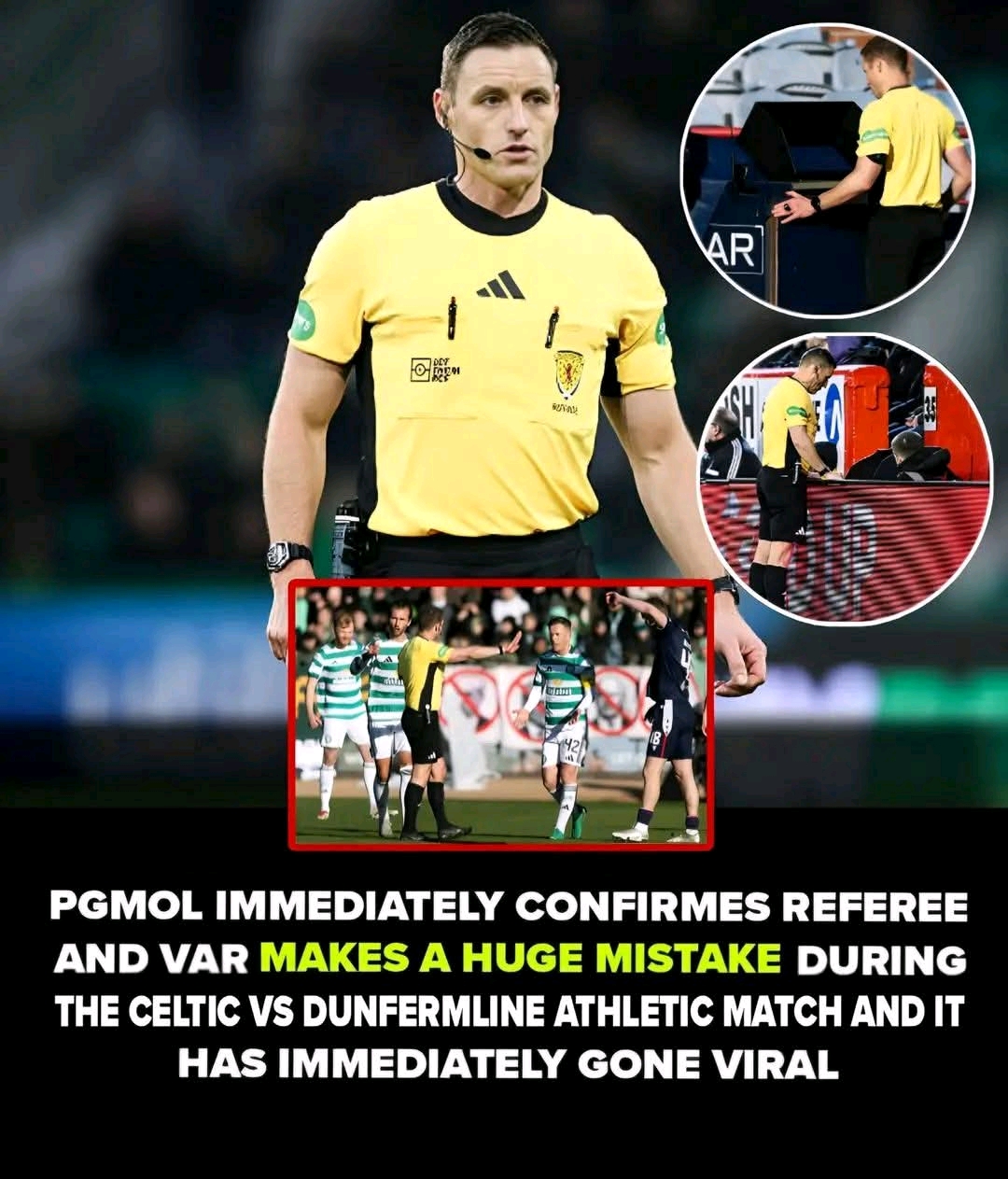
The Scottish Cup final between Celtic F.C. and Dunfermline Athletic F.C. was supposed to be remembered for the football, the atmosphere, and the dream journey of an underdog side trying to shock Scottish football. Instead, the match has exploded into one of the biggest officiating controversies of the entire season, with furious supporters, pundits, and former players all demanding answers after a hugely controversial VAR decision overshadowed the game at Hampden Park.
The final eventually ended in a 3-1 victory for Celtic as goals from Daizen Maeda, Arne Engels, and Kelechi Iheanacho sealed another trophy for the Glasgow giants. Dunfermline fought hard and even managed to pull a goal back through Josh Cooper late in the game, but the biggest talking point was not the scoreline. It was the moment that many fans believe completely changed the direction of the final and robbed Dunfermline Athletic of a genuine chance to create history. ([The Guardian][1])
Almost immediately after the controversial incident, social media exploded with anger. Fans could not believe what they had just witnessed. Television replays only made the outrage even stronger. Supporters from across Scotland, not just Dunfermline fans, began accusing the officials of making one of the worst VAR mistakes seen in Scottish football this season.
The criticism quickly centered around referee Steven McLean and the VAR officials working behind the scenes at Clydesdale House. McLean had already been confirmed as the referee for the final days before the match, with the Scottish FA placing huge trust in one of the country’s most experienced officials. ([Celtic Shorts][2])
But by full time, many supporters believed that trust had been badly misplaced.
The anger was not simply because of a tight offside call or a debatable handball. Fans were furious because VAR had actually sent the referee to the monitor for a second look, which normally signals that officials believe a clear mistake may have been made. Yet after reviewing the footage himself, McLean still decided to allow the goal to stand.
That decision stunned almost everybody watching.
Supporters inside Hampden Park could barely believe the replay shown on the giant screen. Television pundits immediately began questioning how the referee could look at the footage multiple times and still arrive at the same conclusion. Across social media, thousands of fans posted clips of the incident alongside angry captions claiming Dunfermline had been “robbed in broad daylight.”
One furious supporter wrote online that there was “absolutely no point in having VAR if incidents like this are still ignored.” Another claimed it was “one of the clearest fouls seen all season.” Others accused the officials of completely changing the momentum of the final.
The frustration became even more intense because Dunfermline had entered the final as massive underdogs. Neil Lennon’s side had produced an incredible cup run to reach Hampden, defeating stronger teams and capturing the imagination of neutral supporters across Scotland. Their appearance in the final was already seen as one of the stories of the season. ([The Scottish Sun][3])
For many fans, this was supposed to be a fair fight where the smaller club at least had the chance to compete honestly against one of the biggest clubs in Scottish football. That is why the VAR controversy caused such emotional reactions. People felt the underdog had not been given a fair chance.
As the debate intensified online, old criticism of Scottish VAR returned immediately. Many supporters argued that the system has failed repeatedly this season despite promises that it would improve officiating standards. Instead of removing controversy, fans believe VAR has simply created new arguments every single weekend.
This is not even the first time Steven McLean has faced criticism in recent weeks. Earlier in the season, Hearts manager Derek McInnes publicly slammed McLean over another controversial penalty decision during a league match against Motherwell. McInnes described it as a “terrible decision” after VAR advised the referee to review the incident, only for McLean to stick with his original call. ([The Scottish Sun][4])
Now many supporters are linking those incidents together and questioning whether Scottish referees are using VAR correctly at all.
The biggest issue for many fans is consistency.
Supporters constantly hear officials explain that VAR exists to correct “clear and obvious errors.” But critics argue that nobody seems to understand what actually qualifies as clear and obvious anymore. One week, referees overturn decisions after very small contact. The next week, major incidents are ignored even after lengthy reviews.
That confusion has created growing distrust among supporters.
After the final whistle at Hampden, conversations about Celtic’s victory quickly became secondary. Even pundits covering the match admitted that officiating had become the dominant talking point. Instead of discussing Celtic completing another domestic double, the football world became obsessed with the controversial decision.
Some fans even claimed the moment would be remembered longer than the match itself.
For Dunfermline supporters, the pain was especially difficult because their team had shown tremendous courage after a difficult first half. Celtic dominated large parts of the opening period and deservedly took control of the game with goals from Maeda and Engels. But Dunfermline responded brilliantly after the break and began creating dangerous moments of their own. ([The Guardian][1])
That is why many supporters believe the controversial goal decision destroyed the underdog’s momentum at the worst possible time.
Neil Lennon’s side had already shocked Scottish football simply by reaching the final. The club has experienced difficult years financially and competitively, making their return to such a massive occasion emotional for supporters. ([Wikipedia][5])
Many fans believed this final represented a new beginning for the club.
Instead, the aftermath has become dominated by frustration, anger, and conspiracy theories across social media.
Some supporters demanded the Scottish FA release the VAR audio from the incident so fans could hear exactly what was discussed between the referee and video officials. Others called for a complete review of Scottish refereeing standards. A few even suggested that VAR should be removed completely because it is damaging the game instead of improving it.
The controversy also reignited wider debates about transparency in football officiating.
In many other sports, supporters can hear referees explain decisions live during reviews. Football still refuses to offer that level of openness in most competitions. Because of that secrecy, fans are often left confused and angry after major moments.
That confusion creates even bigger reactions online.
Former players joined the debate as well. Several pundits argued that if referees are still making decisions like this after using slow-motion replays and multiple camera angles, then something is seriously wrong with the process itself. Others defended the officials slightly, saying referees are under enormous pressure in massive matches and forced to make split-second judgments.
But even many neutral observers admitted the decision looked extremely difficult to defend after seeing the replays.
The problem for Scottish football is that controversies like this damage confidence in the game. Instead of celebrating the passion, excitement, and drama of the Scottish Cup final, headlines became dominated by refereeing arguments.
That is exactly what many fans hate most about VAR.
Supporters were promised that technology would reduce mistakes and remove controversy from football. Instead, almost every major match now seems to produce new arguments about handballs, offsides, penalties, or fouls. Fans spend more time discussing referees than tactics or players.
Even Celtic supporters admitted online that the decision would remain controversial for a long time.
Some Hoops fans argued their side still deserved to win because of their dominance in key moments. Celtic certainly created plenty of chances and showed their quality throughout the game. Their attacking players caused huge problems for Dunfermline’s defense, especially during the first half. ([The Guardian][1])
But others acknowledged that the disputed incident changed the emotional atmosphere of the match entirely.
For Dunfermline supporters, the sense of injustice became impossible to ignore.
Fans leaving Hampden were reportedly still arguing passionately about the decision long after the trophy presentation had ended. Social media clips spread rapidly across TikTok, X, Facebook, and Instagram, with supporters analyzing every angle frame by frame.
The phrase “one of the worst VAR decisions all season” quickly became attached to the incident online.
The pressure is now growing on the Scottish FA to respond publicly.
Supporters want explanations. They want accountability. Most importantly, they want consistency going forward. The fear among many fans is that Scottish football risks losing credibility if controversial incidents continue happening in huge matches without proper answers.
Referees already work under intense pressure in Scotland. Every major decision is analyzed endlessly by television pundits, newspapers, fan channels, and social media accounts. But this controversy feels even bigger because it happened during one of the country’s showpiece occasions.
Cup finals are supposed to create legendary football moments.
Instead, this final may ultimately be remembered for anger toward VAR.
The reaction online has been extraordinary. Clips of the incident have already attracted hundreds of thousands of views across social platforms. Fans continue debating whether the referee made an honest mistake or whether VAR itself is fundamentally broken.
One thing almost everybody agrees on is that the controversy will not disappear anytime soon.
Scottish football has seen many refereeing debates over the years, but this incident immediately entered conversations alongside some of the biggest modern VAR controversies. Fans are still discussing it days after the match, and the anger shows no sign of slowing down.
For Dunfermline Athletic, the frustration may linger for a very long time.
The club’s supporters waited years to see their team back on such a huge stage. They dreamed of witnessing one of the greatest upsets in Scottish Cup history. Even though Celtic were favorites, many Pars fans believed anything was possible in a final atmosphere.
That hope made the controversial moment even more painful.
Neil Lennon himself remained relatively calm publicly after the game, but many supporters believe the manager was clearly furious underneath the surface. His team had battled bravely against a stronger opponent, only for the officiating controversy to dominate discussion afterward.
Meanwhile, Celtic celebrated another trophy in their incredible history. The victory secured another major achievement for the club during a season filled with pressure and expectations. ([The Guardian][1])
Yet even among Celtic celebrations, the controversy refused to disappear.
That perhaps says everything about how massive the reaction has become.
Football fans can accept mistakes. What they struggle to accept is confusion. When referees review incidents repeatedly on monitors and still produce decisions that most supporters cannot understand, frustration naturally grows stronger.
This is why the debate around VAR continues becoming more emotional every season.
Technology was introduced to bring clarity. Instead, many supporters feel the game has become even more confusing. Nobody inside stadiums knows exactly what officials are checking. Fans wait nervously for long reviews. Celebrations are delayed. Then controversial decisions still happen anyway.
That combination creates huge anger.
The Scottish Cup final controversy now joins a growing list of incidents fueling demands for reform across the game. Some supporters want referees to explain decisions publicly after matches. Others want managers allowed to challenge decisions like in cricket or tennis. A few simply want VAR removed completely.
Whatever happens next, this incident has already left a major mark on Scottish football.
The debate surrounding Steven McLean and the VAR officials will continue for weeks, possibly months. Every future controversial decision involving those officials will now face even greater scrutiny from supporters.
And for Dunfermline fans, the feeling of injustice may never fully disappear.
Many supporters genuinely believe their team was denied a fair opportunity on the biggest stage of all. Whether others agree or disagree, the emotional reaction proves how deeply football still matters to fans across Scotland.
In the end, the saddest part for many neutrals is that the football itself became secondary.
A cup final involving passionate supporters, historic clubs, dramatic moments, and incredible atmosphere should have been remembered as a celebration of Scottish football. Instead, the conversation became dominated by referees, VAR screens, and controversial replays.
That is why so many supporters are now asking the same question.