The owner of Manchester City send message to pep Guardiola, if he want yo stay at the club he need to win Real Madrid

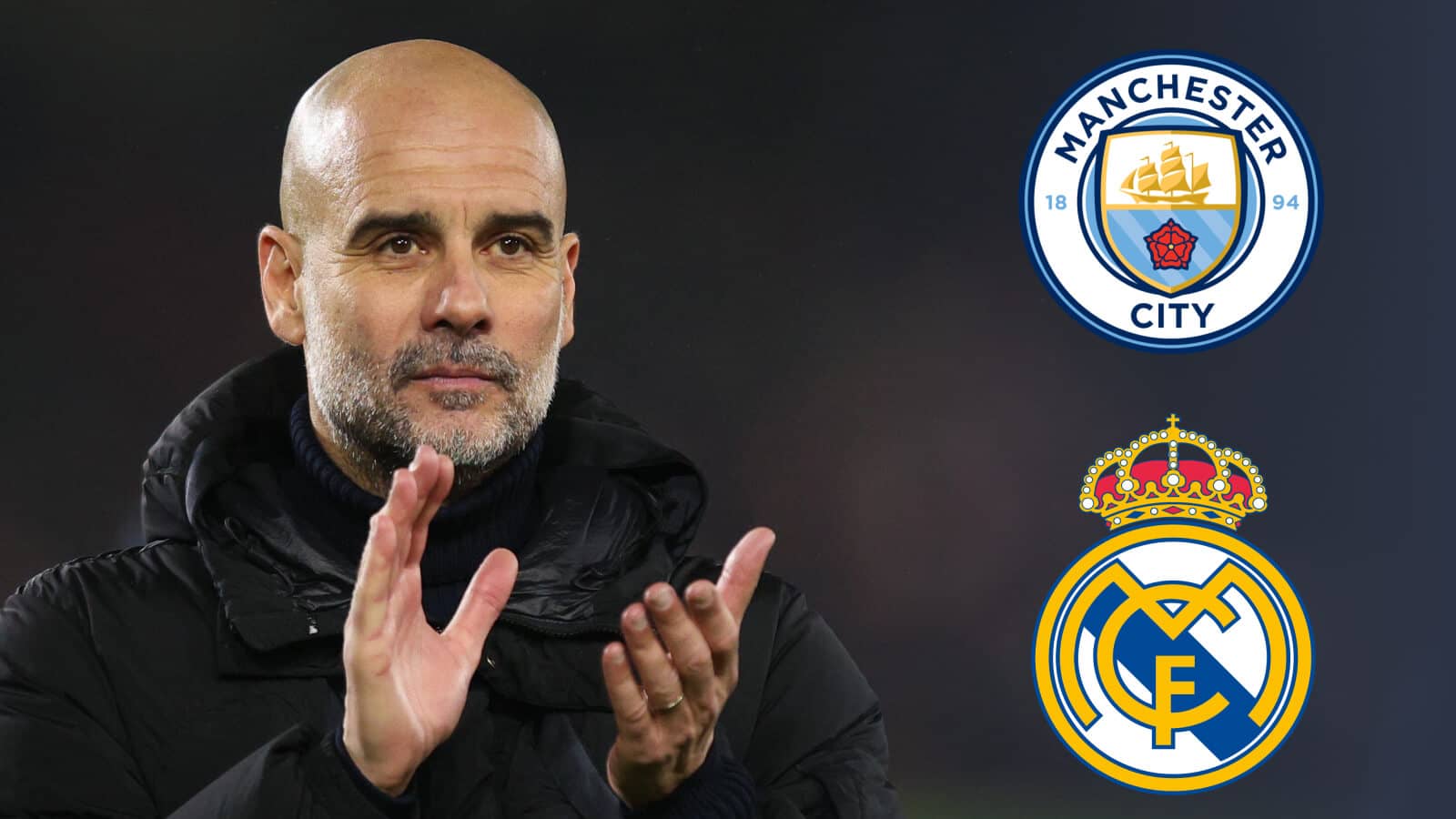
It feels almost unbelievable when people realise that it has already been ten full years since Pep Guardiola first walked through the doors of Manchester City as their new manager. A decade in football usually feels like a lifetime. Managers come and go quickly. Pressure builds fast. Expectations grow even faster. But somehow, Guardiola has managed to stay, evolve, win, fail, learn, and then win again in a way that very few managers in football history have ever managed.
When Guardiola first agreed to take over Manchester City ahead of the 2016/17 season, the entire football world was watching closely. His reputation was already enormous. Before arriving in England, he had already built legendary teams at FC Barcelona and Bayern Munich. At Barcelona, he had created one of the greatest teams the sport had ever seen. His side dominated Europe, won trophies in style, and introduced a style of football that fans across the world admired. Then at Bayern Munich he continued winning domestic titles while shaping the club with his tactical ideas.
But the Premier League was seen as something different. English football had a reputation for being fast, physical, unpredictable and chaotic. Many critics believed Guardiola’s style would struggle there. Some fans and pundits believed his tactical approach was too complicated for the pace of the Premier League. Others argued he had only succeeded before because he had managed very rich clubs filled with world-class players.
So when Manchester City confirmed he would take charge in 2016, excitement was mixed with doubt. People wanted to see whether his philosophy would survive the intensity of English football.
Now, ten years later, most of those doubts have disappeared. Guardiola has built an era at Manchester City that many supporters will remember for the rest of their lives. His teams have dominated English football, broken records that once looked impossible, and played a style of football that has changed the identity of the club forever.
To celebrate the ten-year anniversary of Guardiola’s arrival, football journalists and observers who followed his entire journey spoke about what they learned during this incredible decade. Their reflections reveal just how remarkable the Guardiola era has been.
One of the most important lessons from this period is how crucial Guardiola’s early adaptation was.
Many fans today only remember the success. They remember the trophies, the record-breaking seasons, the beautiful football, and the incredible winning runs. But Guardiola’s first season at Manchester City was not easy at all.
For the first time in his entire managerial career, Guardiola finished a season without winning a single trophy. For a manager who had become used to lifting silverware almost every year, this was a huge shock.
Critics were quick to attack him.
They said English football had exposed him. They argued that his tactics were too risky. They said his possession-based style would never work in the Premier League. Many believed that the Guardiola experiment was failing before it had even properly started.
One of the biggest controversies from that first season involved the goalkeeping position. Guardiola made a bold decision to replace long-time goalkeeper Joe Hart with Claudio Bravo.
Hart had been a fan favourite at the club. He had helped Manchester City win titles and had strong support among the supporters. But Guardiola believed Hart did not fit the style of football he wanted to play. He wanted a goalkeeper who was comfortable passing the ball and starting attacks from the back.
The decision caused huge debate. Many supporters believed Guardiola had made a mistake. When Bravo struggled during the season, the criticism became even louder.
According to journalist Simon Bajkowski, many people who doubted Guardiola were almost celebrating his early struggles. They wanted to prove that his methods would not work in England.
But what made Guardiola different was how quickly he adapted.
Instead of abandoning his ideas, he improved them. Instead of blaming the players or the league, he changed the squad and strengthened the areas he believed were weak.
The transformation was incredible.
Just one season later, Manchester City produced one of the greatest campaigns in Premier League history. In the 2017/18 season, Guardiola’s team dominated the league with a level of consistency that had rarely been seen before.
They did not just win the title. They completely destroyed the record books.
Manchester City finished the season with 100 points, becoming the first team in Premier League history to reach that number. They scored over 100 goals, won 32 matches, and often looked unstoppable.
It was a clear statement to the entire football world. Guardiola had not failed in England. Instead, he had simply needed time to build the team he wanted.
That season became known as the “Centurions” campaign, and it marked the true beginning of Manchester City’s dominance under Guardiola.
Another major lesson from the Guardiola era is the intensity of his dedication to football.
People who have worked closely with him often describe him as completely obsessed with the sport. For Guardiola, football is not just a job. It is his entire life.
Journalist Amos Murphy once described Guardiola in a very interesting way. He said Guardiola is “weird” – but in a positive sense.
By that, he meant that Guardiola thinks about football almost every second of the day. His mind is always searching for new ideas, new tactics, and new solutions. People close to him say he rarely switches off.
He studies opponents constantly. He analyses matches repeatedly. He watches videos, reads reports, and discusses strategies with his coaching staff late into the night.
This obsession is one of the main reasons why Guardiola has been able to stay at the top level for so long. Many managers burn out quickly because the pressure becomes too heavy. But Guardiola seems to enjoy the challenge.
His players have often spoken about how demanding he can be.
Training sessions under Guardiola are extremely detailed. Every movement is carefully planned. Every player must understand exactly where to be on the pitch and how to react in different situations.
For some players, adapting to this level of tactical discipline is difficult. But those who succeed often become better players than they were before.
Many footballers have reached new levels in their careers under Guardiola’s guidance. Players who arrived with potential have often left as complete footballers, capable of understanding the game in deeper ways.
Another key lesson from Guardiola’s decade at Manchester City is how he constantly reinvents his teams.
In football, success can sometimes become a trap. When a team wins trophies, it is tempting to keep everything the same. But Guardiola rarely allows his teams to stay predictable.
He changes formations. He experiments with different roles. Sometimes he even asks players to play in positions they had never tried before.
This willingness to evolve has allowed Manchester City to stay competitive for so many years.
Opponents may study them, but Guardiola always seems to find new ideas to surprise them.
During his time at the club, City have used false nines, inverted full-backs, attacking midfielders as wingers, and defenders stepping into midfield.
These tactical innovations have influenced football across Europe. Many other teams have studied Guardiola’s methods and tried to copy elements of his system.
Another huge milestone during Guardiola’s decade was the long-awaited Champions League triumph.
For many years, critics claimed that Guardiola’s Manchester City could dominate England but not Europe. The Champions League remained the trophy that supporters desperately wanted.
After several painful eliminations, City finally achieved their dream in 2023 by winning the UEFA Champions League.
That victory confirmed Guardiola’s legacy at the club. It proved that his project had reached its ultimate goal.
Winning the Champions League also completed a historic treble season for Manchester City, something only one other English club had achieved before.
For supporters, that moment felt like the peak of Guardiola’s era.
But even after reaching that summit, Guardiola did not stop. His hunger for improvement remained.
Another lesson from his time at Manchester City is the importance of trust between the manager and the club’s leadership.
Guardiola has worked closely with the club’s executives for many years. They have supported his vision by investing in players who fit his style and by giving him the time needed to build long-term success.
In modern football, managers are often fired quickly after poor results. But Manchester City showed patience during Guardiola’s early struggles.
That patience allowed one of the most successful eras in English football history to develop.
Looking back over the last decade, it is clear that Guardiola has transformed Manchester City in ways that go far beyond trophies.
He has changed the club’s identity. He has changed how the team plays football. He has inspired a generation of players and coaches.
Young fans who grew up watching City during this period may not even realise how different the club once was.
Before Guardiola arrived, Manchester City had success, but they did not dominate the Premier League in the way they have during the last decade.
Now the club is seen as one of the strongest teams in world football every single season.
As the ten-year anniversary of Guardiola’s arrival is celebrated, it is impossible not to reflect on the incredible journey that has taken place.
There were doubts at the beginning. There were failures and painful moments along the way. But through adaptation, obsession with improvement, and tactical creativity, Guardiola built something extraordinary.
Ten years in football is a long time, but for Manchester City supporters it may feel like the blink of an eye because of how unforgettable the journey has been.
And as long as Guardiola remains on the touchline, constantly thinking, constantly analysing, and constantly searching for the next idea, it feels like the story of this remarkable era is still far from finished.