🔵⚪ James Tavernier hits back at critics over Israel transfer as ex-Rangers captain insists new life at Maccabi Tel Aviv is “beautiful” ⚪🔵

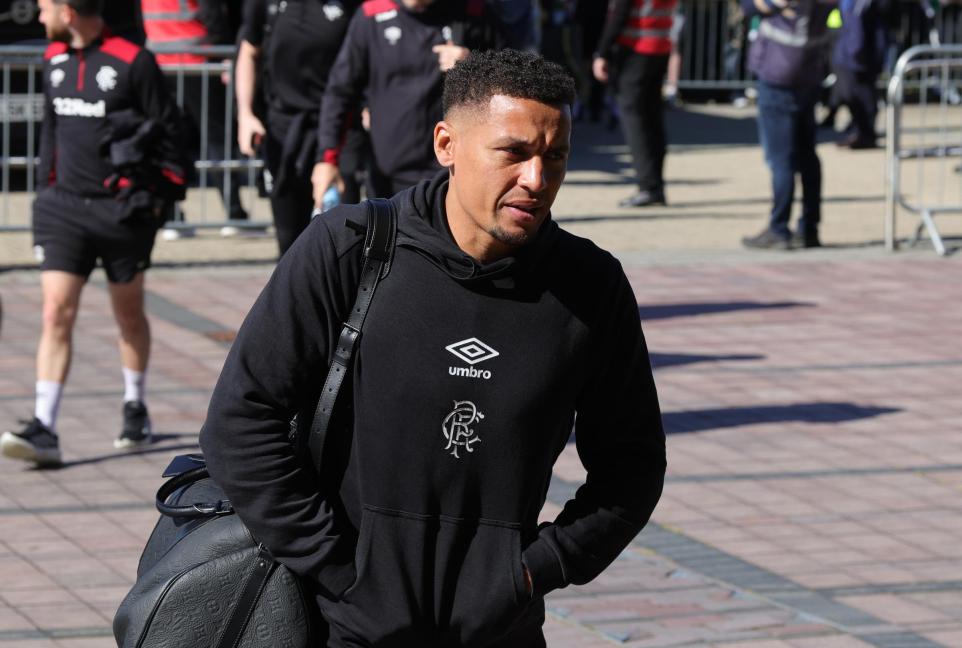
James Tavernier has never been shy about speaking his mind, and in his first extended set of comments since completing his move away from Ibrox, the former Rangers captain has made clear he has no regrets whatsoever about the destination he chose for the next chapter of his career. The 34-year-old right-back, who spent eleven years at Rangers and leaves Govan as one of the most decorated and prolific players in the club’s modern history, has signed for Maccabi Tel Aviv in Israel, teaming up with former Ibrox teammate Kenny Miller, who now manages the club. It represents a significant and, in some quarters, controversial move, given the ongoing conflict in the region has meant that any transfer involving an Israeli club has tended to attract scrutiny that goes well beyond the usual football considerations of wages, ambition and squad fit. Tavernier, however, has been unequivocal in his defence of the decision, describing Israel as a “beautiful place with beautiful people” and pushing back firmly against what he feels has been an unfair or incomplete picture painted back home.
The move itself was completed earlier this month, with Tavernier unveiled at Bloomfield Stadium after passing his medical and putting pen to paper on a deal that will see him continue his career outside Scotland for the first time in over a decade. He has taken the number two shirt at Maccabi, the same number he wore for the majority of his time in Govan, and has wasted no time making an impact on the pitch either, featuring in two matches so far for his new club and winning both, including a thumping 4-1 victory over local rivals Hapoel Tel Aviv in the derby. For a player who built his entire reputation at Rangers on relentless consistency, attacking output from full-back and an almost unmatched appetite for goals from the right-back position, a perfect start in terms of results will have done plenty to settle any early nerves about how he adapts to a new league, a new culture and an entirely different footballing environment.
It is the context surrounding the move rather than the football itself, though, that has generated the majority of the conversation since Tavernier’s departure from Rangers was confirmed. The decision to join an Israeli club, at a time when the conflict in the region continues to dominate global headlines and has already spilled over into the world of football on several occasions elsewhere in Europe, was always likely to draw a reaction, and it has not been universally positive. Some supporters and commentators voiced concerns and criticism over the timing and optics of the switch, pointing to the broader security situation in the region and the wider debates that have followed Israeli clubs and their supporters around Europe in recent seasons, including instances where travelling fans of Israeli sides have faced restrictions or bans on attending away fixtures amid concerns raised by local safety authorities. Against that backdrop, Tavernier’s move was never going to be received purely as a routine end-of-career transfer for a player entering the twilight years of his time at the top level, and the former Rangers skipper has clearly been aware of that reaction in the days since.
Speaking about the criticism directly, Tavernier was measured but firm in his response, making clear that his own lived experience since arriving in Israel has been overwhelmingly positive and does not, in his view, match up with how the country and the situation are sometimes portrayed from a distance. He explained that what people read and see back home does not, in his opinion, do justice to Israel itself, stressing repeatedly that from what he has personally experienced since making the move, it has been a genuinely lovely and welcoming environment. Tavernier was careful to acknowledge that he is aware of the wider issues affecting the region, but was adamant that his own day-to-day experience living there has been far removed from the picture sometimes painted in UK media coverage, and he clearly felt it was important to offer that first-hand perspective rather than simply staying silent on the matter.
Family has also played a significant role in how Tavernier has approached the move, and he revealed that his wife and children are set to relocate to Israel permanently after the upcoming international break, bringing to an end what has so far been a period of separation that the former Rangers man admitted he had never really wanted. Having spent his entire adult life living with his family close by, Tavernier explained that being apart, even for a matter of weeks, was not something that sat easily with him, but that it was ultimately his wife who was keen to make the move out to join him, buoyed by what she experienced during a visit in the early stages of his time at the club. He described her as genuinely looking forward to the switch after enjoying what he called a good week in the country, suggesting that whatever apprehension there may have been in the build-up to the transfer, the early signs from a family perspective have been reassuring rather than concerning.
On the football side of things, Tavernier was equally open about the process that led him to Maccabi Tel Aviv in the first place, and it is a story that carries plenty of familiar Ibrox flavour given the identity of the man who made the initial approach. It was Kenny Miller, the former Rangers striker and now Maccabi boss, who first sounded out Tavernier about a possible move, doing so while the defender was on a family holiday in America following the conclusion of his Rangers career. According to Tavernier, Miller’s pitch centred heavily on ambition, with the Scot outlining his vision of a club that genuinely wants to win trophies, and going into detail about just how passionate both the football club and its supporters are. That kind of appeal, built around silverware and matchday atmosphere rather than simply financial terms, appears to have resonated strongly with a player who has spent his career being defined by winning mentality, first during his rise through the English lower leagues and then across more than a decade of major trophies collected during his time at Ibrox.
Tavernier was candid about the broader thinking behind the move too, explaining that after bringing the curtain down on his Rangers career he was determined to seek out a fresh challenge somewhere entirely new. Alongside the football rationale, he did not shy away from mentioning some of the more lifestyle-driven factors that fed into his decision, joking that after eleven years of regularly enduring the Scottish weather, the prospect of trading the rain for considerably more sunshine held obvious appeal. Underneath the light-hearted remark, though, was a clear and consistent message running through everything Tavernier said: that this was a move built around opportunity and ambition rather than simply winding down his career, and that the chance to win further trophies somewhere he views as offering a genuinely exciting new environment was the decisive factor. He stressed that he has always been driven by the desire to win from a young age, and that Maccabi Tel Aviv represented what he saw as a genuine opportunity to continue doing exactly that, rather than a move made simply for financial convenience or to ease into retirement.
In terms of settling into life at his new club, Tavernier struck an optimistic tone about how the early weeks have gone, despite the inevitable adjustment period that comes with switching countries, leagues and dressing rooms after more than a decade rooted in one club and one city. He spoke enthusiastically about his early experiences of the fans, the training environment and the overall feel of the club, describing the period since his arrival as genuinely special, and made clear that he is already excited about what lies ahead once he reaches full match fitness. Having played two matches and taken part in a handful of training sessions so far, Tavernier suggested supporters have not yet seen him at his best, promising that once he is fully up to speed physically, his level of performance will improve further still. That is a notable statement of confidence from a player who, even by his own admission, is still very much in the process of adapting, but it fits with the reputation Tavernier built at Rangers as someone whose self-belief and consistency rarely wavered regardless of circumstance.
Asked specifically about his relationship with Miller and whether he had always sensed his old Ibrox teammate was destined for a career in coaching and management, Tavernier did not hesitate in confirming that the signs had always been there. He drew a comparison between Miller and Lee Wallace, another former Rangers captain and teammate of Tavernier’s, suggesting that both men had displayed clear leadership qualities during their playing days that pointed towards an eventual move into management. Tavernier described Miller as someone who consistently demanded high standards from those around him even as a player, and said that same trait has carried through directly into how he now operates as a manager, driving those standards into his current Maccabi Tel Aviv squad. It is that relentless pursuit of high standards, according to Tavernier, that he expects to be the defining characteristic of Miller’s management style going forward, and something he believes will serve the current group of players well as the season progresses.
The broader context of Israeli football’s relationship with the wider European game in recent times has undoubtedly added an extra dimension to how Tavernier’s move has been received and discussed. Israeli clubs, and Maccabi Tel Aviv in particular given their profile as one of the country’s most successful and widely followed sides, have found themselves at the centre of various controversies away from the pitch in recent seasons, largely tied to the security situation surrounding matches involving Israeli teams and their travelling supporters. Restrictions placed on visiting fans at fixtures in parts of Europe, along with the broader political debate those decisions have sparked, have kept Israeli football regularly in the news for reasons that go well beyond results and performances on the field. It is against that particular backdrop that Tavernier’s decision to join Maccabi Tel Aviv, and his subsequent willingness to speak so openly and positively about his experience there, takes on added significance, representing as it does a high-profile British footballer choosing to publicly push back against some of the more critical narratives that have surrounded the country and its football clubs in recent times.
For Rangers supporters looking back at Tavernier’s Ibrox career, the manner of his departure and the destination he has chosen will inevitably provoke mixed feelings, separate entirely from the political debate his comments have generated. Few players in the modern history of the club can match his longevity, his goal output from right-back, or his role as captain across some of the most significant periods of the last decade at Ibrox, and there will be plenty among the Rangers support who simply wish their former captain well regardless of where his career takes him next. At the same time, it would be naive to pretend the political sensitivity around his new club has not shaped at least part of the conversation following his exit, and Tavernier’s decision to address that criticism head on, rather than avoid the subject altogether, suggests he was always prepared for his move to generate a reaction of this nature.
What happens next for Tavernier on the pitch will, in time, likely become the dominant storyline once again, as it always eventually does with footballers regardless of the circumstances surrounding their transfers. A perfect start of two wins from two, including that emphatic derby victory over Hapoel Tel Aviv, will have given both player and club plenty of encouragement, and if Tavernier can continue to deliver the kind of consistent, high-level performances that defined his best years at Ibrox, then Miller’s decision to move so quickly to bring his former teammate to Maccabi Tel Aviv will look shrewd indeed. For now, though, it is Tavernier’s willingness to speak candidly about the criticism surrounding his move, and his clear determination to present his own first-hand experience as a counterpoint to that criticism, that has defined the early days of life after Rangers for a player who spent over a decade as one of Scottish football’s most recognisable and successful figures. Whether that willingness to engage with the subject head-on continues as his time in Israel goes on remains to be seen, but there is little doubt that Tavernier, true to the confident and forthright character Rangers fans came to know so well over eleven years at the club, has no intention of shying away from the conversation.
As for life back at Ibrox, Tavernier’s exit leaves an obvious leadership void for Derek McInnes to manage, even amid the encouraging form the team has shown domestically since his departure was confirmed. Replacing more than a decade of goals, assists and captaincy experience from right-back was always going to be one of the more significant challenges of the ongoing rebuild at Ibrox, and how the club manages that transition over the coming months will be watched closely by supporters who spent over a decade watching Tavernier become one of the most reliable and prolific figures in the club’s recent history. For now, though, the focus from a Tavernier perspective remains firmly on his own adaptation to life in Israel, both on the pitch as he builds towards full match fitness, and off it, as he continues to make the case that the reality of his new home differs considerably from the narrative some critics back home have attached to his move.