11 players ruled out for Rangers vs Celtic as new worrying update emerges on star today

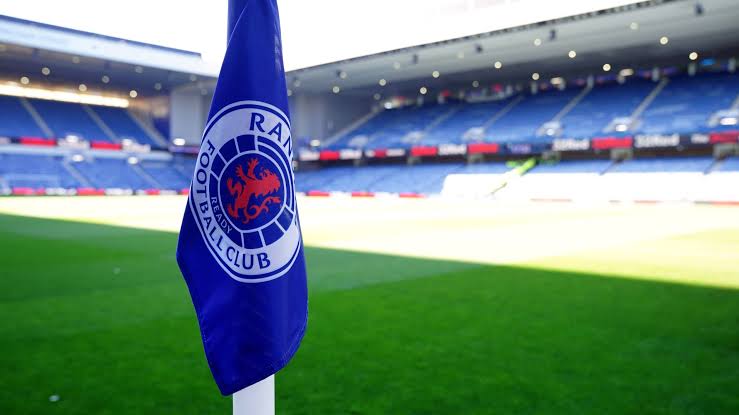
Rangers and Celtic go into Sunday’s Premier Sports Cup quarter-final at Ibrox with a combined 11 players ruled out through injury, and the mood around the fixture has been darkened further by a worrying fresh update on Rangers captain Lawrence Shankland, whose hamstring tear now looks set to keep him sidelined for the best part of a season-defining stretch of fixtures. The two Glasgow giants meet for the first time this season with kick-off at Ibrox set for 12pm on Sunday, and while both sides arrive in excellent domestic form, the scale of the absentee list on each side means Derek McInnes and Martin O’Neill both face significant selection headaches before a ball is even kicked.
Both Rangers and Celtic head into the weekend full of confidence on the back of strong recent results. Rangers made it four successive victories in all competitions with a dramatic, last-gasp 1-0 win over St Mirren in midweek, a result that continued their upturn in form under new manager Derek McInnes. Celtic, meanwhile, have been utterly relentless domestically, making it six straight Scottish Premiership wins after a 1-0 victory away at St Johnstone, a run that has them sitting five points clear at the top of the table after just six games of the new season.
The two sides have not yet met this term, meaning Sunday’s cup tie will be the first Old Firm derby of the season, before the pair meet again just a week later in the league at Celtic Park. As with every Old Firm fixture this season, there will be no away fans present at Ibrox, following the breakdown of the ticket allocation agreement between the clubs and the Scottish Professional Football League’s decision to bar travelling support from all such derbies in league and cup competitions run under its jurisdiction this term.
It is against that backdrop that the extent of the two squads’ respective injury problems takes on even greater significance. With both sides missing key contributors, Sunday’s outcome may hinge as much on which manager copes better with their absentees as on the quality on display from the players who do take the field.
Rangers have been hit hardest in attacking areas, with a string of forwards and creative players unavailable heading into the weekend. Chief among them is star striker Youssef Chermiti, who is facing several months on the sidelines after rupturing his ACL in last month’s defeat to Hibernian. The 26-year-old had joined Rangers from Hannover 96 in the summer for an initial fee of around £2.75 million and had quickly established himself as a regular in McInnes’ attack before the injury struck, making his absence keenly felt just as he was beginning to show what he could offer in Scottish football.
Compounding that blow is the fresh setback involving captain Lawrence Shankland, detailed further below, while winger Daisuke Yokota has also been ruled out of the weekend fixture after being forced to undergo surgery for a groin problem. The Japanese international’s absence removes another attacking outlet from McInnes’ options, with Badredine Bouanani among those who could be handed an opportunity in his absence.
Rangers will also be without midfielder Jose Cifuentes, who has fallen down the pecking order under McInnes and remains unavailable for the weekend, while left-back Tuur Rommens is another absentee, though there is more optimism around his situation, with the defender back in training and understood to be closing in on a return later in the month. Winger Kosta Nedeljkovic is in a similar position: he is reported to be closing in on a comeback from injury but is expected to still be short of full match fitness in time for Sunday, meaning his return will likely have to wait for a later fixture.
Taken together, that list leaves Rangers without six senior players for the visit of Celtic, a substantial number for any side going into a game of this magnitude, and one that will force McInnes into a significant reshuffle of his forward line and midfield options.
Celtic’s list of unavailable players is almost as extensive, with five senior players missing for the trip to Ibrox. Right-back Alistair Johnston remains sidelined by a hamstring issue picked up against Kilmarnock. The Canadian international has been described as making good progress in his recovery, but the timeline means this weekend’s derby will come too soon for him to be considered for selection.
Celtic will also be without Jota, Hyun-Jun Yang, Callum Osmand and Landon Emenalo, a quartet of absences that significantly thins out O’Neill’s attacking and wide options heading into the biggest fixture of the season so far. With so many attacking players unavailable, more responsibility is likely to fall on those who remain, including summer signing Kasper Hogh, who returned to the side in midweek having missed three matches through injury and looks set to keep his place in attack on Sunday.
There was at least a boost for O’Neill on the defensive side of things, with centre-back Cameron Carter-Vickers in contention to return to the squad after missing the win over St Johnstone, giving Celtic back some much-needed defensive experience and organisation at the heart of their backline for the derby.
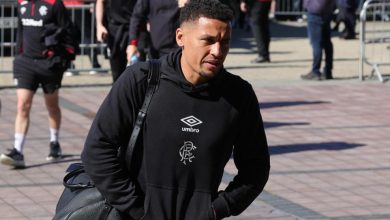
The single biggest injury story dominating the build-up to Sunday’s game, however, centres on Rangers captain Lawrence Shankland. The 31-year-old was forced off early during Rangers’ win over Motherwell at the weekend after suffering what has since been confirmed as a grade 2c hamstring tear, an injury that has left the club facing the prospect of losing their skipper for a significant portion of the season.
Speaking ahead of the St Mirren fixture in midweek, McInnes confirmed the scale of the problem, explaining that scans had shown a tear very similar in nature to one Shankland suffered while playing for Hearts back in January, an issue that kept him out for nine weeks at the time. Given the injury’s similarity to that previous setback, McInnes indicated that Shankland could now be facing an absence of between three and four months, a timeframe that would rule him out of a heavy block of fixtures stretching through the autumn and into the winter period.
Central to the latest, more worrying update is the question of treatment. Shankland has since travelled to London for a follow-up scan and to consult with a specialist over whether surgery is the best course of action, or whether the injury should instead be allowed to heal naturally. McInnes acknowledged that this is a difficult and finely balanced decision, noting that going under the knife might shorten the recovery time by a matter of weeks but could also carry its own risks depending on how the surgery and subsequent rehabilitation go.
Adding to the sense of concern is the nature of the injury itself. Because this is now the second time in under a year that Shankland has suffered a hamstring tear of a similar type, former players and pundits have begun raising questions about whether the problem could become a recurring one. One respected former captain has suggested that, given Shankland’s age, a repeat injury of this kind could develop into what was described as a major concern for Rangers if it continues to resurface, rather than being viewed as an isolated setback.
The timing of the injury is particularly unfortunate for both player and club. Shankland had only recently begun to hit top form in a Rangers shirt, having scored three goals in his previous two appearances, including decisive contributions in league wins, before being forced off against Motherwell. Signed from Hearts for an initial fee in the region of £3.5 million, the Scotland international had quickly become one of McInnes’ most important attacking figures, and his absence leaves a considerable void at the top of the Rangers team, made all the more difficult given that fellow forward Chermiti is already sidelined for an extended period with his own serious injury.
With Chermiti and now Shankland both unavailable, Rangers’ attacking options for Sunday’s quarter-final, and for a lengthy period beyond it, look considerably thinner than they did just a fortnight ago. McInnes does still have alternatives to call upon, with Kevin Kelsy, Ryan Naderi and Bojan Miovski all in contention to lead the line in Shankland’s absence. Naderi in particular has already shown he can step up to the plate, having scored the only goal of the game after coming on to replace Shankland against Motherwell, while Miovski struck a dramatic late winner in the midweek victory over St Mirren.
Even so, losing a captain of Shankland’s influence, on top of an established backup striker in Chermiti, represents a serious blow to the balance and leadership of the Rangers squad heading into arguably the most high-profile fixture of the season so far. With service from wide areas set to become even more important in Shankland’s continued absence, much may depend on how effectively Rangers’ wingers and attacking midfielders can create chances for whichever forward is selected to lead the line against Celtic.
For Celtic, the absence of five players across defence and attack means O’Neill will similarly have to rely on strength in depth and tactical adaptability. The return of Carter-Vickers to contention offers a boost at the back, and with Hogh expected to continue in attack having proven his fitness in midweek, Celtic still retain enough quality to go into the derby full of confidence, particularly given their outstanding domestic form so far this season.
With both sides carrying significant injury lists into the derby, Sunday’s quarter-final promises to be shaped as much by squad depth and in-game management as by the individual quality on each team sheet. Rangers, buoyed by four straight wins but now without both first-choice forwards in Shankland and Chermiti, will need alternative sources of goals if they are to progress at the expense of their fiercest rivals. Celtic, unbeaten domestically and sitting five points clear at the Premiership summit, will go into the game as favourites on current form, even with five of their own players sidelined.
For Rangers in particular, the coming weeks look set to be defined as much by news from the treatment room as by results on the pitch. The decision over whether Shankland requires surgery, expected to follow his consultation with a specialist in London, will go a long way toward determining just how much of the season Rangers will have to navigate without their captain, and whether the concerns being raised about a potential recurring hamstring problem prove to be well founded. Until that picture becomes clearer, McInnes will have to find a way to keep his side competitive across multiple fronts without the player who, until his latest setback, had looked like becoming the talisman around which his new-look Rangers side was being built.