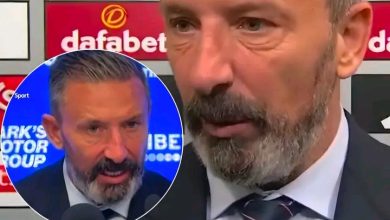
DEREK MCINNES OUT! RANGERS FANS REACT! RANGERS 1-1 WIFI PASSWORD | EUROPA LEAGUE

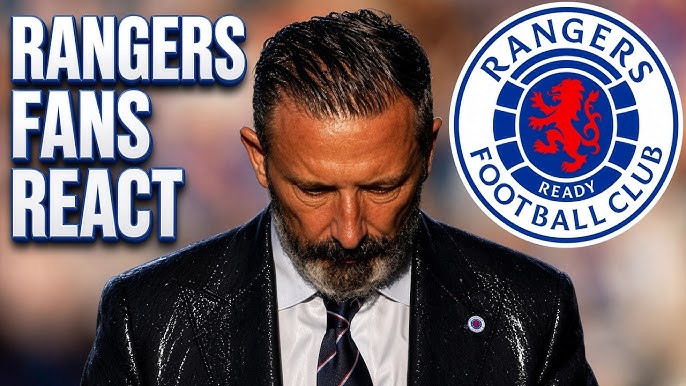
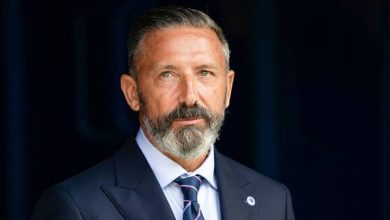
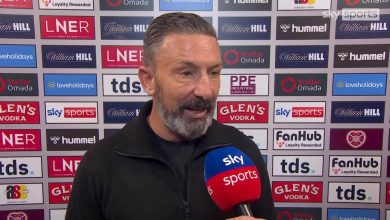
The question of Derek McInnes’s future at Rangers has dominated conversation around Ibrox over the past fortnight in a way few could have predicted when the former Hearts boss walked through the door as the clear, unopposed choice to succeed Danny Rohl back in the summer. A Europa League exit at the hands of Polish outfit Jagiellonia Bialystok, Rangers’ earliest continental departure since 2017, left McInnes winless in his opening four matches in permanent charge and sparked genuine, sustained debate over whether the club had made the right call, even as the manager has since steadied things somewhat with a first win against St Mirren. It’s a strange, uncomfortable position for a manager who arrived at Ibrox with as much goodwill as almost anyone in recent memory, given his status as both a boyhood Rangers supporter and a hugely respected figure in Scottish football following his exploits at Hearts. So where does this actually leave McInnes, and is his job genuinely under threat this early into his tenure?
The scale of the alarm generated by that Jagiellonia defeat shouldn’t be understated. A 1-1 draw at Ibrox wasn’t enough to overturn a 2-1 first-leg deficit from Poland, and Rangers crashed out 3-2 on aggregate in the third qualifying round, dropping into a Conference League play-off tie against Czech side Jablonec rather than securing the Europa League football the club had built its entire summer around. Supporters made their feelings known in no uncertain terms, with boos ringing around Ibrox at the full-time whistle, and McInnes, to his credit, didn’t attempt to shield himself or his players from the criticism. Speaking afterwards, he described the reaction as entirely justified, conceding that what his side served up, particularly in the second half, simply wasn’t good enough, and going further to admit that the club, built as it is for Europa League and Champions League football, wasn’t yet ready to compete at that level. It was an unusually candid and self-critical assessment from a manager just four games into the job, and while some will have respected the honesty, others took it as further confirmation that things had gone seriously wrong, seriously quickly.
The tactical detail of that Jagiellonia collapse has also come under scrutiny, offering some insight into the fine margins McInnes is currently navigating as he tries to settle on his best system and personnel. Missing both left-back Tuur Rommens and striker Youssef Chermiti through injury, McInnes set up in a back three for the second leg, with Djeidi Gassama and Daisuke Yokota deployed effectively as wing-backs, a configuration that paid dividends in the first half as Lawrence Shankland converted an early penalty to level the tie on aggregate. It unravelled after the interval, though, when McInnes withdrew Thelo Aasgaard for Ross McCrorie and switched to a flat back four, a change he explained was aimed at getting more out of a midfielder who wasn’t getting sufficiently involved in the game. Instead, Rangers lost their attacking momentum and control entirely, and Jagiellonia struck the decisive blow on 65 minutes through substitute Nik Prelec, with McCrorie appearing partly culpable for the equaliser that sent his side through. It’s exactly the kind of in-game decision that looks reasonable in theory but, when it doesn’t come off, invites precisely the sort of second-guessing that accompanies every setback for a new manager still finding his feet.
What’s followed the Jagiellonia exit has been a steady drumbeat of scrutiny from pundits, supporters and media alike, even as Rangers have moved to try and stabilise the situation. Former Rangers midfielder Andy Halliday offered a notably balanced take on the situation via Sky Sports, arguing that McInnes is doing the best he possibly can with what’s currently at his disposal, while simultaneously directing sharper criticism towards the club’s recruitment operation as a whole, describing a pattern of what he called a gross level of mismanagement given the sheer volume of incoming and outgoing transfer activity, pointing out that signing 27 players across a twelve-month period inevitably means getting a significant number of those decisions wrong. That’s a notable distinction being drawn by figures close to the club: less a question of whether McInnes himself is the right man, and more a question of whether the structural chaos and instability surrounding recruitment and squad-building at Ibrox has set any manager up to fail regardless of who’s actually in the dugout. Former Manchester United assistant Mick Brown, speaking to Football Insider, was more directly critical, suggesting McInnes had fallen at the first hurdle in Europe and that the resulting concerns were entirely legitimate, even while acknowledging Rangers intend to back their manager in the short term rather than reach for the exit button.
That last point is worth dwelling on, because for all the noise and speculation, the consistent message emerging from sources close to Ibrox has been that there are currently no plans whatsoever to remove McInnes from his post. A poll conducted among supporters in the immediate aftermath of the Jagiellonia exit painted a picture of a genuinely divided fanbase rather than one united in calling for the manager’s head: 22 per cent believed McInnes needed to be sacked immediately, a further 28 per cent felt he bore some responsibility without going that far, 27 per cent pointed the finger squarely at the club’s recruitment operation rather than the manager himself, and the remainder were prepared to extend patience while demanding a swift upturn in results. That’s hardly a fanbase in open revolt, even if the anger from the more vocal sections has been impossible to ignore. Chairman Andrew Cavenagh has been characterised by observers close to the club as someone who tends to dig in and stand by his decisions rather than react impulsively to short-term pressure, a trait that, whatever one makes of it as a management philosophy, points strongly towards McInnes being given considerably more rope than four winless games might otherwise suggest at a club with Rangers’ history of managerial trigger-happiness.
Cavenagh addressed the wider situation directly during a shareholder Q&A session that took place amid the swirling uncertainty, alongside fellow board figures including 49ers executive Paraag Marathe, part of the American ownership consortium now running the club, executive director Fraser Thornton and chief executive Jim Gillespie. When pressed on the club’s recruitment strategy, an area that’s drawn repeated criticism given results on the pitch, Cavenagh pushed back, insisting he believes the current squad is stronger than it was twelve months ago even as he acknowledged between three and five further additions would likely still arrive before the transfer window closes. Gillespie, meanwhile, offered a revealing insight into the thinking behind McInnes’s appointment in the first place, framing the choice facing the club as essentially a decision between hiring a “Klopp” type or a “Guardiola” type, and expressing continued confidence that McInnes represented the right man to address Rangers’ specific challenges, whatever the early results might suggest. It’s worth noting too that McInnes himself was notably absent from that particular shareholder meeting, with Cavenagh explaining the session had been scheduled months in advance and that the manager’s focus needed to remain on the training ground rather than fielding questions from the boardroom floor, a small logistical detail that nonetheless became a minor talking point given the timing.
There’s also been a recruitment subplot running parallel to all of this that’s added further fuel to the sense of instability around Ibrox. Rangers had been closing in on a deal to sign PSV Eindhoven winger Couhaib Driouech, with personal terms reportedly agreed and a fee in the region of £6-7million discussed, only for the move to collapse entirely after Driouech failed his medical, a genuinely bizarre and unfortunate development given the player had already been present at Ibrox to watch his prospective new teammates suffer the Jagiellonia elimination from the directors’ box. That collapse forced Rangers back to the drawing board in their search for wide reinforcements, and it’s part of a broader pattern this summer where planned business hasn’t always gone smoothly, adding to the sense of chaos even as the club has simultaneously pushed through nine, and now potentially twelve, new signings in an extremely active window.
Since that low point, there have been genuine, tangible signs of stabilisation, even if nobody at Ibrox would claim the crisis has fully passed. McInnes recorded his first win in charge with a thumping 5-1 victory over St Mirren in the Premier Sports Cup, a result that eased some of the most acute anxiety even as pundits remained divided over how much credit to extract from a comfortable win over a side that had been defensively solid up to that point. Former Rangers full-back Alan Hutton has expressed confidence that McInnes possesses both the character and the deep understanding of what the club demands to eventually turn the situation around, provided he’s given appropriate time, though Hutton was careful to stress that the underlying structural issues, the pattern of managerial upheaval and unsettled recruitment that has characterised Rangers for a number of years now, run considerably deeper than any single manager’s opening month in the job.
Taken together, the picture that emerges is one of a manager facing genuine, substantial pressure without his position being in any imminent, practical danger. McInnes remains backed by a hierarchy that has shown little appetite for the kind of knee-jerk reaction that cost his two immediate predecessors their jobs within the space of a single difficult season, and he retains a meaningful, if not universal, base of support among a fanbase that understands the scale of the rebuild he inherited. What he doesn’t have, and what he’ll need to find quickly, is a sustained run of results capable of silencing the doubts that four winless games and a humbling European exit have understandably generated. The Jablonec play-off, continued business in what remains an extremely active transfer window, and the ongoing task of building genuine momentum in the league will all go a long way towards determining whether this period comes to be remembered as the difficult, bumpy start of a rebuild that eventually pays off, or the early warning signs of a tenure that never quite recovers its footing. For now, though, the message from those actually calling the shots at Ibrox remains consistent: Derek McInnes isn’t going anywhere, whatever the mounting noise around him might suggest.