Manchester City have never been a club that measures success only in simple terms. For most of the Pep Guardiola era, judging the best player of the year has usually been easy. It has often come down to who scored the most goals, who controlled the biggest games, or who delivered in the moments that won trophies. Titles, finals, and historic runs usually make the conversation straightforward. But 2025 has been anything but straightforward for Manchester City.
This has been a year of recovery, rebuilding, frustration, quiet progress, and eventually renewed belief. A year that began with uncertainty and doubt has slowly transformed into one filled with hope and direction. City did not dominate England from start to finish. They did not sweep aside rivals in familiar fashion. Instead, they stumbled, adapted, suffered, and learned again.
That is what makes choosing Manchester City’s most valuable player of 2025 such a fascinating debate.
This was not a season defined by one unstoppable force dragging the team to glory. It was shaped by resilience, responsibility, and players stepping up when everything around them felt unstable. The most valuable players of this year are not just the most talented names in the squad, but those who carried weight when the club needed balance, calm, and consistency.
Four players stand out above the rest. Four players who were present through the good and the bad. Four players who, in very different ways, helped Manchester City survive their toughest period in years and slowly rebuild their identity. This is the story of those four players, and why each of them can make a serious claim to being Manchester City’s most valuable player of 2025.
The backdrop to this debate is important. City’s struggles did not begin in January. They started in the autumn of 2024, when form collapsed, injuries piled up, and confidence drained from a team that had become used to controlling everything. Matches that once felt routine suddenly felt tense. Simple passes went astray. Defensive mistakes appeared. The aura of invincibility faded. By the time 2025 arrived, City were not chasing dominance. They were chasing stability.
Pep Guardiola, usually so calm and assured, looked visibly stressed during those early months. The team needed leadership, not just from the manager, but from players on the pitch. They needed personalities willing to take responsibility when others faltered. And slowly, quietly, those players emerged. One of the most surprising names in that conversation is Nico Gonzalez.
When Gonzalez arrived at Manchester City, expectations were mixed. He was talented, no doubt, but he did not arrive as a superstar. His early months were rough. There were awkward performances, questions about whether he could handle the intensity of Guardiola’s system, and doubts about whether he belonged at this level.
The moment that changed everything came against Newcastle in February. Gonzalez delivered a performance that made people stop and look again. Guardiola’s comparison to a “mini-Messi” sounded bold at the time, but it captured something important: Gonzalez had begun to understand the rhythm of City’s game.
From February to April, he became a lifeline. City were struggling physically and mentally. Injuries to key midfielders forced Guardiola to trust players he might not normally rely on so heavily. Gonzalez responded by playing with bravery. He took the ball under pressure. He offered movement. He connected defence to attack when City desperately needed structure.
Then, just as quickly as he rose, he faded from view. As last season ended and Champions League qualification was secured, Gonzalez slipped out of the starting lineup. Doubts returned. Was he just a temporary solution? This season answered that question.
With Rodri and Mateo Kovacic both injured, Gonzalez was thrust back into the spotlight. This time, there was no panic. No fear. He looked comfortable, confident, and calm. His positioning improved. His decision-making sharpened. Most importantly, the team no longer looked lost without Rodri.
That is perhaps Gonzalez’s greatest achievement of 2025. For years, Rodri’s absence felt like a crisis. City without Rodri often looked unbalanced and vulnerable. Gonzalez changed that feeling. He did not replace Rodri’s quality entirely, but he removed the fear. By the end of the year, Gonzalez had become indispensable. Not flashy. Not dominant. But reliable. And in a year like this, reliability was priceless. Then there is Erling Haaland.
It feels almost unfair to include Haaland in any debate, because his numbers distort reality. He scores goals at a rate that feels impossible. Yet even for him, 2025 was about more than just goals.
Haaland began the year carrying disappointment. He openly admitted he could have done better the previous season. Missing key chances, giving up a penalty in the FA Cup final, and falling short of personal standards weighed on him. For a player so obsessed with winning, those moments hurt deeply. His response was ruthless.
Haaland hit the ground running and never really stopped. Over 30 goals in the calendar year tell one story. Thirty-four goals, including three at the Club World Cup, tell another. But the deeper story lies in where and how those goals arrived.
He scored home and away against Real Madrid. He delivered in high-pressure moments. He continued to dominate defenders who knew exactly what he was going to do but could not stop him anyway.
One of the most remarkable moments of the year came quietly. His goal against Al Ain, scored at a neutral venue, was his first for City away from home grounds. It felt insignificant at the time, but it highlighted just how many strange records Haaland keeps breaking.
By the end of 2025, Haaland stood just three goals away from becoming the fourth-highest scorer in Manchester City’s history. He had already smashed Alan Shearer’s record as the fastest player to reach 100 Premier League goals. These are not normal achievements. They are historic.
But what truly elevates Haaland’s case as the most valuable player is his growth beyond goals. His link-up play improved. His pressing became more intelligent. He embraced leadership, joining City’s leadership group and taking responsibility during difficult periods.
Even his off-field presence changed. Becoming more visible, more vocal, and even starting his own YouTube channel, Haaland stepped into a role that goes beyond striker. He became a symbol of continuity in a year full of uncertainty.
While Gonzalez and Haaland provided balance and goals, another name quietly reshaped City’s year in a very different way. Rayan Cherki.
Cherki’s arrival brought excitement, unpredictability, and flair to a team that desperately needed creativity. From the moment he stepped onto the pitch, he offered something different. He played with instinct. He took risks. He tried passes others would not.
His early performances were inconsistent, but the impact was undeniable. He changed games off the bench. He unlocked defences with moments of brilliance. And in matches where City looked flat, Cherki injected life.
His winner against Nottingham Forest was a perfect example. When the game looked destined for a draw, Cherki struck with confidence and composure. It was a reminder that football matches are often decided by courage as much as structure.
Cherki’s value lies in his ability to tilt games. He does not need 90 minutes to leave a mark. Sometimes he needs only one touch, one run, or one shot. In a season where City often struggled to break down stubborn opponents, that ability was priceless.
Pep Guardiola’s comments about his “ambivalent” relationship with Cherki summed it up perfectly. At times, he frustrates. At times, he dazzles. But without him, City would have lacked imagination during some of their hardest moments.
Finally, there is Gianluigi Donnarumma.
Goalkeepers rarely dominate discussions about most valuable players, especially at clubs known for attacking football. But Donnarumma’s impact on City’s year cannot be ignored.
He arrived with pressure. Big reputation. Big expectations. And early mistakes that led to criticism. But as the season progressed, Donnarumma grew in authority.
He made crucial saves in matches City could not afford to lose. He brought calm to a defence that had looked shaky. He commanded his box. He communicated. He led
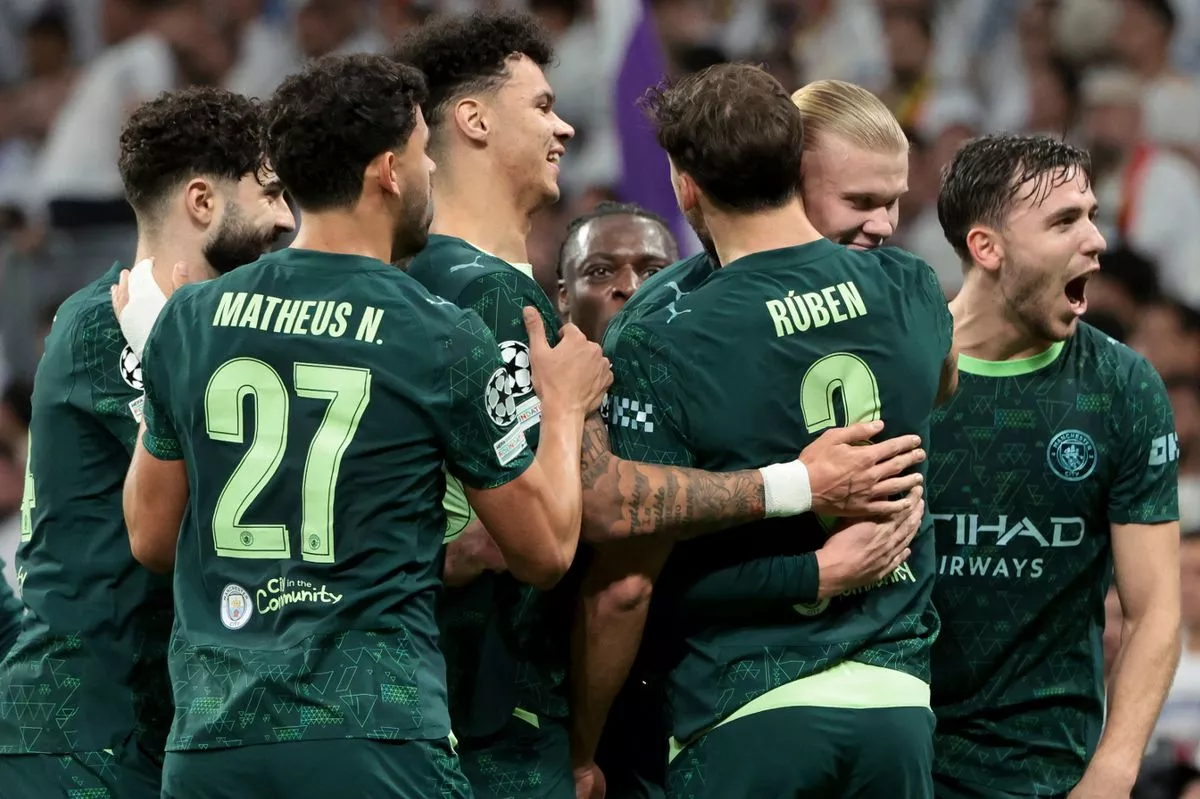
Perhaps most importantly, he delivered in Europe. City’s victory at the Bernabeu in December was a defining moment of the year. It restored belief. It reminded everyone that City still belonged among Europe’s elite. Donnarumma’s performance that night was a statement. In a year where City were not always dominant, having a goalkeeper who could win games became essential.
So who is Manchester City’s most valuable player of 2025? There is no single correct answer.
Gonzalez gave the team stability when it had none. Haaland delivered goals and leadership. Cherki provided creativity and match-winning moments. Donnarumma offered security and belief.
What unites them is not perfection, but presence. They were there when City needed them most. They carried responsibility through a difficult year. They helped transform chaos into control. And that, more than trophies or statistics, defines true value.
As Manchester City look ahead to 2026, this year will be remembered as a turning point. Not a year of dominance, but a year of resilience. And these four players will be remembered as the pillars that held the club steady when everything else was shaking.