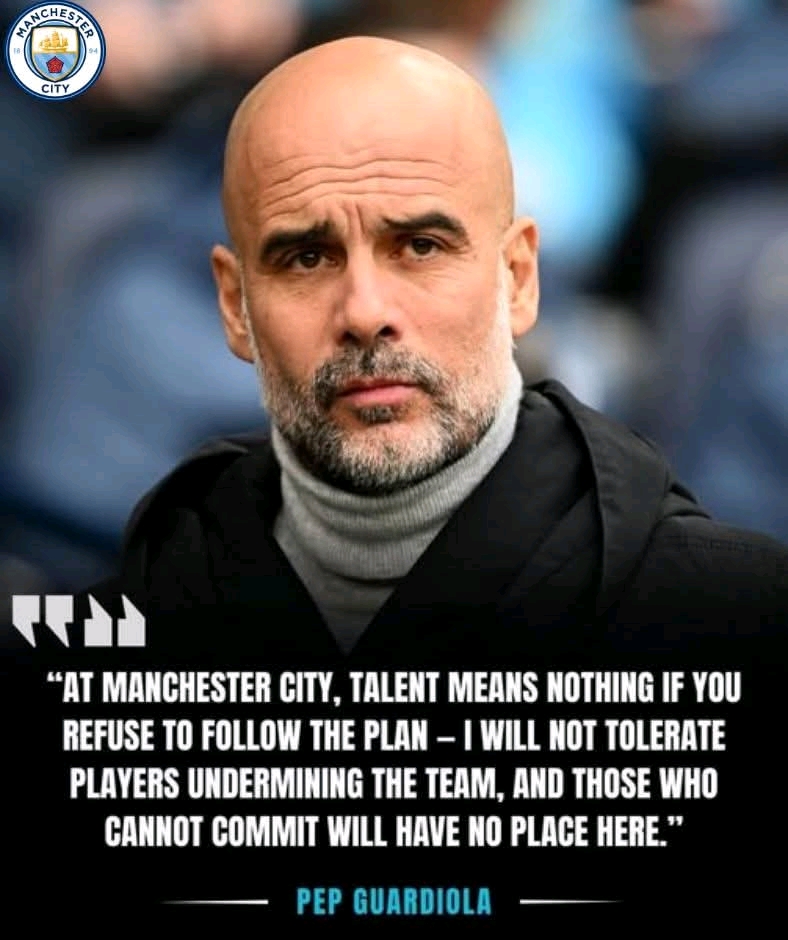
Pep Guardiola has finally drawn a hard line at Manchester City, and the message could not be clearer. No player, no matter the name, reputation, past success, or price tag, is bigger than the system, the discipline, and the standards he has built at the Etihad Stadium. Reports now suggest that two Manchester City players are set to be sold after Guardiola lost patience with their attitude in training and their refusal to properly follow tactical instructions. It is a decision that has sent shockwaves through the fan base and sparked heated debate across English football, because when Pep Guardiola makes a call like this, it is never emotional, never rushed, and never without long-term consequences.
For years, Guardiola has been known as a manager who demands total commitment. He does not just want talented footballers. He wants thinkers, learners, players who are ready to suffer, adapt, and change their natural instincts for the good of the team. At Barcelona, Bayern Munich, and Manchester City, the same pattern has followed him. Players who fully buy into his ideas often reach levels they never imagined. Players who resist, question too much, or believe they know better rarely last long. This latest development at City feels like another chapter in a story football fans know very well, but it still carries huge weight because of the timing and the current situation at the club.
Manchester City are not enjoying a smooth season. Injuries have piled up, performances have dipped, and the aura of total control that once surrounded them has been cracked. Fatigue has been a constant theme, both physically and mentally. Guardiola himself has looked frustrated and stretched thin on the touchline. When a team is going through moments like this, training ground harmony becomes even more important. Any sign of resistance, lack of effort, or tactical disobedience stands out immediately. According to reports, Guardiola has seen enough.
The idea that two players are being pushed towards the exit because of training attitude is not something that happens lightly at Manchester City. This is a club that invests heavily not just in talent but in character. Players are carefully profiled before they arrive. Guardiola is deeply involved in recruitment and does not simply sign names. For things to reach the point where selling becomes the solution, the situation must have gone on for some time. It suggests repeated issues, not one bad week or one heated exchange.
Training under Pep Guardiola is famously intense, detailed, and mentally exhausting. Sessions are not just about fitness or basic drills. They are classrooms. Every movement has meaning. Every position is rehearsed. Guardiola often stops sessions to correct body shape, passing angles, or decision-making. Some players love this level of detail because it makes them feel sharper and smarter. Others struggle. For those who rely more on instinct than structure, Guardiola’s methods can feel restrictive. If a player begins to ignore instructions or only half-commit, it becomes a serious problem very quickly.
Refusing to follow tactics is seen by Guardiola as more than disobedience. To him, it is disrespect to teammates. His football is built on collective understanding. One player stepping out of line can collapse the entire structure. That is why Guardiola has always preferred to lose with his ideas rather than compromise them. This philosophy has shaped his greatest successes, and it also explains why he has never hesitated to let big names go.
Manchester City fans will remember similar situations in the past. High-profile players have left the club not because they lacked ability, but because they did not fully fit Guardiola’s demands. Some departures shocked supporters at the time, but many later admitted Guardiola was right. The system kept evolving, the team kept winning, and replacements often performed better within the structure. Guardiola’s authority inside the dressing room has always been protected, and this latest move reinforces that tradition.
What makes this situation especially interesting is the wider context. City are fighting on multiple fronts while dealing with injuries and squad strain. Letting two players go, especially mid-season or ahead of a rebuild, is a bold statement. It suggests Guardiola would rather work with fewer players who fully commit than keep a larger squad with internal tension. That kind of thinking does not please everyone, especially fans who worry about depth and rotation. But Guardiola has never managed with fear. He manages with conviction.
The reported reasons behind the decision have fueled debate. Poor training attitude is a phrase that can mean many things. It could involve lateness, lack of intensity, negative body language, or failure to respond to feedback. In Guardiola’s world, even small details matter. A player who jogs instead of sprints, who switches off during tactical work, or who openly questions instructions can quickly fall out of favor. Refusal to follow tactics, however, is more serious. It suggests a breakdown in trust between player and manager.
Trust is everything in Guardiola’s teams. He trusts players to execute complex ideas under pressure. In return, he expects absolute belief in his vision. When that trust cracks, recovery is difficult. Guardiola is not known for public arguments or explosive confrontations. He prefers quiet decisions. Players suddenly find themselves benched, left out of squads, or playing reduced roles. When that happens consistently, the writing is usually on the wall.
From the club’s perspective, backing Guardiola in moments like this is almost automatic. He has delivered unprecedented success. Multiple Premier League titles, domestic dominance, and European glory have all come under his leadership. When Guardiola says standards are being compromised, the club listens. Selling two players sends a message not just to the squad, but to future signings as well. Manchester City remains a place where discipline and tactical intelligence are non-negotiable.
Fans, as expected, are divided. Some support Guardiola fully, arguing that no individual should ever challenge the manager’s authority. They believe standards must be protected at all costs, especially during a difficult season. Others worry that Guardiola’s strictness sometimes pushes away players who could still offer value, particularly in moments when depth is needed. This debate has followed Guardiola throughout his career, and it never truly goes away.
Pundits have also weighed in, as they always do when Guardiola makes strong decisions. Some praise him for maintaining control and preventing dressing room issues from spreading. Others suggest that modern players need more flexibility and communication, especially given the pressures of the modern calendar. The truth likely sits somewhere in between, but Guardiola has never been one to adjust his principles based on outside opinion.
The two players involved have not been officially named in many reports, which has only increased speculation. Every underperforming or inconsistent City player is now being discussed online. Training ground rumors, body language during matches, and past comments are being analyzed in detail. This kind of atmosphere can be uncomfortable, but Guardiola is used to it. He rarely addresses such matters publicly until decisions are already made.
What is clear is that Guardiola is preparing for another phase at Manchester City. Every season under him brings small evolutions. Roles change. Systems shift. Players who once looked essential suddenly become replaceable. This is not cruelty. It is the reality of managing at the highest level with constant ambition. Guardiola wants hunger. He wants players who still feel like they have something to prove.
Selling players over attitude also speaks to Guardiola’s belief in culture over comfort. He has always argued that a strong dressing room culture wins trophies in the long run. Allowing discontent or disobedience to linger can poison that culture. Even if the players involved are popular or talented, Guardiola sees the bigger picture. He is thinking months and years ahead, not just the next match.
This decision could also reshape City’s squad balance. Departures open doors for others. Younger players, fringe squad members, or new signings often benefit when senior figures leave. Competition increases. Standards rise. Guardiola has repeatedly shown his willingness to trust players who show the right mentality, even if they lack experience. That approach has helped City stay fresh while others stagnate.
There is also a financial angle. Selling players who no longer fully commit protects the club’s value. Waiting too long can reduce transfer fees and limit options. By acting decisively, City can reinvest in profiles that better suit Guardiola’s demands. Recruitment at City is rarely reactive. It is planned, detailed, and aligned with the manager’s philosophy.
From Guardiola’s personal perspective, this moment feels like a reassertion of control. With pressure building from injuries, fixture congestion, and expectations, drawing a line internally can bring clarity. Players know exactly where they stand. There is no confusion about what is acceptable and what is not. Guardiola thrives in environments where expectations are clear and uncompromising.
As the season continues, attention will naturally turn to how City respond on the pitch. If performances improve, Guardiola’s decision will be praised as decisive leadership. If struggles continue, critics will question whether removing players was the right call. That is the reality of elite management. Every choice is judged through results.
One thing, however, remains consistent. Pep Guardiola will not change who he is. He believes football is about ideas, discipline, and collective effort. He believes training is sacred. He believes tactics are not suggestions but instructions. Players who share that belief often flourish under him. Players who do not eventually move on.
For Manchester City, this moment could mark the start of another quiet reset. Not a dramatic rebuild, but a recalibration of values. The squad will evolve again, shaped by Guardiola’s relentless standards. Fans may not agree with every decision, but history suggests that trusting Guardiola usually ends in success.
In the end, this story is not just about two players potentially leaving Manchester City. It is about power, principles, and the kind of football culture Guardiola refuses to compromise. In an era where managers are often forced to bend to player power, Guardiola continues to push the opposite direction. He draws his line, stands by it, and moves forward without looking back.
Whether this decision reshapes City’s season or simply reinforces an already strong foundation remains to be seen. What is certain is that Pep Guardiola has once again reminded everyone that at Manchester City, talent gets you through the door, but discipline and belief keep you inside.