Richard Keys has shared some worrying inside information regarding Phil Foden.

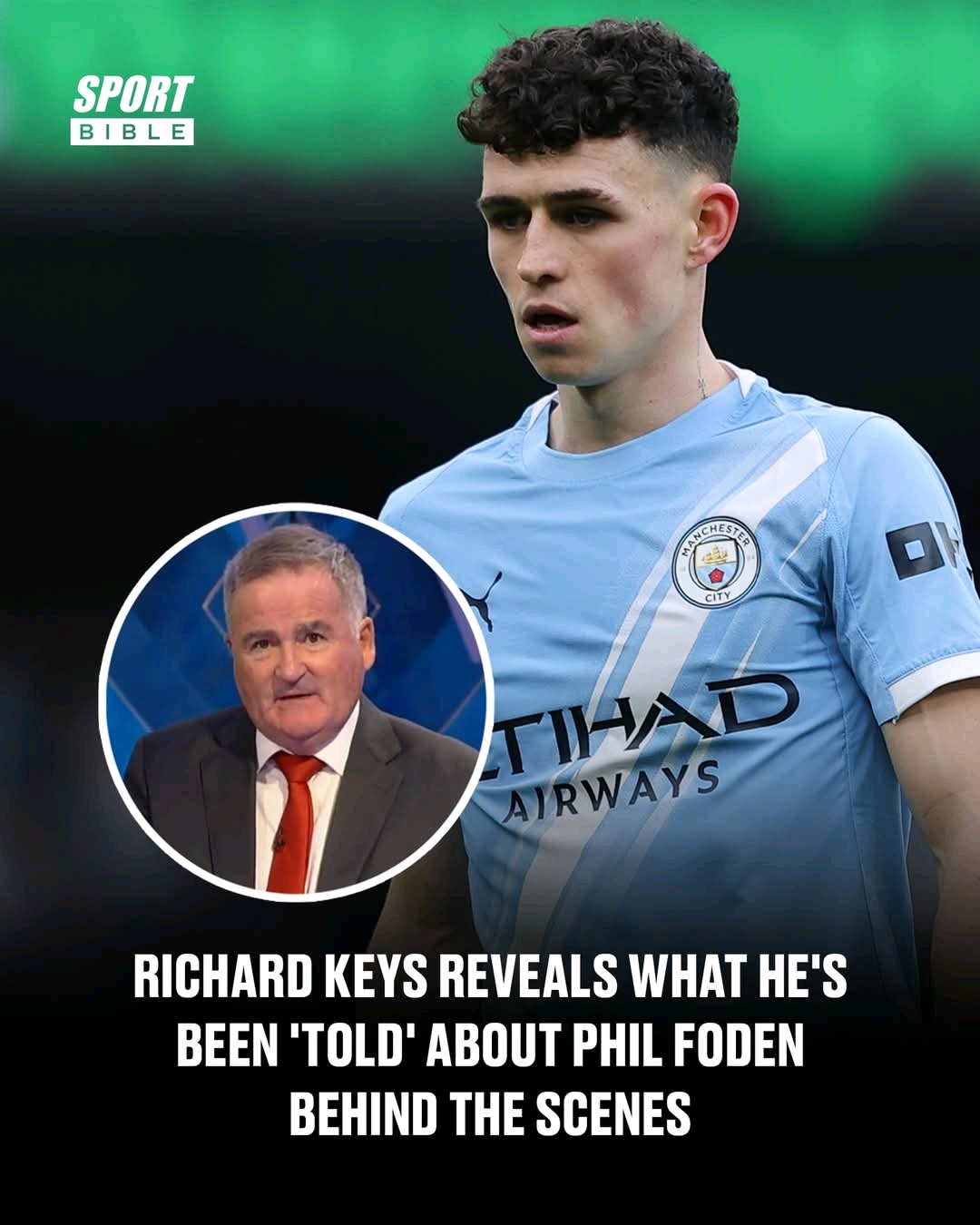
The noise around Phil Foden is getting louder again. Not the noise of cheering fans. Not the noise of commentators praising his genius. This time it is the noise of questions. Doubts. Whispers. And now, a strong claim from Richard Keys that has made many people stop and think.
Foden is not just any player. He is Manchester City’s golden boy. He is the kid from Stockport who walked into the first team at Manchester City and made the world believe he was born to play football at the highest level. Under Pep Guardiola, he grew from a talented academy graduate into one of the most important players in the team. He became a symbol of City’s success. A local lad becoming a global star.
But football changes fast.
This season has not followed the script many expected for Foden. On paper, his numbers in the Premier League do not look terrible. Ten goals. Five assists. For many players, that would be a very solid return. For Foden, after what he has shown before, it feels different. It feels below the level he set for himself.
There was a time not long ago when Foden looked unstoppable. During Manchester City’s historic run to four Premier League titles in a row, he was central to everything. In that incredible title-winning season, he scored 19 league goals in 35 appearances. He was electric. He was confident. He was decisive. He was everywhere on the pitch. He won individual awards. He was praised as one of the best players in England. Some even said he was becoming the face of English football.
Then came the treble season. Again, he delivered. While others like Erling Haaland took many headlines, Foden’s influence was clear. His movement between the lines. His calmness in tight spaces. His ability to score from distance. His understanding of Guardiola’s system. He was not just a good player in a great team. He was a great player in a great team.
But last season was different.
Manchester City did not win a major trophy in the 2024/25 campaign. For a club that had grown used to lifting silverware, that felt strange. And for Foden personally, it was a step backwards. He scored only seven league goals in 28 appearances. On the surface, 28 appearances sounds like regular involvement. But as Richard Keys pointed out, the word “appearance” can be misleading. A three-minute cameo off the bench counts the same as a full 90-minute performance in the statistics.
And that is part of the story this season too.
In City’s last five Premier League games, Foden started only once. Once. For a player who was once considered undroppable, that is a big change. Against Newcastle United in a tight 2-1 win, he came on for just three minutes. Three minutes. That is barely enough time to touch the ball properly, let alone change a game.
It raises questions.
Is he injured? If he is injured, why is he always on the bench? If he is fit enough to sit there and potentially come on, then why is he not starting more often?
Earlier in the previous season, Guardiola described some of Foden’s problems as “illness.” That word caught attention. Illness can mean many things. Physical illness. Mental exhaustion. Stress. Something personal. Guardiola did not go into detail. He rarely does when it comes to personal matters.
Foden himself opened up a little in interviews. After that brilliant 19-goal league season, he admitted in an interview with the BBC that he had “a lot of things going on off the pitch mentally.” That was a rare moment of honesty. Footballers do not always speak openly about mental struggles. The pressure at the top level is enormous. Every game is watched by millions. Every mistake is analysed. Every dip in form becomes a headline.
He also told the Manchester Evening News that he had been dealing with an ankle injury. He described it as a “difficult season.” He said he was “mentally fatigued.” That phrase stood out. Mental fatigue is real. Especially for a player who has been competing at the highest level, year after year, in domestic and European competitions, plus international tournaments with England.
Now Richard Keys has added more fuel to the discussion.
In his recent blog, after talking about other players like Viktor Gyokeres and Eberechi Eze, Keys turned his focus to Foden. He reminded readers how important Foden was during City’s title-winning campaigns. He even said that for him, City are not the same without Foden. That is strong praise.
But then he asked the big question. What has happened?
Keys claimed that he has been told Foden struggles with the demands of being a top-end footballer. That is a powerful statement. The demands of being a top-end footballer are not small. It means constant pressure. Constant expectation. No room for long dips in form. Endless matches. Endless travel. Endless scrutiny. Social media criticism. National team responsibility. Commercial commitments. Interviews. Public appearances. The list goes on.
If what Keys has been told is true, then it is not about talent. Nobody doubts Foden’s talent. It would be about coping with everything that comes with being at the very top.
Keys said that if this is true, then people can only have sympathy for Foden and hope he can conquer it. That word, conquer, is important. It suggests a battle. A personal fight. Something internal.
At 25 years old, Foden is no longer the teenage wonderkid. He is supposed to be in his prime. He is supposed to be leading Manchester City and England. With the World Cup coming, his form matters even more. England fans will be hoping to see the best version of him on the biggest stage.
But right now, he is not guaranteed a starting place even at club level.
Competition at Manchester City is fierce. Guardiola has options everywhere. In advanced midfield roles and wide areas, there are players like Kevin De Bruyne, Bernardo Silva, Jack Grealish, Jeremy Doku, and rising academy talents like Nico O’Reilly, who has impressed recently. If one player drops even slightly in performance or intensity, there is someone ready to take his place.
That is the reality of a top club.
In previous seasons, Foden forced his way into the team because he was too good to ignore. His goals were decisive. His performances were match-winning. He had that spark. Recently, that spark has flickered.
He has not scored in any competition since his goal against Crystal Palace in December. At that time, it was his fourth goal in six games. It looked like he was back. It looked like the difficult period was behind him. Then, suddenly, the momentum stopped.
Football can be cruel like that. One month you are unstoppable. The next month you are sitting on the bench, watching others take your place.
The pressure increases when your team is chasing a title. Manchester City are currently five points behind Arsenal, though they have a game in hand. Every match matters. Every decision from Guardiola is about results. If he feels another player gives him a better chance in a specific game, he will make that choice. He has always been ruthless in that way.
For Foden, this period is a test of character.
Many great players go through dips. It is normal. But how they respond defines their legacy. Do they hide? Do they complain? Or do they work harder?
So far, there has been no public complaint from Foden. No dramatic statements. No visible frustration. Just quiet appearances from the bench and the occasional start.
Richard Keys’ comments have added drama because they suggest something deeper than just form. They suggest that behind the scenes, there may be a struggle with the lifestyle and pressure that comes with elite football.
If that is true, it would not make Foden weak. It would make him human.
Modern footballers are under more pressure than ever. Every training session can be filmed. Every moment can be shared online. Fans debate every touch of the ball. Former players become pundits and analyse everything. A player can trend on social media for a misplaced pass.
Foden grew up in the spotlight. From a young age, he was labelled a future star. Expectations were built around him. When he delivered 19 league goals in a title-winning season, those expectations doubled. Now, anything less than brilliance feels like disappointment.
But football careers are long journeys. At 25, Foden still has many years ahead. A few difficult months do not erase what he has achieved.
The key question is how Guardiola views the situation. Guardiola has always trusted Foden. He once described him as the most talented player he has ever coached. That is huge praise from a manager who has worked with Lionel Messi and many other superstars.
If there is a deeper issue, Guardiola will likely try to manage it carefully. He has shown before that he protects his players publicly. He rarely throws them under the bus. If he talks about illness or fatigue, it may be because he wants to shield them from harsher criticism.
As Manchester City prepare to face Leeds United next, the spotlight will again fall on team selection. Will Foden start? Will he remain on the bench? Every decision will be analysed through the lens of these recent comments.
Meanwhile, SPORTbible has reportedly reached out to Manchester City and Foden’s representatives for comment. That suggests the story has enough weight to demand a response. Whether there will be one remains to be seen.
For now, fans are left with speculation.
Some believe it is simply a matter of form and competition. Others think there is something more personal going on. Richard Keys believes he has been told something significant about the demands of being a top-end footballer weighing heavily on Foden.
The truth may lie somewhere in between.
What is certain is that Manchester City are a different team when Foden is at his best. His energy, his intelligence, his eye for goal, his ability to drift into dangerous spaces – these qualities make City unpredictable. Even Keys admitted that, for him, City are not the same without Foden.
That statement alone shows how high the bar has been set.
Football is full of comebacks. Players fall. Players rise again. Sometimes a difficult period becomes the turning point that strengthens a career.
If Foden can overcome whatever is holding him back – whether it is physical discomfort, mental fatigue, pressure, or simply a temporary dip in confidence – he can return stronger. He has already shown resilience before. Breaking into Guardiola’s City side as a teenager required courage and belief.
Now he faces a different challenge. Not proving he belongs, but proving he can handle the weight of being one of the best.
Richard Keys has thrown the spotlight back onto Phil Foden. The next chapter will be written on the pitch.