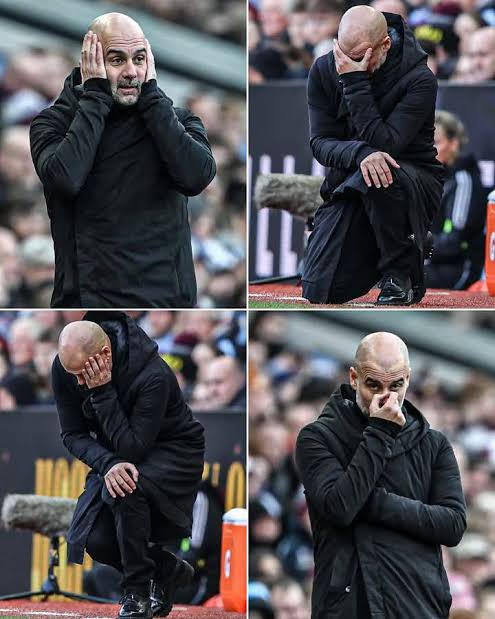
Manchester City’s manager Pep Guardiola has found himself at the centre of a storm this week after receiving a yellow card during his side’s FA Cup win at Newcastle, a booking that has triggered a two-game touchline ban under the Premier League’s new disciplinary rules. The incident happened at St James’ Park when Guardiola confronted fourth official Lewis Smith following a foul by Kieran Trippier on Manchester City’s Jeremy Doku. The yellow card was Guardiola’s sixth of the season, and with the league’s updated regulations, accumulating six cautions automatically results in a two-match ban for Premier League managers.
The ban applies to league and FA Cup matches, which means Guardiola will have to watch Manchester City’s upcoming Premier League clash against West Ham from the stands as well as the FA Cup quarter-final game scheduled for the weekend of April 4-5. However, the ban does not extend to European competitions or domestic cup finals, so Guardiola will be on the touchline for the Carabao Cup final against Arsenal on March 22, where City will aim to continue their recent domestic success.
After the match, Guardiola expressed his frustration at the situation in his typical candid style, highlighting both his long-standing record in English football and the circumstances surrounding the booking. “I will tell you something,” he said. “We have all the records in this country, all of them, despite everything. We have the record of the manager with the most yellow cards. I want all records and now I have it, two-game ban now and I will go on holiday the next two games.” Guardiola’s comments underscored both his irritation at being booked and his determination to defend his players, insisting that he acted to protect Doku and the wider interests of his squad. “There are things after 10 years I cannot understand. Review the action. Of course I’m going to defend Doku and all my teams,” he added, reflecting his consistent approach of standing up for his players during contentious moments.
The context of the booking is important. In the FA Cup match at Newcastle, Jeremy Doku was fouled by Trippier in a challenge that Guardiola felt warranted more immediate attention from the officials. His confrontation with the fourth official was impassioned and reflected the intensity with which Guardiola approaches every competitive situation. While some might see the booking as minor, it adds to a season-long pattern of disciplinary issues for the City manager, highlighting both his fiery temperament and the level of involvement he maintains during matches. Guardiola’s history of reacting strongly to perceived injustices on the pitch has become well documented, with this incident simply adding to a long list of occasions where his emotions have spilled over in highly public ways.
Under the Premier League’s new rules, managers are suspended for one game after three yellow cards and face a two-game ban after six. This system aims to reduce confrontations and maintain decorum on the touchline, but for someone like Guardiola, who is deeply engaged in every moment of a match, it presents a challenge. The Spaniard has consistently shown that he is unwilling to step back when he believes a player is being unfairly treated, and his proactive style of defending his team has led to repeated bookings. The result is the current suspension, which will affect two of Manchester City’s crucial fixtures in the league and FA Cup, both of which are essential for the club’s ambitions this season.
The upcoming games without Guardiola on the touchline could have significant implications for Manchester City. Next Saturday’s Premier League clash with West Ham will be critical in maintaining the club’s momentum in the title race. Guardiola’s absence will require his coaching staff to step up and manage the team during the game, executing his tactical instructions while ensuring that the players maintain focus and intensity. Similarly, the FA Cup quarter-final presents a high-stakes knockout scenario, where the presence of a manager of Guardiola’s experience can make a significant difference. While he will still be involved in preparation and team selection, the inability to directly influence the match from the sidelines represents a notable disadvantage in key moments.
Guardiola’s reaction to the ban highlighted his unique blend of humor, frustration, and pride in his record. His comment about going on “holiday” during the next two games was delivered in his usual tongue-in-cheek manner, but it also conveyed a subtle frustration with the disciplinary system. Guardiola has spent over a decade in English football, achieving remarkable success with Manchester City, and the fact that he now holds the record for the manager with the most yellow cards illustrates both his longevity and his highly visible style of management. The incident has sparked conversation among pundits and fans alike, with discussions centering on the balance between managerial passion and adherence to regulations.
This touchline ban also brings attention to Guardiola’s broader management style, which is characterized by intense involvement, tactical precision, and a deep emotional connection with his players. Whether defending a player like Doku or reacting to a controversial decision, Guardiola consistently demonstrates that he is fully committed to his team’s performance and wellbeing. While this has earned him admiration and results on the field, it also places him at odds with disciplinary authorities, creating situations where his engagement leads to unavoidable consequences such as the current suspension.
In terms of strategy, Manchester City will need to adapt for the next two matches without their manager’s direct presence. Assistant coaches and support staff will have to execute Guardiola’s tactical plan and maintain the team’s structure and playing style. Guardiola is known for his meticulous preparation and attention to detail, so his influence will still be felt behind the scenes, but the absence from the touchline introduces an element of unpredictability. Players will have to manage in-game decisions more independently, responding to evolving situations without the immediate guidance of their manager, which can test their discipline and understanding of the system.
The incident also raises questions about how managers in the Premier League balance passion with discipline. Guardiola’s willingness to challenge officials and defend his players is a testament to his commitment, but it also illustrates the fine line that exists under current regulations. For City, the key will be ensuring that the team remains focused and cohesive during matches, even without Guardiola actively present on the sidelines. It is a scenario that tests the resilience of both the coaching staff and the players, demonstrating the importance of internal leadership and communication within a top-tier team.
Beyond the immediate impact, the two-game ban offers Guardiola a rare opportunity for reflection. Known for his analytical approach and constant assessment of performance, Guardiola may use this period to review team strategies, refine training plans, and identify areas for improvement. While the suspension removes him from the pitch during matches, it does not limit his ability to influence preparation, tactics, or player motivation. In this way, the ban could serve as a strategic pause, allowing for careful consideration and adjustments ahead of crucial fixtures later in the season.
Guardiola’s comments after the match also highlighted his awareness of legacy and records in English football. By referencing his long-term achievements and the accumulation of yellow cards, he placed the incident in the broader context of his career. This reflects a manager who is not only focused on immediate results but also conscious of his historical impact and standing in the sport. The blend of humor and critique in his remarks exemplifies his personality: a manager who is serious about football yet willing to approach challenges with candid honesty and a touch of levity.
The FA Cup match at Newcastle itself provided the backdrop for this disciplinary event. Manchester City’s victory was an important result, reinforcing their strength in domestic cup competitions while continuing their pursuit of success across multiple fronts. Guardiola’s involvement in defending his players during the match is consistent with his track record of maintaining discipline, advocating for fair play, and ensuring that his team is not disadvantaged by decisions from officials. These qualities are integral to his management philosophy and contribute to the team’s performance culture.
As the season progresses, Guardiola’s two-game suspension will be closely watched by media, fans, and analysts. Observers will be interested in how Manchester City performs without their manager on the touchline, whether the coaching staff can replicate his influence, and how players respond to the absence of direct in-game guidance. The situation serves as a reminder of the impact that managerial presence can have on a team’s performance, particularly for clubs competing at the highest level and striving for multiple trophies.
Guardiola’s ban also contributes to ongoing debates about the role of managers in modern football. In a sport where emotions run high and split-second decisions can change the outcome of matches, managers are often the most visible representatives of strategy, motivation, and authority. The Premier League’s rules aim to maintain order and reduce confrontations, but they also challenge managers like Guardiola who are highly engaged and proactive. His situation highlights the tension between maintaining discipline and allowing managers the freedom to passionately advocate for their players during matches.
The upcoming fixtures against West Ham in the Premier League and the FA Cup quarter-final will provide a test of the club’s adaptability. Guardiola’s tactical vision, preparation, and leadership will still guide the team behind the scenes, but in-game adjustments and motivational cues will rely on his assistants. The effectiveness of this approach could influence discussions on managerial impact and the importance of touchline presence in high-pressure situations. Analysts will likely study City’s performance closely, looking for evidence of Guardiola’s influence despite his absence and evaluating how well the coaching team can sustain the team’s style and strategy.
In summary, Pep Guardiola’s yellow card and resulting two-game touchline ban represent a significant development in Manchester City’s season. The incident underscores his passionate management style, his commitment to defending his players, and the challenges of balancing engagement with disciplinary rules. While the ban limits his in-game involvement, it does not reduce his overall influence on preparation, tactics, and strategy. Manchester City must now navigate upcoming fixtures with their manager absent from the sidelines, testing the resilience of both players and coaching staff while providing Guardiola with an opportunity to assess, plan, and reflect during a brief pause in direct matchday responsibilities.
The situation is emblematic of Guardiola’s tenure in England, reflecting both his achievements and the ongoing challenges of managing a top Premier League club. His blend of tactical genius, emotional involvement, and advocacy for players has delivered remarkable success, but it also brings the occasional clash with rules and officials. As City prepare for the next two matches without him on the touchline, all eyes will be on how the team performs, how the coaching staff adapts, and how Guardiola continues to influence proceedings from the stands. This moment adds another chapter to his distinguished career in English football, highlighting both the pressures of management and the enduring passion that defines his approach to the game.
As fans, pundits, and the football community watch closely, Guardiola’s response to the suspension and City’s performance in these matches will be scrutinized in detail. The incident also invites wider reflection on the balance between passion and discipline, the role of managers in modern football, and the ways in which rules affect the game’s dynamics. Guardiola’s record, personality, and influence make him a unique figure in this debate, and his approach to the two-game ban will reveal much about his managerial philosophy and resilience in the face of adversity.
While Guardiola steps back from the touchline, Manchester City will continue to compete across multiple competitions, aiming to secure victories in both domestic and European arenas. His absence offers opportunities for players to demonstrate autonomy and for the coaching staff to showcase their capacity to implement his strategic vision. Observers will be keen to see whether the team maintains its characteristic intensity, positional discipline, and tactical fluidity without direct managerial intervention during matches.
In the broader context, this episode highlights the intricate balance between authority, discipline, and passion in top-level football. Managers like Guardiola must navigate complex regulations while maintaining the drive, focus, and advocacy that define their leadership. The Premier League’s rules on touchline conduct are designed to promote order and fairness, yet they also create scenarios where the most engaged and passionate managers face temporary restrictions, as seen in Guardiola’s current two-game ban.
Looking ahead, Manchester City’s handling of these next two games will be closely monitored by fans, media, and rivals alike. The team’s ability to adapt, maintain performance standards, and execute tactical plans without Guardiola physically present on the sidelines will be a measure of both squad maturity and coaching staff competence. This period will be a test of resilience, leadership within the squad, and the efficacy of Guardiola’s overarching football philosophy when delivered indirectly.
Ultimately, the story of Guardiola’s yellow card and subsequent suspension is more than just a disciplinary matter. It is a lens through which the intensity of Premier League management, the role of emotional investment in coaching, and the interaction between rules and human behavior in football can be examined. Guardiola’s handling of the ban, City’s response on the field, and the media and fan reaction will all contribute to a narrative that exemplifies the pressures, challenges, and dynamics of managing one of the world’s top football clubs.
This incident will undoubtedly become part of Guardiola’s legacy in English football, reflecting both the passion that has defined his career and the regulatory challenges that come with top-level management. Manchester City’s ability to navigate this brief absence from the touchline, sustain performance levels, and continue competing at the highest level will be closely observed, and the outcomes of these games may influence perceptions of Guardiola’s influence, adaptability, and leadership style.
In conclusion, Pep Guardiola’s two-game touchline ban following his sixth yellow card of the season highlights the complexities of managing at the Premier League level. It underscores the balance between passion and discipline, the challenges of in-game advocacy for players, and the strategic adaptation required when a manager is temporarily absent. As Manchester City prepare for crucial fixtures against West Ham and in the FA Cup quarter-final, the football world will watch closely, analyzing the team’s performance, Guardiola’s influence behind the scenes, and the broader implications for managerial conduct and authority in modern football.
The incident serves as a reminder of the intensity, scrutiny, and stakes of top-flight football management, where every action has consequences, every decision is analyzed, and every record contributes to a manager’s legacy. Guardiola’s career, characterized by tactical brilliance, passionate advocacy, and a relentless pursuit of excellence, now includes this two-game suspension as a notable chapter, reinforcing the enduring drama and complexity of life on the touchline in the Premier League.
Over the coming weeks, the focus will be on Manchester City’s performances, Guardiola’s behind-the-scenes influence, and the broader conversation about managerial conduct in England’s top division. The story highlights how disciplinary rules intersect with competitive ambition, how leadership is tested in moments of adversity, and how even the most successful managers must navigate the regulatory frameworks that govern the game. Guardiola’s reaction, City’s adaptability, and the resulting outcomes will all contribute to a rich narrative that exemplifies the pressures and demands of Premier League football, providing insight into the challenges, strategies, and dynamics that define elite football management.
As the Premier League continues to unfold, this incident will remain a talking point, illustrating the ongoing tension between regulation and passion, authority and emotion, and strategy and spontaneity in football. Guardiola’s two-game touchline ban is not just a momentary setback; it is a lens through which the intensity, scrutiny, and stakes of modern football management can be examined, offering a window into the intricate interplay of rules, human behavior, and competitive ambition at the highest level.
The ban also highlights the resilience required of a top-tier squad. Manchester City players and coaching staff will have to operate with heightened awareness, making autonomous decisions on the pitch while adhering to Guardiola’s philosophy and tactical framework. This period will test not only individual adaptability but also the collective cohesion of a team accustomed to direct managerial guidance. The ability to maintain performance standards, execute complex tactical plans, and respond to in-game developments without immediate managerial input will reflect the depth and maturity of Guardiola’s squad and coaching setup.
Beyond the immediate implications, the suspension adds to ongoing discussions in football circles about the role of managers in influencing games, the effectiveness of touchline regulations, and the balance between authority and accountability. Guardiola’s approach, which combines intense emotional involvement with strategic precision, provides a case study in the challenges faced by elite managers operating under strict disciplinary frameworks. His two-game absence will be analyzed not only for its effect on Manchester City’s results but also for the broader lessons it offers about leadership, engagement, and the human element in football management.
In essence, this episode encapsulates many facets of modern football management: the intensity of competition, the scrutiny of behavior, the importance of tactical guidance, and the impact of regulations on leadership. Guardiola’s reaction, the subsequent ban, and City’s forthcoming performances collectively offer insights into how top clubs navigate adversity, maintain standards, and adapt to temporary disruptions in leadership. It underscores the fact that even world-class managers must contend with rules that influence how they express passion, protect players, and assert authority during matches.
As Manchester City prepare for the upcoming fixtures without Guardiola on the touchline, all eyes will remain on the team’s ability to uphold the standards expected at the highest level. The coaching staff’s competence, the players’ discipline, and the implementation of Guardiola’s tactical vision will be scrutinized, with observers keen to see whether City can maintain their characteristic style and effectiveness under slightly altered conditions. This moment highlights the broader themes of adaptability, leadership, and resilience that define elite football, demonstrating the interplay between managerial presence, team performance, and competitive outcomes in the Premier League.
Pep Guardiola’s two-game touchline ban following his sixth yellow card of the season is a vivid reminder of the pressures, rules, and realities of modern football management. It illustrates how a manager’s passion, advocacy, and intensity can collide with regulations, how teams must adapt in response, and how the broader football community observes, interprets, and debates such incidents. The story serves as both a specific update on Manchester City’s situation and a broader reflection on the challenges and dynamics that define top-level football management, highlighting the constant tension between authority, emotion, and performance in one of the world’s most demanding leagues.
The coming weeks will reveal how Manchester City cope with the absence of Guardiola from the touchline, how the team executes tactical plans, and how players rise to the occasion when direct managerial input is temporarily removed. Guardiola’s behind-the-scenes influence, the adaptability of the coaching staff, and the resilience of the squad will all be key factors determining the outcomes of these matches. The narrative will continue to develop, providing insights into leadership, discipline, and strategic execution at the highest level of the sport, ensuring that this episode becomes a memorable chapter in both Guardiola’s career and Manchester City’s season.
Ultimately, this situation encapsulates the enduring drama, intensity, and complexity of Premier League football management. Pep Guardiola’s two-game ban is more than a disciplinary footnote; it is a reflection of the intersection between human behavior, competitive drive, tactical oversight, and regulatory frameworks in elite football. The response of Manchester City, the interpretation of the incident by fans and pundits, and the subsequent performances on the pitch will all contribute to a rich and ongoing story, exemplifying the challenges, pressures, and intricacies of leading a top-tier football club in one of the world’s most scrutinized sporting environments.
As the season moves forward, Guardiola’s temporary removal from the touchline will be a defining narrative, highlighting the importance of adaptability, leadership, and the capacity to maintain high performance under altered conditions. The incident offers a unique perspective on the role of managers, the impact of disciplinary regulations, and the resilience required of both coaching staff and players when key figures are absent. Manchester City’s response, Guardiola’s management off the touchline, and the ensuing results will provide a compelling case study in the dynamics of elite football, the influence of leadership, and the intersection of passion and regulation in one of the world’s most competitive leagues.
This moment will undoubtedly be remembered as part of Guardiola’s legacy in the Premier League, reflecting both the intensity of his involvement and the complexities inherent in managing a top-level club. The two-game suspension is not simply a punitive measure; it is a window into the