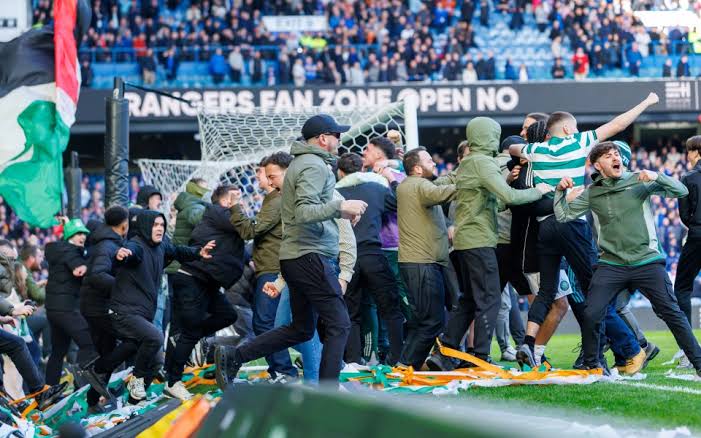
It started with a display. A moment of colour, noise, and pride inside a packed stadium, where thousands of supporters raised their phones at the same time. A tifo — that giant coordinated fan banner — unfolded in the stands of Celtic FC, designed to send a message of unity, identity, and dominance.
But within hours, that same display became the centre of ridicule.
Across the city, in pubs, online forums, and social media threads filled with passion and rivalry, fans of Rangers FC were not impressed. Instead of admiration, there was laughter. Instead of respect, there was mockery. And instead of silence, there was noise — loud, sarcastic, and relentless.
The question that immediately spread everywhere was simple:
Why are Rangers fans mocking Celtic’s latest tifo so heavily?
The answer, as it turned out, was not just about the artwork itself. It was about timing, context, rivalry history, and what supporters believe it represented at this moment in Scottish football.
To understand the reaction, you first have to understand what a tifo means in this rivalry.
In matches involving Celtic and Rangers, every detail matters. Every banner, every chant, every colour choice, every symbol is treated like a statement of power. These are not just football clubs competing for points. They are institutions carrying decades of history, emotion, and identity. When one side makes a visual statement, the other side responds — not on the pitch immediately, but in conversation, criticism, and sometimes humiliation.
So when Celtic unveiled their latest tifo, it was intended to inspire pride. It was meant to show unity among supporters and reinforce identity inside the stadium atmosphere. Fans inside the ground reacted with emotion, applause, and chanting. For them, it worked in the moment.
But outside that emotional bubble, interpretation changed quickly.
Online, Rangers supporters began breaking it down piece by piece. Screenshots spread rapidly. Videos were replayed. Zoomed-in sections were analysed like tactical mistakes in a post-match review. And slowly, what was meant to be powerful began to look, in the eyes of critics, questionable.
Some Rangers fans said the design lacked originality. Others argued it was trying too hard to send a message that did not land. A few even claimed it looked repetitive compared to previous displays seen in Old Firm matches.
But the deeper reason for the mockery was not just artistic opinion. It was psychological.
In rivalries like this, perception matters more than intention. If one side believes the other is trying to assert dominance but fails to impress, the reaction is often harsher than normal criticism. It becomes teasing. It becomes banter. And in some cases, it becomes full-blown ridicule.
That is exactly what happened here.
The reaction did not stay online for long. It moved quickly into everyday football conversations.
In Glasgow pubs, Rangers fans reportedly pointed at phone screens showing the tifo and laughed, turning it into jokes about missed impact and exaggerated hype. Some supporters said it felt like Celtic were trying to “win the atmosphere battle” before kickoff but ended up giving rivals something to laugh at instead.
Others were more direct, claiming the display was overhyped by Celtic supporters before it even appeared. According to them, the anticipation built around it was bigger than the actual result.
This is where rivalry psychology becomes important.
When expectations are high, disappointment becomes louder — even if the display itself is not objectively bad.
Inside the Celtic fanbase, reaction was very different. Many supporters defended the tifo strongly. They argued that atmosphere displays are about passion, not perfection. They said the intention was to motivate players, intimidate opponents, and create unity inside the stadium.
And in their view, it succeeded.
At Celtic Park, the moment the tifo was raised, the stadium atmosphere intensified. Songs grew louder. Energy increased. Players responded to the crowd. For many fans, that is all that matters.
But rivalry football rarely ends at the stadium gates.
Once the matchday moment fades, interpretation begins.
And in this case, Rangers supporters saw an opportunity.
Mockery is a common language in the Old Firm rivalry. It is not new. It is not unusual. It is part of the cultural rhythm between the two sets of fans. If one side celebrates something, the other side often challenges it. If one side creates a spectacle, the other side questions it.
That cycle has existed for decades.
What made this moment spread so quickly, however, was social media amplification. In earlier eras, this would have stayed in stadium conversations or local debates. Now, it travels instantly across platforms, reaching millions within hours.
Short clips, reaction posts, memes, and edited images turned the tifo into a trending topic among football fans in Scotland and beyond.
Some Rangers fans joked that the display was “trying too hard.” Others compared it to previous iconic tifos, arguing those had stronger impact or clearer messages. A few went further, turning it into humour about rivalry superiority, claiming their own supporters could “do it better next time.”
Of course, these reactions are part of football culture. Rival fans always exaggerate differences. What one side sees as brilliant, the other side often sees as flawed.
But behind the jokes, there is always competition.
The competition is not just on the pitch. It is in identity, pride, and symbolic victories.
For Celtic supporters, tifos are a tradition of expression. They represent belonging. They represent history. They are part of matchday culture that connects generations of fans.
For Rangers supporters, reacting to them is also part of tradition. It is a way of engaging in rivalry even when their team is not directly involved in that specific moment.
This is why the mocking spread so fast. It was not random. It was cultural.
As the debate continued, neutral football fans watching from outside Scotland also began commenting. Some found the situation humorous, pointing out how seriously both sides take visual displays. Others noted that such tifos are always subjective — what matters is emotional impact inside the stadium, not online approval.
Still, in modern football, online reaction often shapes narrative more than stadium experience.
And in this case, the narrative was clearly divided.
Inside Celtic circles, there was frustration at what they saw as unnecessary criticism. Many fans argued that Rangers supporters would mock anything regardless of quality, simply because rivalry demands it. They said the reaction was predictable and not worth overthinking.
Inside Rangers circles, the mood was different. The tifo became another talking point in ongoing rivalry discussions. It was used as a reference in banter, jokes, and competitive comparisons between fanbases.
But beyond the humour and rivalry, there was also a deeper layer.
Football tifos are not just decorations. They are statements of identity. They represent how fans see themselves and how they want to be seen. When those statements are mocked, it is not just the artwork being criticised — it is the identity behind it.
That is why reactions become so emotional.
At the heart of it, this is not really about a banner. It is about pride.
As discussions continued, some football observers pointed out an interesting pattern. In modern football, tifos have become more elaborate, more expensive, and more ambitious. Clubs and supporters invest significant time and effort into creating visuals that stand out globally.
But with higher ambition comes higher risk.
The more complex the message, the more space there is for interpretation. And in rivalries as intense as Celtic vs Rangers, interpretation is never neutral.
It is always filtered through loyalty.
So when Celtic’s latest tifo appeared, it was never going to be universally praised. Even if it had been technically perfect, it would still have been viewed differently depending on which side was judging it.
That is the reality of football rivalry.
As the conversation settled, one thing became clear. The tifo itself was not the real issue. The reaction was.
Mockery, praise, criticism — all of it existed in the same space because football rivalries thrive on contrast. Without contrast, there is no debate. Without debate, there is no passion. And without passion, there is no rivalry.
For Celtic supporters, the focus eventually returned to the pitch, where results matter most. For Rangers supporters, the tifo became another chapter in ongoing banter between the two clubs.
And for neutral fans, it was another reminder of how football culture extends far beyond the ninety minutes on the pitch.
In the end, the so-called “shocking reason” Rangers fans mocked Celtic’s tifo was not one single factor. It was a combination of expectation, rivalry psychology, online amplification, and cultural competition.
It was not just about what was displayed.
It was about who displayed it.
And in the Old Firm rivalry, that difference is everything.