Chris Kavanagh’s full conversation with VAR officials is extremely interesting

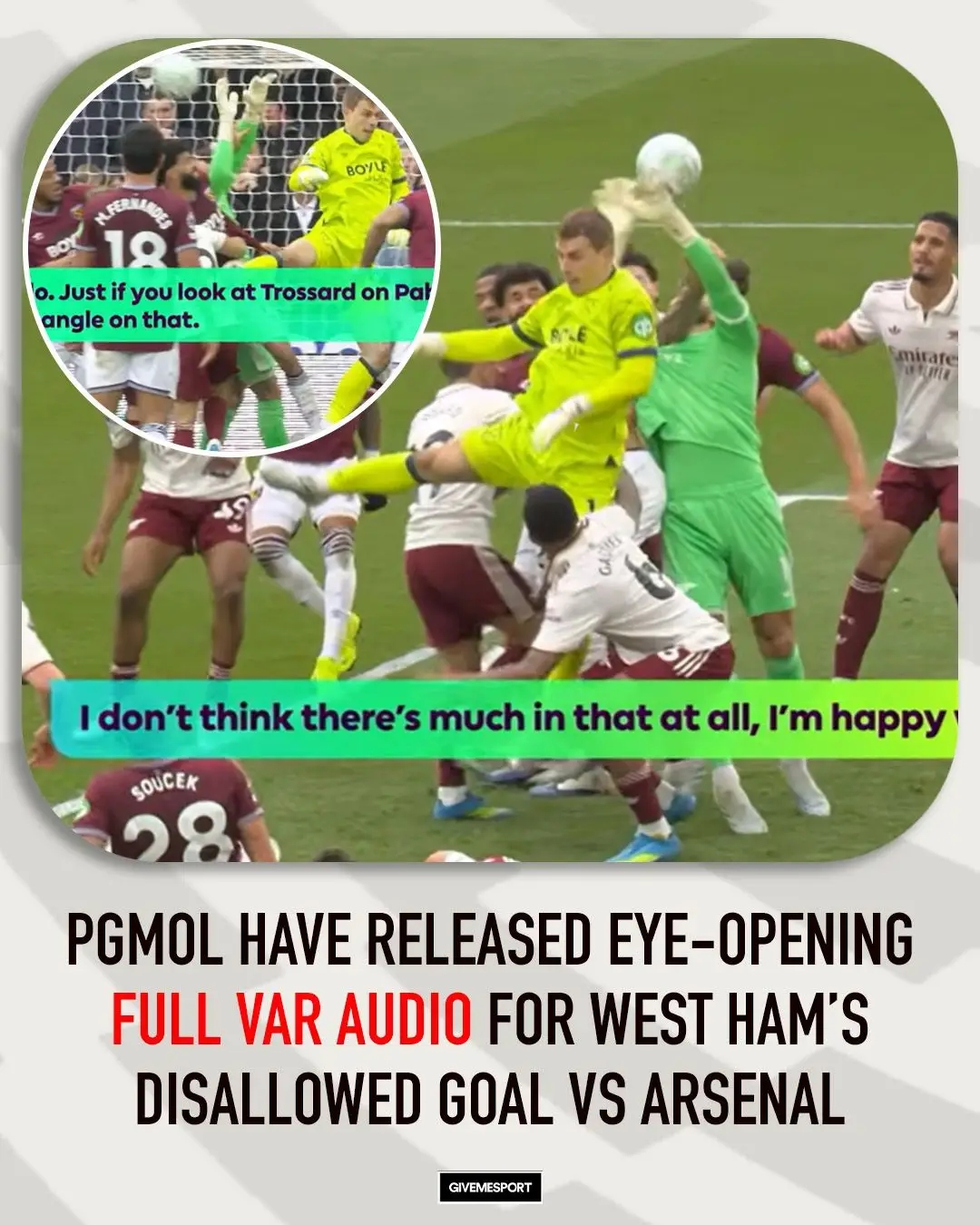
The tension in the English top flight has reached another explosive point as the Premier League title race between Arsenal and Manchester City continues to be shaped not only by goals and performances, but also by controversy, VAR decisions, and heated debate around officiating standards.
The latest storm surrounds a dramatic incident in Arsenal’s clash with West Ham United, where a stoppage-time equaliser was disallowed after a lengthy VAR review. The decision has sparked widespread discussion across football fans, analysts, and officials, especially after the full audio conversation between the referee and VAR team was released to the public.
At the heart of the debate is whether the decision to rule out the goal was correct, or whether it once again highlights the inconsistency and confusion that often surrounds modern VAR usage in the Premier League.
The match itself carried huge consequences. Arsenal were fighting to stay at the top of the table, while West Ham were battling to escape danger at the other end of the standings. Every moment mattered, every decision was critical, and every second of stoppage time felt like it could define an entire season.
Then came the moment that changed everything.
West Ham believed they had found a dramatic equaliser deep into the 95th minute. The ball ended up in the net after a chaotic corner situation involving multiple players inside the box. The stadium erupted. Players reacted instantly. It appeared to be a goal that could shake the title race and the relegation battle at the same time.
But the assistant referee signalled hesitation.
The on-field referee, Chris Kavanagh, immediately indicated concern about a possible foul in the build-up involving Arsenal goalkeeper David Raya. The goal was initially awarded, but VAR intervention soon followed.
From that point, everything became a slow and tense review process.
Inside the VAR room, led by official Darren England, the incident was studied from multiple angles. The key question was simple but controversial: was there a foul on the goalkeeper that directly impacted his ability to play the ball?
As the audio reveals, the officials debated every possible angle of the incident, not just focusing on the goalkeeper challenge, but also examining multiple other physical battles inside the penalty area.
One of the first observations from the VAR team was that there was a “possible foul on the goalkeeper.” The discussion focused on whether Arsenal players had interfered with Raya’s ability to jump, catch, or punch the ball during the corner.
From one angle, the VAR official suggested there was clear contact involving arms across the goalkeeper’s body. The interpretation was that this contact may have prevented Raya from performing a normal action to claim the ball. In his view, that level of interference could be considered a foul.
However, the situation quickly became more complicated.
As more camera angles were reviewed, doubts began to emerge. One angle suggested the contact was not as impactful as initially thought. Another angle showed a crowded penalty area with multiple players grappling for position, making it difficult to isolate one specific action as decisive.
The VAR conversation then expanded beyond just the goalkeeper incident.
The officials also began discussing other potential fouls in the same phase of play, including contact involving Arsenal midfielder Leandro Trossard and West Ham players inside the box. There was also mention of physical battles involving Declan Rice, who was involved in a separate duel during the corner situation.
The VAR team debated whether these additional incidents should influence the final decision. At one point, they attempted to analyse multiple angles simultaneously, creating confusion even within the review process itself.
The communication shows how difficult it was to reach a clear conclusion.
Eventually, the VAR officials recommended that the referee should review the incident at the pitchside monitor. This is the moment where the final decision would be made on the field.
When Chris Kavanagh approached the monitor, the complexity of the situation only increased. Multiple incidents were shown, multiple angles were presented, and multiple interpretations were offered.
The VAR team continued to explain their view, focusing again on the contact involving Raya’s arms, suggesting that the goalkeeper had been physically impeded in a way that prevented him from making a clean attempt to play the ball.
At the same time, they also acknowledged other physical challenges in the box, including the involvement of Trossard and Rice. The referee was asked to consider all of these factors before making a final judgment.
At one point, the referee expressed confusion, indicating that the multiple angles and overlapping incidents made it difficult to identify a clear single offence. However, after reviewing the final angle provided, he eventually agreed with the VAR recommendation.
The final on-field decision was made: foul on the goalkeeper. The goal was disallowed.
That decision immediately changed the direction of the match, preserving Arsenal’s lead and leaving West Ham furious.
For Arsenal, it was a crucial moment in their title challenge. The result meant they remained at the top of the table, keeping their hopes alive as they push toward what could become their first league title in over two decades.
For West Ham, however, the consequences were far more severe. The dropped point kept them in a dangerous position near the relegation zone, increasing pressure on their remaining fixtures and leaving fans frustrated with yet another narrow setback.
The reaction across football was immediate and divided.
Some argued that the correct decision had been made, pointing to the importance of protecting goalkeepers and enforcing rules around physical contact in the penalty area. Others insisted that the decision was too harsh, arguing that such levels of contact are common in corners and rarely punished.
The debate intensified further when PGMOL chief Howard Webb publicly supported the decision. Webb stated that the foul on the goalkeeper was “categorically” correct, explaining that the interference prevented Raya from performing his normal actions.
According to Webb, the key issue was not general contact in the box, but specific interference with the goalkeeper’s arms and ability to claim the ball. He argued that this type of contact has been consistently penalised throughout the season, and that the VAR team followed the correct process in identifying it.
He also acknowledged that other incidents, including the involvement of Trossard and Rice, were reviewed, but maintained that the goalkeeper interference was the most significant factor in the final decision.
However, even with the official explanation, the controversy has not disappeared.
Many fans and pundits continue to question whether VAR is delivering consistency or simply creating more confusion. The lengthy review process, combined with multiple angles and interpretations, has once again raised concerns about clarity in decision-making.
There is also growing discussion about how physical battles in the penalty area should be interpreted going forward. Corners often involve pushing, pulling, and blocking, and the line between fair challenge and foul play remains difficult to define.
As the season moves toward its conclusion, moments like this could become even more significant. With Arsenal and Manchester City separated by fine margins at the top of the table, every VAR decision has the potential to influence the title race.
For Arsenal supporters, this moment may be remembered as a turning point. For West Ham fans, it may be remembered as a moment of frustration and what-ifs. For neutral observers, it may simply be another example of how VAR continues to divide opinion in modern football.
What remains clear is that the debate is far from over. As long as controversial decisions like this continue to appear in high-stakes matches, questions about consistency, interpretation, and fairness will remain at the centre of English football discussion.
And once again, VAR has found itself not as a supporting tool for clarity, but as the main character in football’s ongoing drama.