HAS VAR JUST PUSHED MAN CITY TOO FAR?!” — Explosive Offside Controversy At The Etihad Leaves Fans Furious And Football In Chaos 😱💥 Football supporters across the world are reacting with disbelief after reports claimed a hugely controversial VAR offside decision left Manchester City officials and fans absolutely furious following a dramatic moment at the Etihad.

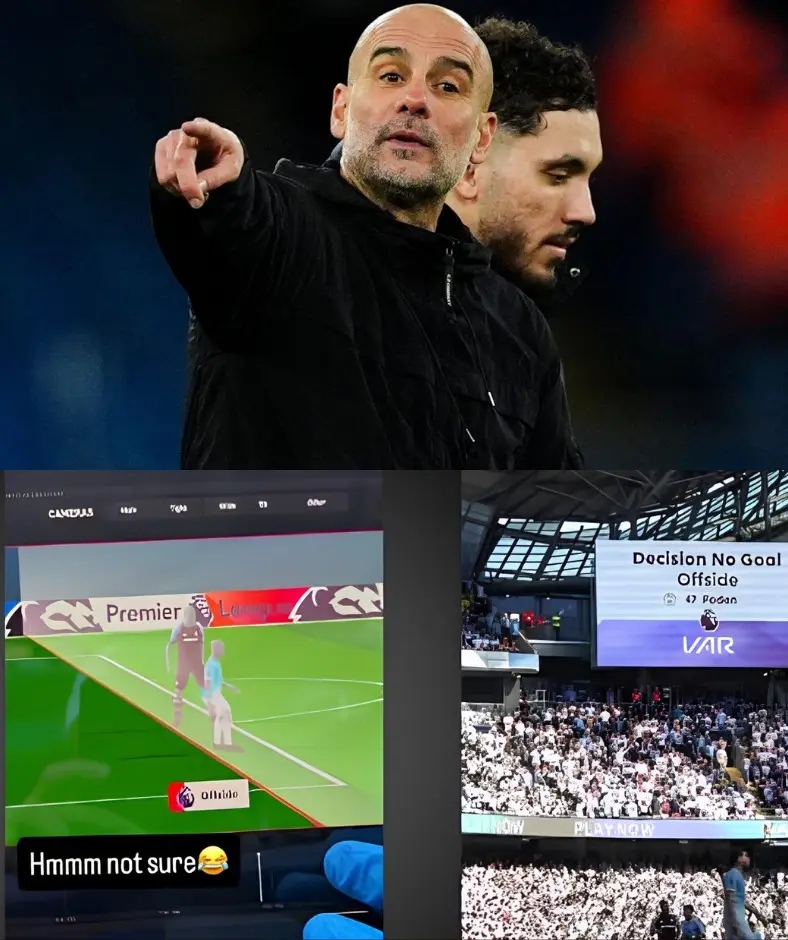
The atmosphere inside the Etihad Stadium was already tense long before the final whistle arrived, but nobody could have predicted the level of chaos that would explode across football after one controversial VAR decision left Manchester City supporters completely furious and reignited global debate over whether the technology is slowly destroying the emotional heart of the sport.
What should have been remembered as another dramatic Premier League night instead became a storm of outrage, confusion, conspiracy theories, and endless online arguments after an explosive offside call ruled out what many fans believed was a perfectly legitimate Manchester City goal.
Within minutes, social media had completely erupted.
Former players were arguing on television.
Pundits were demanding explanations.
Supporters from every major club flooded online platforms with reactions ranging from disbelief to anger.
And inside the Etihad itself, the sense of frustration became impossible to ignore.
For Manchester City supporters, this was not simply another controversial refereeing moment. To many of them, it felt like the latest chapter in a growing list of decisions they believe have unfairly damaged the club during crucial moments of the season.
The incident immediately sparked wider questions about VAR itself.
Has the technology actually improved football?
Or has it created a colder, more frustrating version of the sport where goals are no longer celebrated naturally and every major moment is followed by fear, uncertainty, and delays?
Those questions exploded once again after the controversial moment that now has the entire football world talking.
The drama unfolded during a high-intensity match at the Etihad, with Manchester City desperately pushing forward in search of a decisive breakthrough. The atmosphere inside the stadium was electric. Every pass, every tackle, and every attacking move carried enormous significance as City attempted to keep control of a crucial result.
Then came the moment that changed everything.
A flowing attacking move ended with the ball in the back of the net, triggering scenes of wild celebration across the Etihad. Players sprinted toward the corner flag. Fans exploded with joy. The noise inside the stadium became deafening.
For a few seconds, it looked like another iconic Manchester City moment had arrived.
But then came the pause.
The dreaded pause that football supporters around the world now recognize instantly.
The referee placed his hand to his ear.
The players stopped celebrating.
Fans stared nervously toward the giant screens.
VAR was checking the goal.
Immediately, anxiety replaced excitement.
Supporters inside the stadium began exchanging confused looks while television broadcasts replayed the attacking move from multiple angles. At first glance, many viewers struggled to see anything remotely clear enough to overturn the goal.
Yet the check continued.
Seconds stretched into what felt like minutes.
The energy inside the Etihad shifted from celebration to tension, then from tension to anger as supporters sensed the decision might not go their way.
And eventually, confirmation arrived.
Offside.
Goal disallowed.
The reaction was instant.
Boos thundered around the stadium while Manchester City players surrounded the referee demanding explanations. Replays shown repeatedly across television broadcasts only intensified the controversy because many supporters believed the margins involved were absurdly small.
Some fans claimed the attacking player looked level.
Others argued the technology itself could not possibly determine such fine margins accurately enough to justify overturning goals in moments like these.
The debate spread everywhere almost immediately.
Social media platforms became flooded with screenshots, freeze frames, and slow-motion clips as supporters desperately tried to prove whether the decision was correct or not.
Hashtags began trending globally within minutes.
Some supporters accused VAR officials of overcomplicating football.
Others argued the rules themselves had become impossible for ordinary fans to understand.
And predictably, rival supporters entered the debate too, creating even more chaos online.
But inside Manchester City, frustration reportedly went far beyond ordinary disappointment.
According to growing reports surrounding the incident, club officials were left deeply unhappy with both the decision itself and the broader handling of the VAR review process. Sources close to the situation suggested there was disbelief over how long the review took and confusion about which specific frame had ultimately been used to determine the offside call.
This became one of the biggest talking points after the match.
In modern football, offside decisions are often decided by microscopic margins measured using technology and computer-generated lines. While VAR was introduced to eliminate obvious errors, critics argue the system has evolved into something far more extreme.
Instead of correcting clear mistakes, they believe football is now seeing goals disallowed because of fractions of body parts measured at impossible speeds.
For many supporters, that was exactly what happened at the Etihad.
The controversy reignited long-standing frustration surrounding VAR consistency. One of the biggest complaints from supporters and managers over recent years has been the apparent lack of uniform decision-making across different matches.
Fans constantly ask the same question:
Why does one incident lead to intervention while another almost identical situation does not?
That frustration exploded again after the Etihad controversy because comparisons with previous offside calls quickly emerged online. Supporters began posting clips from earlier matches where similar situations appeared to produce different outcomes.
Some claimed Manchester City had been treated unfairly.
Others argued the decision was technically correct according to the laws of the game.
But even among neutral fans, there was growing agreement on one point: football’s relationship with VAR is becoming increasingly toxic.
The emotional impact of the decision inside the stadium was enormous.
Players who moments earlier had been celebrating passionately suddenly looked furious and mentally drained. Pep Guardiola’s former side continued pushing for another breakthrough, but the momentum of the game had clearly changed.
Supporters inside the Etihad remained angry for the rest of the match.
Every refereeing decision was now greeted with suspicion.
Every delay increased the tension.
And every replay shown on screens generated fresh waves of boos and frustration.
The psychological effect of controversial VAR moments is something many experts believe football still underestimates.
Goals are the emotional heartbeat of the sport.
They create joy, release tension, and produce unforgettable moments shared between supporters, players, and clubs. But VAR has fundamentally changed how goals are experienced.
Instead of immediate celebration, fans now often wait nervously for confirmation.
Instead of pure emotion, there is uncertainty.
At the Etihad, that emotional destruction became painfully obvious.
The supporters had celebrated what they believed was a crucial goal only for technology to take it away moments later.
And because the decision appeared so marginal, the anger became even more intense.
Many former players watching the incident reacted strongly afterward.
Some argued football has become too obsessed with perfection.
Others insisted the laws themselves need urgent reform.
Several pundits questioned whether offside decisions involving tiny margins actually protect the spirit of the game or simply create more controversy.
One former Premier League defender described the situation as “football being refereed by geometry instead of common sense.”
Another analyst argued that if fans need multiple freeze frames and computer lines to understand a decision, then the sport has already lost something important.
These opinions quickly spread across football media.
Television debates became heated.
Radio phone-ins exploded with angry supporters.
Online fan channels uploaded furious reactions demanding answers.
The controversy became bigger than the match itself.
And for Manchester City supporters, that made the situation even more painful.
Because beyond the frustration of the decision, there was also fear about the wider consequences.
Many fans immediately began discussing whether the incident could impact the title race, European qualification battles, or the psychological momentum of the team during a critical stage of the season.
Football history is full of moments where controversial refereeing decisions changed the direction of entire campaigns.
That possibility only increased the emotional reaction surrounding the Etihad incident.
Some supporters even claimed the controversy represented a breaking point in football’s relationship with VAR.
Since its introduction, the technology has remained deeply divisive. Supporters initially hoped VAR would eliminate obvious injustices and improve fairness. Instead, many now believe it has simply replaced one set of controversies with another.
Referees still face criticism.
Fans still argue about decisions.
But now the delays, technology, and confusion create additional frustration too.
The Etihad controversy perfectly captured those fears.
Because even after countless replays, many people still could not agree whether the correct decision had actually been made.
That uncertainty fuels conspiracy theories and tribal arguments across football culture.
Supporters no longer trust consistency.
Managers openly criticize officials.
Players increasingly show frustration during matches.
And every major VAR incident now becomes a global social media war within minutes.
Some football authorities continue defending the system, arguing that accuracy matters most and that difficult decisions are inevitable in elite competition.
But critics respond by asking a simple question:
If VAR creates this much anger, confusion, and emotional damage every single week, is the system really improving football?
At Manchester City, the frustration surrounding the offside controversy reportedly continued long after the match ended.
Players were said to be confused by aspects of the review process, while supporters leaving the stadium continued debating the incident outside the Etihad for hours afterward.
Online, the conversation became even more explosive overnight.
Millions of football fans around the world viewed clips of the decision repeatedly, each arriving at different conclusions. Some insisted the laws had been applied correctly. Others argued the sport itself is becoming unrecognizable.
Meanwhile, rival supporters inevitably mocked City fans for complaining about refereeing decisions after years of domestic dominance, adding even more fuel to the online chaos.
But regardless of club loyalties, one thing became impossible to deny:
VAR remains one of the most controversial and emotionally divisive issues in modern football.
Every season brings fresh debates.
Every week creates new arguments.
And every controversial moment pushes supporters further toward frustration and exhaustion.
The Etihad offside controversy now joins a growing list of incidents that continue shaping football’s complicated relationship with technology.
For Manchester City fans, it felt like a robbery.
For neutrals, it became another example of VAR chaos.
And for football itself, it served as yet another warning sign that the sport may still be struggling to find the right balance between accuracy and emotion.
Because football was built on moments of passion, spontaneity, and shared celebration.
And when supporters celebrate a goal only to spend several minutes staring nervously at computer-generated lines before having that joy ripped away, many are beginning to wonder whether something fundamental is being lost.
The outrage after the Etihad incident proves one thing more clearly than ever:
The war over VAR is far from over.
If anything, it may only be getting started.