18 Years After Leaving Ibrox: How Kenny McLean Quietly Outgrew Lewis Ferguson

Rangers’ academy production line has been under scrutiny for years, and the latest chapter in that story revolves around two midfielders who slipped through the club’s fingers long before either of them became household names in Scottish football. While Lewis Ferguson’s link with a return to Ibrox has dominated headlines, a closer look at the numbers suggests Rangers let an even better player go nearly two decades ago — and his name is Kenny McLean.
Scotland’s record on the international stage remains a peculiar footnote in football history. Among all 84 nations to have ever qualified for a World Cup, Scotland stands alone as the only one never to have progressed beyond the group stages of either the World Cup or the European Championship. It’s a statistic that has followed the national team for generations, and it inevitably raises questions about player development at home, particularly at the country’s biggest clubs.
Rangers, as one of the two dominant forces in Scottish football, carry a significant share of responsibility when it comes to nurturing homegrown talent. Yet the evidence from the 2025/26 season paints an uncomfortable picture. Across their most-used starting eleven that campaign, only one Scottish player — defender John Souttar — featured regularly, and not a single academy graduate could be found among the regulars.
The knock-on effects of this are visible elsewhere too. Young defender Findlay Curtis struggled for game time during the first half of the season and was eventually sent out on loan to Kilmarnock. Ironically, it was that loan spell away from Ibrox that gave him the platform to impress enough to earn a Scotland call-up for the World Cup. The irony won’t be lost on Rangers supporters: a player nurtured at Ibrox needed to leave the building to get the opportunities that led to international recognition.
This pattern of promising youngsters being shipped out, sold off, or simply allowed to leave on a free isn’t new. It has happened repeatedly throughout the club’s history, and two of the clearest examples now find themselves in the headlines for very different reasons.
Lewis Ferguson’s name has become a familiar one in transfer circles connected to Rangers. The central midfielder was released by the Light Blues back in 2013, before he’d had the chance to break into the first team, and went on to sign for Hamilton instead. From there, his career took off in a way few could have predicted at the time.
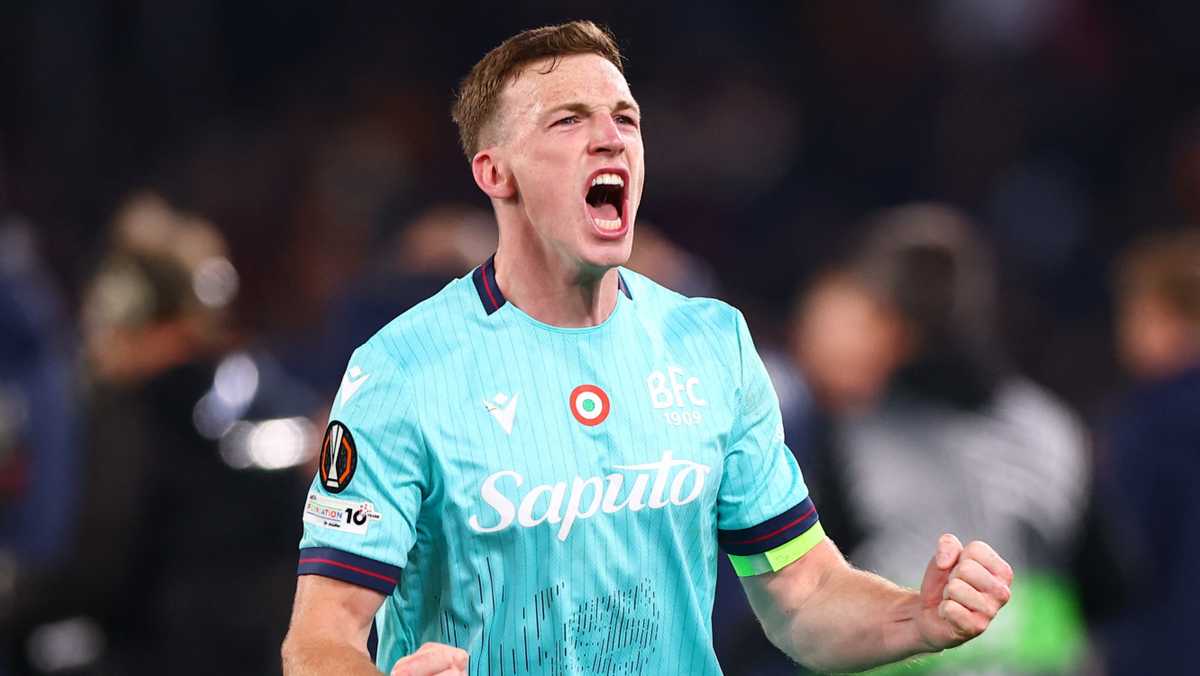
More than a decade on, Ferguson is now a full Scotland international and captains Bologna in Serie A — a remarkable rise for a player Rangers once deemed surplus to requirements. That trajectory alone is enough to make the decision to release him look like a significant academy misstep.
Reports have now emerged suggesting Rangers are exploring a move to bring the 26-year-old back to Ibrox, more than a decade after he left. Ferguson, who supports the club, is said to be open to the idea of returning to Glasgow, which would add a sentimental dimension to any deal. But turning interest into an actual transfer is unlikely to be straightforward.
Bologna are believed to be holding out for a fee in the region of £14.7 million, a figure that would represent a club-record outlay for Rangers if the move went through. Adding further complication, Italian clubs Roma and Lazio are also reportedly keeping tabs on Ferguson, meaning Rangers would need to fend off continental competition as well as meet a hefty asking price.
Given the financial scale involved, it’s far from certain that Rangers will be in a position to push the deal over the line. The size of the fee alone could be enough to price the Light Blues out of a reunion with one of their most notable academy departures.
While Ferguson’s situation has generated plenty of attention, there’s a strong case that Rangers’ biggest academy regret isn’t him at all — it’s Kenny McLean, a player whose Ibrox exit predates Ferguson’s by five years and whose subsequent career has, on the numbers, been even more productive.
McLean left Rangers’ academy set-up in 2008, joining St Mirren on a free transfer. That’s eighteen years ago now, and in the time since, McLean has built a career that’s taken him from Paisley to Aberdeen and eventually to Norwich City, where he signed a decade after his Ibrox departure and has remained a key figure ever since.
Notably, Norwich’s current manager Philippe Clement has history with McLean that dates back to his time in charge at Rangers, when he made it known he wanted to bring the midfielder back to Ibrox. That deal never materialised, and the pair are now reunited at Carrow Road instead, with Clement overseeing McLean’s continued development in Norfolk.
When the statistics from the most recent season are placed side by side, the contrast between the two former Rangers academy products becomes clear.
McLean’s output for Norwich in the Championship during 2025/26 reads as follows: 42 appearances, 3 goals, 10 big chances created, and 4 assists. Defensively, he averaged 2.6 tackles and interceptions per game, won 4.8 duels per game, with a 60% success rate in ground duels and 50% in aerial contests.
By comparison, Ferguson’s numbers in Serie A for Bologna over the same period stand at 27 appearances, 1 goal, just 1 big chance created, and no assists. His defensive and duel statistics were also lower across the board: 1.4 tackles and interceptions per game, 3.1 duels won per game, a 54% ground duel success rate, and a 51% aerial success rate.
Across almost every meaningful metric, McLean’s domestic output outstrips Ferguson’s by a considerable margin. He played more matches, contributed more directly to goals, and was more involved defensively. While Ferguson edges marginally ahead in aerial duel success, that’s the only category where the Bologna captain comes out on top.
Part of the disparity comes down to availability. Between injuries and being left out of the side, Ferguson has only managed 27 starts in Serie A across the past two seasons. McLean, in stark contrast, has started 74 league matches in the Championship over the same period — nearly three times as many.
Simply put, McLean has been a far more consistent and reliable presence for his club, week in and week out, while Ferguson’s influence has been limited by fitness issues and rotation. Regular game time matters enormously for a player’s development and form, and McLean’s sustained involvement in Norwich’s midfield has clearly paid dividends in terms of output.
It’s also worth noting that McLean’s career has spanned both the Championship and the Premier League during his time at Carrow Road, giving him experience at two different levels of English football. He has featured 68 times in the Premier League for Norwich, on top of his extensive Championship record, showing he can perform when stepping up a division too.
Looking at McLean’s overall body of work in Norfolk, the numbers are genuinely impressive for a player many Rangers fans may have forgotten ever came through the Ibrox academy. In total, he has made 310 appearances across all competitions for Norwich, scoring 16 goals and registering 31 assists along the way.
His trophy cabinet at the club includes two Championship titles, underlining his role in Norwich’s various promotion campaigns over the years. He has also worn the captain’s armband for the Canaries for the past two seasons, a clear indication of the trust placed in him by teammates, coaching staff, and the club hierarchy alike.
At international level, McLean has earned 60 caps for Scotland, a tally that places him firmly among the more experienced midfielders to have represented the national team in the modern era. At 34 years old, he remains a regular for his club and continues to be a dependable presence in Norwich’s midfield.
Taken together, the stories of Ferguson and McLean point to a broader, more systemic issue at Ibrox: a pattern of releasing or selling players too early, only for those same players to flourish elsewhere. Both midfielders left the club’s youth setup without ever featuring regularly for the first team, and both have gone on to enjoy substantial careers — Ferguson as a Serie A captain and full Scotland international, McLean as a long-serving Premier League and Championship performer with 60 caps to his name.
The fact that Rangers are now reportedly interested in re-signing Ferguson, despite having let him go over a decade ago, only highlights how short-sighted those original academy decisions may have been. And while no concrete reports suggest an imminent move to bring McLean back to Ibrox, his numbers this past season arguably make just as strong a case — if not stronger — for a reunion than Ferguson’s.
Of course, hindsight makes academy decisions look far clearer than they ever are in real time. Plenty of young players who show promise at 17 or 18 never go on to fulfil it, and clubs have to make tough calls on which prospects to retain and which to let go, often based on limited information and competing financial pressures. But when two players from the same academy go on to make 60 senior international appearances and captain clubs in two of Europe’s top leagues and divisions, it’s hard not to view those releases as missed opportunities.
This isn’t simply a story about two individual transfers gone wrong from a Rangers perspective — it ties into the much larger conversation about why Scotland, as a nation, continues to fall short on the biggest stages. If clubs at the top of the Scottish Premiership aren’t consistently giving homegrown talent the platform to develop and prove themselves domestically, it stands to reason that fewer top-class Scottish players will emerge to bolster the national team.
Findlay Curtis needed a loan away from Ibrox to force his way into World Cup contention. Lewis Ferguson needed to leave the club entirely as a teenager before going on to captain a major European club. Kenny McLean needed eighteen years and two different clubs to develop into one of the most reliable midfielders in the Championship, with Premier League experience to boot.
Each case, on its own, might be dismissed as an isolated example of a player development decision that simply didn’t work out. But when these stories repeat themselves across different generations of the same academy, it starts to look less like bad luck and more like a structural issue that needs addressing.
For now, the more immediate question facing Rangers is whether they can realistically complete a deal for Ferguson. A £14.7 million fee would represent uncharted territory for the club in terms of transfer spending, and with Roma and Lazio reportedly also interested, there’s no guarantee Rangers would even win the race for his signature if they decided to pursue it seriously.
McLean’s situation, meanwhile, appears to be a non-starter in terms of an actual transfer, given his age, his importance to Norwich, and the fact there’s been no indication of interest from Ibrox this time around. But his season serves as a useful reminder of just how good the player Rangers let go for nothing back in 2008 has become.
Whether or not Ferguson eventually completes a return to Glasgow, the broader lesson for Rangers should be about strengthening the pathway from academy to first team, so that the club isn’t continually looking back at former youth players turned into stars elsewhere and wondering what might have been. Until that changes, stories like Ferguson’s and McLean’s are likely to keep repeating themselves, with Scottish football’s biggest clubs continuing to develop talent for other teams to benefit from.