He Thinks He’s an Elite Manager!” — Simon Jordan Lays Into Ange Postecoglou Over Scotland Speculation

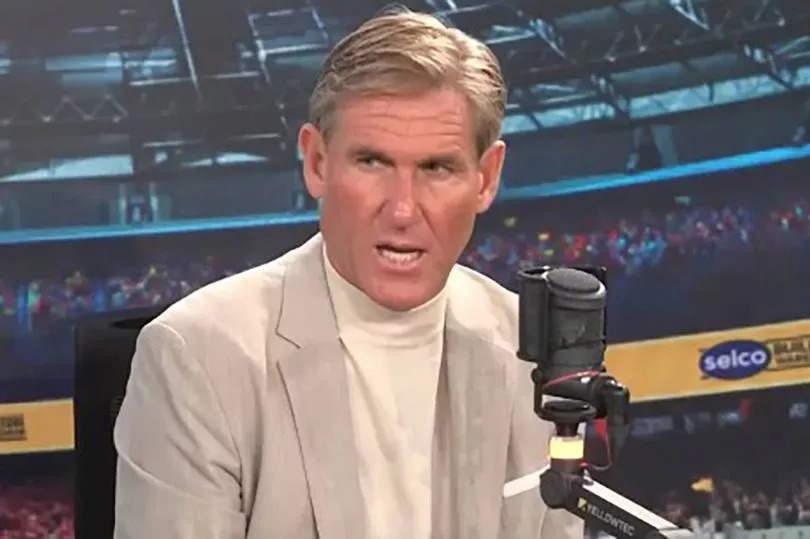
The Scotland manager’s seat has barely gone cold and already the speculation machine is running at full tilt, with one name generating more debate than any other: Ange Postecoglou. The Australian has deep roots in Scottish football thanks to his trophy-laden spell at Celtic, but according to outspoken pundit Simon Jordan, the idea of him taking the national team job is little more than wishful thinking dressed up as ambition.
Steve Clarke’s exit from the Scotland hot seat was never going to be a straightforward affair, and so it proved. Visibly affected after his final match in charge, the veteran manager cut a heartbroken figure as he addressed the media, and the reaction to his post-match comments split opinion right down the middle among supporters and pundits alike.
In the days that followed, Clarke penned a lengthy open letter to the Tartan Army, using the platform to reflect on his time in charge and to thank the players who had been by his side throughout. He was clear that the emotional weight of his departure centred far more on the squad than on himself, writing that the memories built since 2019 simply wouldn’t have existed without them. He praised his players effusively, calling it an honour to have led them, and signed off by wishing his eventual successor well.
Clarke’s tone throughout suggested a manager who felt the time had genuinely come for a change in direction, rather than one pushed out reluctantly. In both the open letter and a separate farewell interview, he spoke with evident pride about what had been achieved during his tenure — most notably, ending Scotland’s long exile from major tournament football and rebuilding a connection between the national side and its supporters that had frayed over previous years. Yet even with those achievements laid out, Clarke was honest enough to admit that a single tournament win across three major competitions simply wasn’t the level of progress required to take Scottish football to the next stage of its development.
With Clarke now gone, attention has understandably turned to who the Scottish Football Association will turn to next. The timeline adds a layer of pressure to proceedings too, given that a new manager will need to be in place before the Nations League campaign gets underway in September 2026, leaving the governing body with a relatively tight window to conduct its search and make an appointment.
Early names being floated in connection with the vacancy include David Moyes, a manager with a long track record in both the Premier League and Scottish football, whose experience and pedigree make him an obvious candidate for consideration. But it’s the other name doing the rounds that has generated considerably more noise, and considerably more skepticism: Ange Postecoglou.
On the surface, the connection makes a certain amount of sense. Postecoglou enjoyed a hugely successful period at Celtic, during which he collected a string of domestic trophies and, perhaps most significantly for Celtic supporters, played a central role in disrupting Rangers’ period of dominance north of the border. That spell cemented his reputation among large sections of the Scottish footballing public as a manager capable of transforming a club’s fortunes, and it’s that goodwill that has fuelled the latest round of speculation.
Since leaving Celtic, Postecoglou’s career has taken him through Tottenham Hotspur, where he delivered a Europa League trophy, and most recently Nottingham Forest, a spell that ended in difficult circumstances. He has been out of work since his Forest exit and has spent the recent World Cup period working as a pundit for ITV, keeping himself visible in the football media landscape even without a managerial post to his name.
The appetite for a Postecoglou return to Scottish football hasn’t been confined to idle pub chat or passing comment sections. A more organised push has emerged online, with some supporters — Celtic fans prominent among them — launching what’s been dubbed “CHANGE: The Campaign for Ange Postecoglou” across Reddit and other platforms. The campaign frames Postecoglou as a high-upside appointment, someone who already understands Scottish football intimately and could bring a fresh, attacking identity to the national team setup.
It’s an earnest effort from a passionate corner of the fanbase, and there’s no denying the romantic appeal of a manager who once delivered silverware at Parkhead returning to take charge of the national side. Whether sentiment translates into a realistic managerial pathway, however, is an entirely different question — and it’s precisely that question Simon Jordan set out to answer on air.
Jordan didn’t hold back when addressing the speculation, summing up his view of the situation in a single, pointed line: “He thinks he’s an elite manager!” That phrase effectively captured his entire argument. In Jordan’s reading, Postecoglou views himself as operating at the top end of the managerial pyramid — a manager who has competed at Premier League level and lifted a European trophy with Tottenham, credentials that, in fairness, plenty of observers would agree place him among a more elite bracket of coaches.
It’s precisely because of that self-image, Jordan argued, that the Scotland job simply doesn’t fit the profile of role Postecoglou would realistically consider. International management at Scotland’s level is, by its nature, a part-time position. The manager doesn’t have day-to-day control over a squad the way a club boss does; instead, the role is built around camps, qualifiers, and a comparatively limited footprint of contact time with players throughout the year. Resources, too, are far more constrained than what a manager of Postecoglou’s recent experience would be accustomed to at Premier League or European level.
Given all of that, Jordan’s view was that the role simply wouldn’t hold appeal for Postecoglou unless he was prepared to take a significant pay cut purely out of sentimental attachment to the country and the football culture there — essentially, taking the job “for the love of it” rather than for career progression or financial reward. Jordan described the broader phenomenon of fans pushing for a manager who, on paper, appears to be operating in a different tier altogether as an “interesting” one, but he was unambiguous in effectively ruling out any realistic prospect of it happening.
Jordan’s skepticism isn’t an isolated take. Across the football punditry landscape, the broader consensus appears to align closely with his assessment. Postecoglou’s managerial profile, shaped by his most recent experiences in the Premier League and on the European stage, points far more naturally toward another club role — whether that’s elsewhere in Europe or further afield — rather than a return to international management with Scotland.
His reputation, despite everything that’s happened since, still carries weight in footballing circles. The trophies collected during his Celtic tenure, combined with the Europa League triumph at Tottenham, mean his managerial stock remains relatively healthy even after a turbulent period that followed. Few would dispute that a manager with silverware in both Scotland and Europe retains genuine currency in the job market.
That said, the manner of his departure from Nottingham Forest has cast something of a shadow over that reputation. Widely viewed as an embarrassing exit, it’s added a layer of complication to how his recent body of work is perceived. There’s also a lingering tension in how his time at Tottenham is remembered: suggestions that Postecoglou effectively deprioritised the Premier League campaign in order to focus the club’s energy on winning the Europa League sit awkwardly alongside his own self-image as an elite-level manager capable of competing on all fronts. If anything, that episode at Spurs has only added fuel to the argument that his ambitions lie at club level, where European competition and prestige remain achievable, rather than in a part-time international post with comparatively limited scope for that kind of silverware.
Stepping back from the Postecoglou debate specifically, it’s worth considering exactly why the Scotland post represents such a different proposition compared to the club roles Postecoglou has occupied throughout his career. International management operates on a fundamentally different rhythm. Rather than overseeing training every day, plotting fixture-by-fixture tactical plans, and managing a squad through the rigours of a full domestic season, an international manager works in short, intense bursts around the calendar — gathering players for brief camps ahead of qualifiers and friendlies, then handing them back to their clubs for the vast majority of the year.
For a manager used to shaping a side on a daily basis, building a footballing identity gradually over weeks and months of training ground work, the international setup can feel restrictive. There’s less control, less time, and ultimately less direct influence over results compared to club football, where a manager’s fingerprints are visible across every aspect of a team’s preparation.
Add to that the financial gulf between Premier League management and international football at Scotland’s level, and the picture Jordan painted becomes even clearer. Top-flight English football remains the most lucrative managerial environment in the world, and a manager who has operated within that financial ecosystem in recent years would be taking a considerable step down in terms of remuneration to take charge of the Scotland national team. For some, particularly those with strong personal or cultural ties to a country, that trade-off can still be worth making. But Jordan’s argument was essentially that nothing in Postecoglou’s recent career suggests he’s the type of manager willing to make that sacrifice purely for sentimental reasons.
With Postecoglou increasingly looking like an unlikely appointment despite the noise generated by supporters online, the Scottish Football Association’s search is likely to centre more seriously around candidates like David Moyes, whose profile and recent experience may align more naturally with what’s required of an international manager working with limited contact time and resources.
Moyes brings a wealth of experience from both English football and a track record of working within Scottish football’s wider ecosystem, and his name being floated early in proceedings suggests the SFA may be leaning toward a candidate with a steadier, more pragmatic profile rather than chasing a higher-profile name purely on reputation. Whether that ultimately proves to be the right approach remains to be seen, but given the tight timeline before September’s Nations League fixtures, the governing body won’t have the luxury of an extended search process.
There’s a broader pattern at play here too, one that extends well beyond Scotland’s specific situation. Supporters of national teams across world football regularly find themselves drawn to high-profile names with strong historical connections to the country in question, often driven more by emotional attachment and nostalgia than by a realistic read of that manager’s current career trajectory and ambitions.
It’s an understandable impulse. Postecoglou’s Celtic years left a lasting impression on a significant section of Scottish football’s support, and it’s only natural that those fond memories would translate into hope that he might return in an even bigger capacity, leading the national team itself. But as Jordan’s comments highlight, there’s often a significant gap between what fans want and what actually makes sense for a manager at a particular stage of his career.
For Postecoglou specifically, the recent chapters of his managerial journey — Premier League football, European silverware, and now punditry duties on a major broadcast platform during the World Cup — all point toward a manager still very much positioning himself for another high-profile club opportunity, rather than stepping back into a part-time international role with a comparatively modest profile and budget.
## The Bigger Picture for Scottish Football
Beyond the individual managerial candidates being discussed, Clarke’s departure marks a notable juncture for Scottish football more broadly. His tenure will be remembered for breaking a long and painful sequence of tournament absences, giving a generation of Scottish fans the experience of watching their national team compete on the biggest stages again after years on the outside looking in. That achievement alone secures Clarke a significant and largely positive legacy, even if the on-pitch results once at major tournaments themselves fell short of what supporters ultimately hoped for.
The challenge now facing the SFA is finding a successor capable of building on that foundation — taking a team that has re-established its place among Europe’s competitive nations and pushing it further, toward genuine knockout-stage contention at a major tournament, something that has eluded Scotland throughout its entire footballing history. That’s a tall order for any incoming manager, and it’s precisely why the profile of candidate matters so much in this search.
Whoever eventually takes charge will need to balance the practical limitations of international management — limited preparation time, a part-time structure, and constrained resources compared to club football — against the genuine talent now emerging through Scotland’s player pool. Whether that man turns out to be David Moyes, another contender yet to be publicly linked, or, against the prevailing wisdom of pundits like Jordan, somehow Ange Postecoglou after all, the next appointment will shape the trajectory of Scottish football heading into a pivotal period for the national side.
For now, though, the consensus among those closest to the game appears settled: Postecoglou’s ambitions remain firmly rooted in club football, and the Scotland job, however emotionally appealing it might be to a passionate section of supporters, simply doesn’t fit the profile of a manager who, in Jordan’s words, still very much believes he belongs among football’s elite.