Every New Premier League Champion If Manchester City Are Stripped of Their Titles

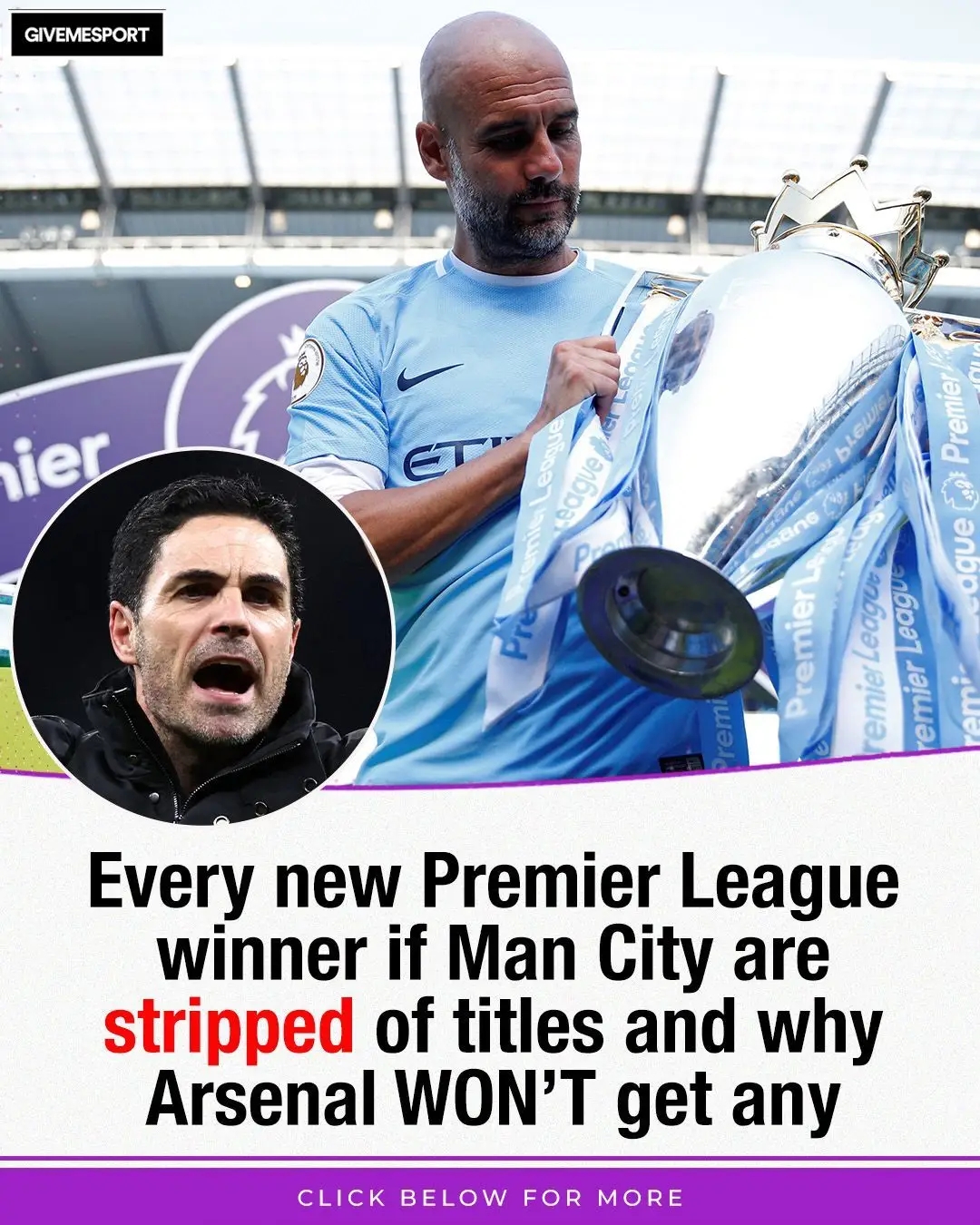
It remains one of the most consequential and long-running sagas in the history of English football. Manchester City, the dominant force in the Premier League for well over a decade, are awaiting the final verdict on 115 charges brought against the club for allegedly violating financial regulations. The outcome of that process could rewrite history in the most dramatic way imaginable — and not just for City, but for the clubs who finished behind them during the years in question.
The scale of what Manchester City are facing is genuinely unprecedented in the context of English football. The 115 charges relate to alleged violations of financial regulations during the period between 2009 and 2018, covering a stretch of years that encompasses some of the most memorable moments in Premier League history. The tribunal hearings concluded back in December 2024 after a twelve-week process, yet despite that conclusion arriving well over a year ago, the independent commission has still to make its findings public. City, for their part, continue to deny any wrongdoing, maintaining that position consistently throughout what has been an extraordinarily prolonged legal process.
The uncertainty around what comes next has generated enormous speculation, with football administrators, legal experts, and supporters of clubs across the division all offering their own theories about what a guilty verdict might ultimately mean. Some experts have suggested a points deduction in the region of 60 points could be handed down. Others have argued that the appropriate punishment should include stripping the club of any titles won during the period in which the violations are alleged to have occurred. That latter possibility is the one that would most dramatically reshape the historical record of the Premier League — and it’s the scenario worth examining in full detail.
The first thing to understand about any potential title redistribution is that it would not benefit Arsenal in the way that many Gunners supporters might hope. In the most recent seasons, Arsenal have been Manchester City’s primary rivals for Premier League supremacy, finishing as runners-up on multiple occasions as Pep Guardiola’s side continued to dominate domestic football. Twice in recent history, Arsenal have been pipped at the post by City in title races that went down to the final weeks of the season.
However — and this is the crucial point — the charges against Manchester City relate specifically to the period between 2009 and 2018. During those years, Arsenal were not finishing second behind City in the title race. The Gunners’ recent near-misses, painful as they have been for their supporters, fall outside the window covered by the allegations. Consequently, any potential reallocation of Premier League titles from that era would bypass Arsenal entirely, regardless of how deserving their more recent runners-up finishes might feel to those who follow the north London club.
The beneficiaries of any title redistribution, should City be found guilty and punished accordingly, would be three other clubs — and the implications for English football’s historical record would be profound.
Of the three clubs who would stand to gain from a potential stripping of Manchester City’s titles, Manchester United would benefit most significantly — and in circumstances that carry a genuinely extraordinary layer of irony.
The first title in question comes from the 2011/12 season, arguably the most dramatic title race in Premier League history. That campaign is seared into the memory of everyone who watched it, defined almost entirely by a single moment of extraordinary sporting theatre. Sergio Aguero’s injury-time strike against Queens Park Rangers, with Manchester City needing to score twice in stoppage time to claim the championship, sparked scenes of delirium at the Etihad that remain among the most visceral in the division’s thirty-plus year history.
The goal didn’t just win City the title — it took it away from Manchester United. Wayne Rooney and his teammates, who had been preparing to celebrate at their own ground as they monitored events elsewhere, were plunged into devastation in a matter of seconds. United had led the title race for significant stretches of that campaign and finished the season with a points total that would, in most years, have been more than sufficient to claim the championship. The cruelty of their final-day heartbreak was compounded by the fact that City pipped them on goal difference, meaning the margin between triumph and despair couldn’t have been narrower.
If Manchester City are stripped of that 2011/12 title, the trophy would pass to Manchester United — the club from whom it was taken so dramatically on that May afternoon. The symmetry of that outcome is almost too neat to be believed. A title that was wrenched away from Old Trafford in the most painful circumstances imaginable, potentially being returned over a decade later through a tribunal process, would represent one of the strangest and most poignant footnotes in English football history. Rooney, who has spoken publicly about the lasting frustration of that day, might finally find some measure of closure.
The second title United would inherit comes from the 2017/18 season, when Guardiola’s side produced one of the most dominant performances in Premier League history, accumulating a record 100 points across the campaign. Manchester United, managed at the time by Jose Mourinho, finished second that season but ended up a staggering 19 points behind City — a gap that illustrated just how comprehensively the Etihad outfit had outperformed their rivals across the course of the year.
Under normal circumstances, being 19 points behind the champions wouldn’t prompt any serious conversation about alternative title destinations. But if City’s accumulation of those 100 points was achieved through alleged financial rule-breaking, the points gap becomes irrelevant to the question of who should hold the trophy. United’s 81 points would be enough to take the title in the absence of City’s total, and Mourinho — who was eventually dismissed from Old Trafford without a league title to his name — would receive a posthumous championship as manager of a club he led to what would become, retrospectively, one of the most significant nights in their recent history.
The combined effect of these two potential redistributions would be remarkable in terms of the historical record. United would move to 22 Premier League titles in total, overtaking Liverpool and cementing their status as the most successful club in the division’s history by a clear margin. That outcome would be greeted with very mixed feelings around English football, but it would be the arithmetical reality of the redistribution.
The second club in line to benefit from a potential title redistribution is Liverpool, and the circumstances surrounding their case make for perhaps the most emotionally resonant storyline of all.
The 2013/14 Premier League season remains one of the most haunting chapters in Liverpool’s modern history — not because of what they achieved, but because of what they came so agonisingly close to achieving. That campaign, under Brendan Rodgers, produced football of a kind rarely seen from a Liverpool side in the post-Shankly era, driven primarily by the extraordinary performances of Luis Suarez, who scored 31 goals in the league and was the runaway winner of the Player of the Season award.
By spring of 2014, Liverpool had built a five-point lead at the top of the table and appeared to be cruising toward a first league title since 1990 — a gap of 24 years that had become a defining wound in the club’s identity. Then came the collapse, swift and savage in equal measure. A home defeat to Chelsea, during which Steven Gerrard’s slip gifted Demba Ba a decisive goal, punctured the momentum at the worst possible moment. The image of Gerrard going down on the Anfield turf has become one of English football’s most iconic and painful photographs, a frozen moment of heartbreak that the man himself has never been able to fully escape.
The damage didn’t stop there. Liverpool then squandered a three-goal lead against Crystal Palace, drawing 3-3 in a match that should have been a formality and instead became another chapter in a rapidly unravelling story. By the time the dust settled, Manchester City had overtaken them and claimed the title by two points — the margin between what would have been one of football’s greatest comeback stories and what became one of its most painful near-misses.
Steven Gerrard retired without ever winning the Premier League, a fact that has followed him throughout his subsequent career in management and public life. If City are stripped of that 2013/14 title, the trophy would be redirected to Liverpool, and Gerrard — even years after his retirement — would finally have a league championship attached to his name as a player. The exorcism of that particular sporting demon, delivered through a legal process rather than a football match, would be one of the stranger forms of closure in the game’s history, but its emotional resonance would be undeniable.
For Liverpool supporters who lived through those final weeks of that season, the memories have never fully faded. The what-ifs of 2013/14 have been relitigated countless times, with every slip, every dropped point, every tactical decision analysed and re-analysed across a decade of reflection. The possibility of the title eventually being theirs, however belatedly and however unconventionally, would provoke a reaction within the club’s fanbase that’s difficult to fully anticipate.
Taking a step back from the individual stories attached to each potential title change, the broader historical implications of a redistribution are staggering. The Premier League’s record books would be fundamentally rewritten, with the legacy of one of the most successful clubs in the division’s history being permanently altered. Manchester City’s reputation as a dominant force across the 2010s has been built in significant part on the titles they accumulated during that period — remove those championships from the record, and the narrative of how English football’s power structure shifted in the twenty-first century looks considerably different.
City’s subsequent titles — the championships won in 2018/19, 2020/21, 2021/22, 2022/23, and 2023/24 — would almost certainly be unaffected by any punishment relating to the 2009 to 2018 period, as those seasons fall outside the window covered by the charges. The club’s more recent dominance, the run of championships that made them the undisputed standard-bearers of the Premier League era, would remain intact in the record books. But the foundation upon which that era of dominance was built — those early Guardiola titles and the transformative Aguero season before his arrival — would be struck from the official history.
For supporters of clubs who finished behind City during those years, the prospect of retrospective justice carries obvious appeal. Years of watching their clubs come up short against opponents who may have been competing on an uneven financial playing field would, in their view, finally be acknowledged and corrected. For City’s own supporters, the notion that their club’s achievements could be retroactively removed from the record represents a form of injustice in itself — particularly given that the verdict has been so long in coming and the club continues to dispute the allegations in their entirety.
Any serious discussion of title redistribution has to grapple with a genuinely complicated philosophical question: what is a football title actually for? Is it a reward for the club that performed best on the pitch during a given season, or is it a recognition of achievement within the rules that govern the competition?
In one sense, the teams who would inherit titles under a redistribution scenario didn’t win those championships through performance — they simply finished second behind a club that may have broken the rules. Manchester United’s 81 points in 2017/18 didn’t feel like a title-winning effort at the time, and Liverpool’s 2013/14 vintage, despite their many qualities, ultimately fell apart when the pressure was greatest. Handing those clubs trophies based on a legal process rather than the outcomes of the matches themselves raises questions about the nature and meaning of sporting achievement that don’t have easy answers.
On the other hand, if the rules exist for a reason — to ensure competition takes place on a level playing field and that no club gains an unfair advantage through financial misconduct — then it follows logically that results achieved in violation of those rules should not stand. The principle that wrongdoing should have consequences is fundamental to any functioning regulatory system, and if City are found guilty, the argument that their titles should be reallocated to the clubs who were competing fairly carries genuine moral weight.
It’s a tension that sits at the heart of this entire saga and that the independent commission will have to navigate in reaching its conclusions. Whatever those conclusions ultimately are, the football world will be watching with extraordinary interest.
The most remarkable aspect of this entire situation is how long the wait for a verdict has already lasted. The tribunal hearings concluded in December 2024, yet here we are, well over a year later, with no public findings from the independent commission. The complexity of the case — 115 charges covering nearly a decade of alleged financial violations, requiring the examination of enormous volumes of evidence and legal argument — goes some way toward explaining the timeline, but the extended wait has itself become a story, generating frustration among supporters and administrators across the league.
Manchester City’s position throughout has remained consistent: the club denies any wrongdoing and has expressed confidence that the process will ultimately vindicate them. The Etihad outfit have continued to operate and compete during the period of the investigation, adding further Premier League titles and competing at the highest level of European football while the legal process grinds forward.
When the verdict does eventually arrive, its impact will be felt far beyond Manchester. Clubs across the country will be affected by whatever precedent is set, administrators and owners will be watching closely to understand what the findings mean for financial regulation going forward, and supporters of the teams who might inherit titles will experience a moment unlike anything English football has previously produced.
Whatever the independent commission ultimately decides, the Manchester City financial case will leave a permanent mark on English football — not just in terms of whatever punishment is or isn’t handed down, but in the conversation it has forced about how the sport is regulated, what the rules are actually worth, and what it means to win a football competition fairly.
For Manchester United supporters, the ghost of Aguero’s goal and the 2017/18 title season may finally find resolution. For Liverpool fans, the memory of Gerrard’s slip and the implosion against Crystal Palace carries the possibility of an extraordinary late redemption. And for the game more broadly, the verdict — when it comes — will answer questions that have been hanging over English football for years.
Until that day arrives, the historical record remains as it is, and Manchester City’s titles remain in place. But the possibility that those trophies could eventually find different homes is one that ensures this story will continue to dominate football conversation for as long as the verdict remains outstanding.