Dan Neil Signs for Rangers: Why Derek McInnes Has Landed One of the Most Exciting Young Midfielders in British Football


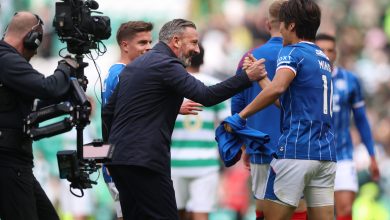
Rangers’ summer rebuild under new manager Derek McInnes has taken another significant step forward with the confirmed signing of Dan Neil from Sunderland on a three-year deal. The 24-year-old central midfielder arrives at Ibrox having spent eight years developing at the Stadium of Light, captaining the Black Cats to Premier League promotion in 2025, and earning England Under-20 recognition along the way. In McInnes, Neil has a manager who clearly rates him highly. In Rangers, he has a club whose weight of expectation, he says, mirrors precisely the environment that drives him to perform at his very best.
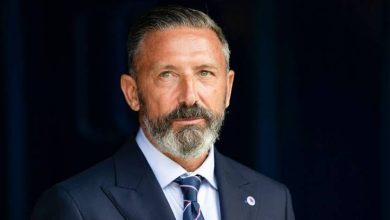
The signing of Dan Neil needs to be understood in the context of everything Rangers have been doing this summer, because it doesn’t exist in isolation. It is one piece of a much larger and more ambitious rebuilding operation being overseen by McInnes, who himself arrived at Ibrox from Hearts as the first major appointment of a new managerial era at the club.
McInnes has wasted little time in reshaping the squad. Rangers have also brought in defenders Ben Godfrey and Ross McCrorie, adding physicality and experience to a backline that required reinforcement. Up front, Lawrence Shankland has been secured — a striker who needs no introduction to Scottish football supporters and who represents exactly the kind of proven domestic goalscorer that Rangers have sometimes lacked in recent years. Behind the goal, goalkeeper Ivor Pandur has arrived from Hull City, providing competition and quality between the posts.
Each signing has addressed a specific need. Together, they paint the picture of a club that has taken stock of where it stands, identified the gaps, and moved purposefully to fill them rather than tinkering around the edges. Neil’s arrival in central midfield fits that same logic — this is a position Rangers have needed to strengthen, and in McInnes’s assessment, they have now done exactly that with a player who brings energy, technical quality, leadership, and significant upside.
To properly appreciate what Rangers are getting in Dan Neil, it’s worth tracing the arc of his development at Sunderland, because the story of his eight years at the Stadium of Light is one of consistent growth and eventually genuine achievement at a club that carries enormous expectations of its own.
Neil joined Sunderland’s academy as a teenager and worked his way through the youth system in the patient, unglamorous way that real development usually happens — training day after day, competing for places, learning what professional football demands of a young player before he’s truly ready. The rewards for that patience came gradually and then, as is so often the case, all at once.
His emergence into the senior setup at Sunderland coincided with one of the most emotionally charged periods in the club’s recent history. The Black Cats, a club with a passionate fanbase and a proud tradition, had spent years in the Championship attempting to return to the Premier League following their relegation from the top flight. The weight of that mission sat heavily on every player who wore the red and white stripes, and Neil not only absorbed that pressure but ultimately thrived under it.
The defining moment of his Sunderland career came in 2025, when he captained the club to Premier League promotion — a moment of genuine significance both for the club and for Neil personally. Leading a team to promotion through the Championship is one of the most demanding tests in English football, a relentless, grinding campaign across 46 league fixtures against opponents who are all equally desperate for the same outcome. The fact that Neil did it as captain, wearing the armband and carrying the responsibility of leadership at 23 years of age, tells you a great deal about the qualities he possesses beyond the purely technical.
The latter half of last season saw Neil spend time on loan at Ipswich Town in the Premier League — a spell that, while brief, offered a valuable window into how he might cope with the demands of top-flight English football. Ipswich themselves were navigating a challenging Premier League campaign following their own promotion, and the environment at Portman Road was exactly the kind of pressure-cooker situation that tests a young midfielder’s mettle.
The loan period was revealing in several respects. Neil was exposed to opponents of a calibre above what he had faced in the Championship on a regular basis, and the intensity and pace of Premier League football demanded adjustments that not every young player makes successfully. The fact that Rangers have moved to sign him on the back of that experience, rather than being deterred by any concerns about his ability to step up, suggests McInnes and his staff were satisfied with what they saw — a player who had proved himself in one of the toughest environments in British football and come through it with his reputation intact and his confidence undiminished.
Derek McInnes has been effusive in his public assessment of the new signing, and the specific qualities he highlighted are instructive in terms of understanding exactly how he plans to deploy Neil within his tactical setup at Rangers.
The Rangers manager described Neil as technically gifted in possession, someone who can contribute goals, and a player who brings tremendous energy to the team. Those three attributes together paint a picture of a well-rounded central midfielder — someone who doesn’t simply sit and recycle the ball but who gets forward, creates, and contributes directly to the attacking side of the game as well as providing the engine room function that any effective midfield requires.
The reference to energy is particularly interesting in the context of Scottish Premiership football, where the physical demands of the game can be every bit as challenging as the tactical ones. Ibrox’s most successful midfielders over the years have typically combined technical ability with genuine work rate — players who can impose themselves on a game both with and without the ball. McInnes clearly believes Neil ticks both of those boxes.
But perhaps the most telling detail in the manager’s assessment was the reference to leadership qualities. McInnes specifically noted that Neil captained Sunderland to promotion in 2025 — not just playing a role in that achievement, but leading it. For a 24-year-old to have captained a club with Sunderland’s history and fanbase through a promotion campaign speaks to a maturity and character that extends well beyond what you can see in a statistical profile or a highlights reel. Leadership at that level, in that environment, has to be earned — and Neil earned it.
One of the most revealing aspects of Neil’s comments upon signing was the way he discussed pressure. In an era where young players often speak cautiously about managing expectations and taking one game at a time, Neil talked about the weight of supporter expectation in a way that was almost enthusiastic — describing the intensity of playing for a club where results make or break people’s weekends as something that actively drives him rather than something he needs to manage or overcome.
That attitude is more important than it might initially appear, because Rangers is genuinely one of the most pressure-laden environments in British football. The club’s fanbase is enormous, passionate, and uncompromising in its expectations. Winning isn’t simply an aspiration at Ibrox — it’s a baseline requirement. Every week, every result, every performance is analysed and discussed with an intensity that many players find overwhelming rather than energising.
Neil’s experience at Sunderland has clearly equipped him well for that environment. The Stadium of Light generates its own fierce brand of supporter passion — a fanbase that has endured enormous frustration over the years and for whom every match carries outsized emotional significance. Having developed and ultimately thrived in that cauldron, Neil arrives at Ibrox not as someone stepping into the unknown but as someone who has already proved he can handle the emotional and psychological demands of playing for a club that means the world to its supporters.
The conversations he’s had with players who have previously experienced both environments seem to have confirmed what he suspected: the feeling at Rangers and the feeling at Sunderland share a common thread, a sense that football at these clubs is never simply a game but something much more personal and much more significant for the people watching. For a player who says he needs that intensity in his career, it’s a fit that goes beyond the purely footballing.
Rangers’ midfield has been an area of scrutiny for some time, and the addition of Neil addresses several of the questions that have lingered around that department. His profile as a player who is strong in possession and capable of contributing goals from midfield provides exactly the kind of quality and directness that a team built on winning the Scottish Premiership and competing seriously in Europe requires.
The Scottish Premiership demands midfielders who can both control games when the situation allows and compete physically when it doesn’t. At the level of the Old Firm and the top end of the table, technical quality is essential, but it has to be married to the ability to win the ball, cover ground, and impose yourself on the game when opponents make things uncomfortable. Neil’s profile ticks those boxes across both dimensions.
His ability to get into goal-scoring positions from midfield is a particularly valuable asset. Scottish Premiership defences are increasingly well-organised at the top end of the division, and breaking them down requires midfielders who are willing and able to arrive late in the penalty area and contribute to the attacking output beyond what the forwards alone can provide. Neil’s goal return at Sunderland — which includes important Championship contributions across his time there — suggests he has that capacity to be a threat from deep.
In terms of building play from the base of midfield, his technical quality in possession provides Rangers with a more composed option for controlling games rather than simply competing in them. The best Rangers midfields over the years have generally included at least one player who can receive the ball in tight spaces, find passes that others can’t see, and dictate the tempo when the team needs to slow a game down or speed it up. That’s the kind of player McInnes seems to believe he has in Neil.
Derek McInnes is a manager with a clear and well-established philosophy about how football should be played, shaped by his years managing in the Scottish Premiership and developed further during his time at Hearts. He favours organised, disciplined teams that are difficult to break down but also capable of playing with purpose and directness in attack. The players he has signed this summer all reflect that philosophy in different ways.
Neil’s combination of technical ability, energy, and leadership makes him a natural fit for the kind of midfield structure McInnes tends to build his teams around. He’s a player who can do multiple jobs within a system — pressing when the team doesn’t have the ball, controlling when they do, and contributing in both penalty areas when the opportunity presents itself. That versatility is exactly what a manager needs from a central midfielder in a system that has to flex and adapt to different opponents and different contexts over the course of a long, demanding season.
The three-year contract also signals that this isn’t a short-term solution or a stop-gap while Rangers pursue other targets. McInnes clearly sees Neil as a cornerstone of his midfield for years to come, a player around whom a new-look Rangers engine room can be built. That long-term commitment from the club gives Neil the security to grow into the role rather than feeling the pressure to immediately justify his signing, even if the Ibrox environment is one where results are expected from day one.
Leaving Sunderland after eight years is no small thing, and it would be wrong to gloss over what that departure means in human terms. Neil grew up at that football club in the truest sense — he arrived as a teenager and leaves as a grown man, a Premier League promotion-winning captain whose development was shaped entirely within the Sunderland system. The relationships formed over eight years, the understanding of a club’s culture and identity, the sense of belonging that comes from being part of an organisation for that length of time — all of that doesn’t simply disappear when a transfer is announced.
His comments about what drove him at Sunderland — the supporter expectations, the sense that results matter profoundly to real people in a real community — carry an unmistakable affection for everything those eight years represented. He isn’t leaving because the experience failed to live up to expectations; he’s leaving because Rangers represents the next step in a career that has been building steadily and that now has a very clear upward trajectory.
For Sunderland supporters, losing a player of Neil’s quality and character to a Scottish Premiership giant will sting, particularly coming so soon after the pain of seeing their promotion campaign give way to a season of Premier League adjustment. But there will be pride mixed into that reaction too — pride in having developed and nurtured a player good enough to attract the attention of one of British football’s most historically significant clubs.
Dan Neil’s arrival is significant not just in itself but as part of what it signals about the direction Rangers are heading under McInnes. The manager has assembled a group of signings that collectively suggest a clear and coherent vision — defensively solid, energetic in the press, quality in midfield, and a proven goalscorer leading the line in Shankland.
Each piece fits with the others in a way that suggests proper planning rather than reactive recruitment. Godfrey and McCrorie shore up the defence. Shankland gives the attack a focal point and a dependable source of goals. Pandur provides reliability in goal. And now Neil adds the technical midfield quality that ties the whole structure together — a player who can be trusted with the ball, who will compete for every fifty-fifty, and who has the leadership qualities to help set standards in a dressing room that McInnes is rebuilding around a fresh identity.
The season ahead will reveal whether those building blocks combine into something genuinely capable of challenging for the Scottish Premiership title and making serious progress in European competition. But on the basis of the summer’s business so far, there’s genuine substance to what Rangers are assembling — and Dan Neil, arriving at 24 with a promotion captain’s medal to his name and a hunger to prove himself in the biggest Scottish football environment of all, looks like exactly the kind of signing that could turn a promising squad into something more.
For Neil himself, the next chapter begins now — at a club whose expectations are enormous, whose supporters demand everything, and whose history demands nothing less than success. On the evidence of everything he has already achieved and everything those who know him best have said about his character, he sounds ready for every bit of it