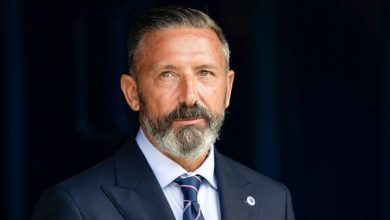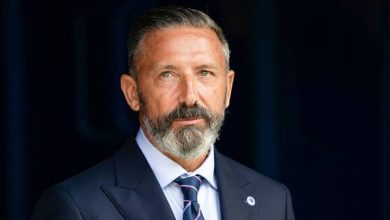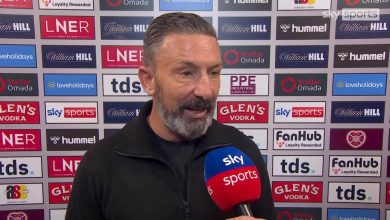
There are new managerial appointments, and then there are homecomings. Derek McInnes’s arrival as Rangers manager firmly belongs in the latter category, with the Scot using deeply personal language to describe what taking charge of Ibrox genuinely means to him, both professionally and on a level that clearly runs far deeper than football alone. His first address to supporters has set an emotionally charged tone for what is shaping up to be a summer of substantial rebuilding at Ibrox, one already given real early momentum by the swift arrival of a second significant summer signing in Ross McCrorie.
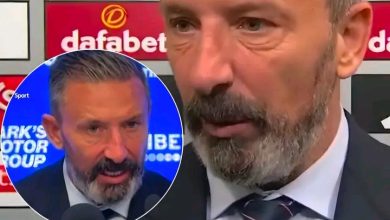
Football clubs like Rangers rarely appoint managers with no prior connection to the institution, but even by those standards, Derek McInnes’s relationship with Ibrox runs unusually deep. Speaking publicly for the first time since being confirmed as the club’s new manager, McInnes didn’t attempt to downplay just how significant this particular appointment is to him personally, describing the day of his unveiling in genuinely emotional terms.
He explained that Rangers has represented an enormous presence throughout his entire life, tracing that connection back through his own family history, with his father having been a devoted supporter of the club. In one particularly striking reflection, McInnes recalled a memory from 31 years earlier, when he had originally signed for Rangers as a young player himself. On that occasion, his father had been sitting in the room next to the manager’s office while his son put pen to paper. Now, more than three decades later, McInnes finds himself occupying that very same managerial office himself, a full-circle moment he described as genuinely special.
Despite the obvious weight of emotion attached to the occasion, McInnes was equally clear in stressing that he feels fully ready for the challenge that now lies ahead. He spoke of feeling comfortable with the size of the task in front of him, while still acknowledging the sheer privilege of being entrusted with managing a club that has meant so much to him and his family across multiple generations. It’s the kind of statement that will resonate deeply with supporters, offering reassurance that whatever challenges lie ahead, the man now in charge of steering the club forward understands, on a fundamental level, exactly what Rangers represents to those who follow it.
Of course, sentiment alone counts for little in modern football, and McInnes will be acutely aware that his own emotional connection to Rangers only heightens the pressure and scrutiny that will inevitably accompany his tenure. Managing a club with such history and such demanding standards is challenging enough under ordinary circumstances; doing so at a club that has shaped your own family’s story for generations adds an additional, deeply personal dimension to that pressure.
Fortunately, McInnes hasn’t been asked to build momentum from a standing start. Rangers had already moved to sign Hearts captain Lawrence Shankland before McInnes’s own arrival was confirmed, giving the new manager an experienced and proven goalscorer to call upon from the very outset of his reign. That early piece of business, secured even before McInnes formally walked through the Ibrox door, sent a clear signal that the club’s hierarchy were determined to support their new manager with meaningful, immediate quality rather than leaving him to rebuild entirely from scratch.
That early intent has now been backed up further, with Rangers completing a second notable piece of summer transfer business in the shape of defender Ross McCrorie, arriving from Bristol City in a deal worth £900,000, with the potential for that fee to rise into six figures through performance-related add-ons. Just as significantly, McCrorie himself required very little persuasion to commit his future to the move, swiftly agreeing to sign a three-year contract once terms were made available to him.
That willingness to move quickly speaks to something beyond simple opportunism on McCrorie’s part. This is, after all, a player already well acquainted with life at Ibrox, having previously represented the club earlier in his career, and one who also has an existing professional relationship with his new manager, having played under McInnes during the Scot’s time in charge at Aberdeen. Few new signings arrive with quite that level of pre-existing familiarity with both club and manager simultaneously.
Speaking to reporters following the confirmation of the deal, McInnes offered a revealing insight into the history between himself and his new defender. He explained that he had originally been the manager responsible for signing McCrorie away from Rangers and into his Aberdeen squad, at a stage when the player himself had been eager to leave Ibrox specifically to test his own abilities elsewhere. McInnes suggested that this early willingness to seek out a fresh challenge, rather than remain comfortable within a familiar environment, said plenty of positive things about McCrorie’s character and ambition.
The manager went on to describe how considerably the defender has developed since that initial spell away from Rangers, pointing to his additional accumulated experience, his subsequent progression to full international recognition, and, perhaps most usefully of all, his intimate existing knowledge of exactly what representing Rangers Football Club demands. For a manager looking to build cohesion and understanding quickly within a squad still very much in the process of taking shape, having a defender who already understands the club inside out represents a genuinely valuable asset.
The specific context behind McCrorie’s arrival relates to Rangers’ pressing need to address the substantial void left by James Tavernier’s departure as a free agent, following the conclusion of his contract. Given the sheer scale of Tavernier’s influence and longevity at Ibrox, identifying any single replacement capable of fully replicating his contribution was always going to represent a considerable challenge, one that has understandably been described in some quarters as Rangers’ own version of an impossible mission this summer.
McCrorie, arriving at 28 years of age and therefore firmly within what many would consider the peak years of a defender’s career, offers a sensible and pragmatic response to that challenge. He brings the specific combination of continued physical prime, additional experience gained through his time in English Championship football, and crucially, a pre-existing understanding of exactly what’s required to succeed within the unique environment of Scottish football’s biggest club.
McCrorie’s arrival also appears to reflect something of a deliberate recalibration in Rangers’ broader recruitment approach. Over the preceding twelve months, the club’s transfer activity had arguably become too heavily weighted towards unproven talent plucked from English lower league football, an approach that carries obvious upside in terms of potential development, but which also brings inherent risk when it comes to adaptation and settling-in periods.
McCrorie represents something different: not simply another Championship-level acquisition, but a player who arrives with genuine first-hand experience of Rangers itself, an existing working relationship with his new manager, and proven Scottish Premiership pedigree from his earlier spell at the club. That combination of familiarity across multiple dimensions, club, manager, and league, should meaningfully reduce any period of adjustment typically associated with a major transfer move, allowing McCrorie to contribute at a consistent level from a considerably earlier stage than might otherwise be expected.
From a financial standpoint, the structure of this particular deal, a modest guaranteed fee of £900,000 with the scope to rise into six figures through add-ons, reflects a prudent and value-conscious approach from the Ibrox recruitment department. Given McCrorie’s specific profile, proven, experienced, and already fully versed in what’s required at the club, this represents low-risk business with a correspondingly reasonable financial outlay attached.
Taken together, McInnes’s deeply personal reflections on returning to manage the club his family has supported for generations, and the swift, sensible acquisition of a defender who already knows Ibrox intimately, paint an early picture of a Rangers regime moving with clarity, purpose, and genuine emotional investment in getting things right. Supporters watching this summer unfold will take real encouragement from a manager who so evidently understands what the club means, backed by a recruitment strategy already delivering the kind of low-risk, high-familiarity signings capable of building quick cohesion within a squad still finding its shape.
Whatever comes next in this transfer window, Rangers have made abundantly clear that this rebuilding project is being approached with both head and heart in equal measure.