WHY THIS EUROPA LEAGUE DRAW MATTERS FAR MORE THAN THE NAMES ON THE PAPER FOR DEREK MCINNES’S RANGERS

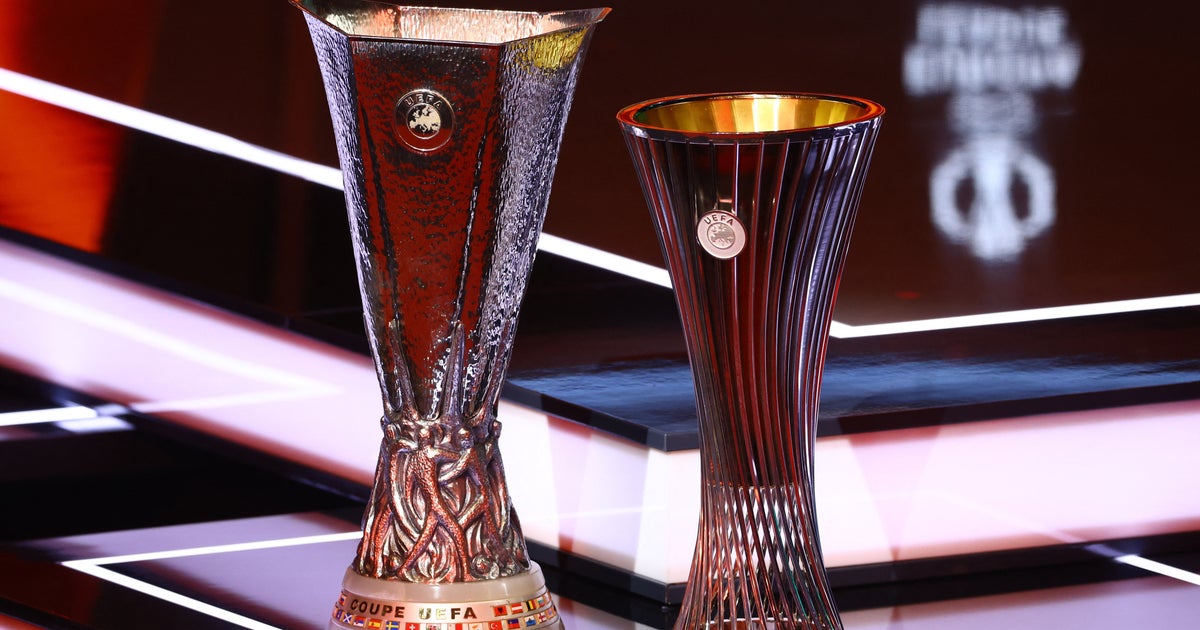
Monday afternoon’s Europa League play-off round draw will have flashed up on plenty of phones inside Ibrox as little more than a formality, two unfamiliar names, Larne and Iberia Tbilisi, sitting there as a hypothetical waiting to be earned rather than an immediate concern. But scratch beneath the surface of what looks, on paper, like a routine administrative exercise and there is a great deal riding on the next month of Rangers’ season, both in terms of what it says about the direction of travel under Derek McInnes and in terms of the tangible benefits, financial and otherwise, that continued progress in Europe would unlock for a club that has built so much of its modern identity around continental competition. The immediate task, a third qualifying round tie against Jagiellonia Białystok starting in Poland this Thursday, remains the only thing that actually matters on the pitch this week. But the wider context around that fixture, and the stakes now firmly established by this draw, deserve far more attention than a passing mention of two unfamiliar opponents waiting somewhere down the line.
Start with the money, because in the modern game there is no getting away from just how significant European qualification has become to a club’s operating model. Reaching the league phase of the Europa League, rather than falling at one of these qualifying hurdles, represents a substantial financial swing for Rangers, one that touches everything from transfer budget flexibility to wage bill sustainability across an entire season. Clubs operating outside the very elite bracket of European football increasingly rely on these qualification windfalls to bridge the gap between what domestic broadcast deals provide and what is required to remain competitive on multiple fronts. For Rangers specifically, having invested heavily in a summer rebuild under McInnes, with a host of new arrivals still bedding into the group, the financial certainty that comes with continental football landing in the club’s favour this season would represent a meaningful boost at exactly the point when it is needed most. Missing out at this stage, by contrast, would not just be a footballing setback but a real financial one too, with knock-on implications for how much room the club has to manoeuvre in the remainder of the transfer window and beyond.
Then there is the question of coefficient, a subject that rarely excites the neutral supporter but which carries enormous long-term significance for how Scottish clubs are treated in European competition for years to come. Every round successfully navigated by Rangers in this campaign contributes not just to the club’s own individual standing but to Scotland’s collective coefficient position, which in turn determines how many European places Scottish football is afforded in future seasons and at what stage those places enter the various competitions. It is the kind of unglamorous, behind-the-scenes consideration that supporters rarely think about when cheering on a European night at Ibrox, but administrators and those tasked with the club’s long-term strategic planning will be acutely aware of exactly what is riding on results against Jagiellonia Białystok this week and, potentially, against Larne or Iberia Tbilisi thereafter. A poor European campaign compounds over time, making future qualification tougher and pushing clubs into earlier, more dangerous qualifying rounds in subsequent seasons. Conversely, sustained European progress builds a cushion that can pay dividends for Scottish football as a whole well beyond this single campaign.
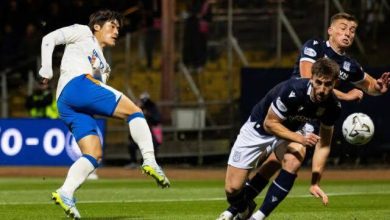
All of which brings the conversation back to the here and now, and to a Rangers squad that finds itself at a genuinely interesting juncture under its new head coach. McInnes inherited a squad undergoing significant transition this summer, with a striking volume of both incomings and outgoings reshaping the balance of the group in a remarkably short space of time. New arrivals have needed to settle quickly into a demanding schedule, and the early evidence of how that process is going came in the season’s opening Premiership fixture, a hard-fought 1-1 draw away at Dundee United that offered glimpses of promise without yet delivering the kind of statement result supporters might have been hoping for from a rebuilt squad under new management. European qualifying football arriving so soon afterwards adds an extra layer of complexity to that early-season settling-in period, forcing McInnes to balance the immediate need for results in Poland and potentially against Larne or Iberia Tbilisi with the longer-term project of building cohesion across a newly assembled group of players still learning each other’s games.
That balancing act has been complicated further by fitness concerns at the back, with Ben Godfrey’s injury during the Dundee United fixture already forcing an early rethink of defensive options just as the European schedule begins to bite. Losing a defender of Godfrey’s profile and experience so early into his Rangers career is far from ideal timing, arriving as it does right as the club heads into a run of fixtures that will test squad depth as much as anything else this season. McInnes will need his central defensive cover to stand up to scrutiny quickly, whether that means turning to alternative options already inside the building or accelerating any planned incoming activity in that area of the pitch before the transfer window closes. The margins in these qualifying ties can be desperately fine, often decided by a single moment of quality or a single defensive lapse across two legs, and having key personnel unavailable at exactly the wrong moment is the sort of thing that can derail an otherwise promising European campaign before it has really begun.
It is worth pausing, too, on what this fixture list actually demands physically and logistically from a squad already juggling domestic and continental commitments. Thursday’s trip to Poland for the first leg against Jagiellonia Białystok, followed by a return fixture at Ibrox the following week, sits on top of an ongoing Premiership campaign that shows no sign of slowing down to accommodate European travel. Should Rangers progress, the subsequent play-off ties scheduled for August 20 and August 27 compress an already demanding month into an even tighter window, with domestic fixtures continuing to be squeezed in around continental duty throughout. Managing player workload across that stretch, rotating where sensible without compromising results, and keeping a newly assembled squad fresh and motivated through a period of intense fixture congestion, will be one of the genuine tests of McInnes’s management in these opening weeks of his Ibrox tenure. It is exactly the kind of pressure-cooker scenario that can define a manager’s early reputation at a big club, for better or worse, and how Rangers navigate the coming weeks will say plenty about the depth and resilience of the group assembled over the summer.
There is also a broader psychological dimension worth considering, particularly given how much scrutiny any new Rangers manager inevitably faces in those crucial opening months. A strong European campaign, built on positive results in Poland and progress through whatever the play-off round ultimately throws up, would go a long way toward building early momentum and quieting any doubts that might have crept in following an underwhelming opening-day result domestically. Supporters and pundits alike tend to judge new regimes quickly, sometimes unfairly so, and a run of positive European results carries a symbolic weight that can shift the broader narrative around a manager’s start to life at a club, even if the underlying process of squad integration is still very much a work in progress behind the scenes. Conversely, stumbling at this stage, whether against Jagiellonia this week or against Larne or Iberia Tbilisi further down the line, would heap further pressure onto a manager already working through the disruption of significant squad turnover and an unwanted defensive injury blow.
None of this is to overstate the difficulty of what lies immediately ahead. Jagiellonia Białystok, while a name unfamiliar to plenty of Rangers supporters, represent a well-established force in Polish domestic football, and the club’s own history of European qualifying suggests they will be no pushover over two legs. Whatever happens in that tie, though, this draw has at least given Rangers and their supporters a clear sense of the shape of the road ahead, and a clearer understanding of exactly what is at stake beyond simply which unfamiliar name ends up on the fixture list next. The financial rewards, the coefficient implications, the squad management challenge, and the early psychological test for a new head coach all combine to make the next month one of the more significant stretches of the season so far, regardless of how casually the draw itself might have registered with supporters scrolling through it on their phones on Monday afternoon.
What happens over the coming weeks will also feed into a broader conversation about where Rangers currently sit relative to their traditional domestic rivals in terms of European pedigree and ambition. Scottish football’s two biggest clubs have long used continental competition as a yardstick for progress, and any slip at this relatively early qualifying stage would inevitably be measured against how the rest of Scottish football’s representatives fare in their own European assignments this summer. Sustained progress, by contrast, would reinforce the sense that Rangers remain one of the country’s genuine standard-bearers on the continental stage, a status that matters not just for pride but for the practical benefits it brings in terms of attracting player interest, sustaining commercial partnerships, and maintaining the kind of profile that helps a club like Rangers compete for transfer targets against clubs operating in ostensibly stronger domestic leagues.
For now, though, all of that remains secondary to the specific, immediate task of getting a positive result in Poland on Thursday night. Everything else, the coefficient calculations, the financial projections, the squad rotation planning for a potential play-off tie against Larne or Iberia Tbilisi, exists downstream of what happens over those two legs against Jagiellonia Białystok. McInnes and his players will know that better than anyone, and the coming days of preparation will be focused squarely on getting the process right rather than looking too far ahead at a fixture list that, however significant in the abstract, remains entirely hypothetical until the job in hand is finished. What this week’s draw has done, more than anything, is sharpen the picture of exactly how much is riding on Rangers getting that job done, and why a tie that might otherwise have looked like a straightforward early-season assignment carries rather more weight than the names on the paper alone would suggest.
There is a useful comparison to be drawn, too, with how other Scottish clubs have approached similarly weighted qualifying assignments in recent seasons. The lesson from those campaigns, repeated almost every summer, is that the sides who treat qualifying rounds with genuine seriousness, resisting the temptation to rest key players or experiment excessively with team selection, tend to be the ones who emerge unscathed into the more lucrative rounds of European competition. Those who underestimate opposition from leagues perceived as weaker, whether in Poland, Northern Ireland, or Georgia, have found themselves on the wrong end of costly upsets more often than the neutral observer might expect. McInnes will be acutely conscious of that history as he sets his team for Thursday’s trip to Białystok, and it would be a surprise if there was any significant experimentation with personnel given everything riding on the outcome of the tie.
The financial mechanics behind all of this are also worth unpacking a little further, because the gap between elimination at this stage and progression into the league phase proper is not a marginal one. UEFA’s prize money structures for the Europa League have grown substantially in recent seasons as broadcast revenues across European competitions have continued to climb, and simply reaching the league phase, before a ball is even kicked in that phase itself, guarantees a baseline participation fee that dwarfs anything on offer for clubs eliminated during qualifying. Layered on top of that is the additional revenue tied to results within the league phase itself, along with the commercial visibility that comes from regular continental broadcast exposure. For a club the size of Rangers, operating in a domestic television market considerably smaller than the Premier League or several of Europe’s other major leagues, that European income stream is not simply a welcome bonus but an increasingly central pillar of the overall financial model, one that helps fund the kind of summer transfer activity McInnes has already overseen and will likely need to draw upon again as the season progresses.
That reliance on European income also shapes how supporters and the wider football media in Scotland tend to discuss these qualifying rounds, often with a slightly heightened sense of anxiety compared to how similarly sized clubs elsewhere in Europe might approach equivalent fixtures. There is a well-worn history of Scottish clubs suffering damaging early European exits against supposedly lesser opposition, and those memories linger long in the collective consciousness of supporters who have watched continental progress used as a barometer for a club’s overall health and ambition for decades. Rangers’ own European history includes both celebrated triumphs and painful setbacks, and it is precisely that history which explains why a seemingly routine third qualifying round tie against a side like Jagiellonia Białystok generates the level of attention and scrutiny that it does among supporters, rather than being treated as a formality to be brushed aside on the way to more glamorous opposition later in the year.
Beyond the financial and historical context, there is also a simple footballing logic to why these early rounds matter so much for a squad still finding its feet under new management. Competitive fixtures, particularly ones played away from home in unfamiliar and often hostile European away days, offer exactly the kind of stern test that can accelerate a squad’s development far more effectively than a run of pre-season friendlies or even the opening weeks of a domestic campaign. Facing Jagiellonia Białystok in Poland this week will force Rangers’ new arrivals to adapt quickly to a different tempo, different refereeing standards, and the particular pressure that comes with knowing a two-legged tie can swing on fine margins across ninety minutes played thousands of miles from home. Handled well, that kind of experience builds resilience and understanding within a group far faster than domestic fixtures alone typically allow, and it is precisely the sort of baptism that could pay dividends later in the season when Rangers face similarly demanding away trips in whatever competition they find themselves competing in come autumn.
It is also worth considering how this campaign fits into the longer arc of McInnes’s own managerial career and the expectations that inevitably follow him into this role. Taking charge of a club with Rangers’ scale and history brings with it a level of scrutiny that few other jobs in Scottish football can match, and early European results, rightly or wrongly, tend to be seized upon by supporters and media alike as an early indicator of how a new regime is bedding in. A positive outcome against Jagiellonia Białystok, followed by continued progress through the play-off round against either Larne or Iberia Tbilisi, would offer McInnes valuable early currency with a fanbase that, after the disruption of a managerial change and a summer of extensive squad turnover, will be looking for reassurance that the rebuilding process is heading in the right direction. Conversely, any stumble at this stage would inevitably invite the kind of early scrutiny that no new manager particularly wants to face, however unfair that scrutiny might be given the scale of squad change still being absorbed.
All of which underlines why this week’s trip to Poland carries significance well beyond the specific opposition Rangers happen to be facing. The identity of the play-off opponent, whether it ultimately turns out to be Larne or Iberia Tbilisi, is in many ways a secondary consideration compared to the broader stakes riding on Rangers simply getting through the round in front of them first. Everything downstream, from the financial windfall of league-phase qualification to the coefficient benefits for Scottish football as a whole, to the psychological boost a new manager could draw from an assured European campaign, depends entirely on results delivered over the coming days rather than the identity of whichever side awaits in the play-off round itself. That is ultimately the real story behind Monday’s draw: not the names on the page, but everything those names represent for a Rangers side still working out exactly what kind of team it wants to become under its new head coach.