MIKEY MOORE SET FOR SHOCK BUNDESLIGA EXIT AS SPURS PREPARE TO SANCTION ANOTHER LOAN MOVE AWAY FROM RANGERS ORBIT

Tottenham Hotspur look set to wave goodbye to Mikey Moore for a second successive season, with the teenage winger poised to head out on loan once again as Bundesliga sides Koln and Hamburg circle a player who spent last term lighting up Ibrox and establishing himself as one of the most exciting young talents in Scottish football. The 18-year-old, who was named PFA Scotland’s Young Player of the Year after a breakout campaign at Rangers, is understood to be pushing for a switch to one of Europe’s top five leagues rather than accepting a return to English football, and that stance appears to have all but ended any lingering hope in Glasgow that his stunning form under the previous regime could somehow be turned into a permanent stay. It is a development that will sting plenty of Rangers supporters who watched Moore grow from a raw, unproven loanee into a genuine matchwinner over the course of a difficult opening spell in Scotland, and it underlines just how quickly a player’s stock can rise once he finds his feet in a new environment. Moore’s situation has been one of the more closely followed subplots of the summer transfer window, not just because of what he offers as a footballer but because of what his departure represents for a Rangers side still trying to work out its attacking identity heading into the new season.
The broad shape of the story is straightforward enough on the surface. Spurs boss Roberto De Zerbi has been running the rule over Moore throughout pre-season, giving him a decent chunk of minutes and, by most accounts, seeing enough bright moments to convince himself that the winger has a future in north London eventually. But eventually is doing a lot of work in that sentence, because the current consensus among those parties involved is that another loan spell represents the best route forward for a player who is still developing physically and tactically, even if his end product last season suggested otherwise. Sending a talented teenager out on loan for a second year running is nothing new in the modern game, particularly for a club like Tottenham that has built an entire academy pipeline around the idea of blooding young players in competitive first-team environments before deciding whether they are ready to contribute at the sharp end of the Premier League. Moore’s education at Ibrox last season, in that context, looks less like an aberration and more like exactly the kind of experience Spurs wanted for him, even if it began shakily.
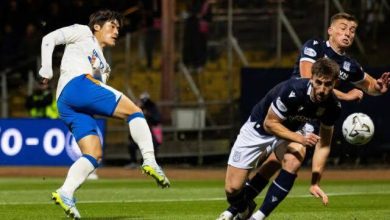
It is worth remembering just how difficult things looked for Moore in the early part of his time in Glasgow. Arriving as a teenager with bags of potential but very little senior experience, he found the step up into regular first-team football tougher than many had anticipated, and there were spells last season where his place in the side looked far from guaranteed. Adapting to the physicality and tempo of Scottish football is never straightforward for young English players parachuted in on loan, and Moore had to work through periods of inconsistency, some understandable homesickness-related dips in form, and the pressure of being talked about as a marquee arrival before he had really had the chance to prove himself. What changed things, according to most inside Ibrox at the time, was a combination of patience from the coaching staff and Moore’s own willingness to keep grafting even when the end product wasn’t quite clicking. By the turn of the year he had begun to look like a genuinely different player, sharper in the final third, more confident taking players on, and increasingly trusted to start in the biggest matches. The end result was seven goals across the season, a return that might not sound extraordinary in isolation but which, given the context of his slow start and the position he was playing in, represented a serious statement of progress. Add in the PFA Scotland Young Player of the Year award and it becomes clear that Moore’s stock, whatever his long-term ceiling turns out to be, rose about as sharply as any loanee’s has in recent Rangers history.
That is precisely why interest in his services this summer has been so widespread and, at times, so competitive. Borussia Dortmund were the first big name to register serious interest right at the start of the transfer window, a fact that in itself tells you plenty about how highly rated Moore now is across the continent. Dortmund, though, wanted the loan structured with an option to purchase built in, giving them the ability to make any move permanent further down the line if Moore continued to progress as expected. Spurs, however, were not willing to entertain that kind of arrangement, preferring instead to retain full control over the player’s long-term future rather than risk losing him for a fixed fee to a club that could develop him into a genuine Bundesliga star and then cash in. That rejection from Tottenham’s end effectively closed the door on the Dortmund move, but it did nothing to dampen wider German interest, and if anything it seems to have opened the floodgates for other Bundesliga sides willing to take Moore on a straightforward loan without strings attached.
Koln have emerged as the frontrunners in that chase, and their interest makes a good deal of sense when you look at how the club has operated in the English market in recent windows. They already have Reigan Heskey and Jahmai Simpson-Pusey on their books, both examples of young English talent being given the chance to develop in German football rather than fighting for scraps of first-team action back home. Simpson-Pusey’s own experience offers a useful, if slightly cautionary, parallel for Moore’s situation. His loan spell north of the border at Celtic last season did not work out anywhere near as well as Moore’s did at Rangers, and it is a reminder that these loan moves, however promising on paper, carry no guarantees. Still, Koln’s track record of giving young English players regular game time and a platform to impress appears to be exactly the kind of environment being weighed up as the right next step for Moore, and it would hardly be a surprise if Tottenham’s decision-makers see parallels between what Rangers offered him last season and what Koln could offer this time around.
Hamburg’s interest adds another layer of competition to the race, and while there has been less detail circulating about the shape of any prospective deal from that end, their involvement is another indicator of just how many clubs across Germany are keeping tabs on emerging English talent right now. The Bundesliga has increasingly positioned itself as a landing spot for players who might once have automatically gravitated toward loan spells in the Championship or lower reaches of the Premier League, offering a blend of tactical education, physical development, and first-team opportunity that many feel outpaces what’s on offer domestically. It is not just the Germans either. LaLiga clubs have also made enquiries to Tottenham about parking Moore in Spain for the season, another sign that his emergence last season has genuinely registered across the continent’s biggest leagues rather than simply within the relatively insular world of Scottish football reporting. Whether any of those Spanish enquiries develop into something more concrete remains to be seen, but the mere fact that they exist speaks volumes about how far Moore’s reputation has travelled in a relatively short space of time.
All of this stands in fairly stark contrast to what was on the table domestically. Middlesbrough had already made known their desire to take Moore on loan for the coming season, with the added incentive of reuniting him with old Tottenham academy team-mate Will Lankshear, who completed a move to Teesside earlier this month in a package worth around £20million. On paper, that reunion angle might have appealed to a player looking for familiarity and a smoother off-field transition, but by most accounts Moore has made his priorities clear, and a return to English football, even in a promotion-chasing Championship side with a familiar face already in the building, does not appear to hold the same appeal as testing himself in one of Europe’s genuine superpower leagues. That preference for a “top five league” move, as it has been characterised, essentially rules out anything in the Championship regardless of the personal connections on offer, and it is easy to understand the thinking. For a player of Moore’s ambition, having already proven himself capable of performing at a senior level in a competitive European league during his time at Rangers, dropping down into the English second tier would represent something of a step backwards rather than the continued upward trajectory he and his representatives appear to be targeting.
For Rangers, the reality of losing Moore permanently to a foreign club rather than seeing him return to Ibrox, even temporarily, will be viewed with a mixture of disappointment and pragmatic acceptance. Under the previous head coach, there had been genuine internal discussions about trying to find a way to make Moore’s stay in Glasgow permanent, recognising just how influential he had become to the side’s attacking play by the back end of last season. Turning loan spells into permanent deals is never straightforward, particularly when a parent club as well-resourced as Tottenham is involved and especially once a player’s value has shot up as dramatically as Moore’s did. Any hope of Rangers structuring a deal that could have kept him at Ibrox beyond last season always looked like a long shot, but it is one that appears to now be definitively off the table given the change in management and Moore’s own stated ambitions elsewhere. It’s a reminder of the structural reality clubs like Rangers operate within: even when a loan player exceeds every expectation and becomes a genuine fan favourite, there is often very little a Scottish club can do to compete with the financial and competitive pull of clubs playing at the very top level of the European game.
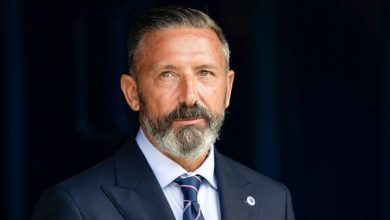
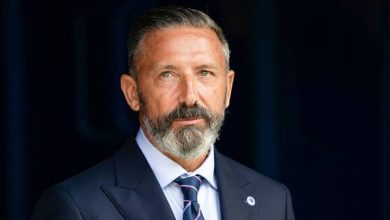
That said, Rangers’ priorities this summer have understandably moved on from what-ifs surrounding Moore’s future and toward addressing the gaps that have opened up in the current squad. The club remains active in the market for reinforcements out wide, an area of the pitch that inevitably looks a little thinner without Moore’s dynamism and end product to call upon. Replacing that kind of direct running and end product from wide areas is never simple, and it will likely take more than one incoming addition to fully paper over the loss of a player who ended the season as one of the most productive attacking outlets in the entire Premiership. There is also a growing sense of urgency in the market for defensive reinforcements after Ben Godfrey, one of the club’s higher-profile summer arrivals, picked up an injury during the Premiership opener against Dundee United. Losing a centre-half of Godfrey’s experience and physical profile so early in the campaign is far from ideal, particularly with a European qualifying tie against Jagiellonia Białystok looming and a title challenge to be sustained across a long domestic season. Manager Derek McInnes will be acutely aware that squad depth in both of these areas, out wide and at the back, could prove decisive over the course of a campaign that already carries plenty of expectation given the volume and profile of arrivals brought in during this transfer window.
Looking at the broader picture, Moore’s situation is also a useful window into how English academy football increasingly functions when it comes to nurturing genuinely elite young talent. Tottenham’s willingness to send a Young Player of the Year winner out on loan for a second consecutive season, rather than fast-tracking him straight into their own first-team plans, reflects a deliberate philosophy around development that prioritises continuous senior football over premature Premier League exposure. It is a strategy that has worked well for plenty of young English players in recent years, allowing them to build resilience, adapt to different styles of football, and arrive at the top level with a far more rounded skill set than if they had simply been thrown into the deep end domestically. Whether Koln, Hamburg, or a currently unnamed Spanish suitor ends up winning the race for Moore’s signature, the framework of the move looks remarkably similar to the one that took him to Ibrox last season: a loan deal designed to sharpen a clearly talented young player in a genuinely competitive top-flight environment, with Tottenham retaining full control of what happens next.
For Rangers supporters, there will inevitably be a sense of what might have been. Moore’s emergence last season was one of the genuine feel-good stories of a campaign that had its fair share of ups and downs, and the image of a player who arrived under a cloud of scepticism leaving as an award-winning fan favourite is exactly the kind of narrative that sticks in the memory of a club’s supporters long after the player himself has moved on. There will be no shortage of Rangers fans who will keep half an eye on wherever Moore ends up next, whether that’s the Rhine, the Elbe, or somewhere in Spain, curious to see whether the upward trajectory he found in Scotland continues in whatever colours he wears next. For now, though, the priority at Ibrox is very much about the here and now: strengthening the flanks, sorting out central defensive cover in the wake of Godfrey’s setback, and building the kind of squad depth that can carry Rangers through a season that already features European qualifying commitments alongside the usual demands of a lengthy Premiership title race. Moore’s next chapter, wherever it plays out, will be one that plenty in Glasgow watch with a mixture of pride and gentle regret that his time at Ibrox couldn’t have been extended just a little longer.
There is also a wider footballing conversation worth having here about the value of Scottish football as a genuine proving ground for young English talent, and Moore’s spell at Rangers only adds weight to an argument that has been building for a number of years now. The Scottish Premiership has often been dismissed in some quarters of the English media as a lesser league, a stepping stone at best, but the reality for a growing number of promising young players has been rather different. Competing regularly for a club with the scale, expectation, and European commitments of Rangers exposes a young loanee to genuine pressure, hostile away grounds, and a standard of coaching that has clearly proven capable of extracting significant improvement from raw talent. Moore’s trajectory, from a player who struggled to hold down a starting spot in the opening months of last season to one leaving as the division’s outstanding young performer, is about as strong an advert as any for the merits of that pathway. It will not be lost on other Premier League academies watching how Moore’s stock has risen that a loan spell in Glasgow did far more for his development than a season shuttling between the bench and the odd cup outing back in London would likely have achieved.
There is also the question of what this saga says about Tottenham’s broader recruitment and development strategy under De Zerbi. The Italian has built something of a reputation throughout his career for backing his own judgement on young players, sometimes throwing academy graduates into senior football earlier than most of his contemporaries would dare. That makes the decision to loan Moore out again, rather than integrate him immediately into first-team plans at Tottenham Hotspur Stadium, all the more notable. It suggests that even with visible admiration for what Moore showed during pre-season, the priority remains giving him another full season of uninterrupted senior competitive football rather than fighting for rotation minutes in a squad stacked with more experienced options in wide areas. Spurs’ recent transfer business has been geared heavily toward the kind of squad depth and quality that makes breaking into the first XI a genuinely difficult proposition for even the most talented teenagers, and that context makes the loan route look less like a lack of faith in Moore and more like a calculated attempt to protect his development curve at a stage when regular football matters more than proximity to the first team.
It is also worth dwelling for a moment on what a move to Koln specifically might look like for Moore in practical terms. The Bundesliga club have not been shy about recruiting from English academies in recent windows, and their approach to integrating players like Heskey and Simpson-Pusey into first-team contention offers some indication of the kind of platform Moore could expect if a deal is finalised. German football’s reputation for developing pace and directness in wide players lines up neatly with the attributes that made Moore such a threat during his best form at Ibrox last season, and there is an obvious logic to the idea that a similar tactical framework, built around quick transitions and direct wide play, could allow him to hit the ground running rather than needing another lengthy adaptation period. Of course, adaptation periods are never entirely avoidable when young players move to unfamiliar leagues, as Moore’s own slow start in Scotland demonstrated all too clearly, but there would at least be a level of stylistic continuity that could help smooth the transition should Koln end up winning the race for his signature.
Hamburg’s motivations, by contrast, are a little harder to read given the relative lack of detail that has emerged about their interest so far, though their recent return to Bundesliga football after a lengthy spell down in the second tier has been accompanied by a clear appetite to recruit dynamic, high-ceiling talent capable of hitting the ground running at the top level. A move there would represent a slightly different proposition to Koln, with Hamburg still finding their feet back among Germany’s elite and looking to build a squad capable of establishing themselves rather than simply consolidating, but the broader appeal for Moore would likely be similar: regular competitive senior football in one of Europe’s stronger domestic leagues, with the platform to continue building the kind of reputation that could eventually attract suitors well beyond the level of interest he has already generated this summer.
Whichever destination he ultimately chooses, the underlying story here is one that Rangers supporters will recognise as a familiar pattern in modern football, where clubs at the top table increasingly treat emerging talent as an asset to be carefully managed across multiple loan spells rather than a player to be committed to on a permanent basis at the first opportunity. It can be a frustrating dynamic for a club like Rangers, who invested time, coaching resource, and first-team opportunity into a player only to watch him move on to pastures new with no realistic prospect of extending that relationship. But it is also, in its own way, a validation of the work done at Ibrox last season. Moore did not arrive at Rangers as the finished article, and the club’s willingness to persist with him through a difficult opening spell rather than shipping him back to London prematurely appears to have played no small part in unlocking the form that has now made him such a hot commodity across several of Europe’s major leagues. That, in the long run, is not a bad legacy for a loan spell to leave behind, even if the ending itself carries a tinge of what-might-have-been for a support who took to Moore in a way that few loanees manage to achieve in such a short space of t