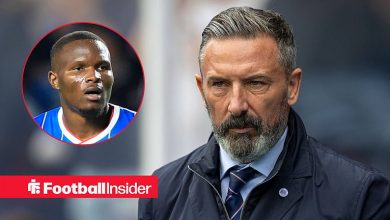
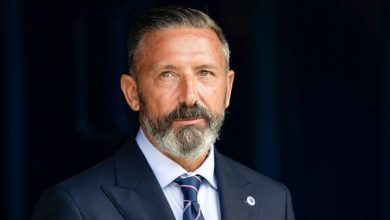
THE SELECTION PUZZLE: HOW DEREK MCINNES COULD SET UP RANGERS AGAINST A JAGIELLONIA SIDE RIDING A PERFECT START

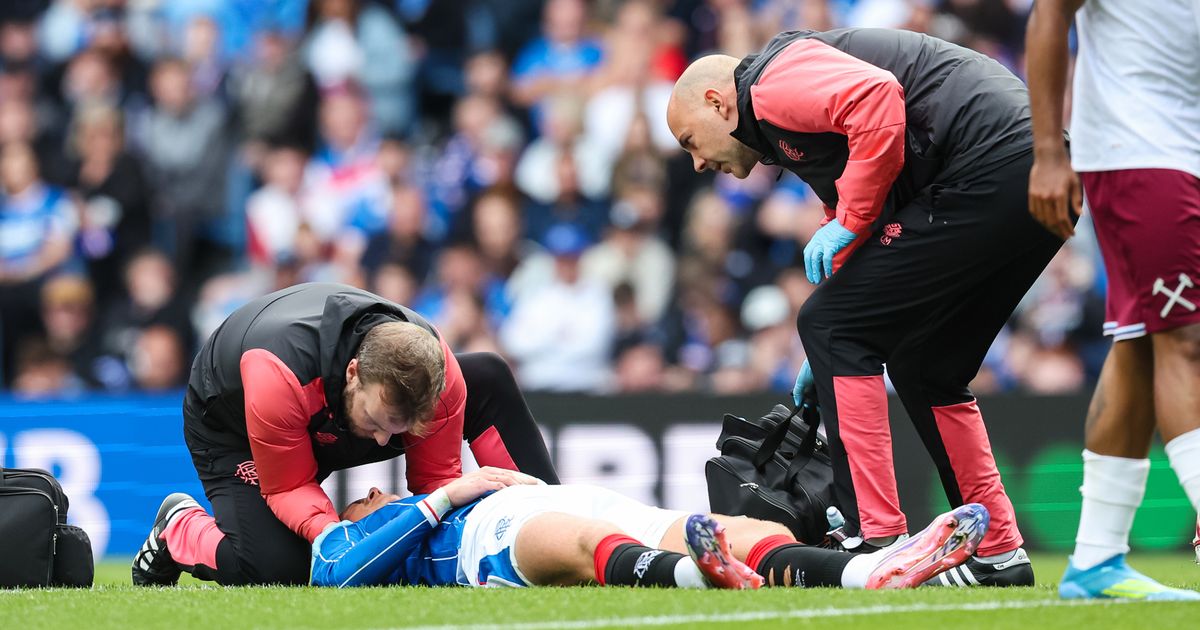
Team news ahead of a European qualifier rarely tells the full story on its own, and that is very much the case as Rangers prepare to travel to Poland for Thursday night’s Europa League third qualifying round first leg against Jagiellonia Białystok. Yes, Derek McInnes has fitness issues to navigate, with Ben Godfrey ruled out, Connor Barron a doubt, and new signing Olwethu Makhanya’s involvement complicated by a visa issue rather than anything picked up on the training pitch. But the more interesting question heading into Stadion Miejski is not simply who is missing, it is what those absences force McInnes to actually do with the players who remain, and how that selection puzzle lines up against a Jagiellonia side that has started their own season with the kind of late-goal resilience that suggests Rangers are walking into a genuinely difficult atmosphere rather than a straightforward assignment against unfamiliar opposition.
Begin with the shape of the problem at the back, because Godfrey’s absence removes one of the more eye-catching additions McInnes made to his backline over the summer, a defender specifically recruited to bring Premier League-honed composure to a defence that has undergone considerable turnover in recent months. Losing that option so early, and with a scan this week still to confirm whether his lay-off stretches to the hoped-for two to three weeks or considerably longer, forces McInnes into a decision that says as much about his footballing philosophy as it does about simple squad management. Does he shuffle an existing centre-back into a slightly unfamiliar role to preserve partnerships elsewhere, or does he look to bed in a different combination entirely, accepting a period of adjustment at exactly the moment his side needs defensive certainty against a Jagiellonia team that has shown a knack for finding goals late when matches are still finely poised? Given the away-day nature of Thursday’s fixture and the general caution most Scottish sides adopt in the first leg of continental qualifying ties, the smart money would be on McInnes prioritising organisational stability and match experience over any kind of adventurous reshuffle, even if that means asking a player to operate slightly out of position for ninety minutes in Białystok.
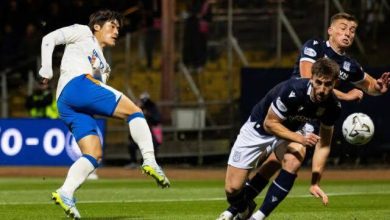
The picture in midfield is arguably even more intriguing, and it is here that McInnes’s touchline decisions during the Dundee United draw may end up shaping his thinking heading into Poland. Dan Neil’s introduction at half-time for Djeidi Gassama visibly shifted the tempo of that fixture, injecting an energy and control into Rangers’ play that had been missing in the opening period, and the temptation to build the side around that same impetus from the very first whistle in Poland will be considerable. Whether that means a straight swap, with Neil starting in Gassama’s place, or a more considered reshuffle that sees McInnes tweak the wider structure of his midfield to accommodate both players in some capacity, is the real selection intrigue here rather than simply noting that Barron remains a slight doubt after his own pre-season niggle. A head coach only a handful of matches into the job, still working out his best available options across a heavily rebuilt squad, faces exactly this kind of live audition process in real time, using substitute cameos and training performances to build a clearer picture of his strongest available eleven far more quickly than he might have liked given the compressed nature of the season’s opening weeks.
Then there is the Makhanya situation, which adds a layer of uncertainty that has nothing to do with football at all but which still shapes the selection conversation regardless. A versatile summer signing being unable to even make the trip due to visa paperwork is the sort of logistical headache that increasingly complicates recruitment from outside the UK and EU, and it leaves McInnes potentially having to plan his matchday squad without a player who may well have factored into his thinking for a role either from the start or off the bench. Whatever back-up options exist in that part of the pitch will need to step up at short notice if Makhanya’s situation is not resolved in time, adding yet another variable to a selection process that already has plenty to contend with before a ball is even kicked in Poland.
All of this needs to be weighed against exactly what Jagiellonia Białystok are bringing into this tie, because a Rangers side navigating its own selection headaches cannot afford to treat Adrian Siemieniec’s team as simply an unfamiliar name filling space on the fixture list. Two wins from two to open the Ekstraklasa season, both secured by goals scored deep into the closing stages, a 1-0 win over Korona Kielce settled in the 89th minute, and a 2-1 victory over Motor Lublin sealed by a Sergio Lozano strike in the 85th, paint a picture of a side with genuine composure and belief when matches remain in the balance. That is precisely the kind of opponent profile that punishes sloppy game management or a lack of concentration in the closing stages of a match, and it is a trait McInnes will need his side to be alert to regardless of exactly which combination of players he settles on. A two-legged European tie can turn on a single moment, and facing a team that has already shown twice this season it knows how to find that moment late on adds real weight to the importance of Rangers getting their own defensive structure right from the first whistle, particularly with Godfrey unavailable to offer his experience in exactly those kinds of tense, tight, late-match scenarios.
There is also a broader tactical conversation to be had about how McInnes wants his Rangers side to actually play, one that this fixture will offer an early meaningful window into given the calibre and unfamiliarity of the opposition. The draw with Dundee United gave only a partial glimpse of his footballing principles, disrupted as it was by the disappointing nature of the result and the mid-match personnel change that shifted the balance of the game. A European away leg against a side sitting on a perfect start domestically offers a rather different examination altogether, testing not just whether Rangers can control possession and create chances against Scottish Premiership opposition but whether the same principles travel effectively against a well-organised, confident continental side playing in front of their own supporters. How McInnes sets his team up here, in terms of pressing intensity, defensive shape, and the balance between caution and ambition typical of first-leg away performances in European qualifying, will offer a much clearer signal of his managerial identity than the opening weekend alone was ever likely to provide.
None of which is to lose sight of the practical reality that results, not tactical purity, will be the only thing that ultimately matters when the two legs are added up. A pragmatic, well-organised away performance that limits Jagiellonia’s opportunities to find one of their trademark late goals, even if it comes at the expense of expansive attacking football, would represent a perfectly sensible approach given the fitness issues McInnes is currently navigating and the general wisdom around not overcommitting in the first leg of a continental qualifying tie played away from home. Should Rangers manage to keep the tie level, or better still return to Glasgow with a slender lead to defend, the pressure would then shift squarely onto Jagiellonia to come to Ibrox and find a way through a Rangers defence bolstered by home advantage and a crowd that has historically proven decisive in these kinds of European ties.
Ultimately, the fitness headaches McInnes is contending with this week are real and cannot be wished away, but they are also just one part of a considerably richer selection and tactical picture heading into Thursday’s trip to Poland. How he chooses to reshape his defence in Godfrey’s enforced absence, whether Neil’s impressive cameo earns him a first European start under the new regime, how quickly Barron can be eased back into contention, and whether Makhanya’s paperwork clears in time to even make the squad, all combine into a genuinely fascinating selection puzzle for a head coach still very much in the early process of establishing his own footballing identity at Ibrox. Add into that mix an opponent already showing the composure to find late goals twice in as many league matches this season, and Thursday night in Białystok shapes up as far more than a routine early continental fixture. It looks instead like a legitimate early test of exactly what kind of Rangers side McInnes is building, fitness list notwithstanding.
It is worth dwelling further on just how unusual it is for a new manager to be handed this particular combination of circumstances so early into his reign. McInnes has barely had time to work with his squad on the training ground in any sustained way before being asked to solve a defensive puzzle created by injury, manage the reintegration of a midfielder returning from a minor fitness setback, assess a promising cameo from a player who may not have started the previous match at all under his own initial plan, and simultaneously deal with the administrative uncertainty of a new signing’s travel status. Any one of those factors in isolation would represent a manageable, if mildly frustrating, wrinkle in preparation for a European away tie. Stacked together, as they currently are heading into Thursday, they combine into a genuinely complex set of variables that will test not just McInnes’s tactical acumen but his ability to communicate clearly and quickly with a squad still getting to know him as a manager.
There is also the question of how much McInnes can realistically lean on the players who did feature prominently against Dundee United, given the short turnaround between that fixture and Thursday’s trip to Poland. Managing fatigue and recovery across a compressed schedule is one of the more underappreciated aspects of modern coaching, and with Godfrey unavailable and Barron carrying a slight fitness concern of his own, the head coach will need to be careful not to overload any of his remaining defensive options by asking them to play every available minute across a demanding week of fixtures. That consideration alone could influence team selection as much as pure tactical preference, with rotation becoming less a matter of squad rotation for its own sake and more a genuine fitness management necessity given how few fully fit senior options McInnes currently has to call upon in defensive areas of the pitch.
The wider context of Rangers’ pre-season and the volume of new arrivals integrated over the summer only adds another dimension to this selection conversation. Building cohesion among a squad with so many unfamiliar combinations takes time under the best of circumstances, and doing so while also missing key defensive personnel accelerates the need for McInnes to make quick decisions about which partnerships and combinations he trusts most, even before those combinations have had the benefit of extensive time working together in training. It is the kind of scenario that can either accelerate a squad’s development, forcing understanding and trust to be built quickly out of necessity, or expose gaps that a longer, more settled pre-season might otherwise have papered over. Which of those outcomes plays out at Stadion Miejski on Thursday night will say plenty about the underlying quality and adaptability of the group McInnes has assembled, regardless of the eventual scoreline.
There is also value in considering how Jagiellonia themselves might approach the tie tactically, given what their own early-season form suggests about their setup under Siemieniec. A team capable of grinding out one-goal victories against domestic opposition in the 85th and 89th minutes typically demonstrates a level of defensive discipline and game management that makes them difficult to break down even when not dominating proceedings for large stretches. That profile suggests Rangers may need patience as much as intensity in their approach, understanding that clear-cut opportunities may be limited and that a single moment of quality, a well-worked set piece, a defensive lapse, or an individual moment of brilliance, could prove decisive rather than a sustained period of territorial dominance. McInnes’s own instincts as a coach, built over a long managerial career prior to arriving at Ibrox, have generally leaned toward pragmatism in exactly these kinds of away-from-home European assignments, and there would be little surprise if that instinct wins out again here given the circumstances currently surrounding his squad.
Ultimately, whatever combination of players McInnes settles upon, the true measure of Thursday night’s performance will lie less in the specific names on the team sheet and more in how effectively a clearly disrupted preparation translates into a coherent, disciplined performance away from home. Rangers supporters travelling to Poland, and those watching back home, will be looking for signs that the underlying structure and organisation of the team can hold up even when key personnel are missing, a quality that often separates sides capable of sustained European runs from those who fall away at the first meaningful hurdle. Thursday night offers an early opportunity for this rebuilt Rangers side to demonstrate exactly that kind of resilience, fitness list notwithstanding.