UNBELIEVABLE — Rangers Fans FUME After VAR Controversy Against Hibs as Michael Stewart Delivers Brutal Verdict

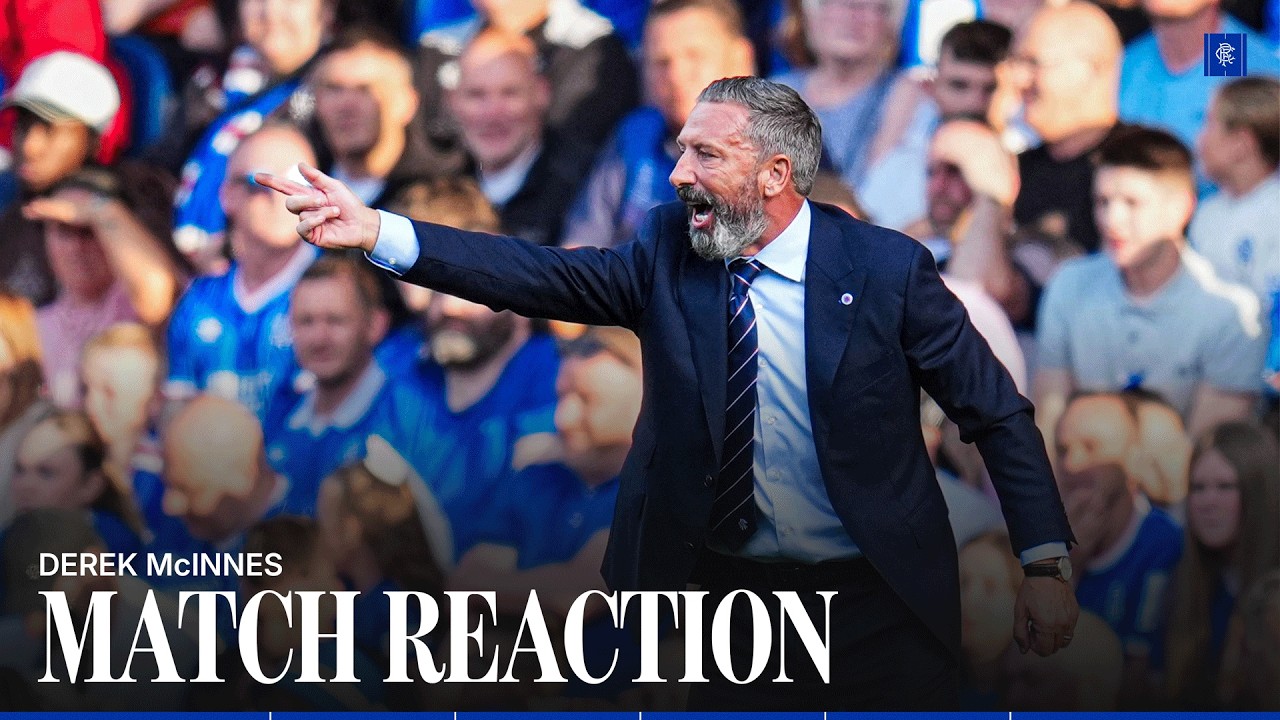
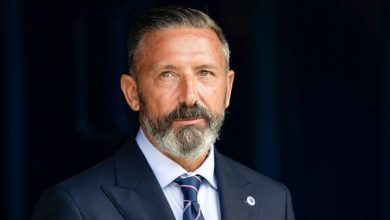
Rangers supporters were left absolutely furious at Ibrox after a controversial VAR intervention turned an already frustrating afternoon into a nightmare for Derek McInnes and his players. The Gers suffered defeat against Hibernian on Sunday, but it was one particular decision involving Vanja Dragojevic and Jason Kerr that dominated the reaction inside the stadium and immediately became the biggest talking point after the final whistle. Referee Don Robertson initially allowed play to continue following the incident inside the Rangers penalty area, seemingly deciding that the contact between the two players was not sufficient to award Hibernian a spot-kick. However, VAR subsequently intervened and Robertson was instructed to review the incident on the pitch-side monitor. After watching the footage, the referee dramatically changed his decision and awarded Hibernian a penalty, leaving Rangers players visibly stunned and supporters furious. The atmosphere inside Ibrox instantly changed as boos and protests rang around the stadium. Dragojevic was shown a yellow card, while Josh Campbell stepped forward and confidently converted from the penalty spot. For Rangers supporters, the frustration was not simply about conceding a goal from twelve yards. The real anger centred on the decision to involve VAR in an incident that the referee had initially judged differently. Many supporters believed the contact was too minimal and too subjective to justify overturning the original call. The incident has since sparked a huge debate about the use of VAR, the threshold for intervention and whether Rangers were unfairly punished at a crucial stage of the match. Michael Stewart’s reaction only intensified the controversy, with the former Scotland international openly questioning why VAR had become involved at all. His assessment will undoubtedly fuel the anger among the Rangers support, particularly because it appeared to support the view that the original decision should have been allowed to stand.
The sequence of events was particularly frustrating for Rangers because the players initially believed they had escaped the danger. Robertson was close to the incident and his first decision was to allow the game to continue. There was no immediate penalty, no dramatic reaction from the referee and no indication that Hibernian were about to receive a potentially game-changing opportunity. Then VAR stepped in. The referee was called over to the monitor, and suddenly the entire situation changed. From the Rangers perspective, that is what made the decision so difficult to accept. The players had already seen the referee make his judgement in real time, only for that judgement to be overturned after a review of the footage. Dragojevic was understandably one of the most frustrated figures on the pitch. The defender had been involved in a challenge that would ultimately become the defining moment of the afternoon, and the fact that it happened during his first Scottish Premiership start for Rangers made the situation even more unfortunate. Instead of being able to focus on his performance and demonstrate why McInnes should trust him, Dragojevic suddenly found himself under an enormous spotlight. Rangers players immediately surrounded the referee and questioned the decision, but Robertson remained unmoved. The yellow card compounded the frustration because Dragojevic was personally punished while Rangers were forced to deal with the consequences of conceding a penalty. Josh Campbell then made no mistake from the spot, giving Hibernian a huge advantage and leaving Rangers facing an even more difficult task. The reaction from the stands was immediate and fierce. Supporters could not understand why the original decision had been changed, particularly when the incident appeared far from clear-cut. That is the central argument surrounding the controversy. Rangers fans are not necessarily claiming that there was absolutely no contact between the players. Their complaint is that the contact did not appear sufficiently obvious to justify VAR overturning the referee’s original judgement. For a club operating under enormous pressure, moments like this can completely change the atmosphere around a match
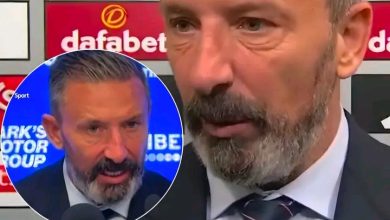
Michael Stewart’s Verdict Will Only Make Rangers Supporters More Furious
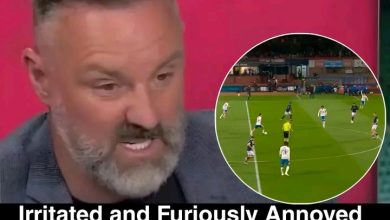
Michael Stewart’s reaction to the incident has become another major part of the story. Speaking during the broadcast, the former Scotland international did not hide his disbelief when Robertson appeared ready to award the penalty. Stewart acknowledged that the challenge did not look ideal from a Rangers perspective, but he argued that this did not automatically make it a penalty. His verdict was blunt: “It doesn’t look good for Dragojevic, but that’s not a penalty kick, that’s not a penalty.” Those comments immediately cut to the heart of the controversy. Stewart was not saying that the Rangers defender had done everything perfectly. Instead, he questioned whether the level of contact was sufficient to warrant such a significant decision. He then went further by questioning why VAR had become involved in the first place. “I don’t know why VAR are looking at this,” he said, highlighting the argument that the incident was not clear enough to justify intervention. That distinction is incredibly important. VAR is supposed to help correct clear and obvious mistakes, not necessarily provide referees with an opportunity to reconsider every subjective decision. Stewart appeared to believe that Robertson’s initial judgement should have remained untouched. He argued that Jason Kerr appeared to go down without enough justification for VAR to intervene, saying: “Jason Kerr falls to the ground without, they just don’t need to be getting involved with that.” As Robertson prepared to make the final decision, Stewart’s frustration became even clearer. “It looks like they’re going to give a penalty kick. It’s absolutely incredible, it really is.” For Rangers supporters watching from Ibrox and elsewhere, those comments will be particularly significant because they reinforce the feeling that the decision was not straightforward. When a television analyst openly questions why VAR intervened, supporters are naturally going to ask the same question. Stewart’s final criticism was arguably the strongest of all, as he argued that the incident had not been viewed in real time as a clear penalty and therefore should not have been escalated. “Nobody’s looked at that in real time, it’s way after the fact, I just do not see there’s any need for VAR to be getting involved in that.” Whether fans agree with him or not, his verdict has guaranteed that the debate will continue.
Why Rangers Supporters Are Questioning VAR All Over Again
The controversy has opened another major debate about VAR and its role in Scottish football. Technology was introduced to help referees make more accurate decisions, particularly in situations that can be difficult to judge at full speed. Yet incidents like the one at Ibrox often create the exact opposite reaction. Instead of giving supporters confidence that the correct decision has been reached, VAR can sometimes leave everyone arguing about whether the intervention should have happened at all. That is precisely what has happened here. Robertson saw the incident live and initially decided against awarding a penalty. The question now is whether the replay showed a clear and obvious error or merely provided another interpretation of an incident that was already subjective. Rangers supporters will argue that there was insufficient evidence to justify changing the decision. Hibernian supporters will naturally argue that the contact was enough to warrant the spot-kick. That disagreement is exactly why VAR remains such a contentious subject. If two groups can watch the same footage and reach completely different conclusions, should the technology really be used to overturn an on-field decision? The answer depends heavily on the threshold being applied by officials. The purpose of VAR should not be to find a reason to change every decision. If referees are encouraged to overturn decisions whenever another interpretation can be found, then the original on-field judgement becomes almost meaningless. That is one of the biggest frustrations among football supporters. Rangers fans want consistency. They want to know what constitutes a penalty and, just as importantly, what constitutes a clear and obvious error. If similar incidents produce different outcomes from one match to another, trust in the system becomes increasingly difficult. The timing of Sunday’s decision made the situation even more explosive because it had a direct impact on the match. Hibernian were handed an opportunity from the penalty spot, Campbell converted, and Rangers were left chasing the game. That naturally magnified the anger. Had the incident happened in a match Rangers were comfortably winning, the reaction might have been very different. But because the decision contributed to a defeat, supporters are inevitably going to remember it.
Dragojevic Cannot Be Allowed to Become the Scapegoat
Despite the controversy, Rangers must be careful not to allow Dragojevic to become the scapegoat for the defeat. The defender will undoubtedly be disappointed with the incident, but one controversial decision should not define his career at Ibrox. Young players need support, particularly when they are placed under enormous pressure during important matches. Dragojevic’s first Scottish Premiership start was always going to attract attention, and the penalty incident has now ensured that his performance will be remembered for all the wrong reasons. However, McInnes must separate the individual mistake, if he believes there was one, from the broader issue of the team’s performance. A defender can make a challenge that gives the referee something to consider without necessarily being solely responsible for the result. The decision ultimately belonged to Robertson after the VAR review. Dragojevic cannot control how the referee interprets the footage or whether VAR recommends an intervention. The most important thing now is how the player responds. Confidence can be fragile, particularly for a young defender at a club as demanding as Rangers. If Dragojevic spends the next few weeks worrying about the incident, his development could be affected. McInnes therefore has a responsibility to make sure the defender understands that one controversial moment does not erase his potential. At the same time, the manager will expect him to learn from the experience. Defenders at Rangers must understand that every challenge inside the penalty area is scrutinised intensely. The margins are incredibly small. McInnes will want his players to defend intelligently, avoid unnecessary risks and make sure they do not give officials an opportunity to make difficult decisions. But that does not mean Dragojevic should carry the entire blame for the defeat. The Rangers squad must take collective responsibility. The result was not determined solely by one penalty. The team had opportunities to influence the match before and after the incident, and those opportunities must also be examined. If Rangers want to compete for major honours, they cannot rely on every refereeing decision going their way. They have to build enough control and attacking quality into their performances that a controversial decision does not completely derail them.
Ibrox Anger Shows Just How High the Pressure Has Become
The atmosphere inside Ibrox following the decision demonstrated just how intense the pressure around Rangers has become. Supporters expect victories, but they also expect performances that reflect the scale and history of the club. When results fail to arrive, every controversial decision, missed chance and defensive mistake becomes magnified. That is the reality McInnes has inherited. The Rangers manager knows that patience at Ibrox can disappear quickly if the team does not produce consistent results. Sunday’s defeat therefore represents more than just another disappointing afternoon. It adds to the scrutiny surrounding the manager and his players. The VAR controversy has complicated the conversation because it gives supporters another reason to feel aggrieved. But McInnes cannot allow the incident to become the only explanation for the defeat. The manager must look at what Rangers did well, what they did poorly and what needs to change before the next match. If his team responds strongly, the Hibernian defeat could eventually become a valuable lesson. If performances continue to disappoint, however, the pressure will increase rapidly. Rangers supporters are not interested in excuses. They want a team capable of competing at the highest level domestically and performing with authority at Ibrox. That means creating chances, controlling possession, defending properly and showing the mentality required to recover from setbacks. The best teams encounter controversial decisions throughout a season. The difference is that they find ways to overcome them. That is the challenge now facing McInnes. He must ensure the players do not allow frustration over the penalty to affect their mentality. The next match becomes an opportunity to demonstrate that the squad has character. Rangers cannot change what happened against Hibernian. They cannot force Robertson to reverse the decision or persuade VAR officials to reconsider it. What they can control is their response. That response will tell supporters far more about the team’s character than the controversy itself.
Rangers Cannot Allow VAR to Become an Excuse
There is a delicate balance Rangers must find in the aftermath of the defeat. The club has every right to question a decision it believes was wrong, but the players cannot use VAR as an excuse for failing to get the desired result. Football is full of unpredictable moments. Referees make mistakes. Opponents score deflected goals. Players miss penalties. Injuries happen at unfortunate times. Champions are not defined by never facing adversity; they are defined by how they respond when adversity arrives. Rangers now have the opportunity to demonstrate that mentality. If the club spends the next several days focusing exclusively on the referee, it risks missing the bigger picture. McInnes needs to identify why his team was vulnerable enough for one decision to have such a major impact. He needs to assess the defensive structure, the midfield control, the attacking threat and the mentality of the players. The penalty may have been controversial, but Rangers still need to become more difficult to beat. That is the standard expected at Ibrox. Supporters will understandably debate the decision, but they also want their team to respond. They want players who are angry enough to improve rather than players who use controversy as a shield. The same applies to McInnes. His job is not to spend every post-match interview discussing refereeing decisions. His job is to make Rangers better. If he can use the frustration from Sunday’s defeat to motivate his squad, the controversy could ultimately become a turning point. The players must understand that the season is far longer than one afternoon. There will be more difficult decisions. There will be more moments when things do not go their way. The only sustainable response is to become good enough that those moments do not decide matches. That requires stronger performances, better concentration and greater attacking efficiency. Rangers have the resources and expectations to demand that standard. The Hibernian defeat should therefore be treated as a warning rather than an excuse. VAR may have played a major role in the afternoon’s drama, but Rangers must still take responsibility for everything they can control.
The Controversial Decision Could Dominate the Rangers Conversation for Days
There is little doubt that this incident will continue to dominate discussion around Rangers for some time. Every replay will be examined, every angle will be debated and supporters will continue to disagree about whether Robertson made the correct call. That is inevitable when a decision involving VAR directly influences the outcome of a match. The controversy has already become bigger than the individual incident because it touches on broader concerns about officiating and consistency. Rangers supporters want to know whether the same standard will be applied to similar incidents involving other clubs. They want clarity about when VAR should intervene and why some decisions are overturned while others remain untouched. Those are legitimate questions for Scottish football. The technology itself is not necessarily the problem. The challenge is ensuring that it is applied consistently and transparently. If supporters understand the process, even controversial decisions can become easier to accept. But when the reasoning behind an intervention is unclear, frustration naturally follows. Sunday’s incident has created precisely that frustration. Stewart’s comments have made the debate even louder because he questioned the need for VAR involvement. That does not automatically prove the decision was wrong, but it demonstrates that the incident was far from universally accepted. Rangers supporters will undoubtedly continue to argue that the original decision should have stood. Hibernian supporters will insist that the penalty was justified. The referee and VAR officials will have their own interpretation of the incident. In the end, the official decision stands, and Rangers cannot change the result. But that does not mean the debate will disappear. Football supporters rarely forget controversial moments, especially when those moments contribute to a defeat. The image of Robertson standing at the monitor before pointing to the penalty spot will become part of the story of this match. For Rangers, the only way to change the narrative is to produce stronger performances in the matches that follow.
McInnes Now Needs a Response From His Rangers Players
The most important question following the controversy is what happens next. McInnes cannot change the result against Hibernian, but he can influence how his players react. Rangers now need a response that goes beyond words. They need intensity, discipline and quality on the pitch. The manager must make sure the squad understands that the season cannot be allowed to drift because of one controversial defeat. Every major club experiences setbacks, but the strongest teams respond quickly. That is what Rangers must do. McInnes will also need to ensure that the players maintain their confidence. A difficult result can create uncertainty, particularly when supporters are already demanding improvement. The manager’s role is to restore belief while also demanding higher standards. If the squad responds positively, the Hibernian defeat could eventually be viewed as an early warning rather than a defining moment. But if Rangers continue to struggle, supporters will inevitably return to the same questions about the manager, the squad and the direction of the club. The pressure will only increase. That is why the next performance matters so much. Rangers supporters may be furious about VAR, but they will ultimately judge McInnes and his players by what happens on the pitch. They want victories. They want attacking football. They want defensive stability. Most importantly, they want a team that looks capable of challenging for trophies. The controversy at Ibrox should therefore become motivation. The players should feel frustrated, but they should also feel determined. Dragojevic should use the experience as a learning opportunity. The senior players must take responsibility. The manager must provide clear instructions. And the entire squad must understand that the standards at Rangers are extremely high. One controversial decision cannot be allowed to define an entire campaign.
Rangers Fans Have Spoken — Now the Team Must Answer
For all the arguments about the penalty, one thing is undeniable: Rangers supporters were furious. The reaction inside Ibrox showed that the decision struck a nerve. The boos, protests and visible frustration from the players captured the mood perfectly. Supporters felt that an incident which had initially been judged one way was suddenly transformed into a penalty after VAR intervention, and Michael Stewart’s comments gave further ammunition to those who believed the decision was wrong. But now the focus has to move forward. Rangers cannot replay the incident forever. They cannot change Campbell’s penalty. They cannot erase the defeat. What they can do is respond. The team has to show that the setback has made them stronger. McInnes has to demonstrate that he can handle the pressure. Dragojevic has to show that the controversial incident has not damaged his confidence. The senior players must lead by example. And the supporters will expect to see a completely different level of determination in the next match. The debate about VAR will continue, but Rangers have a much bigger objective. They need to win football matches. They need to collect points. They need to build momentum. And they need to convince the Ibrox faithful that this squad is capable of competing at the level expected of Rangers. The defeat to Hibernian may eventually be forgotten, but only if the club responds properly. If Rangers bounce back with a convincing performance, the controversy will gradually become another talking point from a difficult afternoon. If they fail to respond, however, the penalty will continue to be mentioned as part of a much bigger story about the team’s struggles. That is why the next few matches are crucial. Rangers fans have made their feelings clear. They believe the VAR decision was wrong. Michael Stewart has questioned it. The players were furious. But now the responsibility belongs to the team. The only answer that truly matters is the one Rangers provide on the pitch.
The Final Verdict: Was VAR Right or Did Rangers Get a Raw Deal?
The debate surrounding the incident is unlikely to have a definitive ending because football decisions are rarely that simple. There was contact between Dragojevic and Kerr, but the crucial question is whether that contact was sufficient to justify a penalty and, more importantly, whether the evidence was strong enough for VAR to intervene after Robertson had initially decided against awarding one. Michael Stewart believes the answer was clearly no. Many Rangers supporters agree with him and believe their team was the victim of an unnecessary VAR intervention. Hibernian supporters will understandably view the incident differently, particularly because the penalty was awarded and converted. From their perspective, the decision gave them an opportunity that Campbell took successfully. Ultimately, the referee’s decision stands, and Rangers have to accept the result. But accepting the result does not mean supporters have to accept the decision without criticism. The controversy raises genuine questions about how VAR is being used and whether officials are applying the clear-and-obvious-error threshold consistently. Those questions deserve proper discussion. For Rangers, however, the bigger challenge is what comes next. McInnes must ensure his squad does not become consumed by frustration. The players must turn their anger into motivation. Dragojevic must be protected from becoming the scapegoat. And the entire team must understand that there is no substitute for producing better performances. The Rangers support will continue debating the penalty, and they will probably continue to believe that their team was hard done by. But the best way to answer the controversy is with results. If Rangers respond strongly in their next matches, the Ibrox crowd will quickly move on. If they struggle again, Sunday’s defeat and the VAR decision will become part of a much more worrying narrative. For now, though, one thing is clear: Rangers supporters are not happy, Michael Stewart is not convinced the penalty should have been awarded, and the VAR controversy has added another layer of pressure to McInnes’ Rangers project. The football will move on, but this particular decision is unlikely to be forgotten anytime soon
Was it genuinely a penalty, or did VAR make a massive mistake by sending Don Robertson to the monitor? Was Michael Stewart right when he argued that there was no reason for VAR to intervene? Did Rangers deserve to lose, or did this controversial decision change the entire game