Rangers supporters hoping for reinforcements before the summer transfer window shuts have received some encouragement from the top of the club. Chairman Andrew Cavenagh has indicated that somewhere between three and five additional signings could arrive at Ibrox before the deadline, even as he acknowledged that the team’s results so far this season have fallen short of expectations.
The Glasgow giants have already been busy in the market, bringing in nine new players since the summer began. Despite that spending and rebuilding, the early league form has been underwhelming: two matches into the Scottish Premiership campaign under recently appointed manager Derek McInnes, Rangers have collected just a single point. Their European campaign has also started shakily — they go into the second leg of a Europa League third qualifying round tie trailing Polish side Jagiellonia Białystok 2-1, having lost the first leg.
Speaking candidly to shareholders at an open forum in Glasgow, Cavenagh described the club’s business dealings this summer as “clunky,” while insisting that the organisation is working hard behind the scenes to turn things around. He was careful not to commit to an exact figure for incoming players, but suggested the number would likely fall somewhere between three and five, with some outgoing departures also expected as the squad continues to be reshaped.
He noted the awkward timing of having to negotiate the finer points of the transfer window while simultaneously preparing for a run of important fixtures — a scheduling tension that comes with the territory in modern football, even if it isn’t ideal. Rangers welcome Jagiellonia to Ibrox on Thursday for the second leg of their qualifier, aiming to overturn the deficit from the away leg. Waiting in the subsequent play-off round is a tie against either Northern Irish champions Larne or Georgian side Iberia Tbilisi, depending on who advances from that other qualifying fixture.
Cavenagh also used the forum to reflect on the broader trajectory of the club since he and his ownership group took charge roughly a year ago. He was frank in admitting that the ambitions set out at the time of the takeover — described as building “sustained winning” and “winning sustainably” — have not yet been realised. Still, he struck an optimistic note, saying that he feels more positive about the club’s direction now than he did twelve months prior.
Rather than dwelling on the disappointing opening to the league season, Cavenagh said the ownership group’s approach was to look forward rather than get bogged down in frustration. He pointed to a broader cultural problem the new regime inherited: a pattern of the club settling for second place, or worse, that had, in his words, “seeped into every corner” of the organisation. Reversing that mindset, he suggested, was never going to happen instantly, and supporters should expect the process of change to take time.
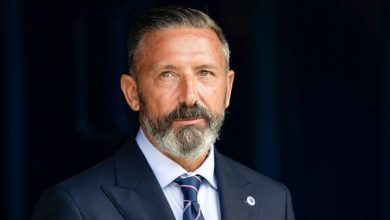
Cavenagh wasn’t the only senior figure fielding questions from shareholders. He was joined by chief executive Jim Gillespie and shareholder Paraag Marathe, and much of the discussion inevitably turned to the recent managerial appointment.
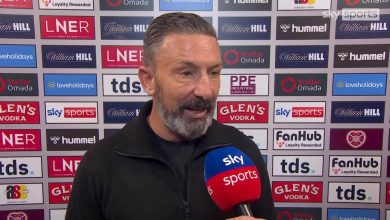
McInnes arrived at Rangers after a spell in charge of Heart of Midlothian, where he came agonisingly close to ending their long wait for a league title before ultimately falling short. Gillespie was asked to explain the thinking behind bringing him to Ibrox, and he framed the decision using a comparison familiar to football followers everywhere: the choice between hiring a manager in the mould of Pep Guardiola — associated with a possession-based, control-oriented approach — or one in the style of Jürgen Klopp, known for high-intensity, front-foot football. According to Gillespie, the recruitment team had deliberately targeted a “Klopp-style” manager, someone who would set up his team to play on the front foot rather than sit back.
Gillespie added that McInnes had been high on the club’s shortlist for an extended period before the appointment was finalised, and that the club’s leadership believed he was a natural fit for the “style and culture” they are trying to build at Rangers. The implication was that this wasn’t a reactive or rushed hire but the product of longer-term planning, even if the timing — arriving amid a difficult start to the season — might suggest otherwise to onlookers judging purely by results.
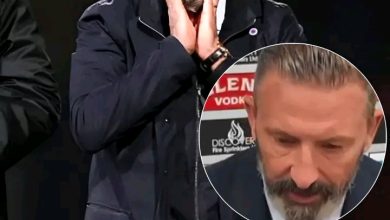
The forum also touched on a controversial refereeing decision from Rangers’ most recent league outing, a 2-1 defeat to Hibernian. That match featured a penalty award for Hibernian that followed a VAR intervention, and it’s clear the decision has not sat well with those inside Ibrox.
Gillespie confirmed that the club is actively seeking clarification from the Scottish FA about the process that led to the penalty being given. His central complaint centred on the threshold that is supposed to govern when video assistant referees intervene: as he understood the protocol, the on-field referee should only be summoned to review a decision, or have it overturned, when there has been a “clear and obvious error.” Gillespie was blunt in saying that, in his own assessment of the incident, he did not see anything that met that standard — it wasn’t clear, and it wasn’t obvious, in his view.
Beyond this individual case, Gillespie framed his concerns in broader terms, calling for the governing body to articulate a clearer strategy for developing both on-field referees and the VAR system as a whole in Scottish football. His question to the SFA, as he put it, boils down to what plan exists for improving standards — because, in his assessment, tangible improvement is what’s needed.
Taken together, the comments from Ibrox paint a picture of a club that is still very much in transition. The ownership group, which took control roughly a year ago, arrived with stated ambitions of building a squad and culture capable of competing consistently at the top of Scottish football — not just occasionally, but as a matter of course. Cavenagh’s own language at the forum — talk of “sustained winning” and “winning sustainably” — reflects an attempt to distinguish between fleeting success and a durable, structurally sound footballing operation.
That kind of transformation, almost by definition, doesn’t happen in a single transfer window or a handful of matches. The nine new arrivals this summer suggest the hierarchy has been willing to back the rebuilding effort financially and in terms of recruitment activity, but the early Premiership results — just one point from two games — have offered little in the way of on-field vindication so far. Similarly, the Europa League qualifying tie against Jagiellonia Białystok represents an early European test that has not gone to plan, leaving Rangers needing a strong performance in the second leg simply to keep their continental ambitions alive this season.
The timing of the second leg is also notable in light of Cavenagh’s transfer comments. With the tie against Jagiellonia on Thursday falling before the transfer window closes, the club finds itself trying to finalise incoming and outgoing deals at the same moment as needing to focus fully on a knockout European fixture — a juggling act that Cavenagh acknowledged is far from convenient, even if it’s an increasingly familiar challenge for clubs operating in multiple competitions during the closing weeks of the summer window.
On the managerial front, the appointment of Derek McInnes represents a definitive stylistic choice by the club’s leadership. By explicitly invoking the Guardiola-versus-Klopp framing, Gillespie was signalling that Rangers deliberately steered away from a possession-dominant, patient style of management in favour of one built around directness, intensity, and proactive, front-foot football. McInnes’s near-miss with Hearts — falling just short of a title that would have been a landmark achievement for that club — appears to have been viewed by Rangers’ recruitment team as evidence he was capable of building a competitive, high-performing side, even without the trophy to show for it. Whether that translates into results at Ibrox remains to be seen, especially given the underwhelming start to his tenure in terms of points on the board.
The dispute over the VAR decision against Hibernian adds another layer of friction to what has already been a testing opening to the campaign. Gillespie’s remarks suggest genuine institutional frustration, not just with the specific outcome of that one match, but with what the club perceives as a lack of clarity or consistency in how the “clear and obvious error” standard is being applied by officials. His call for the SFA to set out a broader strategy for referee and VAR development reflects a recurring theme in modern football, where clubs across various leagues have periodically pushed for greater transparency and accountability around officiating decisions, particularly when video review technology is involved.
For Rangers, the coming days and weeks look set to be pivotal. Thursday’s home leg against Jagiellonia Białystok offers an immediate opportunity to salvage their European campaign, with a play-off round against either Larne or Iberia Tbilisi awaiting the winner. Domestically, the pressure will be on McInnes and his squad to start accumulating points in the Premiership after the sluggish opening to the season. And in the background, the business of the transfer window continues, with Cavenagh’s comments suggesting supporters can expect further squad changes — both arrivals and departures — before the deadline arrives.
Ultimately, the chairman’s message to shareholders was one of patience mixed with urgency: patience in the sense that cultural change at a club he says had grown too accustomed to falling short doesn’t happen overnight, but urgency in the sense that further transfer activity is imminent and that the club recognises results need to improve. Whether the additional three to five signings he anticipates arrive in time to make a meaningful difference to the current squad — and whether they help turn around what has so far been a difficult start under a new manager — will become clearer as the transfer window draws to a close and the season progresses.