Despite signing 27 players, Rangers’ transfers have been ‘gross mismanagement’

Former Rangers midfielder Andy Halliday has hit out at the club’s recruitment strategy, describing their approach to transfers as badly mishandled. His comments came in the aftermath of Rangers’ elimination from the Europa League at the hands of Polish side Jagiellonia Bialystok.
The tie ended in heartbreak for Rangers on home turf, where they could only manage a 1-1 draw on the night. Combined with the result from the first leg, that meant Jagiellonia progressed 3-2 on aggregate, ending Rangers’ European campaign at an early stage and prompting fresh scrutiny of how the squad has been assembled.
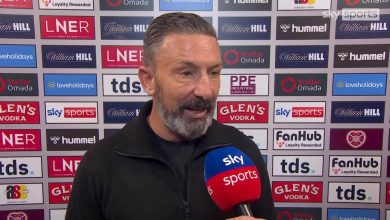
Appearing on Sky Sports, Halliday didn’t hold back when assessing how the club’s business over the past year has left the first-team squad unbalanced. He argued that any club bringing in as many as 27 new players within a single 12-month period has almost certainly made a large number of poor calls along the way — suggesting that volume of turnover, rather than being a sign of ambition, actually points to a lack of clear direction in recruitment.
For Halliday, the scale of that turnover is itself telling. Clubs that get their transfer strategy right tend to make targeted, considered additions rather than churning through dozens of new faces in a short window. Bringing in 27 players in a year, in his view, isn’t evidence of a club being thorough or ambitious — it’s a red flag that too many signings haven’t worked out, forcing the club back into the market again and again to paper over the cracks.
Halliday went further, pointing to specific positional gaps that he believes expose just how disorganised the rebuilding process has been. He noted that the club has brought in only a single recognised left-back, while investing far more heavily elsewhere — with three central defenders added to the ranks. At the same time, he flagged a shortage out wide, with just two wingers now at the club, alongside a glut of central midfielders who, in his assessment, all offer a very similar style of play rather than complementary skill sets.
That kind of imbalance, according to Halliday, makes it “quite incredible” that the club has allowed such a lopsided squad to develop under its watch. Rather than building a well-rounded group capable of competing on multiple fronts, the recruitment has left Rangers short in key areas while overloaded in others — a problem that becomes especially visible when results go wrong, as they did against Jagiellonia.
Despite his criticism, Halliday wasn’t dismissing the idea that Rangers need to strengthen further. He acknowledged that the club is right to think it needs more incoming transfers. His concern isn’t with the principle of continuing to recruit, but with the quality bar being applied to it. Any further additions, he stressed, have to represent a genuine step up from what’s already there — not simply more bodies added to an already bloated squad.
That distinction is central to his critique: it’s not that Rangers have been inactive in the transfer market — quite the opposite — but that activity alone hasn’t translated into a stronger, more balanced team. Adding more players without addressing the underlying issues, he suggested, would only compound the mismanagement he’s already identified.
The backdrop to Halliday’s comments is a disappointing continental campaign that has now come to a premature end. Jagiellonia Bialystok’s win means Rangers won’t be progressing further in the Europa League this season, a result that will sting given the resources that have reportedly gone into reshaping the squad over the past year. A 1-1 scoreline at home wasn’t enough to overturn the deficit from the away leg, leaving the Ibrox side with a 3-2 aggregate loss and an early European exit to explain.
Related coverage from recent days has also touched on defensive struggles at the club, along with dressing room reaction to the Europa League elimination, and a separate warning issued by an upcoming Conference League opponent about the expectations Rangers will be judged against. Taken together, this points to a club under increasing pressure not just to add new faces, but to demonstrate that recruitment decisions are being made with a coherent long-term plan rather than reactive, high-volume turnover.
Halliday’s remarks tap into a broader debate familiar to football fans everywhere: the tension between squad depth and squad coherence. Signing large numbers of players can sometimes be framed as a sign of ambition or financial backing, but as Halliday’s comments suggest, sheer quantity can just as easily disguise poor planning — especially when it leaves obvious gaps in key positions while overloading others.
For Rangers, the challenge going forward will be showing that any further transfer activity addresses those specific shortfalls — particularly at left-back and out wide — rather than adding to an already overcrowded and imbalanced squad. Whether the club heeds that message may go a long way toward determining whether performances like the Jagiellonia defeat become the exception or a symptom of a deeper structural issue.