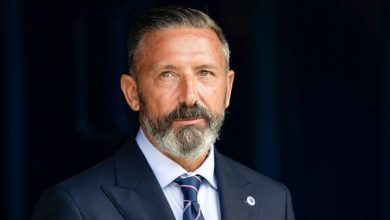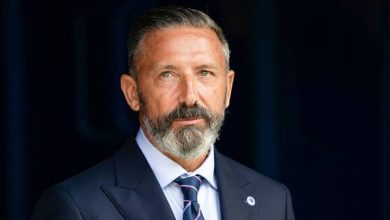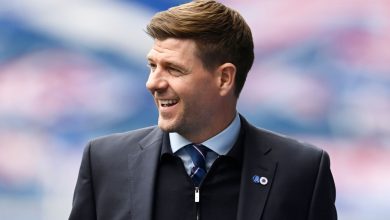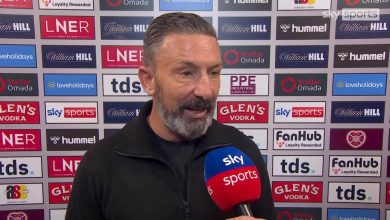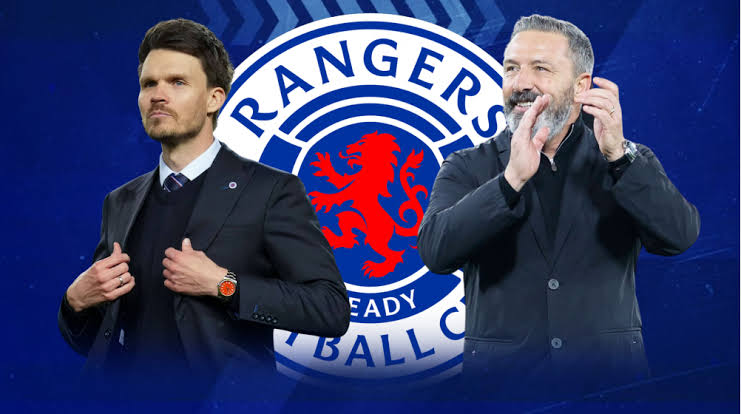
Derek McInnes Makes BOLD Rangers Captaincy Call as Shankland Handed the Armband Derek McInnes has made his first genuinely defining call as Rangers manager, confirming Lawrence Shankland as club captain just two days before the season opener at Dundee United, and in doing so has handed the armband not to a long-serving Ibrox stalwart but to a striker who arrived at the club only weeks earlier. It is the kind of decision that would raise eyebrows at any club, let alone one with the history and expectation that comes with Rangers, and it says a great deal about how quickly McInnes has moved to stamp his own identity on this squad since replacing Danny Röhl in the summer. Succeeding James Tavernier, whose eight-year reign as captain included 565 appearances, 144 goals and a 55th league title, was never going to be a straightforward assignment for anyone. That McInnes has opted to give it to a player who spent last season leading a completely different dressing room in maroon rather than blue only adds to the sense that this is a manager unafraid to make bold, occasionally uncomfortable calls in service of what he believes the club needs.
The process itself tells its own story. Rather than rushing to a decision the moment he walked through the marble staircase doors, McInnes spent the entirety of pre-season deliberately rotating the armband, handing it in turn to Ben Godfrey, Dujon Sterling, Ross McCrorie and Dan Neil across a string of friendlies before Shankland himself wore it in the win over Johor Darul Ta’zim. That approach, watching how each candidate carried himself, how they spoke to teammates, how they responded when things were not going Rangers’ way, was McInnes explicitly using the pre-season calendar as an extended audition rather than treating the captaincy as a formality to be ticked off in his first week. He said as much himself, explaining that he wanted to “take time to look right through the squad and see how everybody was” before making the call, and that the delay was not indecision but diligence. For a club that has cycled through five different managers in as many years and struggled for consistent leadership in that time, that level of care over who wears the armband is itself a signal of intent.
What ultimately swung it for Shankland, according to McInnes, was not reputation or a straightforward striker’s pedigree but something closer to lived experience. The two worked together at Hearts, where Shankland captained the Tynecastle club to their highest points tally of the Scottish Premiership era, and McInnes has spoken about needing no real convincing because he had already watched first-hand how the 30-year-old operates inside a dressing room. “The benefit he had is the evidence I have of how he runs a dressing room,” McInnes explained. “There was a lot to consider but a lot went in his favour. He knows the club. I also have a great relationship with him.” That last point matters more than it might first appear. Managers who inherit a captain, or who are forced to choose blind between candidates they barely know, are taking a leap of faith. McInnes was choosing a player whose character under pressure he had already tested in a genuinely difficult season at Hearts, where Shankland was required to shoulder responsibility when results were not going the Gorgie side’s way. That track record of carrying a team through adversity, rather than simply captaining a side while things were going well, appears to have been the decisive factor.
L
There is also a boyhood-supporter dimension to this that cannot be ignored, and one that McInnes himself leaned on when explaining his thinking. Shankland is a lifelong Rangers fan, someone for whom simply signing for the club this summer already represented, in his own words, “a dream,” and being handed the captaincy on top of that has clearly moved him. Speaking within an hour of being told the news, still visibly buzzing from the conversation with his manager, Shankland called it “a huge honour,” adding that as a boyhood supporter, “to be the captain is a huge honour” in itself. That kind of raw, unforced emotion from a new signing is not something McInnes can manufacture through tactics or team-talks, and it speaks to an intangible quality that data and reputation alone cannot capture: a player who understands, at a gut level, exactly what it means to lead this particular football club out at Ibrox every week.
None of which is to suggest the decision has been universally welcomed without debate. Handing the armband to a player who arrived at the club only that summer, ahead of established figures already inside the building, will always draw scrutiny, and McInnes was asked directly about the optics of overlooking those who have been fighting for the shirt for longer. His answer leaned on precisely the trust he has built with Shankland rather than any obligation to reward tenure. “When you come into a club and have to pick a captain, you’re always mindful of the ones who have gone before,” he said, acknowledging the weight of Tavernier’s legacy directly, before making clear that his priority was finding the right profile for this specific Rangers side at this specific moment, rather than defaulting to seniority. There is a long history in football of managers being criticised for handing leadership roles to new arrivals only for it to unsettle a dressing room; McInnes appears to be betting that Shankland’s obvious authenticity as a Rangers supporter, combined with the manager’s own personal relationship with him, will neutralise that risk far more effectively than simply picking whichever player happened to have been on the books longest.
Perhaps the more genuinely bold element of the decision, though, is not who was chosen but how McInnes intends to use the captaincy going forward. Rather than replicating the Tavernier model, where one man was consistently put up to answer for the team after difficult results, McInnes has been explicit that he wants to build a far broader leadership structure beneath Shankland, spreading responsibility across a wider group rather than concentrating it in a single figure. “At Rangers, I always felt it was a bit unfair that James Tavernier was rolled out after every sore defeat, it was always the same guy fronting up,” McInnes said. “We need to share that load and that responsibility, both when things are going well and when they’re not, by leaning on his teammates and the leadership group we have in the dressing room. Ideally you want everyone to be able to handle that responsibility.” That is a notably different philosophy to the one Rangers have operated under for the better part of a decade, and it reflects lessons McInnes has clearly carried over from his time at Hearts, where he says Shankland himself benefited from being surrounded by other senior figures willing to take on responsibility rather than shouldering every difficult conversation alone.
The composition of that wider leadership group is, by McInnes’s own admission, not going to contain many surprises. Dan Neil, Ben Godfrey, Dujon Sterling and Ross McCrorie, the very players who shared armband duties throughout pre-season, are all expected to form the core of the lieutenants supporting Shankland, with McInnes confirming he would speak to the group as a whole in the days following the announcement to formalise exactly who would be relied upon. It is a deliberately collegiate approach, one that treats the captaincy less as a single title to be won and more as the most visible tip of a much broader leadership culture McInnes is trying to instil throughout the squad. Shankland himself echoed that framing when discussing the decision, making clear he does not see himself carrying the burden alone. “We’re going to need a lot of leaders in the camp,” he said. “It’ll not just be about myself. There will be that core group that looks to lead the changing room. Obviously, myself, I’ll be at the forefront of that.” For a player stepping into one of the most scrutinised roles in Scottish football, that kind of instinct to share rather than centralise the pressure suggests a maturity that goes some way to explaining why McInnes trusted him with the armband in the first place.
It is also worth placing this decision within the broader context of the summer McInnes has overseen at Ibrox, because the captaincy call did not happen in isolation. This has been a squad rebuilt from close to the ground up, with Shankland himself arriving alongside Dan Neil, Ross McCrorie, Ben Godfrey, Ivor Pandur and others as part of a wave of new faces reshaping the spine of the team. Against that backdrop, choosing a captain from within that newly assembled core, rather than reaching back to a legacy figure like John Souttar, sends an unmistakable message about where McInnes sees the heart of his new-look Rangers residing. Souttar, notably, has fulfilled the captaincy role in the past during previous regimes but finds himself expected to move on this summer, while some had speculated Nico Raskin might have been in the frame given how influential he was under the previous coaching staff; McInnes has effectively closed the door on both possibilities by settling so decisively on Shankland instead, reinforcing that his vision for leadership at this club is being built fresh rather than inherited from what came before.
There is, inevitably, pressure that comes attached to this now for Shankland specifically as a footballer rather than simply as a figurehead. He arrives at Ibrox as a proven goalscorer at Premiership level, someone McInnes has described as a player who should be setting targets for himself and meeting them in a Rangers shirt, but strikers who are also captains face a uniquely difficult balancing act: their form is scrutinised as intensely as their leadership, and a slow start in front of goal risks being read as a wider commentary on the captaincy decision itself, however unfair that framing might be. McInnes appears alive to that risk, noting the importance of not putting excessive pressure on any one player and stressing that Shankland was operating within a stronger supporting cast at Hearts that helped share the goalscoring burden too. Whether Rangers can replicate that kind of collective attacking output around their new captain will go a long way to determining whether this bold call is remembered as an inspired piece of early management or an added complication in what was already going to be a demanding first season in the Ibrox hot seat.
What is beyond dispute, whatever the on-field verdict turns out to be, is that this was a decision McInnes approached with real deliberation rather than convenience, built on personal knowledge of Shankland’s character forged over a difficult season together at Tynecastle, and delivered with a clear philosophical shift in how the captaincy itself will function at the club going forward. Rangers have not lacked for captains with pedigree in recent years, but they have, by widespread consensus, lacked the kind of consistent, shared leadership culture that title-winning squads tend to possess. In choosing Shankland, and in simultaneously committing to spreading responsibility across a genuine leadership group rather than isolating one man to answer for every setback, McInnes has made a call that reaches well beyond simply picking who wears an armband. It is an early statement about the kind of environment he wants to build at Ibrox, and Rangers supporters, watching their new manager take his first significant swing so decisively and so early in his tenure, will hope it proves to be exactly the bold, correct call this club has needed for some time.