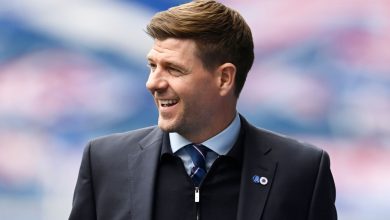
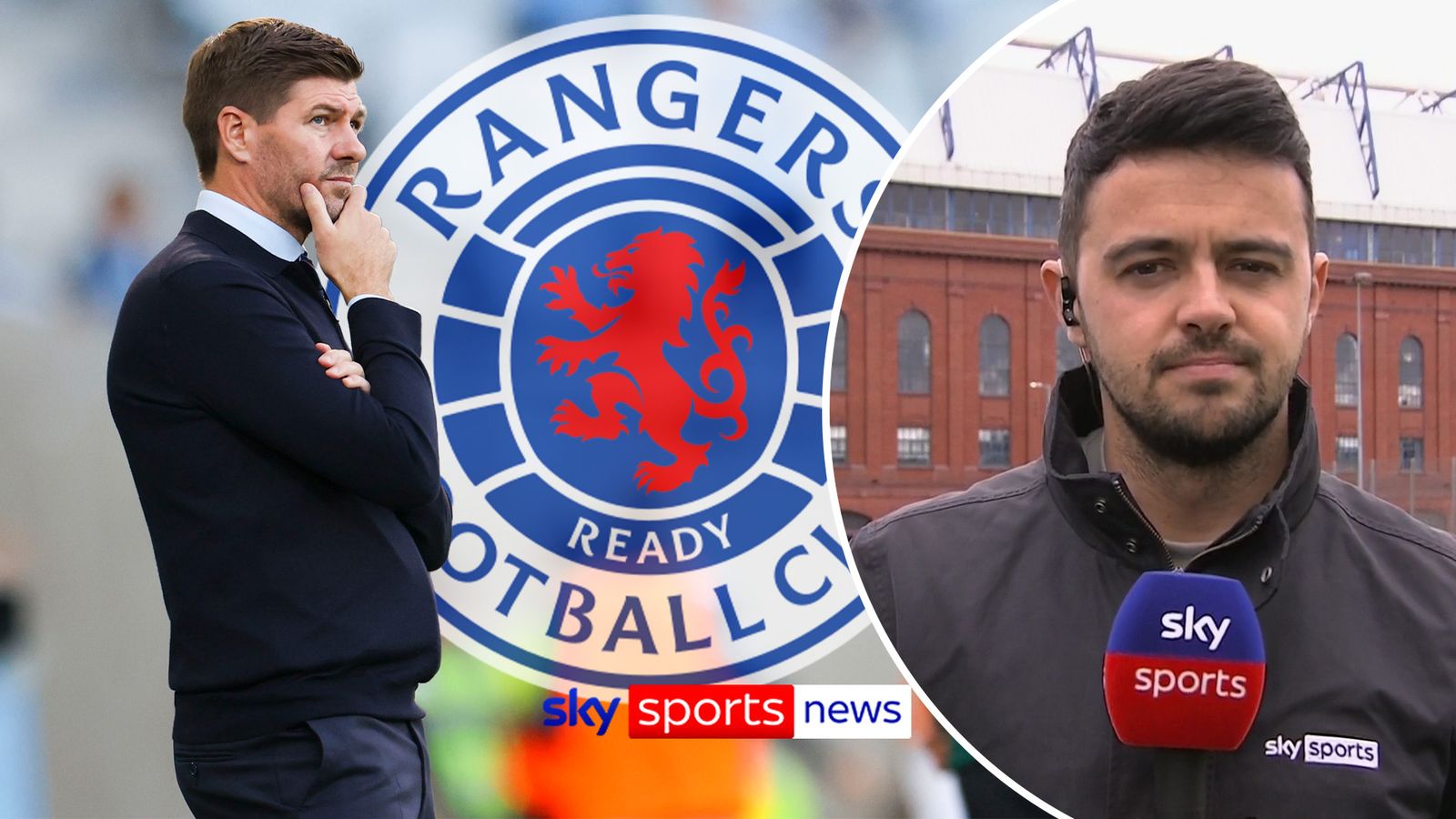
Former Rangers manager Steven Gerrard is set to hold talks with the Gers this week as they look to replace former boss Russell Martin following his sacking.

Russell Martin’s Ibrox tenure lasted just 123 days — a brutally short window even by the standards of modern football’s increasingly trigger-happy managerial culture. He arrived at Rangers with a reputation built on possession-based, progressive football forged at Swansea and Southampton, and the club backed him significantly in the transfer market, spending in the region of £34 million to reshape the squad in his image. It didn’t work. Rangers failed to qualify for the Champions League, suffered defeats in their opening two Europa League group fixtures, and limped through the early weeks of the domestic season in deeply underwhelming fashion. The end came after a 1-1 draw away to Falkirk left the club eighth in the Scottish Premiership table — eleven points behind leaders Hearts, and nine adrift of fierce rivals Celtic, a genuinely alarming position for a club of Rangers’ size and expectation barely two months into a season.
The sacking, when it came, wasn’t just Martin’s alone. His assistant Matt Gill and first-team coach Mike Williamson were dismissed in the same move, a clean sweep that signalled Rangers’ ownership wanted a genuinely fresh start rather than a partial reshuffle. In the immediate aftermath, with no permanent successor lined up, the club turned to a caretaker arrangement built from within its academy and support staff — Under-19 coach Steven Smith took interim charge of first-team training, working alongside B-team coach Brian Gilmour, goalkeeping coach Sal Bibbo, and head of performance Rhys Owen, while the search for a permanent appointment got underway in earnest.
It didn’t take long for one name to dominate the conversation. Steven Gerrard remains, for a large proportion of the Rangers support, the most beloved managerial figure of the modern era — the man who delivered the club’s Scottish Premiership title in the extraordinary 2020-21 “Invincible” campaign, ending Celtic’s nine-year stranglehold on Scottish football and doing so, remarkably, without losing a single league match all season. That achievement alone would have cemented his standing at Ibrox, but it was amplified further by the emotional context surrounding it — a genuine footballing renaissance for a club that had spent years rebuilding after its financial collapse and demotion through the lower leagues earlier in the previous decade.
Gerrard’s departure from Rangers in November 2021, taking the Aston Villa job partway through his third season in charge, had always carried a slightly bittersweet quality for supporters — gratitude for what he’d delivered, mixed with a sense of a project left unfinished. That sense of unfinished business was something Gerrard himself had publicly acknowledged in the period leading up to Martin’s sacking. In an interview released on the Rio Ferdinand Presents podcast, recorded shortly before events at Ibrox came to a head, Gerrard had spoken candidly about his ambitions following his time at Al-Ettifaq in Saudi Arabia, which he’d left earlier in the year. He described feeling that there was “a bit of unfinished business” in terms of wanting to take on further exciting challenges, but was clear that he wanted a specific kind of opportunity: a team genuinely competing to win, rather than simply any available vacancy. “If in an ideal world they come available, I’ll jump at them,” he said. “If they don’t, I won’t go back in.”
That interview, surfacing in the same window as Martin’s dismissal, only intensified speculation that Rangers might represent exactly the kind of “ideal world” opportunity Gerrard was describing — a genuine title-challenging institution, with a manager vacancy freshly created, and a fanbase that would receive his return with open arms
Rangers, under the ownership of Andrew Cavenagh and the 49ers Enterprises group, moved with real speed. Reports confirmed that Gerrard was set to hold talks with the club within days of Martin’s sacking, travelling to London — rather than Rangers officials travelling to meet him — to sit down with Cavenagh and Paraag Marathe, the two figures leading the search for a new head coach. Gerrard arrived in the English capital on a Wednesday evening, with talks initially expected to run into Friday.
The framing of these discussions throughout was notably positive. Sky Sports News, which led much of the reporting on the story, consistently described the talks as “open and constructive,” and reported that discussions had “progressed well” over the opening days, with Rangers’ hierarchy laying out their broader plans and vision for the club. There was even specific, detailed reporting on what a Gerrard reappointment might look like in practice: speculation that he would bring Gary McAllister — his long-time assistant during his first Ibrox spell and a hugely respected figure among Rangers supporters in his own right — back into a backroom staff role, alongside former Rangers striker Jermain Defoe. Reports also indicated that ex-England assistant coach Steve Holland had been “sounded out” as a potential addition to the coaching setup, suggesting Rangers and Gerrard’s camp had progressed to genuinely substantive conversations about staffing and structure, not merely an exploratory introductory meeting.
At the same time, some notes of caution were present even in the most optimistic coverage. Reports flagged that Gerrard remained settled with his family in Bahrain, a legacy of his time in Saudi Arabia with Al-Ettifaq, and that his current living situation could complicate negotiations regardless of how well the football conversations themselves were going. There was also acknowledgment that Gerrard would need genuine reassurance that the Rangers project — given the club’s difficult league position at that specific moment — represented the right challenge for him at this particular stage of his career, rather than simply a nostalgic, emotionally driven return to a club he’d once led to glory.
Other candidates were being considered in parallel, even as Gerrard’s talks proceeded. Sean Dyche, the experienced former Everton and Burnley manager, had reportedly been considered by Rangers’ hierarchy as part of their broader shortlist, but was explicitly reported as not interested in the role — removing one alternative from serious contention early in the process and reinforcing the sense that Gerrard was very much the club’s clear priority target.
The talks that had begun Wednesday continued through Thursday and into Friday, described consistently as positive and constructive throughout. But rather than concluding in an agreement, the process ended differently: Gerrard informed Rangers’ hierarchy that he felt the timing wasn’t quite right for a return to Ibrox at that stage, and confirmed he did not wish to continue further in the recruitment process.
Crucially, the framing from all parties involved emphasized that this wasn’t a breakdown or a rejection born of any negative feeling on either side. Sky Sports reported that talks had been positive throughout, and that both Gerrard and Rangers agreed to leave the door open for a future opportunity, rather than treating the conversation as definitively closed. Gerrard himself expressed genuine gratitude for the continued support of Rangers supporters throughout the process, and wished the club well for the remainder of the season — the tone of a man declining an opportunity out of respect for timing and personal circumstance, rather than any deeper reservation about the club, its ownership, or its ambitions.
Subsequent reporting offered a slightly more granular account of Gerrard’s actual decision-making, noting that he informed the club’s hierarchy of his decision to pull out on a Saturday — after the initial Thursday-and-Friday talks had concluded — suggesting he’d taken the weekend, or at least an additional day, to genuinely weigh the opportunity before reaching his final conclusion, rather than making an immediate, reflexive decision in the room
Piecing together the various strands of reporting from that period, several factors appear to have combined in Gerrard’s eventual decision. The Bahrain living situation was consistently cited as a genuine practical complication — having already relocated his family for the Al-Ettifaq project earlier in his career, a further relocation to Scotland, on what would have been a compressed and urgent timeline given Rangers’ pressing need for a new head coach, represented a significant personal disruption that talks alone couldn’t necessarily resolve in the space of a few days.
There was also the specific timing and context of Rangers’ position at that exact moment: eighth in the table, well adrift of both title rivals, in the midst of what could reasonably be described as a genuine crisis rather than a stable platform for continuity. For a manager who had explicitly stated his preference for joining “a team that’s going to compete to win,” inheriting a Rangers side already eleven points off the pace, requiring an immediate, high-pressure rescue mission rather than a considered rebuild, may simply not have matched the specific kind of challenge Gerrard had described wanting.
Later reporting, following further waves of speculation, added an additional dimension worth noting: at one subsequent point, speculation resurfaced suggesting talks between Gerrard and Rangers had reopened, with bookmakers reportedly making him a fresh frontrunner for the role. Sky Sports News, however, was able to confirm at that stage that no fresh talks were actually taking place — suggesting the appetite from supporters and media for a Gerrard return persisted well beyond the initial October conversations, even without any genuine renewed engagement from either party.
With Gerrard out of the picture, Rangers’ search for a permanent successor entered a considerably messier phase. The club moved to make contact with Graham Potter, the former Chelsea, Brighton, and most recently West Ham manager, who had become available following his own dismissal from the London Stadium. Reports also indicated talks had been held with Gary O’Neil, the former Wolves and Bournemouth manager, adding a further name to an increasingly crowded field of candidates being simultaneously assessed.
Kevin Muscat, the former Rangers player then managing Chinese Super League side Shanghai Port, also emerged as a serious contender during this period — reportedly the frontrunner at various points in the process — though his candidacy ultimately fell away, complicated by his ongoing commitments amid an active title race in China that made an immediate departure impractical.
It was Danny Rohl, formerly of Sheffield Wednesday and with genuine top-level pedigree from his time as an assistant to Hansi Flick with both Bayern Munich and the Germany national team, who eventually emerged as Rangers’ preferred candidate and was appointed to the role. Reports at the time noted that Rohl had specifically “impressed Rangers bosses in talks,” suggesting his eventual appointment was earned through the same competitive, multi-candidate process that had also assessed Potter, O’Neil, and Muscat, rather than representing merely a fallback option once Gerrard, the clear first choice, had removed himself from contention.
Whatever the messiness of the process that brought him to Ibrox, Rohl’s actual tenure proved to be a genuine, well-documented success story, at least relative to the crisis conditions he’d inherited. He steered Rangers from their dire early-season position back into genuine title contention, rebuilding both results and morale to the point where a serious championship challenge looked realistic for much of the campaign. It was only a stumble in the closing stretch — four defeats in Rangers’ final five matches of the season — that ultimately saw the club finish third rather than complete what would have been a remarkable turnaround story.
Rohl himself left Rangers the following summer, choosing to return to Red Bull Salzburg rather than continue into a second season at Ibrox, despite widespread expectations he would stay on. He’s since described that decision, in his own reflections from his new base in Austria, as unambiguously the right one for him personally, citing both the specific footballing project at Salzburg and a broader desire for a different, calmer pace of life away from the intensity of managing an Old Firm club. That departure, in turn, opened the door for Derek McInnes’s appointment from Hearts — the manager now facing his own mounting scrutiny following a difficult start to the season and last week’s chastening Conference League exit to Jablonec.
The reason this year-old saga has renewed relevance isn’t complicated: with McInnes’s early record standing at just two wins from his first seven matches, and with pundits, former players, and sections of the fanbase openly questioning whether he’s the right man for the job, Gerrard’s name has resurfaced as the obvious rallying point for supporters seeking a change. It’s a natural reflex given his stature at the club and the specific manner in which his previous near-return was left — not a closed door, but an explicitly open one, with both parties on record saying they’d welcome future talks.
But it’s worth being precise about what has, and hasn’t, changed since October 2025. The specific factors reported to have influenced Gerrard’s original decision — his family’s settled life in Bahrain, his stated preference for joining a team already positioned to compete rather than one requiring an emergency rescue, his desire for the right timing rather than simply the next available vacancy — have not been reported as having shifted in any confirmed way. There’s no indication his family circumstances have changed, no confirmation of fresh talks having taken place, and no suggestion from Rangers’ current ownership that a managerial change is even being actively considered at this point, however loud the external pressure has become.
What the full arc of this story does illustrate, though, is a genuine pattern in how Rangers’ ownership under Cavenagh has approached managerial recruitment since the club’s ill-fated experiment with Martin: moving decisively and quickly when a vacancy opens, casting a wide net across multiple credible candidates rather than fixating on a single name, and showing a willingness to pivot rapidly — from Gerrard, to Potter, O’Neil, and Muscat, and eventually to Rohl — when a first-choice option doesn’t work out. Whether that same pattern would repeat itself should pressure on McInnes continue to build, and whether Gerrard’s own calculus around a return has shifted in the year since he first walked away, remain, for now, entirely open questions — the answers to which lie somewhere in the same kind of private, closed-door conversations that shaped this story the first time around.