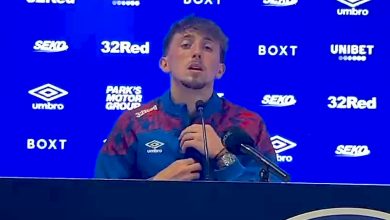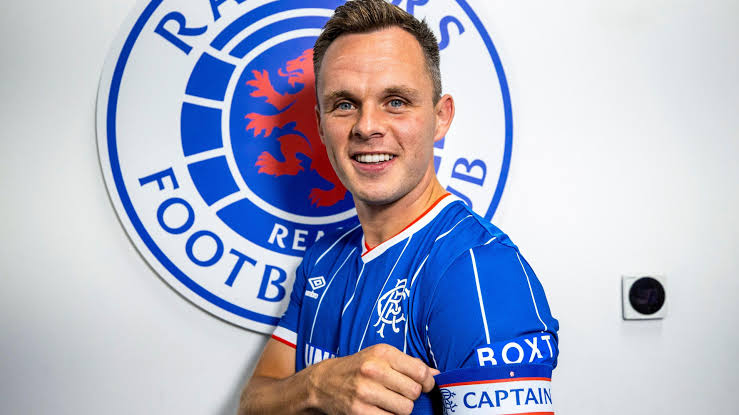
On a night when plenty of his team-mates looked rattled and error-prone at the Falkirk Stadium, Lawrence Shankland was the one figure of genuine calm in a Rangers shirt. His two goals proved decisive, sealing a second Scottish Premiership win of the season for Derek McInnes’s side just days after the captain’s own penalty had delivered the first at Pittodrie, and in an otherwise scrappy, error-strewn contest that never threatened to be remembered for its quality, Shankland was, by unanimous consensus, the difference-maker. Now the question being asked around Ibrox is whether this was the moment that finally springs the Rangers captain into the kind of form Scottish football has come to expect from him, or simply one good night amid what has otherwise been a genuinely difficult start to life at his boyhood club.
The manner of the two goals themselves offered its own quiet testament to Shankland’s class. His first, in the seventh minute, whistled into the roof of the net off his supposedly weaker left foot after Djeidi Gassama had teed him up, the kind of instinctive, first-time finish that separates a genuine goalscorer from a merely willing forward. McInnes admitted afterwards that his instinct on the touchline had been to scream at his captain to lay the ball off for Gassama instead, only to watch Shankland ignore that instruction entirely and simply stick it in the back of the net himself. His second, arriving in the seventy-ninth minute with the game delicately poised at a knife edge following Kosta Nedeljkovic’s own goal that had cancelled out his opener, was again struck with his left foot, passed with almost casual precision into the bottom corner to settle the contest for good. Falkirk boss John McGlynn, for his part, offered about as unequivocal a tribute as any opposition manager is ever likely to pay, telling BBC Scotland simply: “If Lawrence Shankland is in a navy blue jersey, we win the game tonight.”
McInnes’s own post-match assessment leaned heavily on exactly the qualities that have defined Shankland’s career at every club he has represented: experience, calmness, and a knack for producing the goods precisely when the moment demands it. “I’m very pleased for Lawrence Shankland,” the Rangers boss said. “I thought his second goal was particularly good considering he missed the chance that he would have been kicking himself with. But, like all good strikers, the experience of Lawrence, the calmness of Lawrence, the quality comes up with a big moment. His first goal was a fantastic strike. I was screaming to leave it for Gass, but he sticks it in the back of the net.” It was McInnes’s next comments, though, that gave the performance its now-defining label and offered the clearest insight into just how much weight he believes his captain has been carrying since making the move to Ibrox. “I’m delighted for him because it’s not been, like for all of us, the easiest of starts. Obviously Lawrence would feel the weight of that a lot more than some others, just because of his background and how eager he is. A proper captain’s performance out there tonight.”
That phrase, “a proper captain’s performance,” and the context McInnes wrapped around it, cuts right to the heart of why this particular display carries significance well beyond the three points it delivered. Shankland’s move to Rangers in May, finally completing a switch to his boyhood club after years of speculation linking him with exactly this kind of move, arrived off the back of a genuinely stunning individual record at Hearts, sixty goals across his final three seasons at Tynecastle, numbers that made him one of the most feared and reliable strikers anywhere in Scottish football and turned his eventual Ibrox arrival into one of the most eagerly anticipated pieces of business of the entire summer. Being handed the captaincy on top of that, immediately installing him as the on-field figurehead of a club still working through a significant managerial and squad transition, added an extra layer of pressure and expectation that few new signings, however proven their pedigree, are typically asked to shoulder from the very first day.
That combination, a boyhood dream move allied to the captaincy and the weight of a sixty-goal reputation preceding him, appears to have genuinely affected Shankland in the opening weeks of his Rangers career, exactly as McInnes’s comments about him “feeling the weight of that a lot more than some others” seemed to acknowledge. It has, by most honest assessments, not been the smoothest of starts for either the player or the club as a whole. Rangers endured a difficult opening stretch under McInnes, dropping points in both of their opening league matches before suffering the genuinely shocking exit from Europe at the hands of Czech side Jablonec in Conference League qualifying, a result that left Ibrox without any European football for the first time since 2017. Shankland’s own form mirrored that broader struggle, and it is only across these most recent matches, the winning penalty at Pittodrie against Aberdeen followed by Wednesday’s decisive brace at Falkirk, that he appears to be rediscovering something closer to the ruthless, clinical form that made him so feared during his best years at Tynecastle.
The underlying numbers from this recent stretch support that reading. Shankland now has three goals in his four Premiership appearances this season, a return that, while still modest set against his eventual Hearts totals, represents genuine and sustained improvement across his most recent outings. His link-up play against Falkirk was similarly impressive beyond just the two finishes themselves, with the captain bringing the likes of Gassama and Min-su Kim into productive attacking positions throughout the match. No player on either side registered more shots than Shankland across the ninety minutes, and only Gassama managed more touches inside the opposition penalty box, statistical detail that points to a striker not merely poaching two well-taken finishes in an otherwise quiet night, but one who was genuinely central to almost everything positive Rangers produced in the final third throughout the contest.
Context matters enormously in assessing just how significant this potential turning point might prove to be, and it is worth remembering exactly what kind of turbulent backdrop Shankland has been trying to establish himself against since his move was completed. McInnes himself has been serving a two-match touchline ban across this recent stretch of fixtures, an additional layer of disruption to a Rangers dressing room already absorbing a genuinely wholesale summer rebuild, fourteen incoming signings and nineteen departures across a single transfer window that has reshaped almost every area of the pitch. The same night Shankland was delivering his decisive brace at Falkirk also saw midfielder Thelo Aasgaard complete his own departure on loan to Belgian side Anderlecht, while Rangers were simultaneously fending off a loan approach from Turkish side Besiktas for Nicolas Raskin, a saga that would rumble on into deadline day itself before Rangers ultimately succeeded in retaining their prize midfielder. Shankland’s captaincy, in other words, has been tested not merely by the ordinary demands of leading a Scottish Premiership attack, but by presiding over a genuinely chaotic backdrop of squad turnover and off-field speculation that would test the composure of far more experienced leaders than a captain still in the opening months of his Ibrox career.
Raskin’s own return to the side against Falkirk added a further significant subplot to the night, and one that connects directly to Shankland’s opening goal. The Belgian midfielder had missed Rangers’ previous two matches amid the swirling speculation linking him with a move away from Ibrox, an absence keenly felt during the Jablonec defeat where his creative influence was sorely missed as the Czech side forced the penalty shootout that ultimately eliminated Rangers from Europe altogether. His recall from the start against Falkirk, coming as something of a surprise given Rangers had knocked back Besiktas’s loan bid for him only hours earlier on the same day, proved instantly significant: Raskin was central to Shankland’s opener, winning the ball back deep in his own half before instigating the move that eventually found its way to his captain’s clinical left-footed finish. That kind of understanding between two of Rangers’ most important individual talents, forged in the middle of a genuinely fraught deadline day, offers its own small hint at the kind of partnership McInnes will be hoping can flourish across the remainder of the season now that both players appear to be settling into their respective roles within his rebuilt squad.
It is worth pausing, too, on just how remarkable Shankland’s underlying career arc has been to reach this point, because it adds real weight to the argument that this recent upturn in form represents a genuine return to type rather than any kind of fluke or temporary purple patch. Long before his Rangers move was ever seriously discussed, Shankland had already established himself as one of the most natural, clinical finishers Scottish football had produced in years, earning praise during his time as Hearts captain that highlighted precisely the qualities now resurfacing at Ibrox: a natural goalscorer’s movement, clinical finishing allied to a work ethic that had not always been present earlier in his career, and the kind of composure that had made him a fixture in Scotland’s own international set-up. Having previously spoken with genuine emotion about dreaming of silverware with Hearts and about what captaining a club to success would mean to him personally, it is not difficult to see why McInnes’s comments about the “weight” of the captaincy at Rangers landing rather more heavily on Shankland’s shoulders than it might on a less emotionally invested figure ring true. This is a player who has always worn his heart on his sleeve about what leadership and achievement mean to him, and that same emotional investment that made him such a beloved figure at Tynecastle may well have been working against him in the opening weeks of a considerably higher-pressure Ibrox environment, before finally beginning to translate into exactly the kind of decisive, match-winning contributions Rangers signed him to provide.
The broader squad context adds one further intriguing dimension to how Shankland’s rediscovered form might play out across the remainder of the season. Rangers have already added considerable competition for his starting spot across this same transfer window, with Venezuelan striker Kevin Kelsy arriving from Portland Timbers in a deal worth close to nine million pounds specifically to address the centre-forward gap left by Youssef Chermiti’s serious knee injury. That Shankland has responded to the arrival of such significant, expensive competition not with any visible anxiety but with back-to-back match-winning contributions, a penalty at Pittodrie followed by a brace at Falkirk, speaks to exactly the kind of competitive resolve McInnes will want to see from his captain as Kelsy eventually beds into the squad and begins pushing for his own opportunities in the coming weeks. Rather than being unsettled by the arrival of a marquee new rival, Shankland appears, if anything, to have used the moment as fresh motivation to remind everyone at Ibrox exactly why he was signed and handed the armband in the first place.
Whether Wednesday night in Falkirk ultimately proves to be the definitive turning point of Shankland’s Rangers career, or simply one encouraging chapter within what remains a longer, ongoing process of adjustment to life at a considerably bigger, higher-pressure club than the one he left behind at Tynecastle, will only become clear across the weeks and months that follow. What can be said with real confidence, based on the evidence of these past few matches specifically, is that the underlying quality that made Shankland such a prolific and beloved figure during his time at Hearts has not gone anywhere, and that the specific pressures of captaining Rangers through a period of such significant transition appear, finally, to be easing rather than mounting. McInnes’s own verdict, delivered in the immediate aftermath of Wednesday’s victory, captured both the relief and the cautious optimism now surrounding his captain in equal measure: a proper captain’s performance, delivered at precisely the moment both player and club badly needed it, and one that offers genuine hope, even if not yet certainty, that the best of Lawrence Shankland is only now beginning to arrive in earnest at Ibrox