The Real Reason Rangers Said No: Inside The Collapse Of Besiktas’ Raskin Pursuit

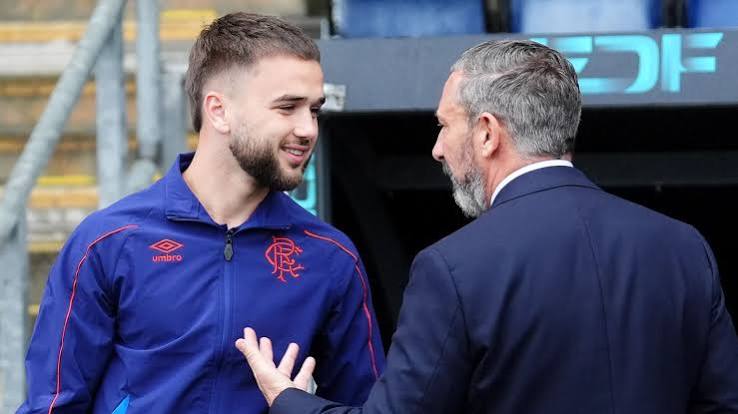
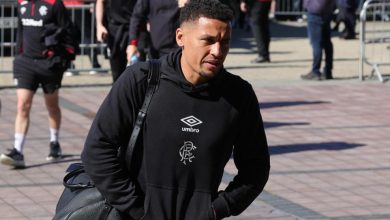
Nicolas Raskin woke up on Friday morning still a Rangers player, and by every account he is at peace with that. Scotland’s clubs have now closed their books for incoming transfers, the 5pm deadline on Thursday drawing a line under a summer that, for a while, looked destined to end with the Belgian midfielder boarding a flight to Istanbul. It didn’t happen. Besiktas came back not once but twice in the space of 24 frantic hours, first with a loan-to-buy proposal and then, when that was knocked back, with an improved permanent offer worth a reported £10.3million. Rangers said no both times, and the second rejection arrived with barely hours to spare before the window shut on Scottish business for good.
On the surface, that reads like a straightforward story of a selling club holding out for a bigger cheque. Big offer, still not big enough, deal collapses, player stays. Except the picture that has since emerged from Turkey suggests something more layered was going on behind Ibrox’s decision-making — something that had less to do with spreadsheets and valuations than with a lingering sense of grievance over an entirely different transfer that never got off the ground.
A Deadline Day That Refused To Die
Scottish Premiership clubs had until 5pm on Thursday to get their incoming business finalised, a deadline that in previous years has passed relatively quietly at Ibrox but this time around turned into one of the more chaotic afternoons of Derek McInnes’s short tenure. Outgoing deals, by contrast, remain possible for a little longer, largely because several markets Rangers do business with — most notably the Saudi Pro League — keep their windows open into the back end of the year. That technicality is precisely why Raskin’s situation had not been definitively settled even as the Scottish deadline came and went; a Saudi approach in the coming weeks has not been entirely ruled out by anyone close to the situation.
But it was the Besiktas saga that dominated the closing hours of the window. The Turkish side’s interest in Raskin has been an open secret for weeks, ramping up sharply once it became clear the 25-year-old had enhanced his stock considerably with a strong showing for Belgium at the World Cup this summer. Reports throughout deadline week suggested Besiktas had initially tried to strike a loan-with-an-option-to-buy arrangement, only for Rangers to reject the structure of that deal outright. There was talk, too, of Rangers attempting to amend agreed terms late in the process, effectively pulling back from an arrangement that at one stage looked close to being verbally settled — a detail that, if accurate, hints at just how uneasy the Ibrox hierarchy had become about letting their most consistent performer of the past two seasons leave on anything other than their own terms.
When that structure was rejected, Besiktas didn’t walk away. Instead, on Wednesday night, they returned with a revised bid, this time proposing a permanent transfer. Sky Sports reported on Thursday morning that even this improved proposal fell short of Rangers’ own valuation of the player, and the suggestion from British football media by mid-morning was that any deal for Raskin was now likely to cost considerably more than £20million once compensation for losing a first-team midfielder mid-season was factored in. That is a striking figure for a player who arrived at Ibrox in a deal worth a fraction of that amount back in 2023, and it underlines just how much his value has appreciated through two and a half years of Scottish football and a World Cup campaign that put his name in front of a wider audience.
By Thursday afternoon, Ibrox News had exclusively reported that Besiktas had decided against pursuing a third bid, effectively bringing the saga to a close for now. The Turkish club’s retreat came not because they had run out of interest, but — according to reporting that filtered through from Turkey later in the day — because the Rangers hierarchy had made their feelings on the matter clear in a way that had little to do with Raskin’s price tag at all.
The Cerny Connection
The clearest insight into why Rangers dug their heels in came via Turkish journalist Ali Ece, who used the language of an “inside story” to describe what had actually shaped the Ibrox board’s thinking. According to Ece, the collapse of the Raskin deal cannot be separated from an entirely different negotiation that took place earlier in the window — one in which the roles were reversed, and it was Rangers doing the buying rather than the selling.
Rangers, as Ece tells it, had gone to Besiktas earlier in the summer with an offer for Vaclav Cerny, the versatile Czech Republic international who spent time on loan at Ibrox during the 2024-25 season under Philippe Clement before returning to parent club Wolfsburg and subsequently completing a permanent move to Turkey. Cerny’s spell in Glasgow, though it predates the current squad rebuild, left a strong impression: he contributed heavily in front of goal during his time in Scotland, memorably scoring twice away to Fenerbahce in a Europa League tie that season, and Rangers evidently retained an interest in bringing him back.
The trouble, according to Ece, was the price. Besiktas wanted £10.3million for Cerny — coincidentally or not, an almost identical figure to Besiktas’s own improved bid for Raskin months later — and Rangers were only willing to go as far as roughly £6million (around €7million), well short of what the Turkish club wanted. Wolfsburg themselves had reportedly asked Besiktas for closer to £8.7million (€10million) when Cerny made the move to Istanbul, so it is not as though Besiktas’s valuation was wildly out of step with the market. Rangers, though, held their ground and the move for Cerny never materialised.
Ece’s account frames what followed as something close to payback. Because Rangers wouldn’t stretch to Besiktas’s number for Cerny, the theory goes, Rangers were in no mood to do Besiktas a favour when the boot was on the other foot and it was Raskin whom the Turkish club wanted. Ece even suggested Besiktas would privately have been willing to come down as far as £9.45million for Raskin had talks progressed further, a sum that would have represented a serious drop from their opening £10.3million offer — but by that point, the appetite in Glasgow to negotiate at all appeared to have evaporated. The Turkish journalist described the situation as needing no further commentary, an unusually pointed way of suggesting that the pattern spoke for itself.
Whether that reading is the whole truth or a simplification of a more layered set of footballing and financial calculations, it adds a wrinkle to a saga that, reported purely through the lens of valuations and bid amounts, made rather less sense. Raskin, after all, is a player entering the form of his career, and a club rebuilding as aggressively as Rangers are right now might reasonably want to keep hold of him regardless of who is asking. But the idea that a breakdown in an unrelated negotiation for a returning fan favourite fed into the board’s stubbornness over Raskin gives the story a texture that pure transfer-fee arithmetic never could.
McInnes’s Public Position
Derek McInnes, for his part, has been notably measured in his public comments on the situation throughout the closing days of the window, careful not to be drawn into speculation while the situation remained live. Discussing the swirl of transfer talk on the eve of the deadline, McInnes indicated he believed Raskin would remain at Ibrox, while stopping short of offering any guarantees, given that the final call ultimately sat above his head in the club hierarchy. It’s a familiar position for any manager navigating a deadline-day sale saga involving one of his most important players — publicly supportive of keeping him, privately aware that the finances of the situation are out of his hands.
That measured tone continued even as speculation intensified. McInnes has repeatedly praised Raskin’s professionalism throughout the saga, describing the midfielder’s conduct during a turbulent few weeks in glowing terms and stressing how much the squad benefits from having a player of his experience available, even amid the uncertainty over his future. Raskin had, in fact, missed a couple of matches during the peak of speculation, but was back involved before the window shut, starting and playing the full 90 minutes in a 2-1 win away at Falkirk on the Wednesday night sandwiched between Besiktas’s two rejected bids — a detail that speaks to just how unaffected his level of application seemed to be by the noise surrounding him.
McInnes has also made no secret of his relief that the window is now closed on the domestic side, describing it as one of the longest and most eventful transfer windows he can recall managing through. For a manager still bedding in a heavily reshaped Ibrox squad, the disruption of a prolonged late-window pursuit of his most experienced and consistent performer was clearly an unwelcome distraction, however understandable the interest in Raskin might be given his level of performance.
A Window Of Change Around Him
The context in which all of this played out matters. Rangers have undergone one of the more significant squad rebuilds in recent memory this summer, with a wave of incoming faces arriving to reshape the group under McInnes. Kevin Kelsy’s arrival from Portland Timbers, reportedly costing in the region of £9.5million, has been described as the second-most expensive signing in the club’s history behind only Tore Andre Flo, and represents a striking statement of intent from a club trying to rebuild both quality and depth up front — a need sharpened by Youssef Chermiti’s serious ACL injury suffered against Hibernian, which robbed McInnes of one attacking option for an extended period.
Elsewhere, the summer has brought in the likes of Vanja Dragojevic, Jens Hjerto-Dahl, Lawrence Shankland, Ross McCrorie, Ben Godfrey, Dan Neil, Ivor Pandur and Cammy Devlin, while talks over Brighton winger Amario Cozier-Duberry have continued to be a live thread as the club looks to add further attacking quality. On the goalkeeping side, Allan McGregor’s return to Ibrox in a coaching capacity has added a layer of experience and familiarity to the backroom staff, even as the playing squad in front of him continues to be reshaped from top to bottom.
On the outgoing side, alongside the ongoing Raskin situation, Rangers have already seen Danilo and John Souttar depart, while midfielder Thelo Aasgaard’s exit to Anderlecht on a £1million loan — with an option for the Belgian club to make the deal permanent for around £5million next summer — freed up something of a gap in the middle of the park that made the prospect of also losing Raskin considerably less palatable for McInnes with the window closing. Aasgaard, signed from Luton in 2025 and tied to Ibrox until 2029, had managed just one goal in five appearances this season before his exit, and his departure left Rangers even thinner in central midfield than they might otherwise have been — arguably reinforcing the argument for keeping Raskin regardless of what any inside story about Vaclav Cerny might or might not explain.
It’s against that backdrop of wholesale turnover that Raskin’s continued presence takes on added significance. He is now the club’s longest-serving player on the books, a status that in itself says plenty about the scale of the rebuild happening around him, given he only signed in 2023. A World Cup with Belgium behind him and two years still to run on his contract, Raskin heads into the new season as arguably the most experienced and battle-tested figure in a Rangers dressing room that otherwise looks and feels very different to the one he first walked into.
What Raskin Actually Wanted
There is little doubt that Raskin himself would have welcomed a move this summer had the right offer materialised. His performances for Belgium at the World Cup significantly raised his profile, and the interest from Besiktas — a genuine Turkish giant with regular continental football and the sort of fanbase and platform that appeals to a player looking for his next step — would have been an attractive proposition on a personal level. Multiple bids falling through across the course of the window will not have been an easy thing to sit through for a player who, by most accounts, had begun to look at his future beyond Ibrox.
And yet the picture that has emerged since is one of a player who has taken the disappointment in his stride rather than allowing it to sour his relationship with the club or the dressing room. Word from within Ibrox suggests Raskin is content enough to continue his development in Glasgow for the time being, a stance that will come as a considerable relief to McInnes given the upheaval elsewhere in the squad. His continued full involvement in training and matches throughout the saga — rather than any hint of a strike or a sulk — reflects well on a player who has consistently been described as a model professional throughout his time in Scotland.
Should interest from Saudi Arabia materialise in the coming weeks, as has been mooted, that would represent a different kind of proposition entirely — a market operating on its own financial logic, largely detached from the sporting considerations that typically drive European transfers. For now, though, that remains speculation rather than substance, and Raskin’s focus, by all indications, is back on his football at Ibrox rather than on engineering an exit.
The Bigger Picture For Rangers
There is an obvious financial dimension to all of this that shouldn’t be glossed over. A fee in excess of £20million for a player signed for a fraction of that amount would represent an enormous windfall for a Rangers hierarchy that has invested heavily in this summer’s rebuild and would, in an ideal world, have liked to recoup some of that outlay through a marquee departure. It is not difficult to see why “those higher up,” as has been suggested, would have preferred to see a deal for Raskin go through rather than watch Besiktas walk away from the table for a third time.
But football clubs rarely operate on pure financial logic alone, and the emerging picture of Rangers’ stance towards Besiktas throughout this saga suggests something closer to a point of principle than a simple failure to agree numbers. If Ali Ece’s account is accurate, the breakdown of an earlier deal to bring Vaclav Cerny back to Ibrox left a mark on how Rangers approached Besiktas’s subsequent interest in Raskin — not necessarily consciously sabotaging their own financial interests, but certainly less inclined to bend towards a club that had, in their eyes, priced them out of a target of their own only months earlier.
For McInnes and for Rangers supporters, the practical outcome is the one that matters most: their best and most consistent midfielder from the past two seasons remains part of the group as the club tries to build some stability and momentum after a hugely disruptive summer of change. Raskin’s continued presence offers a rare thread of continuity running through a squad that has otherwise been almost entirely reshaped, and his experience — sharpened rather than diminished by a taste of World Cup football — will matter enormously as Rangers try to find their footing under a new manager with a heavily rebuilt group of players around him.
Whether Raskin eventually gets his move away from Ibrox remains to be seen; few would bet against interest resurfacing again either in January or next summer, particularly if his form continues on its current trajectory. Besiktas, having twice tried and twice failed to convince Rangers to sanction the deal, may yet return with a third attempt down the line, whether that comes in the form of a fresh approach from Istanbul or interest from elsewhere in Europe. For now, though, the story is a simpler one than the finances alone would suggest: Rangers said no, not purely because the money wasn’t right, but because — for reasons rooted in an entirely separate negotiation over a very different player — they were never really in the mood to say yes.
Raskin’s task now is to put the noise of the summer behind him and get back to doing what he does best. With Rangers trying to shake off a slow start to life under McInnes and stabilise a squad still finding its feet after such wholesale change, having their most experienced performer fully focused and available for selection, rather than distracted by the prospect of an Istanbul move that ultimately never happened, will be seen by most inside Ibrox as no bad thing at all.