Ex-PGMOL Chief Accuses Djeidi Gassama of ‘Cheating’ After Re-Analysing Rangers Controversy

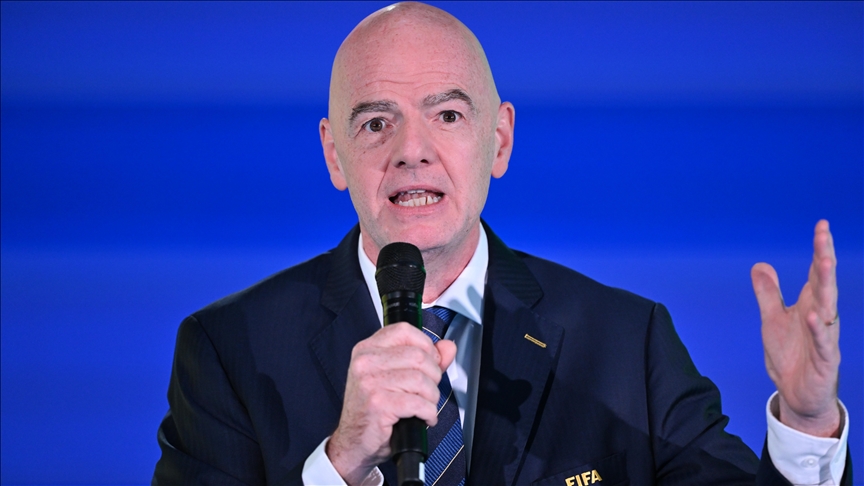
The fallout from Rangers’ narrow 1-0 win over Motherwell at Ibrox refuses to die down, and the latest intervention is arguably the most pointed yet. Former PGMOL chief and ex-FIFA referee Keith Hackett has gone on record with Football Insider to accuse Djeidi Gassama of exaggerating contact to win a penalty during the game, effectively branding the winger’s conduct inside the box as a form of simulation that referee Duncan Nicolson fell for in the moment.
It’s a striking accusation from a figure whose decades in the upper echelons of English refereeing give his opinions considerable weight whenever Scottish football’s latest contentious decision lands on his desk. And this particular verdict does more than simply relitigate whether the penalty should have stood — it directly questions the conduct of the player who won it, framing Gassama’s reaction to contact from Tom Sparrow as manufactured rather than a fair reflection of a genuine
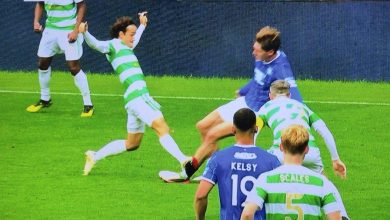
The incident unfolded during Rangers’ home meeting with Motherwell on Saturday, 5 September. Djeidi Gassama went down inside the penalty area following a clash with Motherwell’s Tom Sparrow, and referee Duncan Nicolson had no hesitation pointing to the spot. The decision immediately provoked fury from the away side, with Motherwell’s official social media team publicly criticising what they described as an “incredibly soft-looking” call.
What followed added a strange twist to the story. Min-Su Kim stepped up to take the resulting spot-kick but dragged his effort wide of the left post, sparing Motherwell from conceding directly as a result of the contested decision. Predictably, the Steelmen’s social media account seized on the miss as a form of natural justice, suggesting the outcome was exactly what the situation deserved given how the penalty had been won in the first place.
Rangers, for their part, had already taken the lead through Ryan Don Naderi before the penalty incident occurred, and that opening goal proved to be the only one of the game. The Light Blues held on for the narrow win, but the nature of how the game was settled — combined with the missed penalty — meant the story of the match quickly became less about the three points and more about the legitimacy of the spot-kick award itself.
Speaking exclusively to Football Insider, Hackett didn’t hedge in his assessment of what he saw when reviewing the incident. His central argument was that football is fundamentally a contact sport, and that referees and observers alike too often lose sight of that basic fact when reacting to marginal challenges inside the penalty area.
Hackett’s framing of the Gassama incident was specific: in his reading, there was genuine contact between the two players, but what followed it was an exaggerated reaction from the Rangers winger — the kind of theatrical response to a coming-together that, in his words, dramatically overstated the actual force involved in Sparrow’s challenge. He was clear in stating that force wasn’t sufficiently evident to justify the reaction fans and Nicolson himself witnessed, essentially arguing that Gassama’s response bore little relation to what actually occurred physically between the two players.
For Hackett, that combination of real but minor contact followed by an outsized physical reaction sits squarely within his definition of simulation — even if it’s a more nuanced version than the crude, no-contact dive that’s traditionally associated with the term. His point cuts to one of the more difficult grey areas in modern refereeing: distinguishing between a player going down because they were genuinely fouled with meaningful force, and a player going down in a manner disproportionate to whatever minimal contact actually occurred, essentially using real contact as a foundation for manufacturing an advantage.
Perhaps the most significant part of Hackett’s intervention isn’t really about Gassama individually, but about what he identifies as a structural challenge facing referees and VAR officials across the game. He specifically highlighted the difficulty of assessing “force” in contact situations from a video-review perspective, posing a question that goes to the heart of a huge number of contentious penalty decisions across various leagues: when a player goes down, how much of what’s being witnessed is genuine physical consequence of a challenge, and how much is simply the natural reaction of a player who knows that going down will draw the referee’s attention and potentially win a penalty?
This is, in fairness, one of the most persistently difficult problems in officiating. Contact inside the penalty area is common and largely unavoidable in a physical sport — players jostle, brush past each other, and occasionally catch one another with genuine but relatively innocuous contact dozens of times per match without any of it being remotely foul-worthy. The challenge for officials, both on the pitch in real time and in the VAR booth reviewing slow-motion replays, is separating that background noise of ordinary physical contact from actual fouls serious enough to warrant a penalty award.
Hackett’s argument is essentially that Gassama exploited exactly that grey area — using real contact from Sparrow as a foundation, then adding a physical reaction that made the incident look far more serious to the referee and the watching VAR official than the actual challenge itself warranted. Whether that’s a fair characterisation of what happened, or an overly cynical read of what might simply have been a player losing his balance naturally following contact, is something opinion remains divided
This isn’t the first time the Gassama-Sparrow incident has been publicly dissected by former officials, and it’s notable that opinion hasn’t been uniform. Elsewhere in the ongoing debate, other pundits and ex-referees analysing the same passage of play have arrived at different conclusions — some agreeing the penalty was soft or unwarranted, others suggesting there was enough genuine disruption to Gassama’s momentum to justify Nicolson’s original call. That range of opinion among people with genuine refereeing expertise underlines just how marginal and subjective these split-second contact decisions can be, even under repeated slow-motion review.
It’s also worth noting that Hackett’s own public commentary around Rangers-related refereeing incidents has, on occasion, appeared to shift depending on which angle of an incident he’s reviewing and when. Some outlets covering this same fixture initially reported Hackett as validating Nicolson’s decision to award the penalty, dismissing suggestions of an error and stating plainly that there could be no real complaint about the award. Whether that reflects an evolution in his position after further re-analysis of the footage, a simple case of conflicting reports, or a nuance in exactly what aspect of the decision he was addressing at different times isn’t entirely clear from the public record — but it does add another layer of complexity to an already messy conversation. What’s beyond dispute is that his latest, most detailed comments to Football Insider land firmly on the side of criticising Gassama’s conduct rather than defending the officials’ handling of it.
This latest verdict is far from an isolated intervention. Hackett has become something of a recurring voice in the ongoing conversation about Rangers-related officiating decisions this season, and a look back at his recent commentary shows a pattern of engagement with almost every contentious call involving the Ibrox club.
Just last month, Hackett offered his take on a separate penalty controversy from Rangers’ defeat to Hibernian, where Vanja Dragojevic was penalised for pulling down Jason Kerr. In that instance, having watched the incident properly on the big screen, Hackett performed what he himself described as a complete U-turn, ultimately backing referee Don Robertson’s original decision and endorsing the Scottish FA’s broader clampdown on grappling inside the penalty area.
He’s also previously waded into a red-card controversy from Rangers’ win over Aberdeen, arguing that Toyosi Olusanya was fortunate to escape with only a yellow card for an elbow that caught Cameron Devlin during the match, suggesting the Aberdeen forward had endangered his opponent’s safety. And earlier in the season, Hackett was again called upon for his expert view after Mohamed Diomande went down inside Motherwell’s box in a separate fixture at Fir Park, with questions again raised about whether contact had been manufactured.
Taken together, this pattern illustrates just how frequently Rangers matches specifically are generating officiating flashpoints significant enough to warrant repeated expert intervention from a figure of Hackett’s standing. Few clubs in Scottish football appear to generate quite the same volume of contentious refereeing moments across a single season, whether that reflects the genuine physicality and profile of matches involving one of the country’s two dominant clubs, heightened scrutiny simply because of who’s involved, or some combination of both factors.
Hackett’s intervention also feeds into a much wider, longstanding debate in football about simulation and how it should be policed. The sport has wrestled for years with the question of how to deter players from embellishing contact to win decisions, without punishing legitimate fouls simply because a player’s reaction to being fouled looks theatrical on replay.
Various measures have been proposed and, in some cases, implemented across different leagues and competitions over the years — from retrospective disciplinary action for clear dives, to increased scrutiny of players with reputations for going down easily, to explicit instructions given to referees about how much weight to give a player’s physical reaction versus the objective evidence of contact itself. None of these measures has fully solved the underlying problem, largely because the grey area Hackett describes — genuine but minor contact followed by an exaggerated reaction — is inherently difficult to legislate against with total consistency. A blanket crackdown on players going down “too easily” risks punishing legitimate victims of fouls whose natural reaction to contact simply looks dramatic on camera, while a permissive approach risks rewarding exactly the kind of gamesmanship Hackett is accusing Gassama of engaging in.
It’s a problem that VAR technology, despite being specifically designed to catch and correct exactly these kinds of contentious on-field decisions, hasn’t fully resolved either. Slow-motion replay can sometimes make minor contact look more significant than it was in real time, while other times it can strip away the context of a challenge in a way that makes a legitimate foul look softer than it actually was. Hackett’s comments essentially argue that referees and VAR officials need much greater clarity in how they assess the “force” element of these decisions — a genuinely difficult ask given how subjective the concept inherently is.
For Gassama personally, an accusation of this nature from a figure with Hackett’s profile and background isn’t likely to be brushed off easily. Reputational questions around simulation tend to follow players once they’re raised publicly by respected officiating voices, potentially colouring how referees and VAR officials assess similar situations involving the same player in future matches. If Gassama becomes known among officials as a player prone to embellishing contact, it could realistically work against him in future marginal decisions, with referees potentially more inclined to wave away appeals that might otherwise have been given.
For Rangers as a club, the timing of this controversy is interesting given the broader context of where they currently sit. The win over Motherwell left them fourth in the Scottish Premiership table, five points behind leaders Celtic — a position that suggests genuine ambitions of finishing at the top of the table and potentially securing Champions League qualification ahead of the 2027-28 campaign. Yet, according to reporting from Football Insider, manager Derek McInnes is already understood to be fighting to keep his job at Ibrox, having won only half of his matches in charge to date.
That context adds an extra layer of significance to the Motherwell result and the ongoing controversy surrounding it. Rangers are currently on a three-game winning streak, and the overall mood around the club has understandably brightened as a result — but as is so often the case in football, that kind of momentum can shift very quickly. A run of good results built in part on contentious officiating decisions, however marginal, leaves a team vulnerable to accusations that their form isn’t fully deserved, something that will only intensify scrutiny of every close decision that goes Rangers’ way in matches to come.
Zooming out further, this controversy sits within an increasingly familiar pattern in Scottish football this season: nearly every contentious decision involving one of the country’s leading clubs is now being subjected to detailed, often repeated analysis from high-profile former officials, with contrasting verdicts frequently emerging from different pundits reviewing identical footage.
That level of scrutiny reflects, in part, the genuinely elevated profile Scottish football has enjoyed in recent seasons, along with the increased visibility that comes from widespread media coverage, social media amplification, and the ready availability of slow-motion replay technology that allows every contentious moment to be picked apart from multiple angles almost instantly. It also reflects a growing appetite among football media outlets for exactly this kind of content — exclusive reaction and analysis from credible, recognisable former officiating figures, whose comments reliably generate significant engagement and discussion regardless of which side of a decision they ultimately land on.
Whether that scrutiny is, on balance, good for the game is a genuinely open question. On one hand, it arguably places healthy pressure on officiating bodies like the Scottish FA to maintain and improve standards, given how quickly and publicly errors or contentious decisions are dissected. On the other hand, the sheer volume and, at times, contradictory nature of this analysis — as illustrated by the apparent inconsistency in how Hackett’s own views on this very incident have been reported across different outlets — risks creating a confusing picture for supporters rather than a clarifying one, with almost every contentious decision generating conflicting expert verdicts rather than any kind of settled consensus.
For now, the Gassama penalty joins a lengthening list of contentious moments from Rangers’ season that have drawn public commentary from Hackett and other prominent former officials. Whether the Scottish FA feels compelled to respond directly to this latest accusation of simulation, whether Nicolson faces any internal review as a result, and whether Gassama’s reputation among match officials shifts in the weeks ahead as a consequence of this exchange, all remain open questions.
What does seem clear is that Rangers’ matches specifically continue to generate outsized attention when it comes to refereeing controversy, and this latest episode — with a widely respected former official directly accusing a player of exaggerating contact to win a penalty — represents one of the more pointed and personal interventions of the season so far. As McInnes’ side continue navigating a season already carrying significant pressure both on the pitch and around his own position as manager, incidents like this one ensure that questions about officiating standards, gamesmanship, and the fine margins that separate a stonewall penalty from a soft one will remain part of the conversation surrounding Ibrox for the foreseeable future.