Ex-PL ref urges SFA figure to issue advice after Rangers vs Motherwell controversy

Scottish football has found itself embroiled in yet another refereeing storm, and this time the fallout has reached all the way to England, with a former Premier League official wading into the debate over a contentious penalty award in the Rangers versus Motherwell fixture. Keith Hackett, whose decades of experience officiating at the top level of the English game lend weight to his opinions on matters of law and interpretation, has come out firmly on one side of the argument — and in doing so, he’s put pressure squarely on Willie Collum, the Scottish FA’s head of refereeing operations, to intervene directly with the official at the centre of the storm.
It’s the latest in what has become an almost weekly occurrence in Scottish football this season: a contentious decision, a wave of punditry and former-official reaction, and calls for the governing body to clarify, explain, or otherwise address what happened. This time, though, the specifics of the incident and the split opinion it has generated make for a particularly interesting case study in just how subjective the game’s laws can be, even among people who have spent their careers interpreting them.
The controversy centres on a moment inside the Motherwell penalty area during their meeting with Rangers. Tom Sparrow made contact with Rangers forward Djeidi Gassama, sending him tumbling to the ground inside the box. Referee John Nicolson, the man in the middle for the fixture, had no hesitation in pointing to the spot, awarding Rangers what appeared on first glance to be a clear-cut penalty decision.
What happened next added an unusual twist to the story. Rangers’ Minsu Kim stepped up to take the resulting spot-kick and blazed his effort wide of the post, sparing Motherwell the further indignity of conceding directly from what many neutral observers and now several respected football voices believe should never have been awarded in the first place. In the immediate aftermath of the miss, it looked as though the incident might simply fade into the background — after all, a missed penalty rarely generates the same sustained scrutiny as one that’s actually converted and changes the outcome of a match. Motherwell, in this instance, seemed to have been handed what many at the club likely viewed as a slice of natural justice.
That assumption proved short-lived. Rather than disappearing from the conversation, the penalty decision itself has continued to generate debate among pundits, former officials, and the wider football media in the days since, with the rights and wrongs of Nicolson’s original call becoming the story in its own right, regardless of the fact that Rangers ultimately failed to profit from it on the
The first major voice to weigh in was former Premier League referee Mark Clattenburg, who did not hold back in his assessment of the decision. Clattenburg described the awarding of the penalty as representing an “all-time” low point for refereeing decisions — about as strong a condemnation as a respected former official can offer in public commentary. Coming from someone who spent years officiating some of the biggest matches in English football, including major cup finals and international tournaments, that kind of language carries significant weight and tends to set the tone for how a decision gets discussed in the following days.
Clattenburg’s intervention effectively opened the door for a wider conversation about the incident, one that has since drawn in other high-profile former officials with their own takes on what actually happened when Sparrow and Gassama came together inside the box
What makes this particular controversy more nuanced than a simple pile-on against a maligned official is the fact that opinion among former referees themselves is genuinely divided. This isn’t a case of unanimous condemnation from every pundit who’s picked up a whistle — there’s real disagreement about the merits of the call, which in many ways makes for a more interesting and more legitimate debate about officiating standards than the usual reflexive outrage that follows contentious decisions in Scottish football.
Former FIFA and SPFL official Bobby Madden, speaking on the So Near, Yet So VAR podcast, offered a notably different read on the incident than Clattenburg. Madden’s initial reaction, by his own account, was that the coming-together did look like a penalty when he first saw it. His reasoning centred on the positioning and movement of the two players involved: Sparrow, in his assessment, was fully focused on playing the ball, while Gassama arrived into the situation from what Madden described as the blind side, making contact with the ball first before the subsequent contact from Sparrow followed.
That’s a meaningfully different interpretation from the one offered by Clattenburg, and it illustrates precisely why these incidents generate such prolonged discussion. Two experienced former officials, both of whom have made careers out of interpreting exactly these kinds of marginal, split-second collisions, arrived at different conclusions when reviewing the same passage of play. If people who’ve spent their professional lives making these calls can’t agree on what should have happened, it’s hardly surprising that supporters, pundits, and casual observers find themselves equally split
It’s against this backdrop of genuine disagreement that Keith Hackett has entered the conversation, and his intervention is notable both for the standing he carries as a former top-level Premier League referee and for the specific nature of what he’s calling for. Hackett has made clear that he believes the penalty award was the wrong call — aligning him with Clattenburg’s assessment rather than Madden’s more sympathetic reading of the incident.
But Hackett hasn’t stopped at simply offering his own verdict on the decision. His intervention goes further, specifically urging Willie Collum — the SFA’s head of refereeing operations — to take direct action by reviewing the incident with match referee Nicolson personally, with the explicit aim of ensuring similar mistakes aren’t repeated in future.
Hackett expressed hope that both Nicolson and Collum would look at the incident and go through it properly. He posed the question of what specific advice Collum, given his own background as a respected former top-level referee, could offer Nicolson to help him better judge this exact type of situation the next time it arises on the pitch. Hackett’s framing is notably pointed — he’s not simply asking for a general review of standards, but specifically asking whether the officiating hierarchy at the SFA genuinely stands by the decision as correct, or whether they privately acknowledge, even if not publicly, that a mistake was made.
That’s a significant ask, and one that speaks to a broader tension that has existed in Scottish football officiating circles for some time: the gap between public defences of contentious decisions and the private acknowledgement that mistakes do happen, even among experienced officials working with the benefit of VAR review. Hackett’s comments essentially challenge Collum to be transparent about which side of that line this particular incident falls on.
There’s something worth dwelling on in the specific circumstances of this controversy that separates it from many of the other contentious VAR and refereeing rows that have dominated Scottish football headlines this season. Because the penalty was missed, there’s no scoreline consequence directly attributable to the disputed decision — Motherwell didn’t lose points because of it, and Rangers didn’t gain any tangible benefit from what many believe was a soft or incorrect award.
That fact makes the sustained level of scrutiny the incident has attracted all the more telling. It would have been entirely understandable, even expected, for a missed penalty to generate a day or two of chatter before fading from the conversation entirely. Instead, prominent former officials have continued to weigh in on the correctness of the original decision itself, independent of its ultimate impact on the match. That suggests the underlying concern here isn’t really about this specific game or its outcome — it’s about the broader question of officiating consistency and standards in Scottish football, with this incident serving as merely the latest flashpoint in a season that has already produced numerous contentious calls.
Indeed, this controversy doesn’t exist in isolation. It arrives amid a broader season-long conversation about the standard and consistency of refereeing decisions across the Scottish Premiership, one that has touched multiple clubs and generated repeated calls for the SFA to be more forthcoming in explaining contentious calls.that
Other recent incidents have followed remarkably similar patterns to the one now engulfing the Rangers-Motherwell fixture. A contentious penalty awarded to Celtic against Motherwell — converted by Kelechi Iheanacho in dramatic, late circumstances — prompted former referee Bobby Madden to publicly urge the SFA to clarify its decision-making process and consider releasing audio from the VAR review to help explain how officials arrived at their conclusion. Madden, in that instance, argued that Scottish football risked being shown in a poor light by the ongoing lack of transparency around contentious calls, at a time when the league should otherwise be promoting itself as one of the most entertaining and competitive in Europe.
Similarly, Willie Collum himself has previously had to publicly address and defend contentious red-card decisions for denying goalscoring opportunities, including incidents involving Motherwell defender Liam Gordon and several other players across the league, with the SFA reportedly planning to consult with Premiership clubs including both Rangers and Celtic over how such decisions are handled in the future.
What emerges from stitching these various incidents together is a picture of a governing body under sustained pressure from multiple directions — former officials, current managers, and supporters alike — to be more transparent about how contentious calls are reached, and to demonstrate that lessons are genuinely being learned and applied by match officials as the season progresses. Hackett’s intervention over the Sparrow-Gassama incident is simply the latest, and arguably one of the more prominent, examples of that pressure given his own background at the very top level of the English game.
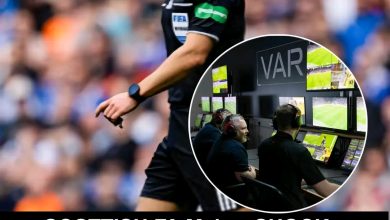
It’s worth noting that these controversies are unfolding in a footballing landscape where VAR technology exists specifically to catch and correct exactly these kinds of marginal decisions. The fact that penalty award still went to the spot, despite the presence of video assistant referee technology capable of reviewing the incident, raises its own separate set of questions about how VAR intervention thresholds are being applied in Scottish football, and whether officials are using the system as effectively as they could be to eliminate exactly this type of disputed call.
Fans and pundits alike have grown increasingly used to VAR reviews overturning or confirming contentious decisions across various leagues, and the expectation that technology should be catching clear errors has only grown as the system has become more established. When decisions like the Sparrow-Gassama penalty still generate this level of split opinion among experienced former officials even after presumably going through whatever review process was available on the day, it inevitably raises questions about whether the threshold being applied for VAR intervention in Scottish football is set at the right level, or whether it’s allowing too many marginal calls to stand uncorrected.
For now, the ball is very much in Willie Collum’s court, both figuratively and quite literally given Hackett’s direct appeal for his intervention. Whether the SFA’s head of refereeing operations chooses to publicly address the incident, privately review it with Nicolson as Hackett has requested, or simply allow the controversy to run its course without formal comment remains to be seen.
History suggests the SFA has, at times, been reluctant to offer detailed public explanations of contentious decisions, preferring instead to let referees’ original calls stand without extensive additional commentary, beyond occasional confirmations that decisions were reviewed and deemed correct. That approach has previously drawn criticism from figures like Bobby Madden, who has argued that greater transparency — including potentially releasing audio from VAR conversations — would serve Scottish football’s reputation better than the current, more guarded approach to communicating with the public about these incidents.
Whether Hackett’s intervention, carrying as it does the weight of his own background as a respected Premier League official, proves to be the catalyst that finally shifts the SFA’s approach to transparency around contentious calls remains an open question. What does seem clear is that the debate over the Sparrow-Gassama incident is unlikely to be the last of its kind this season. With opinion split even among experienced former officials, and with the SFA facing repeated calls from multiple directions to clarify and improve its processes, Scottish football’s relationship with refereeing controversy shows little sign of cooling down anytime soon.
Stepping back from this individual incident, there’s a broader conversation to be had about the pressures facing referees in the Scottish game more generally. Officials like John Nicolson are making split-second decisions in real time, often with players moving at speed and contact occurring in the kind of marginal, ambiguous circumstances that even trained professionals reviewing slow-motion replays afterward can’t always agree on. The fact that Clattenburg and Madden — two officials with genuinely elite-level experience — reached opposing conclusions on the same incident is perhaps the clearest evidence available that this wasn’t a case of an obviously wrong decision, but rather a genuinely difficult, borderline call that reasonable, experienced people can interpret differently
That nuance often gets lost in the noise of post-match punditry, where strong opinions and dramatic language — an “all-time low,” for instance — tend to generate more attention and discussion than more measured assessments. It’s worth bearing in mind, when following the ongoing fallout from this incident, that the existence of split opinion among respected former officials doesn’t necessarily mean Nicolson made an indefensible error; it may simply reflect the inherent difficulty of officiating contact situations inside the penalty area, where the margins between a clean challenge and a foul can be vanishingly small.
Nonetheless, Hackett’s specific call for Collum to engage directly with Nicolson reflects a reasonable and constructive way of approaching these situations — not necessarily as a public condemnation, but as an opportunity for developmental feedback that could help the official refine his judgment in similar scenarios going forward. Whether that conversation happens publicly, privately, or not at all, the broader expectation from voices like Hackett’s is that Scottish football’s officiating structures should be actively working to learn from contentious moments like this one, rather than simply allowing them to pass without further reflection.
As the Premiership season continues to unfold, with Rangers, Motherwell, and every other club in the division likely to find themselves on either side of similarly contentious decisions before the campaign is out, the pressure on Willie Collum and the SFA’s refereeing department to demonstrate consistency, transparency, and a genuine commitment to improvement is unlikely to ease. This particular controversy, sparked by a penalty that was ultimately missed and therefore had no direct bearing on the final result, may in time be remembered less for its impact on a single match and more as another data point in a much longer-running conversation about the standard of officiating in Scottish football.