VAR slammed for ‘unforgivable’ Rangers penalty escape as Ibrox hero calls out error that cost St Mirren

Andy Halliday has waded into the growing controversy surrounding Rangers’ dramatic 1-0 win over St Mirren at Ibrox, insisting that VAR official Steven McLean made a serious and, in his view, unforgivable blunder by failing to recommend a penalty review after Emmanuel Fernandez appeared to catch Ismeal Kabia inside the box during the first half of Wednesday’s contest. The former Rangers midfielder, speaking on BBC’s Sportscene in the aftermath of the match, has become the most prominent voice yet to suggest that St Mirren were unjustly denied a clear route back into a game they ultimately lost to a stoppage-time Bojan Miovski winner, adding fresh fuel to what has already become one of the more heavily scrutinised officiating storylines of the young Scottish football season.
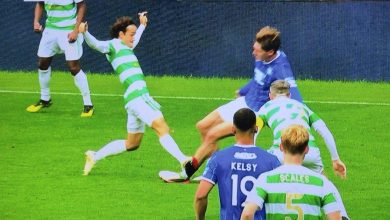
The incident in question occurred during a first-half period in which St Mirren, by most accounts, more than matched their hosts and could reasonably have expected to take something from the contest, with the visitors having weathered an early Rangers onslaught before growing progressively more comfortable in possession as the half wore on. As Ismeal Kabia burst into space in behind the Rangers defence, having found himself in the blind side of a Dujon Sterling run that Halliday noted had left the St Mirren winger with a clear path into the penalty area, Emmanuel Fernandez arrived late to make what replays appeared to show was significant contact with Kabia’s standing foot. Referee Don Robertson allowed play to continue in real time, with what has been described as only a modest appeal from the St Mirren players in the immediate aftermath, and with no intervention forthcoming from the video assistant referee, the moment passed without any penalty being awarded, the scores level at that stage of the contest.
It was that lack of VAR intervention, rather than Robertson’s initial decision not to award a penalty in the run of play, that has drawn the sharpest criticism in the hours and days since the final whistle. Halliday was unambiguous in his assessment when discussing the incident, stating plainly that he had no doubt St Mirren should have been awarded a penalty for the challenge. He explained that while he could understand a referee failing to spot the precise nature of the contact in real time, given the pace of the passage of play and the relatively subdued reaction from the St Mirren players in its immediate aftermath, he felt strongly that this was exactly the kind of scenario VAR exists to identify and correct, and that Steven McLean’s failure to advise Robertson to review the incident on the pitchside monitor represented a significant lapse in exactly the kind of protection the system is designed to provide. The key detail Halliday pointed to when breaking down the replay was the subtle buckling motion in Kabia’s ankle at the moment of contact, which he argued made clear that it was Fernandez, rather than the St Mirren winger himself, who initiated the challenge.
That assessment has been echoed elsewhere in the Scottish football media in the days since the match, with former referee Bobby Madden offering his own detailed breakdown of the incident on social media that arrived at a broadly similar conclusion, albeit through a slightly different lens of analysis. Madden referenced the sport’s Clear Lines guidance for officials when assessing the challenge, explaining that a penalty should be awarded, or at the very least reviewed by VAR, whenever a defender’s contact with an attacker’s foot is clear, carries a significant degree of intensity, and has a genuine impact on that attacker’s ability to continue the passage of play. Madden was explicit in stating that, in his reading of the incident, Kabia had already played the ball away before Fernandez’s challenge arrived, meaning the normal exemption that applies when a defender makes a legitimate attempt to win the ball first did not apply in this particular case. His conclusion, delivered with the kind of technical precision expected from a former official well versed in exactly how these guidelines are meant to be interpreted, was that there was no legitimate reason for a penalty not to have been awarded once the incident was reviewed.
The broader context surrounding this latest officiating controversy only adds to the sense of frustration among neutral observers and St Mirren supporters alike. This is far from the first time VAR decisions involving Rangers have generated significant debate this season, with a separate and entirely unrelated penalty controversy having already emerged from Rangers’ earlier League Cup meeting with the same opposition, when former PGMOL chief Keith Hackett publicly criticised officials for failing to award Rangers a penalty of their own after Nicolas Raskin appeared to be pushed in the back inside the box during that 5-1 victory at Ibrox. Taken together, the two incidents paint a picture of a fixture pairing between Rangers and St Mirren that has been unusually accident-prone from an officiating perspective this season, though it is worth noting that the earlier controversy worked in Rangers’ favour rather than against them, which only sharpens the sense of grievance among St Mirren supporters that their side has now been on the wrong end of contentious calls in successive meetings with the same opponent.
It’s also worth placing this controversy within the wider pattern of officiating debates that have periodically flared up around Rangers throughout recent seasons, an ongoing source of tension between the Ibrox club and the Scottish football refereeing community that long predates this particular incident. Rangers themselves have previously gone public with frustrations about VAR decisions and appointments, including a strongly worded statement questioning the reinstatement of officials following an earlier error in a Premier Sports Cup final defeat to Celtic, in which the club raised pointed questions about the governing body’s commitment to accountability in refereeing standards. Against that backdrop, there is a certain irony in Rangers now finding themselves on the beneficiary side of a contentious officiating call that has drawn public criticism from a well-respected former player, a reminder that the debate over the standard and consistency of video assistant refereeing in Scottish football cuts in multiple directions depending on which side of a given decision a club happens to find itself.
For St Mirren, the timing of this latest controversy could hardly have been worse, given how competitive and well-organised their overall performance had been across the ninety-plus minutes at Ibrox. Craig McLeish’s side had already shown signs of real progress this season, with the manager having been recognised with the Manager of the Month award for August, and Wednesday’s performance, even in defeat, offered further evidence of a team capable of matching a Rangers side that has been enjoying its best run of form of the season under Derek McInnes. Having weathered the storm of Rangers’ early pressure and grown increasingly threatening as the match progressed, with Fraser Taylor and Nikolas Agrafiotis both going close in the second half before Declan John’s effort flashed agonisingly past the post in the closing stages, St Mirren will feel with some justification that a rare and potentially decisive penalty opportunity was taken away from them at a crucial stage of a tightly contested match that was ultimately decided by the finest of margins in Rangers’ favour.
The broader football consequences of the missed penalty call are, of course, impossible to definitively quantify. Had St Mirren been awarded and converted a first-half spot-kick, the entire complexion and tactical shape of the remaining hour of the match would likely have shifted considerably, potentially forcing Rangers into a more expansive approach that could have opened up further chances at either end of the pitch. Equally, there is no guarantee that a penalty would have been converted even had it been awarded, and Rangers themselves might reasonably point to the fact that they created enough opportunities of their own across the ninety minutes, even if their finishing left something to be desired, to argue that the eventual outcome broadly reflected the balance of overall play across the full match. Nevertheless, the sense of injustice among the St Mirren camp and neutral observers alike is unlikely to be assuaged by such arguments, particularly given how emphatic both Halliday and Madden have been in their assessment that a clear and obvious refereeing error occurred.
For Rangers and Derek McInnes, the controversy arrives at a moment when the club can otherwise reflect with considerable satisfaction on a fourth consecutive victory across all competitions, a result that lifted the team into second place in the Scottish Premiership table ahead of this weekend’s hugely significant Premier Sports Cup quarter-final meeting with Celtic at Ibrox. McInnes himself has largely avoided being drawn into extensive public commentary on the penalty controversy in the aftermath of the match, with his post-match focus instead directed toward praising his side’s resilience in finding a winning goal so deep into stoppage time, and toward the debuts handed to deadline-day signings Badredine Bouanani and Kevin Kelsy. Whether the Rangers manager will be asked to offer a more detailed response to the growing officiating debate in the build-up to Sunday’s derby with Celtic remains to be seen, though such controversies rarely disappear entirely from the pre-match conversation once pundits and former officials have weighed in as forcefully as Halliday and Madden have done in this instance.
Looking ahead, the Scottish FA’s refereeing department will likely face familiar questions in the coming days about the standard of VAR intervention in this particular fixture, questions that have become an increasingly regular feature of the football conversation north of the border regardless of which clubs happen to be involved in any given controversy. Given the history of contentious calls that have already emerged from fixtures between Rangers and St Mirren this season alone, and given the broader pattern of officiating debates that have periodically overshadowed matches involving both Old Firm clubs in recent years, there is likely to be little appetite from the governing body to let this particular incident pass without at least some acknowledgment of the issues raised by Halliday’s and Madden’s analysis. For now, though, Rangers will simply be relieved to have escaped Wednesday’s contest with all three points intact, regardless of the surrounding controversy, as they turn their full attention toward the daunting derby test that awaits them at the weekend