Rangers let Scotland’s future number 9 leave for £0, now he’s outscoring Shankland & Kelsy

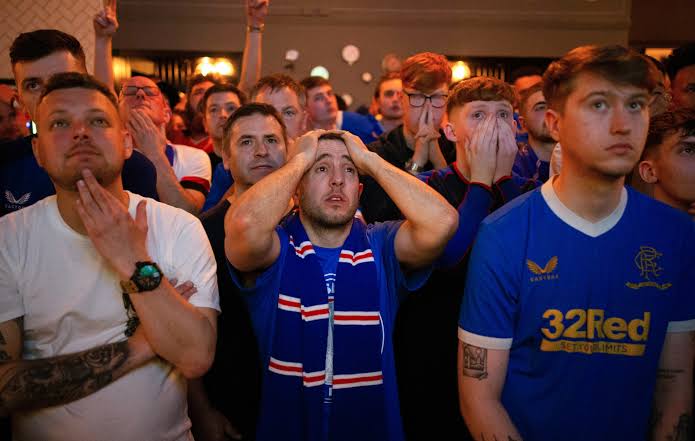
There is a certain type of story that resurfaces every so often in Scottish football, one that forces supporters of a big club to confront an uncomfortable truth about their own academy system, and Rangers find themselves at the centre of exactly that conversation this week as Robbie Ure, the striker they let leave for nothing back in 2023, continues his remarkable rise through European football at a moment when Ibrox itself is desperately searching for goals up front following the injury to captain Lawrence Shankland. Ure’s story has been bubbling under the surface for a while now, but the timing of his latest headlines, a big-money move to Sevilla in La Liga, could hardly be more pointed given the problems Derek McInnes currently faces trying to replace his talismanic number nine.
The numbers at the heart of this story tell their own compelling tale. Ure has scored ten goals in 2026 alone, a run of form built primarily on an outrageous spell in Sweden with IK Sirius before his big move to Spain, while over the same calendar year period, Rangers skipper Lawrence Shankland has managed eleven goals, seven of which came during his final months at Hearts before his summer move to Ibrox, and deadline-day signing Kevin Kelsy has also scored ten times in 2026, the majority of those coming for Portland Timbers in Major League Soccer before his own £9m-plus move to Scotland. Put simply, a player Rangers allowed to leave for free is now scoring goals at a rate comparable to, and in some assessments actually exceeding, both the club captain and the marquee summer signing McInnes brought in specifically to solve his goalscoring problem, and that comparison alone is enough to make for uncomfortable reading around Ibrox.
Ure’s journey to this point has been anything but conventional, and it is worth tracing in some detail to understand exactly why his current form carries such weight in the context of Rangers’ current predicament. Glasgow-born and having played his grassroots football at Barrhead Youth Football Club before joining Rangers as a boy, Ure spent the best part of a decade coming through the Ibrox academy system, eventually making his first-team debut at the age of 18 and even scoring within minutes of that debut appearance in a League Cup fixture. Despite that promising start, and despite senior figures at the club reportedly telling the Rangers Review as far back as 2022 that Ure had the potential to become Scotland’s leading number nine of the future, the striker managed just two senior appearances for Rangers before deciding, in 2023, to leave the club entirely for Belgian side Anderlecht, initially joining their reserve team in the Challenger Pro League rather than pushing for regular first-team football in Scotland.
That decision, by his own admission, was not an easy one to make at the time, but Ure has since spoken with real conviction about the reasoning behind it, explaining that he had looked at the recent history of Rangers’ academy graduates and recognised how few had managed to force their way into regular first-team involvement over the preceding decade. Rather than continuing to play in the Lowland League for the club’s reserve side, an environment he felt was doing little to advance his development as a player, Ure made the leap abroad, understanding that if his opportunity at Ibrox was never going to arrive, he needed to be prepared to forge his own path elsewhere. Rangers did, in fact, offer him a new contract in 2023 in an attempt to keep hold of him, but Ure opted to pursue the move to Belgium regardless, a decision that has since been vindicated in the most emphatic fashion possible.
From Anderlecht’s reserve setup, Ure’s path took him to Sweden and IK Sirius in 2025, and it was there that his career truly caught fire. Signed for a reported eight million Swedish kronor, a fee in the region of six hundred and twenty thousand pounds that made him Sirius’s record signing at the time, Ure scored an astonishing fifteen goals in fifteen appearances across the Swedish top flight this year, including ten goals in his final six matches for the club, a run of form so eye-catching that it attracted interest from clubs well beyond Scandinavia, with reported admirers including Egyptian giants Al Ahly and Austrian outfit Red Bull Salzburg before Sevilla ultimately won the race for his signature. That move to Spain, confirmed for an initial fee of five and a half million pounds with a further two million pounds in potential add-ons, taking the total package to somewhere in the region of seven and a half million pounds, represented a stunning conclusion to a rise that began with Ure playing reserve-team football in Belgium’s second tier just a couple of years earlier.
There is, in fairness to Rangers, a small silver lining buried within this otherwise painful story. Because Ure progressed through the Ibrox academy system through his nineteenth birthday season, the club retains an entitlement to a share of the FIFA solidarity mechanism payment generated by his transfer to Sevilla, worth an initial guaranteed lump sum in the region of one hundred and sixty-five thousand pounds, with the potential for a further payment worth an additional sixty-three thousand pounds should Ure hit certain performance milestones during his time in Spain. It amounts to a modest, unexpected windfall for a club that otherwise negotiated no sell-on clause when Ure departed for Anderlecht back in 2023, but it is scant consolation set against the backdrop of watching a player once tipped internally to become the country’s next great centre-forward thriving elsewhere at exactly the moment Rangers most need a reliable source of goals.
The timing of Ure’s Sevilla move landing in the same week that Youssef Chermiti was ruled out for the remainder of the season with a cruciate ligament injury only sharpened the sense of frustration among Rangers supporters when the story first broke, and events since then have only added further layers to the narrative. Shankland’s own hamstring injury, suffered during last weekend’s win over Motherwell and now expected to keep the Rangers captain sidelined for up to four months, has left McInnes needing goals from wherever he can find them, with Kelsy, Ryan Naderi, and Bojan Miovski all being asked to shoulder significantly more attacking responsibility than might have been anticipated at the start of the season. Watching a player of Ure’s calibre, a player some within the club privately believed had genuine star potential, score goals for fun in Sweden before securing a move to one of Spain’s most storied clubs, inevitably invites uncomfortable questions about whether Rangers’ academy pathway did enough to support his development, and whether a different approach might have kept a genuinely talented young Scottish striker within the fold at Ibrox rather than watching him make his name abroad.
It is a pattern that extends beyond Ure’s individual case and speaks to a broader issue that has periodically dogged Rangers’ youth development setup over recent years. Questions about how effectively the club transitions promising academy graduates into first-team opportunities have surfaced repeatedly, with observers pointing to the relatively small number of homegrown players who have managed to establish themselves as regular first-team contributors at Ibrox over the past decade. Ure’s rapid ascent since leaving the club, going from fringe reserve-team football in Belgium to prolific goalscoring form in Sweden and now a starting role at a major La Liga club, stands as a pointed example of a talented young player who needed to leave his boyhood club entirely, and travel through multiple countries and lower-profile leagues, before finally being given the platform and trust required to fulfil his obvious potential.
For Ure himself, the vindication of his decision to leave Rangers appears to be a matter of considerable personal satisfaction. Speaking at his unveiling at Sevilla’s Ramón Sánchez-Pizjuán Stadium, the striker reflected candidly on how significant a decision it had been to walk away from Ibrox at the time, expressing genuine pride that his career path had ultimately led him to a club of Sevilla’s stature and taking that as confirmation that leaving Rangers when he did had been the correct choice for his development. That sense of quiet vindication has only grown louder as his goal return has continued to climb, and with interest from bigger clubs across Europe having circled before Sevilla completed the deal, there is a growing sense that Ure’s rise is far from finished, even at a club that finished just one point above the relegation zone in Spain’s top flight last season.
There remains, too, an intriguing subplot regarding Ure’s international future that adds another layer of complexity to this story from a Scottish perspective. Having represented Scotland only up to Under-19 level and never having earned a senior cap, Ure’s international qualification situation is understood to be more complicated than it might first appear, with reports suggesting he could theoretically be eligible to represent Ukraine through the grandparent rule given he has yet to make a senior appearance for Scotland. Given the well-documented struggles Scotland’s national team have experienced in finding a reliable focal point up front in recent years, and given Ure’s obvious quality on current form, the prospect of Scotland potentially missing out on a player of his calibre due to a failure to move quickly enough with a senior call-up would only compound the sense of an opportunity being allowed to slip away, mirroring almost exactly the club-level frustration Rangers supporters are currently grappling with.
Looking at Rangers’ current situation with fresh eyes, it is difficult not to draw at least some connection between the club’s ongoing search for attacking reinforcements, first through the £9m-plus deadline-day pursuit of Kevin Kelsy, and now through renewed interest in bringing Bologna’s Lewis Ferguson back to Scotland, and the reality that a player capable of genuinely competing for a starting striker’s role was developed within the club’s own academy system before being allowed to leave for nothing. There is a reasonable argument to be made, based purely on current goalscoring output, that Ure would represent as viable an attacking option for Rangers right now as either Naderi or Miovski, both of whom have been required to step into the breach following the injuries to Shankland and Chermiti. Whether Ure himself would have any appetite to return to Ibrox at this stage of his rapidly ascending career is an entirely different question, and given his own comments about how vindicated he feels by his decision to leave, it seems unlikely such a reunion would hold much appeal even if Rangers were interested in pursuing one.
What this story ultimately underlines, more than anything else, is the fine margins that exist in developing young talent at the highest level, and how quickly a club’s assessment of a player’s ceiling can be proven wrong once that player is given the freedom, patience, and platform to develop away from the pressures and expectations that come with representing a club of Rangers’ size. Ure’s journey from Barrhead Youth Football Club through the Ibrox academy, via Anderlecht’s reserves and a goal-laden spell in Sweden, to a starting role in La Liga represents one of the more remarkable rises in recent Scottish football history, and the fact that his current scoring rate compares so favourably with both Rangers’ club captain and their marquee summer signing will not be lost on supporters as they continue to search for goals from within their own ranks during this injury-hit period of the season. Whether Rangers’ academy setup takes any lasting lessons from watching one of its own graduates thrive so spectacularly elsewhere remains to be seen, but for now, Robbie Ure’s story stands as a pointed and uncomfortable reminder of the talent that occasionally slips through the cracks even at the biggest clubs in the country.