The reason why Rangers fans banned from Rangers vs celtic ..the truth finally out


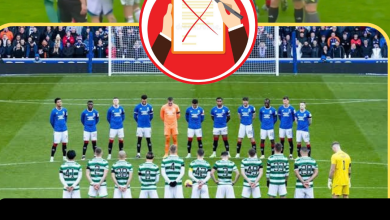
Graeme Souness has voiced his hope that the current ban on away supporters attending Old Firm fixtures proves to be nothing more than a short-term measure, describing the absence of travelling fans as a genuine diminishment of what he considers the biggest and most spectacular fixture in world football. The former Rangers captain and manager, speaking while promoting Premier Sports’ live coverage of this Sunday’s Premier Sports Cup quarter-final between the two Glasgow giants, made clear that while he understood and accepted the reasoning behind the SPFL’s decision, he remains hopeful that a return to some form of away allocation can be found sooner rather than later, given everything the fixture loses in atmosphere and spectacle when one set of supporters is entirely absent from the stands.
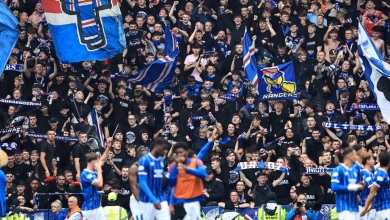
Souness’s comments arrive at a particularly significant moment in the ongoing saga surrounding away ticket allocations for matches between Rangers and Celtic, a debate that has rumbled on in various forms for the better part of a decade but which reached a genuine crisis point following the ugly scenes that unfolded at Ibrox in March, when Rangers and Celtic supporters clashed violently on the pitch after Celtic’s Scottish Cup quarter-final victory over their fierce rivals. Those events, described by police at the time as involving extreme hostility and violence that impacted both Celtic staff and players, saw hundreds of Rangers supporters invade the pitch in response to Celtic fans celebrating their penalty shoot-out win, with missiles and pyrotechnics thrown before police and stewards eventually managed to form a barrier separating the two sets of fans. Nine arrests were made within twenty-four hours of the incident, with police indicating at the time that significantly more were expected as investigations continued, and disturbing footage subsequently emerged showing a female police officer being kicked to the ground and Celtic defender Julian Araujo being confronted by supporters who had made their way onto the pitch.
It was those specific scenes of chaos and disorder, unwanted images that Souness himself acknowledged had been beamed around the world, that ultimately prompted an independent review into the events at Ibrox and led directly to the SPFL’s decision to implement a full and comprehensive ban on away supporters for every fixture between Rangers and Celtic across the remainder of the current season. That decision represents a considerable departure from the arrangements that had been in place in recent years, with away allocations for Old Firm fixtures having fluctuated significantly since 2018, ranging at various points from as few as zero tickets to as many as eight hundred, before the two clubs eventually settled on an agreement guaranteeing a five per cent away allocation for fixtures throughout 2025 and 2026. That relatively hard-won compromise, itself the product of years of negotiation and periodic breakdowns in trust between the two clubs, has now effectively been torn up in the aftermath of March’s disorder, replaced instead by a blanket ban that will apply to every Scottish Premiership and Premier Sports Cup meeting between the sides for the remainder of this campaign.
The specific breakdown in negotiations that preceded the SPFL’s intervention adds an additional layer of context to how this situation ultimately unfolded. When discussions turned toward ticketing arrangements for the new season, Rangers reportedly proposed allocating just three hundred seats to visiting Celtic supporters, a dramatic reduction from the roughly two thousand five hundred fans who had previously been permitted to attend under the five per cent arrangement. Celtic, understandably, rejected that considerably diminished allocation as inadequate, and with the two clubs unable to reach any form of compromise between themselves, the SPFL ultimately felt compelled to step in and impose its own determination on the matter, resulting in the current arrangement whereby no away fans whatsoever will be permitted at any Old Firm fixture in either the league or cup competitions this season.
In its official statement announcing the decision, the SPFL was careful to frame the measure as a temporary arrangement rather than any kind of permanent policy shift, explaining that the approach would allow Rangers, Celtic, the league body itself, Police Scotland, and other relevant stakeholders the necessary time and space to properly consider a long-term solution to what has become an increasingly fraught and complicated issue. The governing body also emphasised that the arrangement would provide greater certainty for supporters and those responsible for matchday planning, helping to avoid the kind of repeated uncertainty around ticketing that has characterised previous seasons, while stressing that the position would remain subject to review should circumstances materially change over the course of the campaign. Arrangements for matches between the two clubs beyond the current season, the SPFL confirmed, will be considered well in advance of the 2027/28 campaign, suggesting there remains at least some appetite within the game’s governing bodies to find a more sustainable long-term arrangement rather than simply defaulting to a permanent ban going forward.
Souness’s own reaction to the situation reflects a broader sentiment that appears to be shared by many within Scottish football, a recognition that the safety concerns driving the current ban are entirely legitimate and understandable given the severity of what unfolded at Ibrox in March, combined with a genuine sense of regret at what the fixture inevitably loses as a spectacle when played without any away representation whatsoever. Speaking candidly about his hope for a swift resolution, Souness described his wish that the situation resolve itself quickly given just how much of a spectacle the Old Firm derby represents, a sentiment that speaks to the unique standing this fixture holds not just within Scottish football but across the wider footballing world, drawn from the passion, history, and intensity that having both sets of supporters present has traditionally generated inside whichever stadium happens to be hosting the occasion.
That sense of diminishment is something several other prominent voices within Scottish football have echoed in the days since the SPFL’s announcement was confirmed. Journalist Mark Guidi, speaking on the Go Football Radio Show, offered a considerably more pessimistic long-term prediction than Souness’s hopeful outlook, suggesting that away supporters may never again be permitted to attend Old Firm fixtures taking place outside of the national stadium at Hampden Park, a prediction that, if it proves accurate, would represent a truly seismic and lasting shift in how this fixture is experienced by supporters of both clubs going forward. Given that the issue of away ticket allocations for matches between Rangers and Celtic has been a recurring source of tension and periodic crisis for the better part of a decade now, Guidi’s scepticism about a swift return to any kind of meaningful away presence carries genuine weight, even allowing for the SPFL’s own insistence that the current arrangement remains temporary in nature
For both managers currently tasked with navigating this unusual landscape, the practical reality of the away fan ban means an entirely different atmosphere awaits them and their players when the two sides finally meet for the first time this season. Martin O’Neill’s Celtic side will travel to Ibrox this coming Sunday for the Premier Sports Cup quarter-final without a single travelling supporter present inside the stadium, before the roles reverse entirely just seven days later when Derek McInnes brings his Rangers side to Celtic Park for the first Scottish Premiership meeting between the two clubs this season, again with no away fans permitted to attend. It represents a peculiar and historically unusual set of circumstances for fixtures of this magnitude, with both games likely to feature a noticeably different atmosphere compared to previous Old Firm encounters that have benefited from even a modest away allocation cheering on their side from a corner of the ground.
The broader history of fan disorder and periodic bans affecting Old Firm fixtures provides useful context for understanding just how entrenched this particular problem has become within Scottish football. Away supporters were previously banned entirely from attending matches between the two clubs back in 2023, following a string of earlier incidents, before eventually being permitted to return on a reduced basis the following year as part of efforts to restore some semblance of normality to proceedings. That gradual, cautious reintroduction of away fans appeared to represent genuine progress at the time, with the Scottish Cup quarter-final in March initially being viewed as something of a test case for whether even larger allocations might eventually be sustainable, given that fixture featured the first large-scale allocation of away tickets for an Old Firm derby in almost a decade, with Celtic granted seven thousand five hundred tickets inside Ibrox under Scottish Cup rules permitting away clubs to claim up to twenty per cent of available tickets. The subsequent disorder that marred the conclusion of that very fixture has instead had the opposite effect entirely, torpedoing what little momentum had been building toward a more permissive long-term arrangement and instead triggering the most restrictive measures seen in this particular fixture for several years.
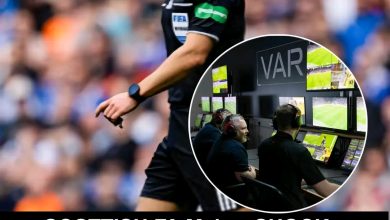
It is also worth noting that the March disorder occurred against the backdrop of a genuinely dramatic and closely fought contest on the pitch itself, a reminder that the football being played in these fixtures often carries its own compelling drama entirely independent of what unfolds among the supporters. Celtic ultimately progressed to the semi-finals of that season’s Scottish Cup on penalties following a goalless draw after extra time, in a match during which Martin O’Neill’s side failed to register a single shot on target across the full one hundred and twenty minutes of play, relying instead on a nerve-shredding shootout to see off their rivals. Rangers captain James Tavernier struck the crossbar with his side’s opening penalty before Djeidi Gassama blazed his own effort well over the bar, sealing Celtic’s progression despite Rangers having accumulated considerably more shots across the match and having a goal controversially ruled out during extra time following a VAR review for handball against Emmanuel Fernandez. That the football itself produced such a dramatic and contentious conclusion, only for the aftermath to be completely overshadowed by the violence that followed, underlines just how much additional scrutiny and pressure surrounds every aspect of matches between these two clubs, on and off the pitch alike.
For the SFA’s part, the punishments handed down in the aftermath of March’s disorder extended beyond simply the SPFL’s decision regarding away fan allocations, with the governing body separately confirming that both Rangers and Celtic would be required to play their next Scottish Cup fixtures behind closed doors entirely, as a distinct sanction for the disorder that occurred. That additional punishment underlines the severity with which the football authorities have treated the March incident, recognising that the scale and nature of the violence that occurred represented a significant escalation beyond the more familiar forms of tension and hostility that have periodically characterised previous Old Firm fixtures over the years.
Looking ahead to this weekend’s Premier Sports Cup quarter-final and the following week’s league meeting at Celtic Park, both clubs and their managers will need to adjust to operating in an environment stripped of the usual away support that has traditionally added an extra dimension of noise, colour, and tension to these already highly charged occasions. For Derek McInnes, still relatively new to the demands of managing in Old Firm fixtures having only arrived at Ibrox over the summer, the experience of facing Celtic for the first time in a stadium without any travelling Celtic support present will represent an unusual introduction to a fixture that typically ranks among the most intense and atmospheric occasions in European club football. Martin O’Neill, by contrast, brings considerably more experience of navigating the unique pressures of Old Firm football, even if the specific circumstances of playing without away support represent a relatively novel wrinkle even for a manager as experienced as he is.
Souness’s broader point, that the absence of away fans genuinely diminishes what should be one of football’s great spectacles, speaks to something that extends well beyond simple ticketing logistics or safety considerations, touching instead on the fundamental character and identity of the fixture itself. Much of what makes Old Firm derbies so compelling to watch, both for those inside the stadium and for the global television audience that regularly tunes in to watch these fixtures, stems precisely from the raw, visceral atmosphere generated by having passionate, committed supporters from both clubs present and audible throughout the ninety minutes, trading chants and songs across the divide even amid the underlying tension that always threatens to boil over. Removing one half of that equation entirely, even temporarily and for entirely understandable safety reasons, inevitably robs the occasion of some of that unique intensity, replacing it instead with a more one-sided atmosphere that, while still likely to be loud and passionate from the home support alone, cannot fully replicate the particular electricity generated when both sets of fans are present and engaged throughout the contest.
Whether Souness’s hope for a swift resolution proves well-founded, or whether Mark Guidi’s more pessimistic prediction of a longer-term or even permanent absence of away fans from Old Firm fixtures outside of Hampden ultimately comes to pass, remains to be seen, and much will likely depend on how the various stakeholders, Rangers, Celtic, the SPFL, Police Scotland, and other relevant authorities, are able to work together constructively over the coming months to identify a sustainable long-term arrangement that properly balances the undeniable safety concerns raised by March’s disorder against the genuine desire, shared by figures like Souness, to preserve as much of the fixture’s traditional spectacle and atmosphere as possible. For now, though, both sets of supporters will have to watch this weekend’s Premier Sports Cup quarter-final and next week’s league meeting unfold without the ability to travel and support their side in person, a reality that adds yet another unusual layer to what was already shaping up to be a fascinating early-season examination of exactly where both Glasgow giants currently stand under their respective managers.