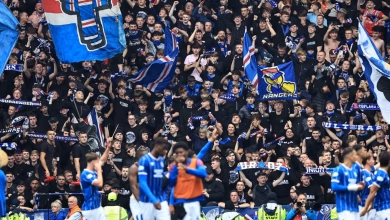
BBC Scotland have found themselves at the centre of fresh criticism from Rangers supporters after their match report on Wednesday’s dramatic 1-0 win over St Mirren appeared to take a pointed swipe at the scale of the celebrations that greeted Bojan Miovski’s stoppage-time winner at Ibrox, with the broadcaster’s coverage suggesting it was somehow a sign of the times at Rangers that a narrow home win over a mid-table opponent should be met with such over-the-top scenes of joy. It is the kind of line that, on the surface, might read as a fairly innocuous piece of match-report colour, but for a fanbase that has spent much of the last decade convinced of a broader institutional bias against their club within certain sections of the Scottish football media, it has proven to be exactly the kind of spark needed to reignite a long-simmering grievance.
The specific passage in question, buried within BBC Scotland’s written report of the contest, stated plainly that it represented a sign of Rangers’ current times that a 1-0 home win over St Mirren should be greeted with such over-the-top celebrations, a line that many supporters have interpreted as a thinly veiled dig at both the players and the club itself for daring to celebrate a hard-fought, dramatic late winner with the kind of enthusiasm typically reserved for far more significant occasions. Given the context surrounding the goal itself, a stoppage-time strike from a player who, by his own recent standing within the squad, might reasonably be considered as low as fifth-choice among Rangers’ available strikers, and given everything the club has been through over recent weeks, the suggestion that this reaction was somehow excessive or worthy of comment has understandably rankled with supporters who feel there was nothing remotely unusual about celebrating a goal of that magnitude in the manner that Derek McInnes, his players, and the Ibrox crowd chose to do.
To properly understand why this particular passage has generated such a strong reaction, it is worth revisiting exactly what Wednesday’s victory meant in the broader context of Rangers’ season so far. McInnes’ side made it four consecutive wins across all competitions with the victory over St Mirren, a result that lifted the club back up to second place in the Scottish Premiership table following what had been a genuinely difficult and, at times, alarming start to the new manager’s tenure at Ibrox. Having endured a winless run stretching across his opening four competitive fixtures in charge, including a mortifying Europa League qualifying exit at the hands of Jagiellonia Białystok, McInnes and his players have spent the past several weeks working hard to rebuild both form and confidence, and Wednesday’s win, however scrappy or unconvincing in terms of overall performance quality, represented another meaningful step in that ongoing process of recovery. Given everything that preceded it, the sight of McInnes visibly relieved and delighted at full-time, embracing Miovski on the touchline amid wild scenes of celebration from players and supporters alike, seems an entirely proportionate response to a club and a squad that has genuinely needed moments like this to come together and rediscover its sense of collective purpose after such a difficult opening period to the campaign.
There is also a specific subplot regarding Miovski himself that adds further context to why his goal, and the celebrations that followed it, carried such significance. With the club’s attacking options having been ravaged by injury in recent weeks, including the long-term losses of Youssef Chermiti to a cruciate ligament problem and captain Lawrence Shankland to a serious hamstring issue, Miovski has found himself thrust into a considerably more prominent role than his standing within the squad might previously have suggested. Some observers have gone as far as to suggest that, with a fully fit squad at his disposal, the North Macedonian international would likely rank as no higher than Rangers’ fifth-choice striking option, making his decisive intervention against St Mirren all the more significant, both in terms of what it did for the immediate result and in terms of what it might mean for his own standing and confidence going forward. Watching a player operating from such a peripheral position within the squad step up and deliver in such a dramatic fashion is precisely the kind of moment that tends to generate genuine, heartfelt celebration among supporters, coaching staff, and teammates alike, and framing that reaction as somehow excessive or embarrassing rather misses the point of why football continues to captivate people in the first place.
It is worth acknowledging, in fairness to BBC Scotland’s broader coverage of the match, that their report did not entirely ignore the legitimate football talking points from the contest itself. The broadcaster’s coverage noted that St Mirren had posed a constant threat on the counter-attack throughout the match, much as they had also done against Celtic in their previous league fixture, with Rangers centre-back Emmanuel Fernandez fortunate not to concede a penalty for a late challenge inside the box, an incident that has already generated considerable separate debate and controversy in the days since the final whistle, with prominent voices including Andy Halliday and former referee Bobby Madden arguing forcefully that a clear and obvious error had been made in not awarding St Mirren a spot-kick. The report also acknowledged that St Mirren’s Ramsay had passed up two good chances of his own during the match, offering a reasonably balanced account of a contest that could quite easily have gone the visitors’ way given the number of promising opportunities they created across the ninety minutes.
Nevertheless, it is that specific line about the scale of Rangers’ celebrations being somehow indicative of the club’s current standing that has drawn the most pointed criticism from supporters, many of whom have taken to social media and dedicated fan forums to vent their frustration at what they perceive as yet another example of a broadcaster seemingly unable to resist including a subtle dig at Rangers even within the confines of a straightforward match report. Discussion on the well-known Rangers supporters’ forum FollowFollow captured much of that frustration in vivid terms, with posters questioning why BBC Scotland appeared to view any celebration of a last-minute winning goal as somehow unusual or worthy of comment, particularly given the historical precedent of similarly dramatic celebrations following late goals in matches of far less significance across the sport more broadly. Others pointed to what they view as a broader and consistent pattern of negative or subtly critical coverage of the club across BBC Scotland’s football output, suggesting that barely a day passes without some form of critical framing appearing within the broadcaster’s various football sections, including within shorter gossip-style items that some supporters believe are crafted with similarly pointed undertones.
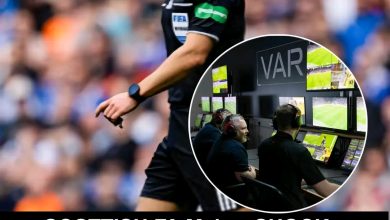
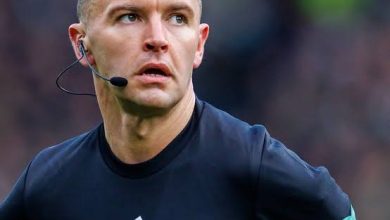
This latest controversy also arrives against the backdrop of a separate but related storyline from the same match, regarding the penalty appeal that was waved away when Fernandez appeared to catch Ismeal Kabia inside the box during the first half. That particular incident has already generated a fair amount of column inches in its own right, with Andy Halliday having been notably outspoken in his belief that St Mirren were unjustly denied a clear penalty, going as far as to describe the lack of VAR intervention as an unforgivable error on the part of match officials. Former PGMOL chief Keith Hackett offered a starkly contrasting view, insisting that referee Don Robertson had been correct not to award a penalty and suggesting instead that Kabia had been guilty of simulation. That existing controversy over the standard of officiating in the match adds an additional layer of context to the broader sense of grievance some Rangers supporters feel toward BBC Scotland’s coverage, with questions already having been raised about whether the broadcaster’s football correspondents gave appropriate weight and attention to the penalty incident within their overall assessment of the contest.
Looking beyond this specific controversy, the timing of this latest media spat could hardly arrive at a more significant moment for Rangers as a club, with what has been widely described as potentially the biggest week of the season now firmly on the horizon. Sunday brings the first Old Firm meeting of the campaign, with Celtic making the short trip to Ibrox for a Premier Sports Cup quarter-final that carries genuine significance beyond simply progression to the semi-final stage of the competition. Rangers will be acutely aware of the opportunity for a measure of revenge following last season’s dramatic and controversial Premier Sports Cup semi-final defeat to Celtic, a contest in which McInnes’ predecessors saw their side dominate for the full one hundred and twenty minutes of normal and extra time, only to lose out on penalties in agonising fashion, a result that has clearly left a lingering sense of unfinished business among both players and supporters heading into this weekend’s rematch.
Beyond Sunday’s cup tie, Rangers will then make the short journey across the city to Celtic Park just a week later for the first Scottish Premiership meeting between the sides this season, with the Ibrox side currently sitting five points behind their fierce rivals in the table. A victory in that league fixture would cut the gap to a considerably more manageable two points and send Rangers into the extended international break with genuine momentum and confidence heading into the second half of the campaign, while defeat would risk allowing Celtic to further extend what is already a commanding early-season lead at the top of the Scottish Premiership. Given the stakes involved in both fixtures, and given the broader context of a Rangers side and support desperately seeking evidence that genuine progress is being made under their new manager following such a difficult opening stretch to the season, it is perhaps unsurprising that emotions were running high enough around Wednesday’s victory over St Mirren for any perceived slight from the media to generate such a strong and immediate reaction from supporters.
There is also a broader, longer-running context to consider when assessing why Rangers supporters remain so sensitive to perceived negative or dismissive coverage from outlets like BBC Scotland, one that extends well beyond this single incident and speaks to a deeper and more entrenched sense of grievance that has built up over a period of many years. Complaints about perceived institutional bias within the Scottish football media, and BBC Scotland’s football coverage specifically, have been a recurring feature of discourse among Rangers supporters for a considerable time now, with many pointing to a perceived pattern of critical or dismissive framing applied to Rangers-related stories that they believe would not be applied in quite the same way to similar stories involving other clubs, Celtic included. Whether that perception reflects a genuine and demonstrable pattern of bias, or whether it instead reflects the kind of heightened sensitivity to critical coverage that often develops among supporters of any club during a period of on-pitch struggle and off-pitch scrutiny, is a debate that is unlikely to be definitively settled by this single incident alone, but it is clear that this latest controversy has once again tapped into a well of existing frustration that has been building for some considerable time.
For BBC Scotland’s part, it seems unlikely that the broadcaster will offer any formal response or clarification regarding the specific line that has generated such controversy, given the relatively minor and subjective nature of the complaint compared to more substantial editorial disputes that occasionally arise within sports journalism. Nevertheless, the strength of feeling generated by what was, in the broader context of the report, a fairly brief and passing observation, underlines just how closely every word of media coverage involving Rangers continues to be scrutinised by a passionate and engaged fanbase, particularly during a period when the club and its new manager remain under considerable pressure to demonstrate tangible progress after such a difficult start to the season.
As Rangers now turn their full attention toward the daunting double-header against Celtic that awaits them over the coming ten days, this latest media controversy will likely fade relatively quickly from the immediate conversation, replaced instead by the far more pressing questions of team selection, tactical approach, and squad management that both McInnes and his players will need to navigate as they prepare for what genuinely could prove to be a season-defining stretch of fixtures. But for a fanbase that has grown accustomed to scrutinising every line of media coverage involving their club with a keen and often suspicious eye, the sense that BBC Scotland once again found a way to insert a subtly critical note into what should have been a straightforward celebration of a dramatic and hard-fought victory will likely linger in the collective memory for some time yet, adding one more entry to what many supporters view as an already lengthy and frustrating catalogue of perceived slights from certain corners of the Scottish football media