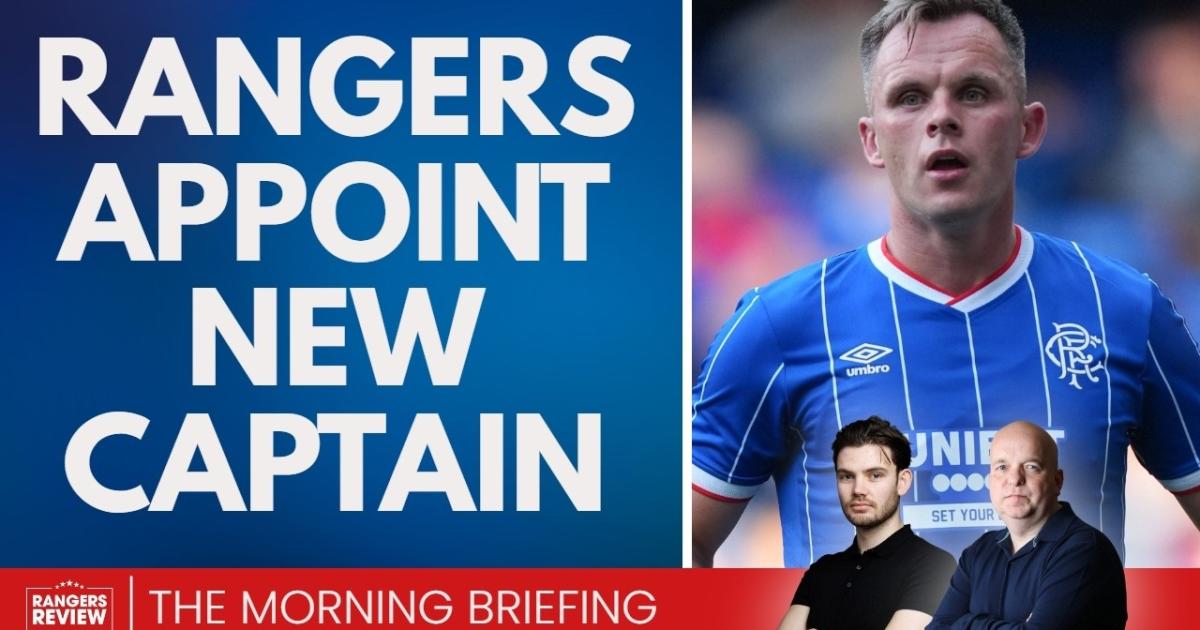
When Derek McInnes sat down to decide who should carry the captain’s armband into a new era at Ibrox, he settled on a player he already knew intimately from their time together at Tynecastle. Lawrence Shankland’s appointment as Rangers captain ahead of the 2026/27 season was confirmed just two days before the Scottish Premiership curtain-raiser at Dundee United, and it brought to an end a summer-long search for a leader capable of filling the void left by long-serving former skipper James Tavernier. Described by those close to the situation as “the most determined man” in the Ibrox squad, Shankland’s appointment reflects both his individual qualities and a broader emphasis on collective responsibility that McInnes is trying to build into the fabric of his new-look Rangers side.
Shankland’s elevation to the captaincy could not be separated from the context of who he was replacing. James Tavernier’s departure from Ibrox this summer, after his contract expired, brought the curtain down on one of the most significant leadership tenures in the modern history of the club. The right-back made 565 appearances during his 11 years at Rangers, scoring 144 goals along the way and captaining the side to their 55th league title, having first been appointed to the role by then-manager Steven Gerrard. Wearing the armband for eight years, Tavernier’s influence on the dressing room went far beyond his individual statistics, and replacing that kind of long-term stability and leadership presence was always going to be one of the defining challenges facing whoever succeeded him at the club.
With Tavernier gone, Rangers had spent much of the summer targeting leadership qualities as a priority in the transfer market, conscious of the gap his exit would leave. Several other candidates who had worn the armband at various points in recent seasons, including Jack Butland and John Souttar, had themselves either already left the club or were in the process of being moved on, further underlining the scale of the leadership vacuum McInnes needed to fill as he took charge of his first full season at Ibrox
Rather than rushing into a decision, McInnes used the pre-season programme to carefully assess his options, rotating the captaincy among several members of his squad before settling on a permanent choice. Over the course of Rangers’ pre-season fixtures, the armband was worn at various points by Ross McCrorie, Dan Neil, Ben Godfrey and Dujon Sterling, giving each of them the opportunity to demonstrate their leadership credentials in a competitive environment, even if the matches themselves carried little at stake. Shankland himself also led the side out during a pre-season fixture against Malaysian club Johor Darul Ta’zim, offering an early hint that he was very much under serious consideration for the role on a permanent basis.
Speaking about the process, McInnes explained that any incoming manager appointing a new captain has to be mindful of the standard set by those who have held the role before, a clear nod to the weight of history and expectation that comes with leading out a club of Rangers’ stature. That deliberate, unhurried approach to the decision suggested McInnes wanted to be certain he was making the right long-term choice rather than simply handing the armband to the most obvious or senior candidate available to
Ultimately, McInnes turned to a player with whom he already had an established working relationship and a track record of success in a leadership role. Shankland had served as captain of Hearts during the Edinburgh club’s title challenge last season, a period in which McInnes himself was in charge at Tynecastle, giving the manager first-hand knowledge of how the striker conducts himself both on and off the pitch. That existing familiarity appears to have been decisive: rather than gambling on an unproven leader within his new squad, McInnes opted for a player he already trusted implicitly to handle the pressures that come with captaining Rangers.
Shankland’s profile also fit neatly with what the club had been looking for throughout the summer. As a boyhood Rangers supporter now representing the club he grew up idolising, his personal connection to Ibrox added an emotional dimension to the appointment that went beyond simple tactical logic. That sense of authenticity, of a player who understands exactly what the armband means to the institution and its supporters, was viewed as an important quality in a dressing room that needed a unifying figure following a summer of considerable squad turnover.
According to those close to the Rangers set-up, Shankland’s blend of experience, leadership pedigree and understanding of the club made him close to an ideal profile for a captain in this particular moment. Having previously led Hearts and now taking charge of the club he had supported since childhood, he was described as possessing the kind of determination that stood out even among a competitive group of leadership candidates, with observers close to the squad suggesting he is regarded as the single most driven personality inside the Ibrox dressing room
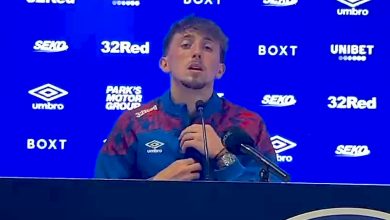
For his part, Shankland made no attempt to hide his emotions upon learning of the decision. Speaking to reporters just an hour after McInnes had informed him personally, he described being named Rangers captain as a huge honour, reflecting on how surreal it felt to go from simply dreaming of playing for the club as a boyhood supporter to now leading it out onto the pitch. He explained that since arriving at Ibrox, he had consciously tried to adjust his own habits and behaviour to fit what he felt a Rangers captain should embody, working on setting the right standards in training and around the club even before the armband was officially confirmed as his.
Shankland was candid in acknowledging that captaining Rangers would come with an intensity of scrutiny unlike almost anything else in Scottish football. He recognised that the pressures of the role would be considerable, particularly given the standard set by his predecessor, but was equally clear that he viewed the potential rewards of succeeding in the position as being worth significantly more than any of the downside risk that came with it. That balance of realism and ambition characterised much of his response to the news, striking the tone of a player fully aware of what lies ahead but eager to embrace the challenge rather than shy away from it.
While Shankland’s appointment as permanent captain sends a clear signal about who McInnes views as his primary on-field leader, the Rangers manager has been equally deliberate in stressing that leadership within the squad will not begin and end with one individual. The rotation of the armband throughout pre-season among several other senior players was itself a signal of this approach, and it is an emphasis that has continued to play out during the season proper. There have already been occasions in competitive fixtures where the armband has been passed to another player when Shankland was substituted or rested, with Nicolas Raskin in particular having worn it during matches in which the captain was not on the pitch for the full 90 minutes.
That shared approach to leadership reflects a broader philosophy McInnes appears keen to instil throughout his squad: that responsibility for driving standards, setting an example and steadying the ship during difficult moments should not rest solely on the shoulders of one player, however capable. Given the volume of new faces brought into the squad over the summer, and the pressures of playing for a club with the history and expectation that Rangers carries, cultivating a wider base of leadership across the dressing room, rather than relying on a single figurehead, looks to be a conscious and considered strategy on the part of the new manager
Even with that collective approach to leadership, there is no getting away from the scale of expectation that now rests on Shankland individually as the man wearing the armband. As a forward, he faces the dual challenge of needing to deliver goals for a Rangers side undergoing significant transition, while simultaneously being looked to as the voice of the dressing room whenever results or performances dip. Any slow start to the campaign was always likely to place extra scrutiny on his leadership, given that supporters and media alike tend to hold the captain particularly accountable during difficult periods.
McInnes himself has been open about that reality, acknowledging that a captain inevitably faces greater scrutiny during tough moments in a season, since the armband naturally draws extra attention when a team needs answers. He has framed that scrutiny as simply part of the responsibility that comes with the role, while also stressing that the rewards of succeeding as Rangers captain, in terms of what it can mean for a player’s career and legacy at the club, comfortably outweigh the added pressure that comes with it.
Since his initial appointment, the picture around Shankland’s captaincy has continued to develop in ways that reflect the unpredictable nature of a long football season. He has not always been guaranteed a starting place, in keeping with McInnes’ insistence that the armband being shared around the squad was always part of the plan rather than a temporary arrangement during pre-season alone. There have been notable moments, such as a League Cup tie against St Mirren, when Shankland began the match on the bench, with Raskin instead wearing the armband and delivering a commanding performance in central midfield as Rangers ran out convincing winners.
Such moments have prompted plenty of discussion among Rangers supporters and observers about the club’s leadership structure moving forward, and about how much of the captaincy will end up being a fixed, ceremonial title versus a fluid, in-game responsibility that shifts depending on team selection. Regardless of that ongoing conversation, Shankland has remained the club’s officially recognised captain throughout, and his standing as the figurehead of the dressing room has not been seriously called into question, even during passages of the season when injury or team selection have kept him off the pitch.
Indeed, since taking up the armband, Shankland quickly demonstrated why McInnes felt so confident in trusting him with the responsibility, contributing significant goals during a productive early-season run of form before later being sidelined by a serious hamstring injury. That setback, coming at a time when he had begun to look increasingly influential in a Rangers shirt, has added a further layer of complexity to the captaincy picture, with other senior players such as Raskin continuing to step into the leadership role in his enforced absence.
What remains clear, regardless of rotation, injuries or shifting circumstances throughout the season, is the underlying rationale behind McInnes’s original decision. In choosing Shankland, the Rangers manager opted for a player whose determination, boyhood connection to the club and proven leadership pedigree at Hearts made him stand out from an otherwise competitive field of candidates. Whether wearing the armband himself or watching on as it passes temporarily to a team-mate during his absence, Shankland’s role as the figure McInnes has entrusted to set the tone for a rebuilding Rangers side remains central to the club’s plans for the season.
As Rangers continue to navigate a period of significant transition, both in terms of personnel and playing identity under their new manager, the importance of having a captain capable of leading from the front, in both the literal and figurative sense, is unlikely to diminish. Shankland’s task now is to translate the honour and determination he spoke about so openly upon his appointment into consistent performances and steady leadership through whatever challenges the remainder of the season brings, ensuring that McInnes’s early faith in him as the man to succeed a club legend proves to be fully justified.