The Club Needs New Energy”: Russell Martin Exclusive on Becoming Rangers Head Coach

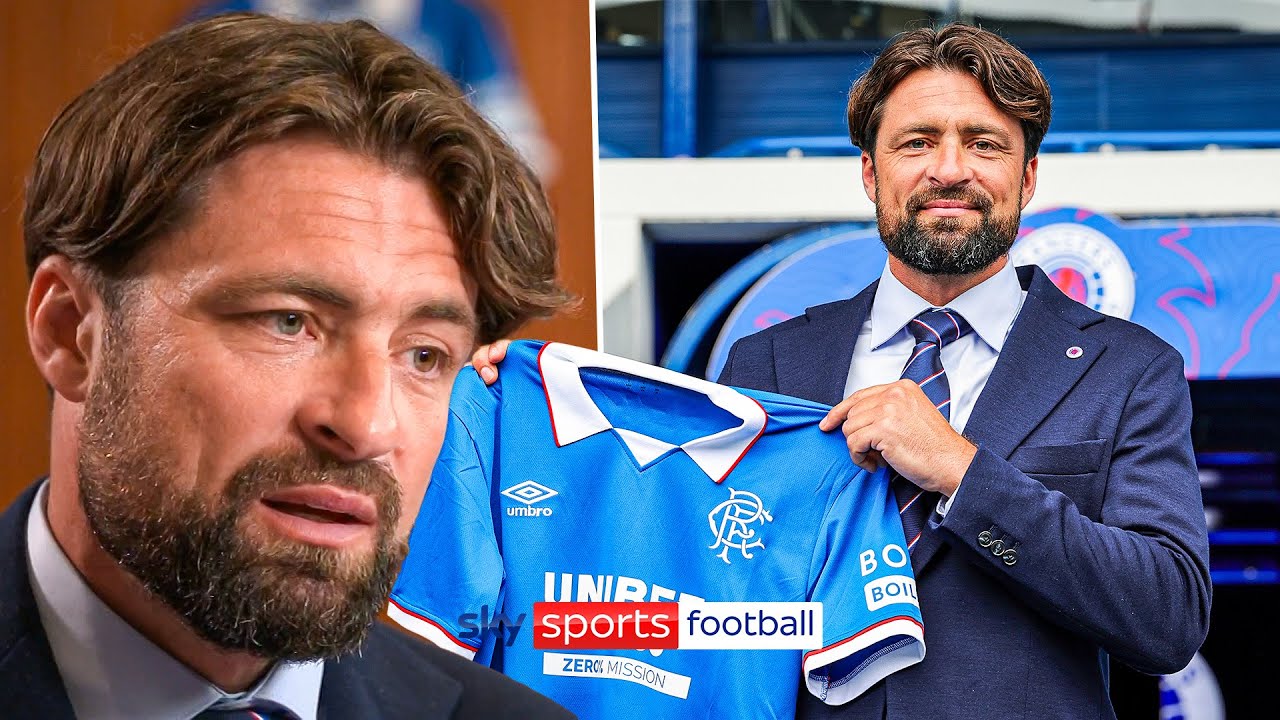
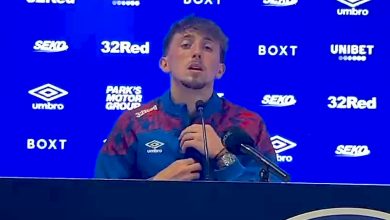
Russell Martin’s unveiling as Rangers head coach marked the first major statement of intent from the club’s new American ownership, and in an exclusive sit-down interview, the 39-year-old former Southampton boss laid out exactly why he believes he is the right man to lead a new era at Ibrox. Speaking candidly about the scale of the challenge in front of him, his ambitions of eventually catching Celtic, his plans in the transfer market, and the importance of captain James Tavernier to his vision, Martin made clear that he sees his arrival as the beginning of a genuine reset for a club he says has been crying out for a change of direction
Martin’s appointment came as the very first significant move made by Rangers’ new ownership group, led by American businessman Andrew Cavenagh, whose consortium had completed its takeover of the Scottish giants just a week earlier. That timing was no coincidence. With the takeover freshly finalised, the incoming ownership wanted to move quickly to establish a clear identity for the football side of the club, and Martin’s arrival, on a three-year contract, was designed to send an immediate signal that the days of drift under the previous regime were over.
For Martin himself, stepping into the role represents both an enormous opportunity and an unmistakably difficult challenge. Rangers arrive at this juncture having gone through a turbulent period, one that saw the previous manager dismissed mid-season and the club finish well off the pace domestically. Martin was open in acknowledging the scale of what lies ahead, describing the task in front of him as a huge one, but insisting that with the right conditions in place, Rangers remain a club capable of achieving major success once again.
Central to Martin’s message in the interview was his belief that Rangers, as a club and as an institution, require a fundamental change of atmosphere after a difficult few years. He was direct in stating his conviction that the club needs new energy and a fresh start, pointing to what he described as a tough period for both the club and its supporters over recent seasons. That framing set the tone for much of the rest of the conversation, with Martin repeatedly returning to the idea that mentality and belief, as much as tactical detail or individual quality, would be the foundation on which he hoped to rebuild.
Martin argued that history shows Rangers are capable of huge things when the club has momentum, clarity and a sense of collective belief running through it. He suggested that his job, at least in the early stages, would be as much about restoring that intangible sense of energy and conviction around the place as it would be about specific tactical or technical work on the training ground. It’s a philosophy that reflects Martin’s broader coaching background, having built a reputation during his time in England’s lower divisions for developing a clear playing identity built around confidence in possession and a positive, front-foot approach to games
Asked directly about his ambitions and whether Rangers could realistically topple Celtic, who arrived into the new season having wrapped up their latest Scottish title, Martin did not shy away from the scale of the task. He acknowledged that Celtic’s recent dominance of the Scottish game has been considerable, but insisted that his aim was for Rangers to become the best version of themselves, with the clear implication that doing so consistently would eventually put them in a position to close the gap on their fiercest rivals.
Martin’s message was one of long-term ambition tempered by realism about the road ahead. Rather than making bold short-term promises about immediately overhauling Celtic, he focused on the idea of incremental improvement, building a squad and a way of playing capable of sustaining a title challenge over time rather than producing a single moment of transformation. That measured tone reflected an awareness of just how far Rangers had fallen behind their rivals in recent seasons, and a recognition that closing that gap would require sustained progress rather than a quick fix.
As part of the wide-ranging interview, Martin also touched on his transfer plans as he looked to begin shaping a Rangers squad that reflected his own footballing principles. While specific transfer targets were not the focus of the conversation, Martin made clear that recruitment would play a central role in his early months at the club, with the new ownership’s backing seen as an important factor in his ability to bring in players suited to the style of play he wanted to implement.
Given his previous work at clubs known for progressive, possession-based football, it was widely expected that Martin’s recruitment priorities would lean toward technically proficient players comfortable playing out from the back, alongside profiles capable of pressing intensely in the final third. Whether the existing Rangers squad, built under different managerial philosophies in recent seasons, could adapt quickly enough to that approach was one of the more significant questions hanging over his appointment from the outset.
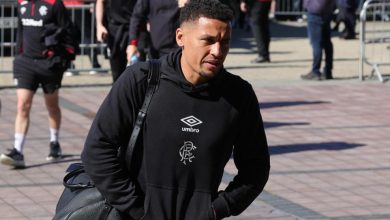
One individual singled out for particular attention during the interview was club captain James Tavernier, whose importance to the Rangers set-up Martin was keen to underline. As the club’s longest-serving and most experienced player, Tavernier’s role was framed as central not just to the team’s performances on the pitch, but to the broader project of establishing a new culture and mentality at Ibrox. Martin’s comments suggested he saw the veteran full-back as a key ally in transmitting his own ideas and standards to the rest of the squad, leaning on his experience and standing among the playing group to help embed the new approach more quickly.
That reliance on senior, trusted figures within the squad reflects a broader pattern in how newly appointed managers often approach unfamiliar dressing rooms, using established leaders to help bridge the gap between a manager’s ideas and a squad’s willingness, or ability, to execute them under pressure. For Martin, getting a player of Tavernier’s stature onside early appeared to be viewed as an important building block in his broader project at the club.
Martin’s appointment was not entirely without prior history at the club. The former Scotland international defender had a short loan spell as a player at Rangers back in 2018, giving him some existing familiarity with the size and expectations of the institution he was now being asked to lead as head coach. That connection, while brief, offered Martin a degree of insight into the unique pressures that come with representing one half of the Old Firm, insight that few incoming managers arriving fresh from English football would be able to draw upon.
Since his playing days, Martin had built a coaching career primarily in the English lower leagues and Championship, taking charge of MK Dons and Swansea City before being appointed manager of Southampton. It was at Southampton where his most recent managerial spell ended in difficult circumstances: after guiding the Saints to promotion to the Premier League, Martin suffered a torrid return to the top flight, managing just one win from his first 16 games in charge before being sacked in December. Southampton were subsequently relegated back to the Championship at the end of that campaign, a disappointing conclusion to what had briefly looked like a breakthrough achievement in getting the club promoted in the first place.
Given that turbulent recent history, it was perhaps inevitable that questions around fan scepticism would arise during Martin’s unveiling. Asked directly about the negative reaction some Rangers supporters had shown toward his appointment, Martin responded with characteristic directness, acknowledging that he had rarely, if ever, arrived at a club as the fans’ first-choice candidate. He pointed instead to his track record of eventually winning supporters over during his time at previous clubs, expressing confidence that a similar dynamic could play out at Ibrox if results and performances began to follow.
Martin also spoke about the values that had underpinned his own playing career, describing his approach as being built on hard work and resilience rather than outright natural talent, and suggesting that mentality was something he hoped to instil in his new Rangers squad as they attempted to close the gap on Celtic. He framed his own journey, from a player whose progress was built on graft rather than gifted ability, through to management, as evidence of a broader pattern of proving people wrong that he intends to continue at Ibrox.
Martin’s arrival at Ibrox was also welcomed publicly by figures with close knowledge of the Scottish game. Former Rangers striker Kris Boyd, speaking to Sky Sports News shortly after the appointment was confirmed, described the move to secure Martin as a fantastic piece of business by the club, suggesting that Rangers had made an astute choice in bringing in a coach with clear ideas about how he wanted his teams to play. That kind of endorsement from a well-respected former player carried weight given the scepticism that had greeted the appointment in some quarters of the Ibrox support.
Such backing mattered given the scale of expectation Martin would immediately be operating under. Managing Rangers has long been considered one of the most demanding jobs in British football, with success measured strictly in terms of trophies and progress against Celtic rather than any broader notion of gradual improvement. Martin appeared fully aware of that reality, stating plainly that success at Ibrox would ultimately be judged by silverware, and admitting that he had a great deal still to prove in order to convince supporters that he was the right man for the job
Looking back, Martin’s confident words in that first exclusive interview stood in sharp contrast to how his tenure would eventually unfold. His time in charge proved short-lived and difficult, with Rangers enduring a winless opening to the league campaign and suffering a heavy Champions League qualifying exit before results failed to sufficiently improve. Martin was ultimately dismissed after 17 matches in charge, an unusually swift end for a manager who had arrived with such clear conviction about the size of the project and his own ability to deliver on it.
In hindsight, the themes Martin raised in his introductory interview, the need for fresh energy, the importance of belief and momentum, and the scale of the gap to Celtic, would go on to define much of the discourse around his tenure. His inability to generate the kind of energy and results he had spoken about so confidently on his first day ultimately cost him the job, opening the door for the ownership to search once again for a head coach capable of delivering the transformation Martin had promised but was unable to produce during his time at Ibrox.
Even though his reign would not last, Martin’s opening remarks upon being appointed remain a useful window into the mindset and ambition of Rangers’ new ownership at the very outset of their project. The language of energy, freshness and long-term belief that characterised his first interview reflected exactly what the new hierarchy under Cavenagh had been hoping to bring to the club, a clean break from the drift of previous seasons and a renewed sense of purpose heading into a new chapter. Whether that vision would eventually be realised under a different head coach became one of the defining questions facing Rangers in the months that followed Martin’s departure fro the role he had once described with such optimism.