There are winning your first Old Firm derby, and then there is winning it the way Derek McInnes just did. A 3-0 demolition of Celtic in the quarter-finals of the Scottish League Cup was not simply a result. It was a statement, delivered in front of a raucous, sold-out Ibrox that had been starved of exactly this kind of afternoon for far too long. Dan Neil scored twice. Kevin Kelsy, all £9.2million of him, opened his Old Firm account with a composed finish that summed up everything Rangers had promised when they broke the bank for him on deadline day. And Celtic, for ninety-plus minutes, simply had no answer.
This was McInnes’s first Glasgow derby since taking the reins at Ibrox, and the pressure heading into it had been very real. A club with Rangers’s history does not tolerate drift, and there had been enough of it in recent weeks to make plenty of supporters nervous about what a first Old Firm test under the new head coach might reveal. What it revealed, in the end, was a Rangers side that looked sharper, hungrier and more streetwise than the visitors in almost every department. Celtic arrived at Ibrox top of the Premiership and unbeaten domestically, riding a run of confidence that had them fancied to control this fixture the way they have controlled most of the recent history between these two clubs. Instead, they were bullied out of the game from the opening whistle, and by full time, the only debate left was how much worse it could have been.
The early exchanges gave little hint of the gulf that would eventually open up. Kelsy and Min-su Kim both spurned presentable chances inside the first ten minutes, the kind of misses that in derby games can occasionally come back to haunt the side that fails to take them. Celtic, sensing an opening, responded with intent of their own. Colby Donovan picked out Kasper Høgh with an excellent pass, only for the Celtic forward to stumble under pressure before he could get a shot away. Camilo Durán reacted quickest to the loose ball and forced an attempt from a tight angle that drifted wide. It was, for a spell, the kind of frantic, error-strewn opening that these fixtures so often produce, both sides guilty of wastefulness, both sides aware of how quickly the tone of a derby can shift on a single moment of quality.
That moment arrived in the twenty-third minute, and it belonged to Rangers. Neil, deputising as captain and playing with the freedom of a man utterly convinced of his own qualities, picked up possession on the edge of the box after a slick passage of link-up play down the Rangers left. He took a touch to set himself, and with the kind of composure that separates good derby performances from forgettable ones, he stroked the ball low into the bottom corner. Ibrox erupted. It was the goal Rangers’s first-half dominance deserved, and it changed the entire complexion of the contest. From that point on, Celtic never looked like a team that believed the tie was still theirs to win.
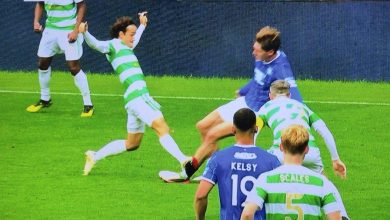
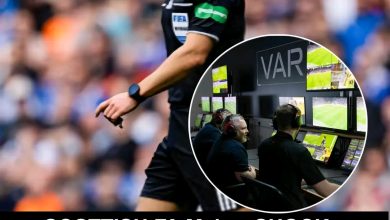
It was in the aftermath of that opener that the afternoon’s most contentious moment arrived, and it is one that will be picked over by pundits and supporters alike for days to come. Mika Baur, tracking back to close down Ryan Naderi, arrived late on the Rangers forward with a challenge that referee Nick Walsh had no hesitation in punishing with a straight red card. On the day, it looked a harsh call, the kind of decision that swings a derby further than it needs to be swung. And the subsequent analysis has done little to soften that impression. Former Premier League referee Mark Clattenburg reviewed the incident and delivered a verdict that will be cold comfort for Celtic: while he accepted that Baur’s challenge was reckless and mistimed, lacking the awareness a player in his position should have shown, he stopped well short of calling it a sending-off. Clattenburg’s assessment was that the challenge simply did not carry the speed, force or malice that the laws of the game require to meet the red card threshold, and that a booking would have been the correct call. It is a damning verdict for Walsh, delivered by a man who has stood in the middle of more Premier League football than almost anyone else in his generation, and it will only add fuel to Celtic’s sense of injustice about how their afternoon in Glasgow unravelled.
Whether Rangers needed the extra man is, frankly, up for debate, because what followed suggested this was a gap in quality rather than a gap in numbers. Even before Baur’s dismissal, Celtic had struggled to lay a glove on their opponents in any meaningful sense, misplacing passes in areas of the pitch where crispness and composure are usually taken for granted at this level. Rangers’s aggressive, man-for-man pressing scheme had already begun to suffocate Celtic’s build-up play, forcing rushed decisions and low-percentage passes into areas where Rangers were only too happy to win the ball back and go again. The sending-off simply accelerated a collapse that had already begun.
Benjamin Nygren and Donovan were both booked either side of the interval as Celtic’s frustration boiled over, a sign of a team that knew the game was slipping away and had no obvious route back into it. Martin O’Neill, watching from the touchline, made the only change available to him at the break, sending on Haissem Hassan for Sebastian Tounekti in an attempt to freshen up his attacking options. It made little difference to the pattern of the game. Sam Johnstone, at least, gave Celtic something to cling to in the early stages of the second half, producing back-to-back saves to deny first a rasping long-range effort from Min-su Kim and then a close-range header from Naderi at the back post. For a few minutes, it looked as though Johnstone alone might keep the scoreline respectable.
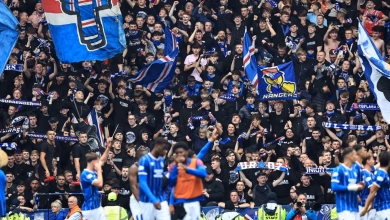
He could do nothing about what came next. In the fifty-ninth minute, Rangers doubled their advantage in style. Kelsy, the club’s marquee summer arrival, found space inside the box and finished with the kind of clean, clinical strike that Rangers fans had been promised when the deal was announced on transfer deadline day. Neil provided the assist, extending his personal contribution to the afternoon to a goal and now two assists’ worth of influence, before completing his own brace and Rangers’s romp in the seventy-fifth minute. By the time the full-time whistle sounded, Rangers had scored three without reply, restricted a Celtic side that had arrived top of the league to almost nothing of note in front of goal, and sent a capacity Ibrox home in a state of near-disbelief at how comprehensively their team had dismantled their oldest rivals. Away fans, notably, were locked out of Ibrox for the occasion, meaning the entire 51,000-plus crowd inside the stadium was there to celebrate a home performance that gave them every reason to.
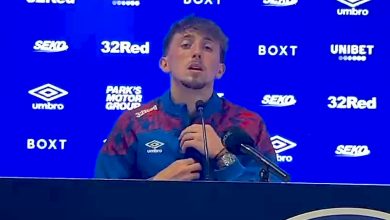
The context around this result matters as much as the scoreline itself. Rangers had arrived at this fixture off the back of a difficult opening stretch to the season, sitting some way behind Celtic in the Premiership table and still searching for the kind of statement performance that would convince supporters the McInnes project was heading in the right direction. This was exactly that. Speaking afterwards, McInnes was unequivocal about what the performance meant, insisting that the level his side produced was precisely what was required to overcome a team of Celtic’s quality, and stressing that he could not point to a single player who had let the side down. He described the win as a marker, a reference point his players and staff can return to across the rest of the campaign whenever questions are asked about Rangers’s ability to compete at the top end of Scottish football. With Rangers now having strung together five consecutive victories heading into this tie, McInnes was careful to frame the win not as a peak to be admired from a distance, but as a floor his side should now be building from.
He was also refreshingly candid about the value of individual moments over rigid tactical planning, suggesting that games of this magnitude are more often decided by players stepping up in big moments than by any tactical masterstroke on the touchline. It is an interesting admission from a head coach only a matter of weeks into the job, but it fits with what Ibrox witnessed. This was not a Rangers performance built on some revolutionary system. It was built on Neil’s quality in the final third, Kelsy’s composure in front of goal, and a collective refusal from the home side to allow Celtic any foothold in the contest whatsoever. McInnes’s mind had already turned to what comes next by the time he spoke to the press, acknowledging that Celtic are more than capable of setting up differently when the sides meet again at Parkhead next Sunday, and stressing that each fixture between these two clubs has to be judged on its own terms rather than assumed to follow a pattern.
For Celtic and Martin O’Neill, the post-match reckoning was considerably more uncomfortable. O’Neill did not attempt to dress up what had happened, describing his side as second best from start to finish and admitting that a couple of genuinely promising chances went unconverted in the first half when Celtic had managed to break through Rangers’s press. He was blunt in his assessment that his side simply were not at the level required for an occasion of this magnitude, describing the need for a wake-up call that starts with his own reflection before it extends to his players. There was a striking honesty in how directly O’Neill placed responsibility on himself in the moments immediately after the final whistle, a tone that will do little to quiet growing scrutiny of his side’s start to the season regardless of their position at the top of the table. He was equally clear that Rangers’s physicality had not caught him by surprise, describing the challenge his side face as a fundamentally physical one that will test Celtic again in every sense when the two sides reconvene at Parkhead.
Pressed further on suggestions that his side’s issue was one of mentality rather than execution, O’Neill pushed back firmly, arguing that the root cause on the day was technical rather than psychological. His view was that Celtic’s passing simply was not good enough in periods when they held healthy amounts of possession, and that it is only once a team accumulates enough poor passes in a short space of time that mentality genuinely becomes a factor in how a performance unravels. It is a defence that will not entirely satisfy Celtic supporters looking for answers after their side’s first defeat in seven meetings with their fiercest rivals, but it at least offers a coherent explanation rather than a shrug.
The Scottish football media were considerably less forgiving in their assessment of O’Neill’s afternoon. Daily Record columnist Keith Jackson used his post-match column to question both O’Neill’s reading of the game as it unfolded and some of his selection calls, suggesting the Celtic manager appeared bamboozled by events at Ibrox and had no obvious answer once things began to slip away from his side. Jackson’s criticism extended to specific team selection decisions, including the calls to start both Johnstone and Tounekti, with the suggestion being that certain individuals looked overwhelmed by the scale of the occasion once the whistle blew. It is the kind of scrutiny that tends to follow a heavy Old Firm defeat regardless of a team’s league position, and it will not make for comfortable reading around Parkhead this week.
There is a broader subplot running through all of this that Rangers supporters in particular will enjoy dwelling on. Celtic went into this fixture unbeaten in the Premiership and sitting clear at the top of the table, the kind of form that had led many to assume this season’s balance of power in Scottish football had already been settled before a ball was kicked in the derby itself. What happened at Ibrox punctures that assumption, at least for now. Cup football has a habit of behaving differently to league form, freed as it is from the accumulated weight of table positions and points totals, and Rangers used that freedom to full effect. There is also a psychological dimension to consider heading into next weekend’s league fixture at Parkhead. Rangers travel across Glasgow having just inflicted Celtic’s heaviest and most chastening defeat of the campaign so far, while Celtic will be desperate to restore parity and silence any suggestion that this result represents anything more than a one-off cup afternoon. McInnes himself acknowledged as much, noting that the pressure has, for the moment at least, shifted onto Celtic’s shoulders ahead of that return fixture.
For Rangers, the immediate reward is a place in the semi-finals of tahe League Cup, where they will face Aberdeen at Hampden Park next month for a spot in the final. It is a fixture Rangers will approach with considerably more belief than they might have carried into this quarter-final a fortnight ago, and McInnes will be acutely aware of the importance of using this Old Firm statement as a springboard rather than a one-off high point. The manager was explicit about wanting his group, and in particular his newer signings, to understand exactly what a result like this means to the Rangers support, and about the standard he now expects his side to try to replicate on a weekly basis regardless of how they are set up tactically from game to game.
There is also a wider context to Kelsy’s involvement that deserves attention. His arrival on deadline day was one of the defining moves of a summer rebuild under McInnes that also brought in Kim Min-su, Kosta Nedeljkovic and Nicolas Raskin, part of a broader effort to reshape a squad that had looked short of the quality required to compete on multiple fronts. Kelsy’s fee immediately made him one of the most closely watched arrivals at Ibrox in recent memory, and there is always a particular kind of scrutiny that attaches itself to a big-money forward the first time he steps out in a derby of this magnitude. Some players shrink from that occasion. Kelsy did the opposite, and the manner of his goal, a composed finish into the bottom corner rather than a scrappy tap-in, will only strengthen belief among supporters that this was money well spent. Raskin, too, was heavily involved in midfield throughout, part of a Rangers engine room that simply outworked and outthought their Celtic counterparts for long spells.
It is also worth dwelling on how comprehensively this performance answered questions that had followed Rangers through their recent European exit. McInnes was candid in his press conference about the shortcomings of that continental disappointment, openly admitting his side had not been ready for the level required in Europe, and using Sunday’s derby win as evidence that lessons from that setback had been absorbed rather than ignored. There is a pattern emerging under the new head coach of using difficult moments as teaching opportunities rather than papering over them, and it is a approach that appears, on the evidence of this result, to be resonating with his squad. The turnaround from a chastening European away defeat to an emphatic domestic derby win inside the space of a fortnight speaks to a group capable of compartmentalising setbacks and refocusing quickly, a trait that will be essential if Rangers are to sustain any kind of title challenge or deep cup run across the season.
The refereeing controversy, meanwhile, is unlikely to disappear from the conversation quickly, however comprehensively Rangers won the game on its own terms. Clattenburg’s intervention carries weight precisely because it comes from someone with no obvious stake in either side of the Old Firm divide, and his conclusion that Nick Walsh got the decision wrong will be seized upon by Celtic supporters as evidence that the balance of the contest was skewed before it had even been settled on merit. Whether that argument holds up to scrutiny is a separate question. Celtic were already second best in every meaningful sense before Baur’s dismissal, misplacing passes in dangerous areas and failing to trouble Rangers’s goal with any real conviction even while playing with a full complement of players. The red card compounded Celtic’s afternoon rather than defined it, but expect Scottish football’s governing bodies and pundits to spend the coming week picking over Walsh’s decision-making regardless of how little difference it ultimately made to the destination of the three points.
Individually, this was an afternoon that will live long in the memory for both Neil and Kelsy. For Neil, captaining the side in an Old Firm fixture and marking the occasion with a brace is the sort of career milestone that tends to define a player’s relationship with a club’s supporters for years afterwards. For Kelsy, scoring on his Old Firm debut just weeks after arriving in a deadline-day deal worth £9.2million is about as emphatic an introduction to the fixture’s unique pressures as any new signing could hope for. Both will now be central to how Rangers approach the visit to Parkhead, and both will carry the confidence of Sunday’s performance into a game that already carries enormous weight for both clubs and both managers.
What Sunday ultimately confirmed is that this Old Firm rivalry, for all Celtic’s recent domestic dominance, remains capable of throwing up afternoons that defy the form book entirely. Rangers were the better side in almost every department, from the opening exchanges through to the final whistle, and did so without needing the red card that will dominate the discourse around the game to actually settle the outcome. McInnes has his marker. O’Neill has his wake-up call. And Scottish football has another chapter in a rivalry that shows no sign of losing its capacity to surprise.