Rangers 3-0 Celtic: Derek McInnes wins first Old Firm of season as hosts reach Scottish League Cup semi-finals


Derek McInnes has his first Old Firm victory as Rangers manager, and it could hardly have arrived in more emphatic fashion. A rampant Rangers side swept Celtic aside 3-0 in the Premier Sports Cup quarter-final at Ibrox on Sunday, with captain Dan Neil scoring twice and deadline-day signing Kevin Kelsy adding his first goal for the club to send the Light Blues into the last four of the competition. It was a result that will have surprised plenty given the shaky opening weeks of the season under McInnes, but on the day, Celtic simply had no answer for the ferocity and organisation of the home side’s approach.
The build-up to this one had carried an unusual amount of tension for a fixture that typically needs none. Rangers arrived at the derby having stumbled out of both the Europa League and the Conference League at the qualifying stage over the summer, a double European exit that piled early pressure on McInnes just months into his reign. Throw in a stuttering start to the league campaign, and there were real questions being asked about whether the appointment was working. Those questions had started to be answered in the weeks before this match, with league wins over Aberdeen, Falkirk, Motherwell and St Mirren steadying the ship and building a platform of confidence heading into the first Old Firm meeting of the season. Even so, nobody inside Ibrox could have predicted quite how one-sided this would turn out to be.
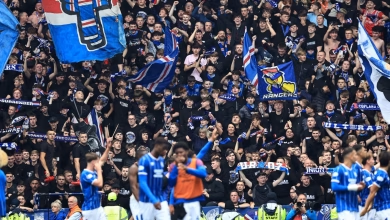
Celtic, under the returning Martin O’Neill, travelled to Glasgow’s south side full of their own narrative. O’Neill’s second spell in interim charge had started with intent, and there was a sense that Celtic’s greater continuity at the top level might tell against a Rangers side still bedding in a host of summer arrivals. That theory lasted almost no time at all once the game kicked off. With away fans absent from Ibrox under the latest allocation restrictions, the atmosphere inside the stadium took on a different character entirely, one that Rangers used to their considerable advantage as the afternoon wore on.
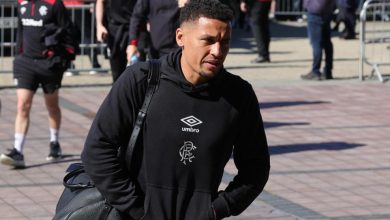
McInnes’s tactical setup was the story of the first half, and in many ways the story of the entire match. He deployed a back three, with James Penrice given license to drift inside from left wing-back and effectively operate as an auxiliary central midfielder whenever Rangers had the ball. That decision flooded the centre of the pitch and allowed Rangers to press Celtic man-for-man across the field, with Dujon Sterling, Emmanuel Fernandez and Olwethu Makhanya matching up three-vs-three against Celtic’s forward line while Djeidi Gassama and Min-su Kim provided width and energy further forward. It is the kind of bold, high-risk setup that can be picked apart if it goes wrong, but on this occasion it worked to devastating effect, suffocating Celtic’s ability to build from deep and leaving captain Callum McGregor isolated in midfield without the defensive-minded partner he has often relied on in previous seasons.
The chances came early. Kelsy and Kim both spurned good openings inside the first twenty minutes as Rangers set the tone with intent, forcing Celtic backwards and denying them any foothold in the game. The breakthrough, when it arrived, was a fitting reward for the pressure Rangers had built. After twenty-three minutes, some slick interplay between Ryan Naderi and Kelsy up front carved Celtic open, and the ball broke to Neil on the edge of the box. The captain, deputising in the leadership role and playing with the composure of a man who has been at the club far longer than a single summer, guided a precise finish into the bottom corner to send Ibrox into raptures.
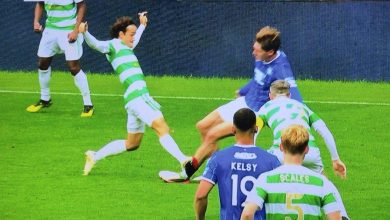
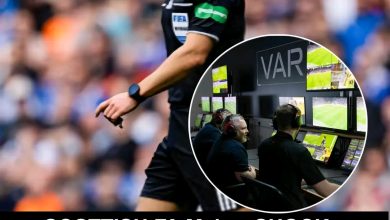
If that opener settled any lingering nerves, the second goal, arriving just after the hour mark, effectively finished the contest as a spectacle. Penrice, so influential throughout, delivered a teasing cross from the left that caused confusion in the Celtic box, with the ball eventually breaking to Kelsy unmarked at the back post. The Venezuelan striker, signed for a reported £9.2million on transfer deadline day and playing in just his third appearance for the club, made no mistake, driving a first-time finish into the corner for his maiden Rangers goal. The strike survived a VAR check for a possible earlier offside in the buildup, and once confirmed, it sparked scenes of pure delight around Ibrox. For a player who has been in Scotland barely a matter of weeks, to mark an Old Firm derby with his first goal for the club, in front of a crowd stripped of any away contingent to dampen the noise, was as good an introduction to the fixture as any new arrival could hope for.
Celtic tried to respond. Haissem Hassan was introduced at the interval in place of Tonekti in an attempt to inject pace down the right flank and stretch a Rangers back line that had, until that point, barely been troubled. Min-su Kim tested Johnstone from distance for Rangers as the home side continued to look the more likely to add to the scoreline, while at the other end Celtic’s forward players found themselves crowded out time and again by a Rangers defensive unit that rarely allowed a clean sight of goal. The introduction of Hassan briefly threatened to change the complexion of the second half, but any momentum Celtic generated was short-lived, and Makhanya’s early second-half yellow card was as close as the visitors came to gaining a foothold through disruption rather than genuine created chances.
Rangers, rather than sitting on their two-goal cushion, continued to push, and their third arrived in the seventy-fourth minute in fitting style. After a Celtic clearance fell straight to him on the edge of the area, Neil struck a high, curling effort beyond Johnstone to complete his brace and put the gloss on a afternoon that had gone almost entirely to plan for the home side. It was a goal that also carried historical significance, with reports afterwards noting that Neil became the first Rangers player since 1963 to score his first two goals for the club in an Old Firm fixture, a statistic that speaks to just how significant this individual performance was in the context of the club’s history with this derby.
By the closing stages, the game had long since been settled, and reports from inside the stadium suggested McGregor could be seen mouthing his frustration towards teammates as Rangers turned the screw further, denying Celtic any route back into a contest that had slipped away from them inside the first half-hour. Celtic finished the afternoon without a single clear-cut chance of note, a damning statistic against a side of their pedigree, and one that will have made for uncomfortable viewing for O’Neill as he took charge of what was already becoming a difficult second match back in interim charge.
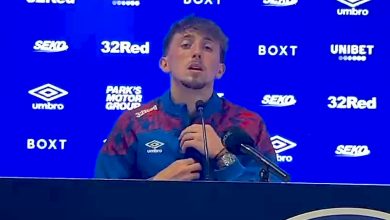
The full-time whistle brought a release of emotion around Ibrox that had been building not just across ninety minutes, but across a difficult opening two months of the season. McInnes, speaking afterwards, was typically measured in assessing his side’s performance, playing down suggestions of some grand tactical masterplan even as the numbers and the eye test both suggested otherwise. He did, however, draw a clear line between this display and the disappointment of the summer’s European exits, describing the gulf between the two as stark. It was a subtle but pointed way of reminding observers just how far his side has come in a matter of weeks, from a team being knocked out of continental competition at the qualifying stage to one capable of dismantling their fiercest rivals without ever looking troubled.
Neil, unsurprisingly named man of the match, spoke afterwards about the surreal nature of producing a career-best moment on the biggest stage the Scottish game has to offer. The Sunderland academy product turned Rangers captain admitted that even scoring one goal in the fixture would have been enough to satisfy him going into the game, let alone completing a brace that will live long in Ibrox folklore. He was quick, too, to deflect credit onto his teammates, describing the win as a genuine collective effort rather than an individual triumph, and praising the manner in which the team had defended without possession in recent weeks, a discipline he felt was crucial to nullifying Celtic’s threat before Rangers ever got the chance to hurt them at the other end.
Kelsy’s post-match reaction carried the raw enthusiasm of a player still adjusting to life in Scottish football and clearly overwhelmed by what he had just experienced. Asked about the noise generated inside Ibrox, his response leaned on simple, repeated affirmations of just how remarkable he found the occasion, capped with genuine delight at having opened his account for the club in a fixture of this magnitude. It is the kind of debut derby goal that instantly earns a player a certain standing with the support, and Kelsy’s willingness to lead the line so early into his Rangers career, in a game with this much riding on it, did not go unnoticed by his captain either. Neil later praised the striker’s rapid adaptation to a new country and a new style of football, pointing out that Kelsy has barely had time to settle before being trusted with a starting role in one of the biggest fixtures on the Scottish football calendar, and delivering when it mattered most.
The wider reaction to the result has been significant, extending well beyond the usual domestic bubble of Scottish football punditry. International media picked up on the scale of Rangers’ dominance, with comparisons drawn to some of the most emphatic Old Firm wins of the modern era, including nods to the kind of complete performances associated with previous successful eras at the club. There was little sympathy offered towards O’Neill or Celtic in the aftermath, with observers noting that the nature of the defeat left no room for mitigating circumstances or refereeing controversy to hide behind. This was, by consensus, as clear and one-sided an Old Firm result as either side has produced in recent seasons, and it has firmly repositioned the early-season narrative around McInnes’s Rangers from crisis management to genuine momentum.
Domestically, reaction was similarly effusive. Broadcasters and analysts singled out several individual performances beyond just the two goalscorers, with Naderi earning particular praise for his work rate and aggressive contribution in the build-up play that led to the opening goal. Rangers’ overall approach, using the Ibrox atmosphere as a genuine tactical weapon in the continued absence of away support, was framed by multiple outlets as a blueprint the club may look to replicate in future fixtures of this magnitude, particularly with a return derby now only days away.
That return fixture arrives remarkably quickly. Celtic will host Rangers in the William Hill Premiership the following Sunday at Parkhead, the first league meeting between the two sides this season, and it promises to be an entirely different examination for McInnes’s players. Where Sunday’s cup tie was played in a stadium stripped of travelling support and tilted heavily in Rangers’ favour atmospherically, the trip to Celtic Park will offer no such advantage, with away fans similarly absent under the current allocation arrangements but home advantage now sitting firmly with O’Neill’s side. Rangers will arrive full of confidence, know that victory would close the gap at the top of the table to just two points, and will hope to carry the momentum and tactical template from this derby straight into a fixture that carries even greater long-term significance for the destination of the title race.
Before that, though, there is the small matter of a League Cup semi-final to look forward to, with Rangers now drawn against Aberdeen, the games set to be played across the weekend of October 31 and November 1. It sets up a repeat of a fixture that has produced plenty of drama between these two sides over the years, and gives McInnes a tangible route to a first trophy as Rangers manager, something that would go a long way towards silencing any remaining doubts that lingered after the club’s difficult European summer.
For now, though, Ibrox can simply enjoy the moment. This was not merely a routine three points or a straightforward cup progression; it was a statement result against the club’s fiercest rivals, delivered by a squad still finding its feet under a new manager, inside a stadium that provided the platform, from two players who both, in their own way, produced career and club-defining moments on the biggest stage the fixture had to offer. Neil’s brace etched his name into a piece of Old Firm history not achieved by a Rangers player since 1963, while Kelsy’s composed introduction to life at the club suggests McInnes may have unearthed another significant addition from the summer’s rebuild. Add in a tactical setup that nullified one of Scottish football’s most storied midfields and left a title rival with no clear-cut chances across ninety minutes, and it becomes clear why the scale of this win has reverberated so widely, both at home and internationally.
Questions remain, of course, as they always will in a results-driven business. McInnes will know that a single derby win, however dominant, does not erase the disappointment of a difficult European summer, nor does it guarantee anything in the return fixture at Celtic Park next weekend, where conditions will look and feel very different. But for a manager who arrived under pressure and endured a testing start to the season, Sunday’s performance offers the clearest evidence yet that his methods are taking hold, that his squad is beginning to understand exactly what is being asked of them, and that Rangers, after a turbulent opening to the campaign, may finally be building the kind of form that turns a promising foundation into sustained success. The two Glasgow giants will meet again in a matter of days, and if McInnes can find even a fraction of Sunday’s intensity and organisation at Parkhead, the two-point gap at the summit of Scottish football could look very different by the time full time is called next Sunday evening