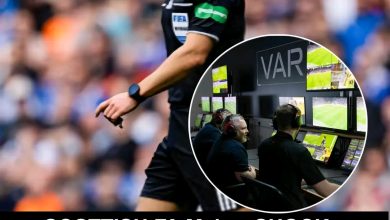
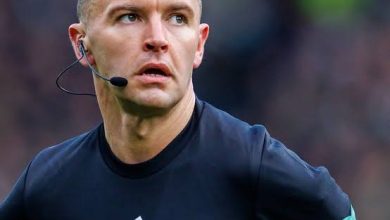
Nick Walsh suspension bombshell! After the latest meeting, the referee could be suspended — while Rangers may also face a points deduction!

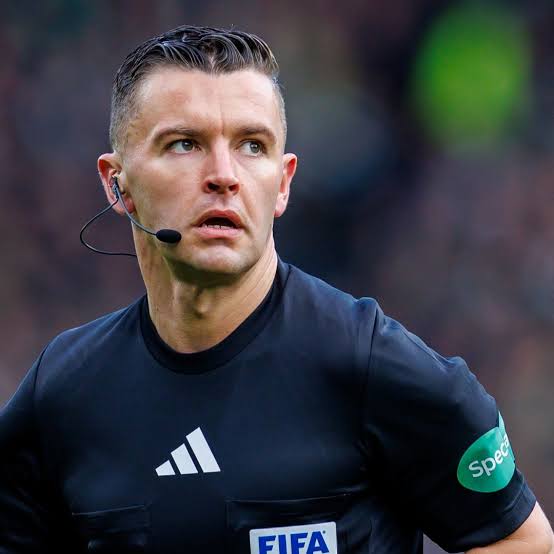
Rangers may have walked off the Ibrox pitch with a comprehensive 3-0 win over Celtic and a place in the Premier Sports Cup semi-finals already secured, but the full-time whistle did not end the talking points from Sunday’s Old Firm derby. In the days since Derek McInnes’s side dismantled their fiercest rivals, attention has increasingly turned towards the performance of referee Nick Walsh, whose handling of two key incidents has drawn criticism from pundits, former officials and supporters alike, reigniting a debate about refereeing standards in Scottish football’s biggest fixture that has followed Walsh for several seasons now.
On the balance of play, there was little for Rangers to complain about in terms of the result itself. McInnes’s side were utterly dominant from start to finish, controlling 53 per cent of possession and outshooting Celtic 15 to 7 across the ninety minutes, numbers that tell their own story about just how comprehensively Martin O’Neill’s side were second best throughout the contest. But dominance on the scoreboard has not stopped scrutiny of Walsh’s individual calls, with two moments in particular standing out as the kind of decisions that, in a fixture of this magnitude, simply cannot be missed.
The first arrived just after the hour mark, when Rangers were denied what appeared to be a clear-cut penalty. Olwethu Makhanya, deployed as part of the back three that has become such a feature of McInnes’s tactical setup this season, was adjudged to have brought down Kasper Hogh inside the box in a passage of play that immediately drew appeals from the home support. Walsh, positioned reasonably well to view the incident, waved away the appeals without a second thought, and remarkably, no review followed from the VAR team monitoring the game. In a fixture already being scrutinised for every marginal call, the decision not to send the referee to the pitch-side monitor, or to overturn the call remotely, has become a significant talking point in itself.
Former FIFA referee Keith Hackett was among those to weigh in on the incident in the days that followed, and his assessment did not offer Walsh much cover. Speaking to Ibrox News, Hackett said he found it surprising that no VAR intervention followed once the officials had reviewed the footage, a comment that carries extra weight given his decades of experience at the top level of the game. When a referee of Hackett’s standing describes himself as surprised by the lack of a review, it tends to suggest the incident was rather more clear-cut than Walsh and his assistants judged it to be in real time. For a Rangers side that were already cruising to victory by that stage of the match, the missed penalty call did not change the outcome, but it has added fuel to a growing sense of frustration among supporters that decisions of this nature continue to go unpunished.
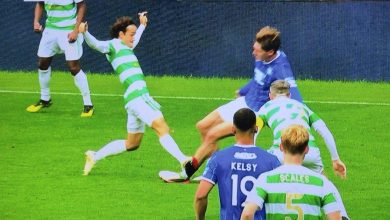
The second incident occurred earlier in the second half and worked in the opposite direction, with Celtic the beneficiaries of what many felt was another questionable call from Walsh. In the 65th minute, Ryan Naderi found himself involved in what was described as an innocuous-looking passage of play, appearing to slip as Celtic’s Mika Baur made contact with his ankle. Replays suggested it was Baur who initiated the contact, catching Naderi as the Rangers full-back lost his footing, yet the free-kick was awarded in Celtic’s favour rather than Rangers’. It was a smaller moment in the context of a match Rangers were already controlling comfortably, but taken together with the missed penalty at the other end, it has painted a picture of an afternoon in which Walsh’s individual judgement calls consistently failed to match what the cameras were showing.
None of this, it must be said, is a new phenomenon where Walsh and Rangers are concerned. The referee has something of a fraught history with the Ibrox club stretching back several seasons, and Sunday’s derby has simply added another chapter to a story that Rangers supporters, and at times the club’s own coaching staff, have grown increasingly vocal about. Walsh was the man in the middle for the 2024 Scottish Cup final between Celtic and Rangers, a fixture in which he disallowed what would have been a Rangers goal for an apparent infringement on the Celtic goalkeeper. Then-manager Philippe Clement was scathing in his assessment afterwards, pointing out the inconsistency of penalising his own players for grabbing and pulling when Celtic players had been doing precisely that at the other end of the pitch throughout the game.
That was far from an isolated flashpoint. Walsh’s decisions have continued to draw scrutiny in fixtures involving Rangers in the time since. During a Scottish Premiership meeting between Celtic and Rangers earlier this year, the Ibrox side’s title hopes were effectively ended following a third successive defeat in the fixture, with Walsh again at the centre of the post-match debate after opting not to send off a Celtic player for a high tackle with the score locked at 1-1. Rangers went on to lose that game comfortably, and while pundit Stephen Gallagher argued forcefully that a red card should have been shown, he did offer something of a defence for Walsh himself, suggesting the referee had not been shown a crucial angle of the incident by his VAR colleagues at the time. It is a pattern that has repeated itself across several of these fixtures: individual officiating errors compounded, or at times excused, by broader failures in the VAR process supporting Walsh in the middle.
Elsewhere, Walsh’s disciplinary record in high-pressure matches has continued to generate headlines well beyond Scotland’s borders. He was the referee tasked with a Europa League tie between Ajax and Qarabağ in which he sent off two Qarabağ players, a decision that drew heavy criticism at the time and contributed to a comfortable Ajax win. He was also in the middle for a Europa League match between Union Saint-Gilloise and Braga in which he issued a staggering four red cards and twelve yellow cards across the ninety minutes, a statistic that speaks to a referee either presiding over an exceptionally ill-tempered contest or applying his authority with a heavier hand than most of his peers might have done in the same circumstances. Closer to home, a Scottish Premiership meeting between Rangers and Dundee United saw Walsh heavily criticised for sending off Rangers midfielder Mohamed Diomande, with the referee declining to reverse his initial call even after being invited to review the incident himself on the pitch-side monitor, a decision that fed directly into the narrative building around his reluctance to change his mind once a call has been made.
Taken individually, each of these incidents might be dismissed as the kind of split-second, high-pressure error that referees at every level of the game are prone to making. Football is a fast-moving sport, and even the finest officials in the world make mistakes across the course of a season. But the accumulation of these moments, specifically in matches involving Rangers, and specifically in fixtures as high-profile as Old Firm derbies and cup finals, has understandably fostered a deep well of suspicion and frustration among the Ibrox support whenever Walsh’s name appears on a team sheet ahead of a big match. Sunday’s derby, for all Rangers’ dominance, has done little to change that perception, even if the result itself was never seriously in doubt.
It is worth stressing that Rangers’ victory on Sunday owed far more to their own tactical execution than to any officiating controversy. McInnes’s decision to deploy James Penrice as an auxiliary central midfielder, overloading the middle of the park and pressing Celtic man-for-man across the pitch, was the genuine architect of the win, exposing what were described as severe structural vulnerabilities in Celtic’s approach and leaving both goalkeeper Sam Johnstone and defender Cameron Carter-Vickers repeatedly exposed throughout the afternoon. Dan Neil’s brace and Kevin Kelsy’s composed finish were the product of a Rangers performance built on genuine tactical superiority rather than any favour shown by the officials. Had the penalty appeal been given, the scoreline may well have finished even more emphatically in the home side’s favour, but it is unlikely to have changed the outcome of a match Rangers were already winning comfortably on merit.
That context matters, because it is precisely what makes the missed penalty call so difficult for many to simply brush aside. When a refereeing decision has no bearing on the eventual result, there is sometimes a temptation among fans of the beneficiary club to let the matter drop rather than dwell on what did not cost them anything. But the broader pattern of Walsh’s involvement in contentious Rangers fixtures over recent seasons means this incident has instead been absorbed into a larger, ongoing conversation about officiating standards, VAR accountability and consistency in Scotland’s biggest matches. For a governing body already facing regular criticism over the transparency of its VAR processes, another missed intervention in an Old Firm fixture, however inconsequential to the final result, is unlikely to be received well by an increasingly sceptical support.
Martin O’Neill, for his part, had far bigger concerns to address in the aftermath than any refereeing grievance, openly admitting to severe tactical flaws in his side’s approach following the 3-0 defeat. Celtic’s issues on the day ran far deeper than any single officiating call, with McGregor left isolated in midfield and the visitors failing to register a single clear-cut chance across the ninety minutes. It would be a stretch, then, to suggest Walsh’s performance played any meaningful role in shaping the outcome of Sunday’s derby. What it has done, however, is add another data point to a growing file on a referee who continues to find himself at the centre of major Rangers storylines, for reasons that go well beyond any single ninety-minute performance.
Looking ahead, Rangers and Celtic will meet again within days in the William Hill Premiership at Parkhead, a fixture that will be scrutinised just as heavily, if not more so, given its direct bearing on the title race rather than simply cup progression. Whoever is appointed to referee that contest will do so under an intense spotlight, with Sunday’s derby ensuring that every marginal decision in the return fixture will be viewed through the lens of the ongoing debate around officiating consistency in this fixture. For now, though, Rangers can take real satisfaction from a performance that settled the contest long before any refereeing talking points became relevant, while the debate around Walsh’s positioning, judgement and VAR support in Scotland’s biggest games looks set to rumble on regardless of what happens next